National Poetry Month: ‘Ariel’ by Sylvia Plath

“The collection contains some of her most celebrated poems: Lady Lazurus, Daddy; The Moon and the Yew Tree and the titular piece Ariel.  Many of these are poems written in a burst of creativity shortly before she took her life. They are poems I’ve read many times over, but only ever as individual pieces of work. When you read them as a collection, the intensity and darkness that’s visible in an individual poem is heightened and magnified many times over.”

Source: Ariel by Sylvia Plath: #1965club read ‹ BookerTalk ‹ Reader — WordPress.com

I first read Plath’s novel The Bell Jar and her collection of poems entitled Ariel when they first came out in the United States. Their combined impact on me was enormous. and, to this day, “Ariel” remains my favorite poem, second only to “Fern Hill” by Dylan Thomas.
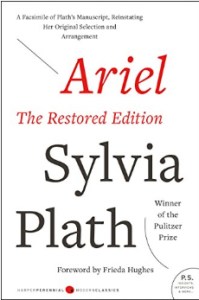
The original edition of Ariel was published after Plath’s death wasn’t what she intended. Her husband, poet Ted Hughes, changed the selection. I see that as a travesty and an arrogant intrusion into her work. I still have the original version of Ariel on my bookshelf. But if you want what the poet intended, take a look at the restore edition from 2004 shown here.

Malcolm

New ‘Conjure Woman’s Cat’ Hardcover Edition

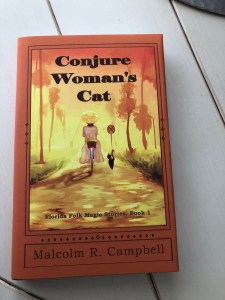
Thomas-Jacob Publishing has released a hardcover edition of Conjure Woman’s Cat by Malcolm R. Campbell. Also available in paperback, e-book, and audiobook, the story set in the Florida Panhandle in 1954 follows the efforts of a conjure woman to find justice after her granddaughter is assaulted in a small town. The novel’s sequels, Eulalie and Washerwoman and Lena will also be released in hardcover in the coming months.

Copies are already available at Amazon.com and Barnesandnoble.com and can be obtained by your nearest indie bookstore via their Ingram catalogue.

“I dearly loved Eulalie and Willie, I could easily have been friends with them both. The more I read the name Eulalie the more I adored it. It has a beautiful rhythm and made me smile every time I read it. Eulalie was a wise woman and deserved the respect she was given. Kudos to Malcolm R. Campbell for a story well told.” from Big Al’s Books and Pals

“Listeners will marvel at the magical realism in this story and benefit from the helpful glossary of the charming local dialect.” S.G.B. © AudioFile 2016

“For me to truly love a book, it needs the following: great plot with something to get fired up about, intelligent, engaging storytelling, well-defined characters, at least one of whom makes me wish I could conjure them into my life and my living room, and a deeply satisfying conclusion. Campbell’s work delivers beautifully on all of the above.

“The book is narrated by Lena, cat and spirit companion to Eulalie, Conjure Woman and human being extraordinaire. Eulalie (don’t you just love that name?) has an innate goodness that can’t be denied, but she’s no saint. She’s devout and dedicated to doing God’s work, and has a willingness to confront what others refuse to acknowledge. Her determination to set straight the injustices in her world, combined with her resilience and wisdom, made this reader fall in love with her.” – WordNerd on Amazon

“This was a delightful read, mostly because of the unique narrator … Eulalie’s cat Lena. I was taken into the heart of a world so foreign to my own, and ended up grateful for the glimpse. Poetic justice for inexcusable cruelties abounds but only because of Eulalie’s faith and intervention.

“More than simply characters in a fictional piece, I soon believed in their culture and social conventions. Most of us don’t believe in hoodoo and conjuring, but there was a time when those beliefs were much stronger. The novella took me back to that period. This book is magic.” L. Record on Amazon

Enjoy the book!

–Malcolm

Thomas-Jacob is a traditional publisher in Florida.


Review: ‘Line of Sight,’ a Jack Ryan Jr. Novel

Line of Sight (Jack Ryan Universe, #25)Line of Sight by Mike Maden
My rating: 3 of 5 stars

Jack Ryan, now President of the United States, and his son, Jack Ryan, Jr., analyst and black ops specialist at “The Campus,” are enduring characters in the Tom Clancey series ever since “The Hunt for Red October” appeared in 1984. As fans know, the series has been written by other authors since Clancey’s death.

Mike Maden, the author of “Line of Sight,” has written a fair number of the books sharing the series with Mark Greaney and others in what has been an amazingly consistent run of political action thrillers that has maintained the Clancey Style, fast-paced plots, and love of military equipment. Fans of the series will appreciate the tangled plot in this yarn that focuses on Jack Ryan, Jr. as he goes to Bosnia look for a former patient of his mother (Cathy Ryan) who saved the girl’s sight and then lost track of her.

Other forces are, of course, at play, including terrorists who want to destabilize Bosnia’s fragile peace and an international crime organization that has placed “kill orders” on several people, including Jack. Unaware of either group, Jack focuses on tracking down Dr. Cathy Ryan’s former patient and friend Aida Curić. The disparate subplots of this story turn toward each other like an impending train wreck as other members of The Campus become involved in minor roles.

The weakness of the book comes from the fact that the subplots need time to develop and while they are brewing, the reader is treated to lengthy travelogue sections for entertaining Jack with others or alone. Every tourist destination but the kitchen sink in the surrounding area becomes a sightseeing stop, interspersed with a love interest that, while well handled, doesn’t reduce the author’s reliance on in-country experience and/or Internet research to pad out the story. Potentially, 25% of the text is the kind of travel and historical information we usually get in a Dan Brown novel.

The book reads well, especially if one skims the travel sections, and in spite of those sections, the conclusion doesn’t disappoint.

View all my reviews

Malcolm

Wow, new followers

WordPress keeps sending me notices that more and more people are following this blog. That’s a little scary because it means I can’t slack off and write these posts drunk and blindfolded. Thank you!

While many of my posts do sound drunk and blindfolded, I also have fun reviewing a few books, talking about authors, and occasionally saying a few things about writing. Yet, I have madness in my method and that is something that I believe needs to be said. I say it in fiction. This Facebook cover picture pretty well sums it up:


My publisher is working on a new edition. She just sent me photographs of it this morning. Wow, for a grey and rainy day, they really make me happy. You’re going to like it. More on that later, of course.

Malcolm


Seriously, a long title is nothing to be scared of

Several great titles come to mind:

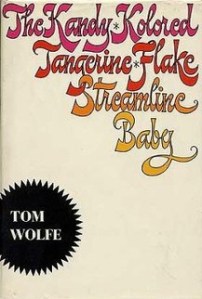
Tom Wolfe’s 1965 collection of essays  The Kandy-Kolored Tangerine-Flake Streamline Baby The story originally appeared in Esquire Magazine in 1963.

Gloria Sawai’s short story “The Day I Sat With Jesus on the Sun Deck and a Wind Came Up and Blew My Kimono Open and He Saw My Breasts” in her 2002 short story collection A Song for Nettie Johnson The story originally appeared in 1976.

Peter Weiss’ 2001 play “The Persecution and Assassination of Jean-Paul Marat as Performed by the Inmates of the Asylum of Charenton Under the Direction of the Marquis de Sade.”

David Rakoff’s 2006 satire (with a bite) Don’t Get Too Comfortable: The Indignities of Coach Class, The Torments of Low Thread Count, The Never-Ending Quest for Artisanal Olive Oil, and Other First World Problems.

Having said that, here’s a bit of shameless promotion from your sponsor (AKA, me)

My 2017 Kindle short story “En Route to the Diddy-Wah-Diddy Landfill While the Dogwoods Were in Bloom” has a long title. But it reads fast, is satirical (with a bite), and is based on Florida folklore about a magical sound called Diddy-Wah-Diddy. The place was hard to find, but if you did find it, you could eat all you wanted to eat.

My re-telling takes a lot of liberties with the original because, well, I felt like setting it in modern times and made it about a junk food junkie obsessed with finding the town and providing it is real.

I don’t advise looking for it, but if you happen to find it, let the rest of us know where it is.

Malcolm


Journeying through fiction

Critics have said that the best fiction is that which is so well written, readers feel they are actually there in the scenes observing the action and hearing the dialogue. We read books, I believe, when we need to read them even though our choices may be subconscious. This need probably includes escapist fiction, though I see that more as an emergency pain killer or probiotic than a self-improvement journey.

A variety of book genres resonate with me. When there are lessons, large and small, and vicarious experiences, large and small, within them, then the process of reading becomes a positive journey. There may or may not be spiritual implications even though the story is providing something we need. We don’t always consciously know what we need; yet, the reading provides it. In fact, since I operate out of intuition and chaos, I tend to think that books meet our needs when we simply read them to enjoy them rather than when we read them thinking they’ll meet specific needs in our lives.
Apparently, those needs are best met when we allow ourselves to be swept away by the story, to read it without distractions and to visualize the scenes as they happen rather than intellectually reading the words the way we might if we were studying a book for a college course. When I read, I pretend that I am right there in the middle of the action. After reading a few pages, it’s no longer pretence because the action really seems to be wherever I am.

In spite of several cataract surgeries, my eyes tire more quickly these days than they did years ago. So, I’m likely to shut them for a few minutes to give them a rest. When I do this, I continue to see an unfolding scene. This is somewhat disconcerting because it’s not the scene the author wrote. It’s as though the characters continue doing their own thing while my eyes are closed with dialogue and action seem just as real as that in the book. When I open my eyes, I find that I’ve somehow wandered into an alternate future for the characters that began the minute I closed my eyes. This forces me to backtrack several pages to get back into the story the author intended.

I have no idea whether or not this happens to other readers. Perhaps it’s an anomaly. Perhaps it’s my level of concentration and/or my writer’s intuition about routes the story could take next at any given moment.  In general, I function better when I’m reading my favorite kinds of stories. They’re like powerful energy drinks. Reading helps my writing, too even though I never read anything similar to what I’m writing at the moment because I don’t want to be influenced by it, worse yet, borrow it without knowing I’m borrowing it.

I don’t think it helps to pick up a novel and think, “Okay, I’m about to go on a journey.” That would be like taking a placebo, knowing that it’s a placebo. The journeys we take by reading books seem more effective when we don’t concern ourselves with the journeys and just let whatever’s going to happen to happen. After we finish a book, we might feel empowered or inspired or more confident in ourselves or ready to tackle difficult tasks. Personally, I prefer not to analyze this: I’d rather just allow it without trying to pin science and technology logic to the process.

How about you? When you read the kinds of novels you like best, do you feel better off while reading them? Do you feel a lack in your life when you don’t have anything new to read? When you finish a book, does it feel like you’ve just returned home from a vacation trip?

I can easily answer “yes” to all those questions, but I wonder where other people experience books in similar ways.

Malcolm

Review: ‘Juror #3’ by James Patterson and Nancy Allen

Juror #3Juror #3 by James Patterson
My rating: 2 of 5 stars

When a reader buys a book that appears to be a novel, s/he has every right to expect a novel. That’s not what we get with “Juror #3.” Many novels include the words “a novel” on the cover and title page. This one doesn’t. Yet, the presentation implies a book-length story instead of a work that is essentially two short stories with many of the same characters. Without providing a spoiler here, suffice it to say that when the first court case suddenly ends midway through the book, many readers will be disappointed.

The premise is interesting. Fresh out of law school, Ruby Bozart returns to Rosedale, Mississippi where she spent part of her childhood living on the other side of the tracks. She hangs up a shingle, expecting to get her start by practising family law. To her surprise, a judge assigns her to handle a high-profile murder case that appears to be a slam dunk for the district attorney. A black football star has been accused of murdering a white lady at a local country club where he was working as a waiter. He was found with the victim, his hands and clothes covered with her blood.

Bozart is a compelling character. She’s smart and determined to fully represent her well-known client rather than walk through the case, and though she’s made her first friend in town–a fry cook at the local diner–she’s going to need substantial legal advice to go up against an experienced district attorney. As usual, there’s more here than meets the eye, including help from unexpected quarters: a savvy and out-of-the-blue law partner.

As a true novel, the book’s first story would have had more depth and the support characters would have been more fully developed. However, all of the characters are real within the book’s theme and setting, so Patterson fans won’t have any trouble staying up past their bedtimes to find out just what the deal is with the man sitting in the third chair in the jury box.

Once all is said and done and the case ends, Bozart’s former fiancé, the rich Lee Green, Jr., who comes from old money, asks Ruby to defend him against charges he murdered a prostitute in Vicksburg. He claims he’s innocent even though he was found passed out in a hotel room in bed with the dead call girl. Once again, Ruby is facing what appears to be a slam dunk for the prosecution. To make matters worse, the case has gotten so much press coverage in Vicksburg, Ruby doesn’t see how it’s possible for Lee to get a fair trial even if she really wanted to defend him, which she doesn’t.

After all, their engagement ended because he was unfaithful to her. On top of that, his family never accepted her as worthy of him. She takes the case anyway. Like the first story, Ruby shows that in spite of her paltry courtroom experience, she can maintain her poise in a battle against an experienced district attorney who’s just as smug as Lee’s family. Yet she needs more help figuring this case out than she did with the first case. That is to say, while she has gut-feeling suspicions about the prostitute’s death, her partner handles most of the “heavy lifting” that gets Ruby out of a life-threatening jam.

The second story contains many compelling twists and turns, but in general–in these kinds of books–one expects the protagonist to be the hero of the story. It’s probable that Ruby wouldn’t have survived to the end of the second case without her partner’s intervention. For many fans, this is going to weaken the story.

Both stories could have worked on their own had they been presented as short stories even though each of them needed a little more depth even within Patterson’s trademark fast-paced style. The book would have been better if it had been presented openly as two stories. What a shame that it wasn’t put together that way.

View all my reviews

Malcolm

My granddaughters will have to wait a while for my ghost story book

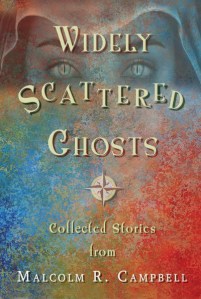
My granddaughters are 11 and 6 years old, so I thought it would be cool to dedicate my new collection of stories (Widely Scattered Ghosts) to them so that when they are in their 50s they can take a copy to Antiques Road Show and learn that the book–at auction–is then worth $1000000000000.

This haunted Florida bridge is the setting for one of the stories.

They live in Maryland, so I’m going to mail the book. But I can’t address it to them because they love getting things in the mail, especially packages. But they’re way too young to read any of the stories. Even though none of the stories are the Stephen King variety, Freya and Beatrice will need to wait until they’re teenagers (I guess) before they get to see the book.

So, the mail is going to my daughter with instructions to hide the book and to remember where she hid it. My father was an author. I always thought it was neat to have copies of some of his books autographed for me. Maybe the girls will feel the same way even though I’m no James Patterson or John Grisham.

Four of the stories are about an inquisitive and highly intelligent teenager named Emily who talks to ghosts. She reminds me of my daughter (except for the talks-to-ghosts part). As a grandfather, I get to brag and say that I think my granddaughters will grow up to be smarter than Stephen Hawking.

That makes me wonder if they’ll correctly guess the endings to each of the stories before they get there.

Malcolm


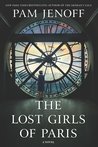
Review: ‘ The Lost Girls of Paris’ by Pam Jenoff

The Lost Girls of ParisThe Lost Girls of Paris by Pam Jenoff
My rating: 4 of 5 stars

Jenoff has written a compelling novel about female British agents serving in occupied France during World War II. In many ways, it’s a heartbreaking novel since we learn early on that the odds are against many of the agents lasting long in the field before they’re captured and executed.

The novel is easy to follow since it focuses three characters, albeit with a good supporting cast: Eleanor, who works for the British SOE (Special Operations Executive) and champions and then trains and manages female agents in the field; Marie, whom Eleanor recruits due her flawless French; and Grace, who finds an abandoned suitcase in a New York train station after the war and becomes interested in a packet of the agents’ pictures.

The novel moves well, giving readers a sense of what it might have been like for these women to suddenly leave the country without telling anyone where they were going and, after arduous training, finding themselves in harm’s way. Fans of black ops novels might wish that more of the novel concentrated on the field work itself rather than the worries and intrigues at SOE headquarters. However, the girls’ work in the field is well researched and authentic.

The problematic character in the novel is Grace. After stumbling upon the pictures, she feels compelled to learn more about the SOE, Eleanor, and the girls in the packet of photographs. While Grace is a realistic character, inserting her life and her problems into this story takes away from the primary focus of the novel. She is more or less a device the author has used to help convey the story to the readers. While Grace “works” as a character, the novel might well have been stronger if she hadn’t been included.

Taking the story as it is with Grace in the mix, the material is well presented and interesting. Goodness knows the story in “real life” could have happened this way with an unconnected person stumbling upon it and trying to learn more. That said, the novel is well worth the reader’s time.

View all my reviews

Short Story Collection Released Today (careful, it’s about ghosts)

Publisher’s Description

A readers’ advisory for this collection of nine stories forecasts widely scattered ghosts with a chance of rain. Caution is urged at the following uncertain places: an abandoned mental hospital, the woods behind a pleasant subdivision, a small fishing village, a mountain lake, a long-closed theater undergoing restoration, a feared bridge over a swampy river, a historic district street at dusk, the bedroom of a girl who waited until the last minute to write her book report from an allegedly dead author, and the woods near a conjure woman’s house.

In effect from the words “light of the harvest moon was brilliant” until the last phrase “forever rest in peace,” this advisory includes—but may not be limited to—the Florida Panhandle, northwest Montana, central Illinois, and eastern Missouri.

Widely Scattered Ghosts is available in paperback and e-book at online booksellers and leading bookstores. (If your favorite store doesn’t have it, tell them they can order it from their Ingram catalogue.)

You can learn more about the stories’ location settings on the spotlight page of my website.

Before it was torn down some years ago, this old Florida building was a favorite of ghost hunters. I was in the building when it was a clean and functioning facility.

Buy the Book Here

Amazon

Barnes & Noble

Kobo

SCRIBD

Apple iTunes