I wish it were easy to add illustrations to my books

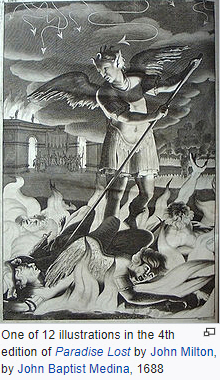
When I read old novels, I enjoy the engravers’ work. Sometimes the illustrations begin new chapters or appear in line with the text to add weight to a description. Whether or not one believes an illustration is worth a thousand words, the graphics, in my opinion, helped convey the novel’s places and characters and events to the readers.

I’m always happy when the publishers of modern-day novels take the trouble to add a reoccurring graphic at the book’s chapter beginnings, or better yet, graphics that fit the text here and there throughout the book.

Unless an author is an artist, the first roadblock today comes from having to hire an illustrator, and that might just be an expense that’s higher than what the book is projected to earn. Yes, there are stock agencies where one can find illustrations, but their use is typically limited to cover artwork.

The second issue is copyright. Sorting that out might be a nightmare to just determine who owns it; and then, if anyone does own it, getting permission and paying a fee to use it (sometimes waved for educational books).
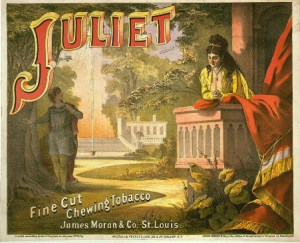
In my case, I mention real products in my novels, partly to set the scene, partly to give the reader a sense of the times, and partly just to show what I’m talking about. For example, if I were writing a novel set in Montana in the 1800s, I would probably mention (or have the characters attend) one of the presentations of the traveling Shakespeare companies. Showing a handbill would be wonderful. Or, I would have one of my characters who likes chewing tobacco get swept up in the craze of related products. I love the artwork from the Juliet tobacco pouch.

If I could draw (ha ha), I might create a black-and-white illustration of the downtown of one of my made-up towns, showing what such a place might have looked like during the time when the novel is set. No, I don’t want a graphic novel. Just a few drawings to convey the ambiance of the stories.

Malcolm

My contemporary fantasy novel “The Sun Singer” is currently free on Kindle.

This and that on a rainy afternoon

  • The picture of our weather RADAR shows why–once again–we had to postpone mowing our yard. Supposedly, Fescue grows .5 inch per month. Ours seems to be growing faster. At our previous house, we had Centipede grass. It’s growing season starts later and it grows slower. I wish we had that here.
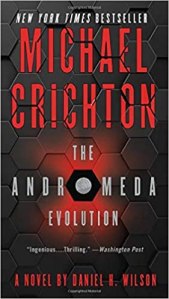
  • I just finished reading the sequel to Michael Crichton’s 1969 novel The Andromeda Strain which I read when it first came out. Written by Daniel H. Wilson, The Andromeda Evolution, fits nicely into the style and plot of the original, though potentially with a more unlikely ending. Still, I had fun reading it. If you haven’t read the original, you may be a little lost.
  • Earlier this year, I held a sale for my Vietnam War novel At Sea. Somebody left a comment, saying they would be happy to write a review. I was looking at my Amazon author’s page yesterday and noticed the review was there. What a great review. The reviewer’s name was listed as Robin. If you’re the person who left the comment here several months ago, I wanted you to know that I appreciate the review.
  • For those of you keeping score <g>, I did finish reading Madame Bovary.
    Currently available Steegmuller translation published in 2013.

    The book was well written, though I have to say, it was strange reading a novel that was hit with obscenity charges when it came out that didn’t have an overt sex scene in it. For today’s readers, other than those who enjoy experiencing the classics, the book will read very slowly.

  • Yes, I know, I’m supposed to be cleaning out the garage today–that is, editing my novel in progress. Some gurus say a novel should sit for a bit before an author starts editing. Since I didn’t really feel like editing today anyhow, I’ve decided to follow that advice. I wonder how long I can use that excuse.
  • During our quarantine days, my wife has been making cherry pies and blackberry pies. Unfortunately, the standard Oregon Brand of pie cherries/berries has disappeared from the stores around here in favor of some goofy brand of pie filling. However, we just went online last year and started ordering our Oregon favorites in bulk.

Besh wishes for the month of July which we all hope goes more smoothly than the previous months of the year.

Malcolm

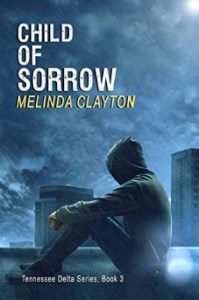
New title: ‘Child of Sorrow’ by Melinda Clayton

Thomas-Jacob Publishing has released the third title in Melinda Clayton’s “Tennessee Delta Series,” Child of Sorrow. Currently available as an e-book, the novel will appear in additional formats as soon as printer supply chains return to normal.

Prior books in the series are: Blessed are the Wholly Broken (2013) and A Woman Misunderstood (2016).

From the Publisher

When fourteen-year-old foster child Johnathan Thomas Woods is suspected of murder, an old letter and a tacky billboard advertisement lead him to the office of attorney Brian Stone. Recognizing the sense of hopelessness lurking under John’s angry façade, Stone is soon convinced of his innocence. When John offers up his lawn-mowing money as payment, Stone realizes this is a case he can’t refuse.

In the face of overwhelming evidence assembled by the prosecution, Stone and his team find themselves in a race against time to save an angry boy who’s experienced more than his fair share of betrayal, a boy who more often than not doesn’t seem interested in saving himself.

I was a beta reader for this novel and enjoyed the experience and the story.

–Malcolm

Hardcover edition woes

The pandemic has screwed a lot of supply chains as various manufacturing and retail operations shut down.

The shutdown problem is impacting my hardcover books, all of which are listed on Amazon (and possibly elsewhere) as out of stock. These come from a different printer than the paperback editions which are still available. The Kindle editions are also available.

I apologize for the inconvenience to those of you who have been perplexed about the missing hardcover editions of Conjure Woman’s Cat, Eulalie and Washerwoman, Lena, Sarabande, and Special Investigative Reporter. Let’s hope they return soon.

Malcolm

Okay, I guess I’ll read ‘Madame Bovary’

I bought a copy of Madame Bovary in 1991 just before my wife and I became involved as nearly full-time volunteers at a museum near Atlanta. All of my reading time switched over to museum-related research. So the novel sat–even after we left the museum and moved all my books from one house to another twice.

I am near the beginning of the novel now, a few pages past the time when Dr. Charles Bovary marries Emma Rouault, the daughter of one of his patients, so none of Emma’s indiscretions that led to Flaubert’s obscenity trial in 1856 have happened yet.
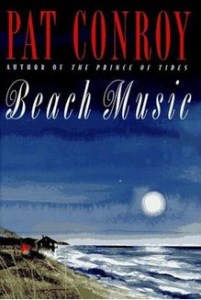
Flaubert was acquitted and, as usually happens after such trials, the book became a bestseller, and subsequently considered a masterpiece. Most Flaubert commentators mention that he was a perfectionist, agonizing (apparently for hours) over every word.

I can see this clearly even through the 1957 translation by Francis Steegmuller. The description of the farm where Emma lives reminds me of the exuberant care of Hillary Mantel’s Wolf Hall.  The scenes are so perfectly set in both novels, that it’s easy to feel like a time traveler back to 1827-1846 (Madame Bovary) and  1500-1535 (Wolf Hall).

Currently available Steegmuller translation published in 2013.

Steegmuller (1906-1994) translated quite a few of Flaubert’s works, so he was familiar with the author and his style. The novel has been translated into English at least 19 times, the first one coming from Karl Marx’ daughter Eleanor in 1886.

The critics argue about which translation is best, some chiding translations for using the current American slang of the day in their work. Steegmuller’s is among the better known, but–having been around for a while–his version gets sniped at by subsequent translators such as Lydia Davis’ 2010 comment in New York Magazine: “You’d think, working from one text, that the translations have got to be fairly similar. But it’s amazing how different they all are. Some are fairly close, but then they’ll add a metaphor that Flaubert doesn’t have. And some are outrageously far away. Two of the most popular, Steegmuller and Hopkins—they’re not bad books. They’re well written in their own way. But they’re not close to what Flaubert did.”

As some commentators have said, those of us who aren’t French, or aren’t fluent in French, will never know exactly what Flaubert did. As we say, “The map is not the territory,” we might also say “The translation is not the novel.” As for me, I’ll keep the translation I have–with no intention whatsoever of comparing it with the others.

Now, I’m waiting to see whether or not I’ll be shocked and scandalized!

–Malcolm

Looking back at Pat Conroy’s ‘Beach Music’

Beach Music (1995), Conroy’s sixth book, is the story of Jack McCall, an American who moves to Rome to escape the trauma and painful memory of his young wife’s suicidal leap off a bridge in South Carolina. The novel is wide-ranging in its historical and geographical scope, and in its treatment of the Holocaust, Russian pogroms, and southern poverty, among other themes; it is generally recognized as Conroy’s ambitious—and perhaps darkest—work.Pat Conroy Web Site

Beach Music began as a 2,100-page manuscript which his publisher’s staff trimmed down. My mass market paperback is 800 pages. By today’s “standards” of shorter and shorter novels, this book is huge.

Like Conroy’s other novels, Beach Music focuses on a broken southern white male who’s the product of a dysfunctional family that grows up in the beautiful–and lyrically presented–South Carolina Lowcountry.

Excerpt: “It enclosed us in its laceries as we watched the moon spill across the Atlantic like wine from an overturned glass. With the light all around us, we felt secret in that moon-infused water like pearls forming in the soft tissues of oysters.”

The novel’s length comes, in part, from the backstories of many of the other characters as well as childhood reminiscences between protagonist Jack McCall and his brothers.

If we were to extract a basic plotline, it would be this. McCall leaves the Lowcountry with his two-year-old daughter Leah and moves to Rome after his wife Shyla commits suicide by jumping off a bridge. McCall is, of course, blamed for this; his wife’s parents claim McCall is unfit to raise Leah, but fail to prove their case in court. He severs his relationships with his family to the point of keeping his address and phone number secret. Slowly, family members work their way back into his life and communications begin to open up.

Part of his understanding of his extended family comes from considering their dark backgrounds, including the Holocaust. His mother’s background is especially bleak and is almost too horrible to comprehend. My belief is that these divergences, while well written and very dark, are too long.

The darkness is balanced out somewhat by the fact that McCall and his brothers take a devil-may-care approach to life. They’re likely to say or do almost anything, proper or not. On McCall’s first trip back to the states, somebody asks him who’s watching his daughter in Rome while he’s gone. His response is that Charles Manson got paroled and needed the work.

While sitting with his brothers in the hospital room where their mother is in a coma, somebody mentions that they should be careful what they say because people in comas can hear what’s being said at one level of the mind or another. Jack responds by saying something like, Mama, this is Jack. I’m the one who loves you. My brothers think you’re trash and don’t care about you at all. When it comes to your children’s love, it’s always Jack.

My favorite Conroy novel remains Prince of Tides, also filled with Lowcountry beauty and a family’s dysfunctions. I’ve read Prince of Tides multiple times. This past week was the first time I re-read Beach Music since it came out. It remains in my view, a stunning book in part because of its flaws.

Malcolm


A bunch of stuff for Sunday

  • We’re all looking for ways to cope with pandemic anxiety. You may find this free workbook from the Jung Center to be of help.
  • Several things have helped me cope. First, I don’t have to leave the house often. Also, I have chores (like mowing the yard) and enjoyable work (a new novel in progress). As you get older, you’ll discover that even with a riding mower, cutting the grass is a multi-day project. One day to cut it and several days to recover from all the aches and pains that arise from riding over a fairly rough yard that was part of a farm several years ago.
  • I’m re-reading Jeff Shaara’s historical novel A Chain of Thunder about Grant and Sherman’s siege of Vicksburg. Vicksburg is often overlooked by those who study the Civil War because the battle ended one day (July 4, 1863) after the Battle of Gettysburg (July 3, 1863). Both were important Union victories, but Vicksburg was far away in what was in those days called “The West” and Gettysburg was close at hand.
  • I know all of you have been waiting with bated breath for news about the pot roast I mentioned recently in my slow cooker post. It came out great. We’ll finish it at supper tonight: that means I’m not spending the afternoon in a hot kitchen. My wife grilled some asparagus for a tasty side dish.
  • With most of our regular TV shows done for the season, we have been turning once again to old movies. In addition to Netflix, we find many of them on Turner Classic Movies which is part of our basic package on DISH. The Noir Alley films air at midnight on Saturday. (We archive them to view later.) Many of TCM’s movies are introduced by hosts who provide a little background. I especially like Noir Alley’s Eddie Muller because he provides interesting facts about the movies, directors, stars, and trends before and after the films.
  • A favorite author of mine said she has a new book coming out soon. I can’t tell you who she is or the name of the book because it’s not yet in release and if I mention it here before the publisher announces it, there will be hell to pay. Fresh hell, probably.

–Malcolm

My novel Mountain Song is free on Kindle through the end of the day today.

Cormac McCarthy: Maybe not the best author to read during a pandemic

When I run out of factory fresh books, I turn to my bookshelves and re-read older books. I stumbled into the Cormac Mcarthy section recently (I have most of his books) and read Cities of the Plain. Most things go wrong in this book, but I read it all the way through because l like McCarthy’s dialogue, descriptions, and the tone of his books. I think he writes with grit and stars rather than ink. This book has a few good people in it.

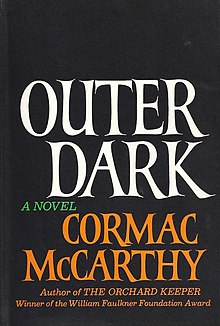
I thought, what the hell, I’ll read another. I chose Outer Dark. This novel has a lot more grit in it and even the stars aren’t clean. It doesn’t have any good people in it, though some try hard to be good in narrow ways.

Guy Davenport, in The New York Times, said, “Nor does Mr,. McCarthy waste a single word on his character’s thoughts. With total objectivity, he describes what they do and records their speech. Such discipline comes not only from mastery over words but from an understanding wise enough and compassionate enough to dare to tell o abysmally dark a story.”

The fact that it’s so well written commits one to keep reading even though reading McCarthy is often like drinking poison for recreation. If it were badly written, it wouldn’t bother readers so much, especially when the world around us during this pandemic seems to have come out of something McCarthy might have orchestrated for his next novel or screenplay.

Time to move on to another section of my bookshelf.

Malcolm

Malcolm R. Campbell’s Mountain Song is free on Kindle.


‘Tom Clancy Enemy Contact’ by Mike Maden

I read the Tom Clancy franchise books to escape whatever I need to escape. Now it’s probably the pandemic and everything related to it.

Enemy Contact is another instalment in the series featuring Jack Ryan, Jr. and the “Campus” organization. The Campus handles black ops interventions that the government can’t or won’t handle. The stories are action-oriented and involve a cast of operatives that has evolved throughout the series.

This book is missing about everything that has made the series worth reading, though the stories have become less interesting after Mark Greaney’s True Faith and Allegiance came out in 2016.

What is this book is missing:

  • Most of the primary Campus characters from the best of the previous books.

  • The black-ops action which has been the series’ true focus. Jack Ryan, Jr.’s cover story with the organization is that he’s a financial analyst, though those duties don’t usually play heavily into the plots. In this story, he spends most of the novel traveling in Poland looking for potential financial irregularities and/or treasonous associations in the investments of a U.S. Senator who ticked on the President of the U.S. President (Ryan’s dad).
  • Ryan travels from one contact/company to another with Lilianna, a Polish agent who serves as a chauffeur/driver. He’s attracted to her but keeps the relationship professional. Since he’s working/posing only as a financial analyst, she has no idea he has black-ops skills. The meetings are rather routine, so the agent’s police skills are wasted, and we end up with more pages of Polish history and food information than anything else. Meanwhile, a more pressing IT security mess is developing that could impact U. S. security agencies, but we only hear snippets about it–and Ryan isn’t focused on that.
  • With about ten percent of the book left, we finally get some black-ops action. Ryan is blind sided by it probably because he has been rather cavalier about the potential dangers of going around asking questions of bad people. He escapes one another group of bad guys only to get pulled into another group of bad guys while he’s off work. The action here is handled well.
  • Then, suddenly all the other minor plot lines get resolved, most in a long epilogue, and the book ends. Formally, there is closure (though minimal) for the national security issues, but none for Ryan’s personal losses.

What a mess.

–Malcolm

Malcolm R. Campbell’s short story collection Widely Scattered Ghosts is currently free on Smashwords. (epub or mobi format).

The 10 most inspiring, enjoyable books about how to write 

Most people know what a story is until they sit down to write one,” the great short story writer Flannery O’Connor once wrote. When it comes to good writing, we can tend towards a romantic vision of it being an unexplainable, inimitable act of divine intervention. It can be inspiring – and often unpalatable – to be reminded that the best writing is more often the result of hard and constant work.

Even if the last thing you are planning on doing in lockdown is writing a novel, here are some of the best guides on writing: how to do it, how it works and how to be inspired to start.

Source: From Stephen King to Anne Lamott: the 10 most inspiring, enjoyable books about how to write | Books | The Guardian

At my age, I seldom read how-to-write books any more because I tend to improve my output by just doing it.

Those who are younger than me–and that’s mostly everyone–might find both practical help and inspiration from the books on this list. Consider starting your quest with On Writing by Stephen King. It has a lot of fans–and for good reason.

One book I’d add to this list is Writing the Breakout Novel by Donald Maass. As an agent, Maass knows what sells as well as what writers are doing to submit manuscripts he and other agents will spend time reading.

Enjoy the books.

–Malcolm