Knowing the history of your favorite states makes your stories better

I have been a member of the Montana Historical Society for at least 25 years even though I live in Georgia. Why? I fell in love with the state after working two summers in Glacier National Park. Since the state’s history and environment fascinate me, I look forward to each new issue of the Society’s award winning Montana The Magazine of Western History.

The places where my novels are set always figure strongly into their plots and themes. Much has been written about the Rocky Mountains and Glacier National Park. I try to keep up so I can make my descriptions as accurate as possible and to ensure that my plots are viable within those settings. Even though I don’t write historical novels, I also feel that knowing the history of an area adds to my understanding of a state or region and enriches my storytelling.

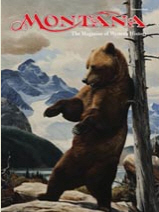
Unlike many of our high school and college history classes that focused a great deal on remembering dates, reading the articles and reviews in a historical magazine is a joyful experience. There’s no pressure to take notes and/or to guess which five facts will be on a pop quiz or the final exam. In the  Summer 2012 issue of Montana The Magazine of Western History, the lead article “The End of Freedom: The Military Removal of the Blackfeet and Reservation Confinement, 1880” by William E. Farr features the Indian reservation on the east side of Glacier National Park.

One can hardly visit Glacier without learning about the tribe’s association with the park. If you reach the park by car or train from the east, you’ll pass through the Blackfeet reservation. This well-written article definitely increases my sense of place and the people who are important there.

As a writer, I want to know what I’m writing about—in depth. Obscure facts come to mind long after I read an article and influence plot development in ways I can never predict when each issue of the magazine arrives. My membership in the Montana Historical Society has, I think, been an important component in shaping my three novels set partly within the state: The Sun Singer, Garden of Heaven: an Odyssey, and my recent contemporary fantasy, Sarabande. I always hope that readers, especially those who live in the places I write about, will think that I live there, once lived there, or have spent a great deal of time seeing the sights on multiple vacation trips.

Most states have state, county and local historical societies, tourism departments, and preservation groups that are worth their weight in gold for writers who see place almost like another character in each story.

Table of Contents – Current Issue

  • The End of Freedom: THE MILITARY REMOVAL OF THE BLACKFEET AND RESERVATION CONFINEMENT, 1880, by William E. Farr
  • Protest, Power, and the Pit: FIGHTING OPEN-PIT MINING IN BUTTE, MONTANA, by Brian Leech
  • Breaking Racial Barriers: ‘EVERYONE’S WELCOME’ AT THE OZARK CLUB, GREAT FALLS, MONTANA’S AFRICAN AMERICAN NIGHTCLUB, by Ken Robison
  • Building Permanent and Substantial Roads: PRISON LABOR ON MONTANA’S HIGHWAYS, 1910–1925, Jon Axline
  • Signs of the Times: THE MONTANA HISTORICAL SOCIETY’S NATIONAL REGISTER SIGN PROGRAM, by Ellen Baumler
  • REVIEWS:  Jiusto and Brown, Hand Raised, reviewed by Jon T. Kilpinen / Hedren, After Custer, reviewed by James N. Leiker / Courtwright, Prairie Fire, reviewed by Sarah Keyes / Schackel, Working the Land, reviewed by Susanne George Bloomfield / Wood, Hunt Jr., and Williams, Fort Clark and Its Indian Neighbors, reviewed by Steven Reidburn / Pasco, Helen Ring Robinson, reviewed by Alexandra M. Nickliss / Flint and Flint, eds., The Latest Word from 1540, reviewed by Thomas Merlan / Harvey, Rainbow Bridge to Monument Valley, reviewed by Lawrence Culver

For me, such articles grab my attention like a page-turner novel. Since the reading is fun, I tend to remember it later on when I’m telling another story about the state.

Malcolm

A contemporary fantasy set in Montana, and available on Smashwords in multiple e-book formats.

Author Melinda Clayton returns to Appalachia for her new novel

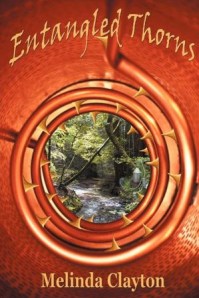
I’m pleased to welcome author Melinda Clayton (Appalachian Justice and Return to Crutcher Mountain) to the Round Table today to talk about her new novel Entangled Thorns. Once again, Clayton heads back to Appalachia for a compelling story about hard times and hard memories. Entangled Thorns, which tells the story of Beth Sloan and the “infamous Pritchett family of Cedar Hollow, West Virginia,” was released by Vanilla Heart Publishing June 27, 2012.

Malcolm: Like Appalachian Justice and Return to Crutcher Mountain, your new novel Entangled Thorns has an Appalachian setting. What draws a Florida author away from the orange groves and sunny beaches into the hills of West Virginia for her storytelling?

Melinda:  My mother’s family is from West Virginia, around the Charleston area.  My grandfather was retired from the mines.  Both of my maternal grandparents passed away when I was a teen, but up until that time we visited every summer.  I loved everything about it:  the people, the mountains, the wildlife.  My mother was born in a tiny place called Big Ugly Holler, which served as the inspiration for Cedar Hollow.  It doesn’t exist now, but we once hiked into the mountains to see what was left of it.  There was no road; by that time, there wasn’t even a trail.  When we finally reached our destination all that remained of Big Ugly Holler were a few foundations and chimneys covered in vines.

Malcolm: In Entangled Thorns, your protagonist Beth Sloan has been running from and/or repressing her troubled childhood until circumstances force her to confront it. Your protagonists in Appalachian Justice and Return to Crutcher Mountain were also wounded as children. Does this overarching theme of your work come out of your experience as a psychotherapist or the kinds of stories you’re drawn to on the nightly news?

Melinda:  I love this question, and the answer is, “both.”  I read a book when I was very young – I’d give anything to remember the title of it – but it was about a social worker who worked with troubled kids.  Ever since then I knew I wanted to work with troubled children and families in some capacity.  I’ve also always been drawn to true crime stories, as morbid as that might seem.  There is something about the workings of the human mind that absolutely fascinates me, particularly when it goes off-kilter in some way.

Malcolm: You recently completed a Ed.D. in Special Education Administration program which required a dissertation. How did you manage to jump back and forth between academic writing with its reliance on sources and a formal style to fiction with its emphasis on people, adventure and an accessible style?

Melinda:  That was a little challenging at times.  The act of writing fiction was a great stress reliever, but I had to work to keep the informal language (contractions, slang, etc.) from entering my academic writing.  It was tempting at times to put in something like, “This research will show that there ain’t no correlation…” for the pure fun of seeing my committees’ reaction.

Malcolm: How does the doctoral work fit into your professional goals?

Melinda:  My ultimate goal is to teach at a college level.  My doctorate sort of combined two fields of study, since my M.S. is in Community Agency Counseling, and my doctorate is in Special Education Administration.  I’d love to contribute to the field by demonstrating how the two fields often go hand-in-hand and should support each other and work together, instead of arguing over funding streams and services as so often happens.

Malcolm: For the general public, Appalachia conjures up such themes as isolated, subsistence living, hard-working and persevering people, coal mining and other environmental excesses, and pure, raw music unlike that from any other part of the country. How do your characters and plots mesh with or run counterpoint to these stereotypes? Does the lure of Appalachia for your storytelling ever translate into other areas, say, in tempting you to move there as a teacher or psychotherapist?

Melinda:  It’s a delicate line to walk.  I know from my own family that the manner in which Appalachia is often portrayed can be a sore point.  At the same time, I want the story to reflect what is, in some areas, true to life.  I relied heavily on not only my research, but also my own memories as well as my mother’s experiences.

I also know from my experiences that the poverty associated with Appalachia exists elsewhere.  There’s no need to travel to Appalachia to encounter it.  In the late 1980s, when I was fresh out of college with a B.A. in social work, my first job was as the coordinator of case management services for a rural mental health center in Tennessee.  My case workers and I were responsible for a three county area, working with the most impoverished of families. Many of our clients were without electricity or running water.  Many also lived in the most basic of housing structures, without floors or internal walls.  I think it’s difficult to believe there are still families living in such poverty in the U.S., but there are.

Malcolm: Thomas Wolfe brought the phrase “You Can’t Go Home Again” into general use. “Going home” can be awkward, embarrassing or frightening on so many levels even for those of us who had relatively normal childhoods. But your characters had strong reasons for avoiding home, yet all of them find that they must go home again. Does this theme grow out of the psychologist’s seemingly favorite “well me about your childhood” question or is it more that home is the only place where the issues of home can be fixed?

Melinda:  Again I have to smile, because it’s both.  My writing of home is a very transparent attempt to create the home I miss.  Until I was about twelve, we lived in my father’s hometown in TN surrounded by aunts, uncles, cousins, and grandparents.  We had fried chicken at Mawmaw’s house every Sunday after church, then spread blankets on the lawn under the pecan tree and visited well into the evening.  A rough couple of years ended all that.  One aunt died tragically in a car accident, another divorced, my grandparents lost their home to a fire, and my family moved away.  I’m sure it wasn’t as idyllic as I remember, but it’s pulled at me ever since.

But I also think it’s necessary to revisit the places that have scarred us, either symbolically (often for safety’s sake only symbolically) or physically.  We have to face our issues before we can resolve them.  Burying them doesn’t work; we have to excise them, examine them, and then choose to heal and move on.

Malcolm: Thank you, Melinda.

Where to Find Melinda on the Internet

Blogs on Xanga and WordPress

Facebook

Twitter

Amazon Author’s Page

Smoky Zeidel and ‘The Storyteller’s Bracelet’

Smoky and Tufa

Today I’m happy to welcome back author Smoky Trudeau Zeidel (On the Choptank Shores, The Cabin). Her new novel, The Storyteller’s Bracelet (out this month from Vanilla Heart Publishing) is a historical romance set in the late 1800s during the period when the U. S. Government forced Indian youths into boarding schools where they would learn the “American way of life.” (See my preview of the book here.)

Malcolm: What is a storyteller’s bracelet, and what gave you the idea of using one as the centerpiece in your story about two young Indians from the southwest?

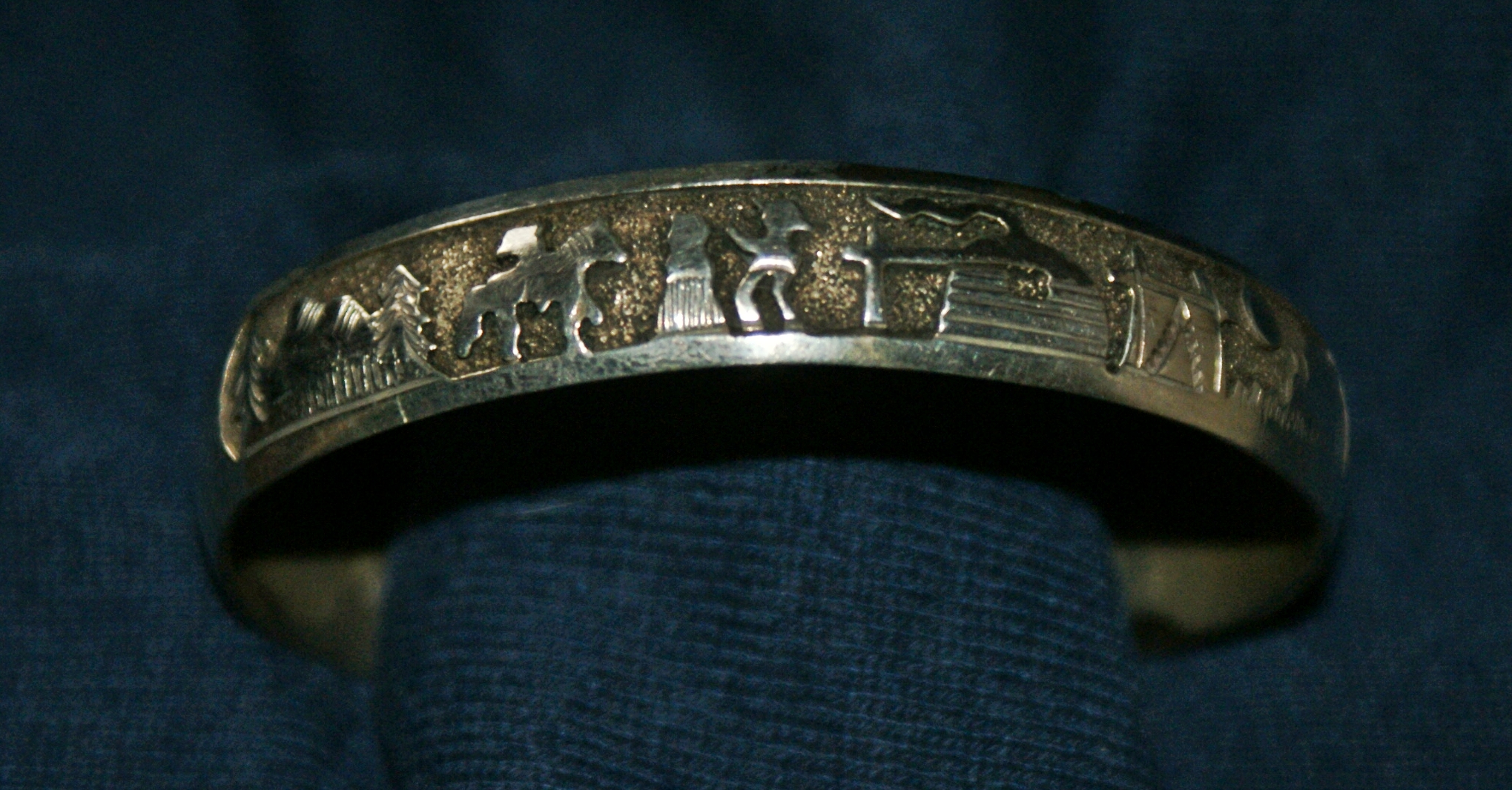
Smoky: A storyteller’s bracelet is a silver bracelet engraved with pictographs that tell some sort of story. My sister Bonnie gave me one as a gift about five years ago. I knew immediately I wanted to create a story about such a bracelet.

Malcolm: While the culture of Otter and Sun Song appears to influenced by the ways of the Tewa and Diné, your protagonists’ tribe isn’t identified in the novel. What led to your decision not to use a specific Indian nation for their background?

Smoky: You’re right about the Tewa and Diné/Navajo, but there also are Hopi influences in the story. I decided not to identify a specific tribe because I’m not Indian, and I didn’t want readers to presume that I am. I did not want to presume to know how a member of a specific tribe would act in any particular situation. Plus, I wanted to be able to pull aspects of different tribal lore into my story, especially when it came to telling the creation stories, because the different stories are beautiful. Also, by not identifying a particular tribe, I was able to bend the stories just a bit to fit the novel. I wouldn’t have felt right doing that if I had identified a particular tribe.

Malcolm: Like many young Indians, Otter and Sun Song were sent away to a white-run Indian school where the intent was to remove the students’ Indian language, beliefs, and culture and replace English, Christianity, and white clothing styles and laborer skills. Most of us didn’t hear about this in our high school history classes. It must have been difficult to place your characters into such an environment. How did you cope with this during the writing process?

Smoky’s Bracelet

Smoky: No, we didn’t hear about the Indian Schools in our history classes, just as we didn’t hear about the Japanese Interment camps. History often has overlooked the ugly things our culture has done, and these are just two examples of that. It was hard to place Sun Song and Otter in the school, but it was crucial to the plot. I also wanted to bring some awareness of what our government did to all the Indian Nations by ripping children and young people away from their tribes, their families, their culture. It was a shameful thing to do. Most of the time, when I was writing particularly tense scenes at the school, I raged at my computer. I felt really angry, even ashamed to have white skin. I guess, in a way, The Storyteller’s Bracelet is an apology to indigenous people everywhere for the way my birth tribe–white people of European descent–treated them.

Malcolm: The Storyteller’s Bracelet has a touch of magical realism in it, as does your earlier novel The Cabin. In both novels, the magic is a natural outgrowth of the places and the characters’ beliefs. Do you often wonder if such magic exists in “real life,” or do you approach it more as a viable storytelling technique?

Smoky: It is, of course, a viable storytelling technique, and is an integral part of the plot of The Storyteller’s Bracelet, as it was in my earlier novel, The Cabin. But yes, I do believe such magic exists in real life, at least for those of us who know how to tap into it. I’ve experienced it firsthand on several occasions. Does my body physically move from one plane to another in a different place and time, like in my books? No–at least, I don’t think so. But I have traveled to a cave in a faraway mountain range to converse with a Spirit Bear, and I have found myself transported to an island on a raft that is pushed by a great gray whale, with whom I also converse. Is it magic? Or is it imagination? I’m not sure there’s a difference.

Malcolm: Otter and Sun Song are in touch with their environment and treat wild creatures and special places there with respect.  This reminded me of your own approach to nature as you wrote about it in Observations of an Earth Mage. Did your own view of the natural world help you tell Otter’s and Sun Song’s story or did you have to “step away” from your own views to allow your characters’ views to be truly their own?

Smoky: No, I didn’t have to step away. Sun Song and Otter are like my own children–I created them, gave birth to them. It was critical to me that they shared my belief that we are all one with nature, neither above nor below every living creature, whether it be the smallest of insects or the powerful mountain lion or brown bear. We are nature. All of us. Intentionally harming any living thing is like harming a family member, for we are all the same, we are all one, to Mother Nature.

Malcolm: As a historical romance, The Storyteller’s Bracelet focuses on the feelings between Otter and Sun Song as well as the forbidden and dangerous feelings between Otter and the white girl Wendy whom he meets in the town where the Indian school is located. However, since these relationships unfold on a much broader canvas than the classic love triangle, were the two women a planned part of the plot from the outset or were you simply “following your characters” as you wrote when Wendy appeared on the scene?

Smoky: The two women were always in the planned plot, but they ended up being much feistier that I ever imagined. Sun Song, for example, in my initial story idea had a much smaller role than she ended up with. I ended up following her, because she made it clear this was to be her story as much as Otter’s. My planned original ending is nothing like how the actual novel turned out. Following Sun Song’s lead, I was able to work my way to these characters’ true story. And both I and the publisher, Kimberlee Williams of Vanilla Heart Publishing, think this story is much, much better than the one I originally planned.

Malcolm: Thank you, Smoky.

Where to find Smoky on the Internet

Website and Blogs

Author fan page on Facebook

Twitter

Amazon book listing

Briefly Noted: “The Storyteller’s Bracelet’ by Smoky Trudeau Zeidel

Available for pre-order on Amazon, “The Storyteller’s Bracelet” is a new historical romance from Smoky Trudeau Zeidel (“On the Choptank Shores,” “The Cabin”) with a June 22, 2012 release date from Vanilla Heart Publishing. Smoky will stop by Malcolm’s Round Table to discuss her book later this month. Meanwhile, you can learn more about Smoky in her interview with Shelly Bryant here.

Publisher’s Description: It is the late 1800s, and the U.S. Government has mandated native tribes send their youth to Indian schools where they are stripped of their native heritage by the people they think of as The Others. Otter and Sun Song are deeply in love, but when they are sent East to school, Otter, renamed Gideon, tries to adapt, where Sun Song does not, enduring brutal attacks from the school headmaster because of her refusal to so much as speak. Gideon, thinking Sun Song has spurned him, turns for comfort to Wendy Thatcher, the daughter of a wealthy school patron, beginning a forbidden affair of the heart.

But the Spirits have different plans for Gideon and Sun Song. They speak to Gideon through his magical storyteller’s bracelet, showing him both his past and his future. You are both child and mother of The Original People, Sun Song is told. When it is right, you will be safe once more. Will Gideon become Otter once again and return to Sun Song and his tribal roots, or attempt to remain with Wendy, with whom he can have no future?

Comment: Smoky and I share the same publisher, so in my view, it would be improper for me to review The Storyteller’s Bracelet. Yet, as I read an advance copy to prepare for our upcoming discussion, I couldn’t help but notice the great care Smoky has taken with her approach to the culture, beliefs and thoughts of her dual protagonists Otter and Sun Song. Since the title character in my novel Sarabande has an Indian heritage, I wrestled with the problem of accurately telling a story from an Indian’s point of view.  Smoky’s words ring true. What an absolutely wonderful book. This should be grabbed up as a classic.

Malcolm

contemporary fantasy for your Kindle

E. B. White and a swan named Louis

“Even today, White’s book continues to foster the conservation efforts he deeply believed in. Each year, the Red Rock Lakes National Wildlife Refuge receives numerous letters from young readers who inquire about Louis and seek information about the refuge and the trumpeter swans.” – Marcia Melton, in “E. B. White’s Montana and ‘The Trumpet of the Swan,'” Montana – The Magazine of Western History, Spring 2012

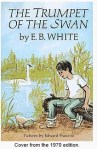
Most of us remember E. B. White (1899 – 1985) primarily for his children’s books Stuart Little (1945), Charlotte’s Web (1952) and as co-author (with William Strunk, Jr.) of The Elements of Style (1959). But a book that grew out of his 1922 trip to Montana in a Model T Ford when he was 22 is not only equally notable but demonstrates how well-told stories about the natural world can influence young readers to help protect the treasures they first discover in fiction.

“Montana made a lasting impression on White,” writes Marcia Melton in her feature article in the current issue of Montana – The Magazine of Western History. Fifty years later, that impression was still strong enough to lead to The Trumpet of the Swan about a young cygnet who had no voice. Even though White worked for a while on a Montana ranch and saw a lot of scenery, he never saw a swan and never visited the Red Rock Lakes National Wildlife Refuge where his story is set. (He knew how to do research.)

Red Rock Lakes NWR photo

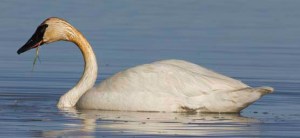
Founded in 1935, the refuge is in the greater Yellowstone area near the Centennial Mountains and the headwaters of the Missouri River. According to the refuge’s website, “A very shy bird by nature, the trumpeter swan is the subject of intense study in an attempt to learn how to ensure their survival. Rescued from near extinction, trumpeters breeding in the Greater Yellowstone Ecosystem, including Red Rock Lakes, have grown in number from a low of only 200 birds in 1932, to a success of more than 500 in recent years.”

As Melton notes, the swans were heavily hunted in the 19th century and early 20th century for meat, quills, down, and feathers. Fortunately,  by the time White’s book was published inn 1970, the insanity of hunting wild creatures into extinction kept us from losing the swan. However, the bird still faces threats, as The Trumpeter Swan Society informs us, from illegal shooting, power lines, lead poisoning, and habitat loss. The Society, with the help of numerous volunteers, is one of the trumpeter’s strongest allies.

When White accepted the National Medal for Literature for The Trumpet and the Swan in 1971, he said “Only hope can carry us aloft, can keep us afloat. Only hope, and a certain faith that the incredible structure that has been fashioned for this most strange and ingenious of mamals cannot end in ruin and disaster.”

Reading Melton’s article about the man who wrote a story about a young swan named after Louis Armstrong who finds his voice in the form of a trumpet at a store in Billings, Montana, reminds me of the strength of a writer’s “act of faith,” as White calls it, and how that faith can be carried far and wide on the winds on white wings.

Malcolm

Contemporary fantasy set in Montana

If you ask me what I’m reading, you’re on your own recognizance

A writer friend of mine once told me she looks at my book reviews here as prospective To Be Read books for her Kindle. “You have never steered me wrong, Malcolm,” she said. Perhaps he fingers were crossed behind her back.

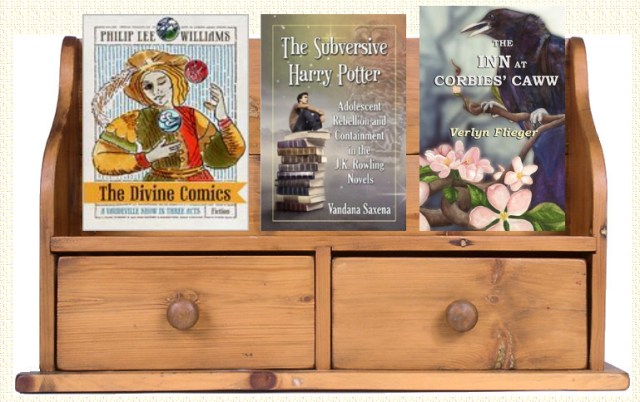
Take a look at my current reading shelf. It should be a warning. I say that because I am probably the only person in the known universe who has these three books on his shelf at one time. Or at any time. My reading tastes are both wide-ranging and eccentric. (Not always because, hey, I can enjoy a good Nora Roberts or John Grisham novel like anyone else.)

People sometimes note that most of my reviews on GoodReads and Amazon end up with four or five stars and suggest that I’m just trying to be nice. No, I’m doing that because I usually only review books I like a lot—well, unless I read something that really ticks me off.

However, five stars from me doesn’t mean the book will get give stars from you.This was proven conclusively several years ago when I gave  Dow Mossman’s novel The Stones of Summer a glowing review. People told me I was crazy. Possibly so even though I was one of 30 people who felt that way.

Consider the Source

So, when I tell you what I’m reading, you need to consider the source (me) and remember that even though I often read mainstream bestsellers, I probably read them for the wrong reasons. The other books on my shelf are going to have a very strong flavor of magical realism, speculative fiction, fantasy, folktales, literary fiction, and stuff that—for the want of a better words—is just plain weird.

Now, my writer friend hasn’t told me directly that I inadvertently steered her wrong on a book last year, that one being The Tiger’s Wife by Téa Obreht,  but I noticed she gave it three stars on GoodReads. Sigh. After The Night Circus, that was my favorite novel of the year. I think both of these novels are Pulitzer Prize level novels, though I doubt either one was nominated (or seriously considered) since the rules say the novels must be truly American stories and neither of these books were.

Your Own Recognizance

As it turns out, this post is a disclaimer, meaning that I am often drawn to stories that mesh one way or another into my sense of wonder and my world view of real life and fiction. Before spending your money on anything on my To Be Read shelf, you better get a second opinion.

What’s on your shelf these days?

Malcolm

Historic Newspapers on line help researchers and hobbyists

Nothing is more frustrating to an author, researcher or individual with a passion for a place or a historical period than to discover that the records they want to see are stored in a university or historical society library where they are classified in terms of linear feet. Internet searches that yield such hits are a real barrier to learning more, finding family histories, or finishing a book.

Fortunately, more and more organizations and units of government are funding the creation of searchable databases of digitized records. If you know anyone searching for their great great grandparents on Ancestry.com, then you’ve probably heard that new material is becoming available daily.

Now, Chronicling America is bringing old newspapers into the modern world by scanning them into a publicly accessible database with full-text search capabilities via names, topics, places and keywords. Called the National Digital Newspaper Program, the project represents a joint effort of the National Endowment for the Humanities (NEH) and the Library of Congress (LC).

The Montana Historical Society noted in the current edition of “Montana, the Magazine of Western History,” that issues of the Anaconda Standard, Butte New Age, The Colored Citizen, Daily Yellowstone Journal, Fergus County Argus, Helena Independent, Mineral Argus, Montana News and Montana Post in the late 1800s are now available. Many more papers and issues will come online between now and 2013.

As a fan of Glacier National Park, I found an immediate number of hits for materials I’d never had access to before unless I was willing to pay a researcher or staff member at a library several dollars per page to Xerox and snail mail me materials out of a collection—and then hope I guessed right about the dates and page numbers.

Your special places may be covered by newspapers that are already available. The searches are easy and free. Of, if you’re just browsing, the site’s homepage displays old newspapers from the current date.

–Malcolm

No Pulitzer for Fiction: Disappointing

Major book awards focus attention on what we hope are the best and the brightest of books. They also create controversy when the winner and/or the named finalists don’t meet the expectations of the public and/or the critics. This year, no novel received a Pulitzer Prize, and that has focused public attention on the process.

The process includes a three-person panel of book-savvy jurors who, for this year’s prizes, spent the second half of 2011 reading over 300 nominated books. In December, they presented the Pulitzer Prize board with the names of three books. The 18-person board’s job was to select, by vote, the winner and two named finalists.

The jurors’ recommendations were Train Dreams by Denis Johnson, Swamplandia! by Karen Russell and The Pale King by the late David Foster Wallace. While the first two of these books are on my to-be-read list, I have no knowledge about any the selections other than what I’ve read in the reviews and news stories.

Since the conversations and procedures in the board room are confidential, we don’t know what happened there. We don’t even know if the board votes like a trial jury, has a discussion, and then votes again. We also don’t know if, after the first vote, no book has a majority, the book with the fewest votes is eliminated prior to another vote.

Prospective Improvements

Many suggestions have been made about the process:

  1. The jurors should pick the winner. Reasonable, but unlikely, since boards have the final say and cannot give away their responsibilities.
  2. The board should have more than one author on it. Reasonable, but with the Pulitzer Prizes’ focus on journalism, adding an author might be seen as diluting the journalist knowledge base.
  3. Include provisions that allow the board to call for a back-up list of recommendations if it doesn’t like the first group. This has potential but if the board can’t reach a majority decision on a winner, it might not be able to reach a majority decision to call for the backup list.
  4. Add another board member so that ties are impossible. This makes sense, primarily because no board is ever supposed to have an even number of members unless an otherwise non-voting chairman is permitted to vote in the event of a tie.

Many commentators have spoken eloquently on behalf of this year’s recommended books while others have suggested reasons why one or more of them may have been unacceptable. In my view, presenting no award due to the lack of a board majority for any one book is not acceptable. So what happened to make 2012 the first time since 1977 that no award for fiction was given? We may never know.

If I were to speculate, I would say that possibly nine people on the board held out for The Pale King because they considered the book superior to the others and/or viewed Wallace as a great writer who shouldn’t play second fiddle to anyone else. If this happened, the only vote the board could arrive at—due to its ill-advised even number of members—would be a tie.

The powers that be probably have the power to prevent hung juries in the future. It’s too late for 2012, and that’s disappointing.

–Malcolm

How to tell the difference between a blog hop and the bunny hop

This post is presented as a public service after a barrage of text messages coming in to the Malcolm’s Round Table International Headquarters indicated that a lot of people were scared. The problem arose over the letters BH. Today, they stand for blog hop.
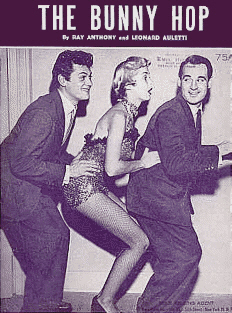
Years ago, they stood for bunny hop. But now: In a text message, BH 2nite? led many people to believe they were supposed to meet up on the dance floor. After Googling Bunny Hop, people stated (for the record) that they’d rather be caught dead than caught doing the bunny hop.

Quite understandable.

Even during the heyday of the bunny hop in the 1950s, most of the guys leaning up against the walls of the gym where most high school hops (dances) were held screamed “oh no!” whenever the bunny hop got started.

It snaked all around the dance floor picking up wallflowers as it went. At my high school, it was always led, started or planned by the feisty lady who led the pep rallies and the cheerleading squad. I think she was a Navy SEAL with a smile.

Okay, here it is

Bunny: Snakes around a high school dance floor.

Blog: Snakes around the Internet.

Bunny: Imprints the addictive music in your head for weeks and for the rest of your life maybe, returning in your dreams to haunt you.

Blog: Brings you (hopefully) an exciting series of posts as you hop from blog to blog hearing only the music of your choice from your MP3 player.

Blog

Bunny: Forced you to grab the butt (often appropriately) of the person ahead of you in line (see picture) while tapping the floor with one foot, then the other, then leaping backward, then forward.

Blog: According to the Federal government, blog hops are coverened by a section in the code that proclaims: Mama don’t allow no butt grabbing around here.

Bunny: Sometimes people got hurt.

Blog: Casualty free for years.

For a shining example of a blog hop with more class than this post, stop by on Friday, December 16th for the Sleigh Bells and Inkwells Blog Hop, featuring a baker’s dozen writers who will knock your socks off without forcing you to dance or remember frightening music.

–Malcolm

Book of pioneering essays explores fantasy with Native American influences

In 2006, author Amy Sturgis  presented a paper at the  Mythopoeic Society’s Mythcon 37 in which she suggested that specialists in fantasy studies and Native American studies have a lot to offer each other. In an August 2009 interview, Sturgis said, ‘Both sides I think are missing out on great opportunities to talk about and share the remarkable — and remarkably similar — literature in their respective fields. In my talk I recommended ways of bringing together those who love fantasy and those who love Native America.”

After her Mythcon talk, Sturgis was approached by the Mythopoeic Society Press and asked to edit a book of essays that would use her paper as a catalyst for exploring: (1) Native American mythology in literature, (2) Native American authors writing works with fantasy elements, (3) non-Native fantasy authors incorporating Native America into their own work.

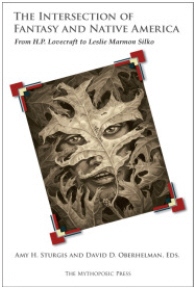
As an author interested in the cultures and stories of the native nations traditionally associated with the locations in which my novels are set, I’m was happy to see the publication of The Intersection of Fantasy and Native America: From H.P. Lovecraft to Leslie Marmon Silko (Mythopoeic Society Press, October 2009) with pioneering work about the long-neglected impact of native themes in fantasy genre novels.

Publisher’s Description

A number of contemporary Native American authors incorporate elements of fantasy into their fiction, while several non-Native fantasy authors utilize elements of Native America in their storytelling. Nevertheless, few experts on fantasy consider American Indian works, and few experts on Native American studies explore the fantastic in literature. Now an international, multi-ethnic, and cross-disciplinary group of scholars investigates the meaningful ways in which fantasy and Native America intersect, examining classics by American Indian authors such as Louise Erdrich, Gerald Vizenor, and Leslie Marmon Silko, as well as non-Native fantasists such as H.P. Lovecraft, J.R.R. Tolkien, and J.K. Rowling. Thus these essayists pioneer new ways of thinking about fantasy texts by Native and non-Native authors, and challenge other academics, writers, and readers to do the same.

Author’s Comments

In an April 2009 interview in which she was asked about myth, fantasy and science fiction, Sturgis said, “All three are involved in the project of answering the question of what it means to be human: the nature of humanity; the nature of humanity’s relationship to the earth, the cosmos, the infinite; and other questions like these. The very first storytellers, through their mythological stories, parables, and other tales, were trying to come to some sense of the world and to figure out their place in it. I see mythology as a “mother figure” out of which the other two have grown.”

Reviewer Opinions

  • “With excellent and accessible scholarship, this book opens wide the door of Native American mythology and fantasy by connecting it with the fantasy many of us already know and love.” — Travis Prinzi, Author of Harry Potter and Imagination and editor of Hog’s Head Conversations.
  • “The essays in Sturgis and Oberhelman’s The Intersection of Fantasy and Native America open our eyes to the kinship between families of literature hitherto seen as separate-fantasy and Native American fiction-showing their interconnections in subject matter, in techniques of dream and trance and magical realism and post-modern meta-narrative, and most importantly, in their ability to penetrate appearances in search of underlying truths. The result is that we see each in light of the other and both as parts of the larger, so-called mainstream, and as essential to our understanding of literature, its  writers and readers, in the 21st century. –Verlyn Flieger, Professor of  English, University of Maryland at College Park, Author of Interrupted Music, A Question of Time, and Splintered Light.

The myths flowing out of classic Greek and Roman mythology and the impact of fact and fiction about kings and queens and elves and faerie folk from faraway worlds have, I believe, partially obscurred the role of Native American folktales and belief systems in creating both our world view and the fantasy fiction given birth by our imagionation in the place where we live. By examining the work of widely known authors, The Intersection of Fantasy and Native America helps interpret the rich landscape we may not have noticed just outside the front door.

–Malcolm

contemporary fantasy with native themes