Great Fiction: Location, Location, Location

These days, most people say they like character-driven novels. As Barbra Streisand sang years ago, “People who need people, Are the luckiest people in the world.” We want to read about people, pretend to be them, laugh at them, hate them, learn from them and, if nothing else, see what they’ll do next.
nixNonetheless, location can make or break a novel. Picture this:

  • The Night Circus set in the day time or, worse yet, Dubuque.
  • The Prince of Tides without the tides or, worse yet, without the the lush bays and swamps an estuaries of the South Carolina coast. (“It was growing dark on this long southern evening, and suddenly, at the exact point her finger had indicated, the moon lifted a forehead of stunning gold above the horizon, lifted straight out of filigreed, light-intoxicated clouds that lay on the skyline in attendant veils.”)
  • Jonathan Strange & Mr Norrell set in modern times or, worse yet, within the 1950s neighborhood of Happy Days or the early 1960s city ambiance of American Graffiti. (“Where does the wind come from that blows upon your face, that fans the pages of your book? Where the harum-scarum magic of small wild creatures meets the magic of Man, where the language of the wind and the rain and the trees can be understood, there we will find the Raven King.”)
  • All the Pretty Horses moved from Texas onto a Star Wars planet or, worse yet,  the Catskill Mountains.

Setting is more than a generic backdrop for the action

In his essay, “Setting as Character,” Crawford Kilian wrote, “Whether it’s Scott Fitzgerald’s 1920s Long Island or Tolkien’s Shire, the setting really is a kind of character in the story. Geographically and socially, the setting shapes the other characters, making some actions inevitable and others impossible.” The novels I listed above not only didn’t happen somewhere else, they couldn’t.

ozmapOn a similar note, a recent post on ProActive Writer, explored the importance of settings with the idea that “ignoring setting, or even giving it only a passing consideration, will lead to an unconvincing story.” The post views setting as the framework or the skeleton that holds up your plot and characters. Some authors build worlds for their novels before writing the novels; others let the worlds evolve while they write their stories. Either way, the worlds—real or imagined—must be convincing, they must fit the story like a warm mitten on a winter evening.

My Location Settings

I say all this as a way of introducing a series of posts on my Sun Singer’s Travels blog about the location settings in my novels. These easy-to-read posts explain each setting, show or describe what happened there in the novel, and explain why I chose the setting.

My approach to settings is organic and intuitive. By that I mean that I don’t make fiction-class lists of the attributes of the settings I want to use. No literary theory here; just places and reasons why I liked them. So far, the series has three installments:

Future posts will look at the world of a city in the Midwest, an aircraft carrier, a bridge over a wild river, and a sailor town. Stop by and see what you think. Whether you agree or disagree with my rationale, perhaps these posts will help you choose the best possible settings for your short stories and novels.

Malcolm

Malcolm R. Campbell is the author of contemporary fantasy novels.

Read it now on your Kindle

Turning (selected and well-disguised) Secrets into Fiction

While growing up in Florida, my secret story often sounded like old Florida adventure novels.

“A secret story should be yours alone: about who you are, who you want to be. Who you believe yourself to be, under all the social conventions and expectations. Are you secretly a sorceress? A priestess? A charmer of animals or teller of fortunes? Are the trees your friends? There is something wonderful about having a secret identity, something that no one knows about you.” – Theodora Goss in her post “Your Secret Story”

Along with “Where do you get your ideas?” the question people ask me the most is, “How much of each story is true?”

Some of the actual events merged into a short story or novel come from an author’s experiences. For example, my Kindle short story “Moonlight and Ghosts” draws slightly on my experience as a unit manager years ago in a center for the developmentally disabled. Other events in an author’s work come from what author Theodora Goss describes as one’s secret story.

A secret story, often begun in childhood, is the story we tell ourselves about ourselves, a lifelong imagination-run-wild romp of the things we fantasize about doing or being. In childhood, many of us imagine being wizards or Knights of the Round Table or Superman.

As we grow older, perhaps we change our story to make it more plausible. These stories can be, but usually aren’t, the same as our dreams and goals. Perhaps they come to mind as an all-in-good fun episode we imagine while we’re falling asleep or mowing the yard. Perhaps they have a deeper impact and become our personal myth.

What ever they are, we seldom tell them to each other. Yet, to a writer, they are so much a part of his/her imagination, selected fragments of them wind up in stories or, in some cases, serve as the catalysts for stories.

I wonder if we become truly happy and/or in a state of bliss when our secret story and our daily life become one. Before that happens, these stories are a great source of ideas for the next novel or short story.

You May Also Like:

  • I have brought back my “Book Bits” writing links posts twice a week on my Sun Singer’s Travels blog. Each post includes 8-10 links for recent book news, reviews, how-to articles and features.
  • The Real Magic of the Unlimited Self tells the story behind the story for my “Moonlight and Ghosts” Kindle short story. (Sometimes the magic is real.)
  • Or, see my website for my latest news.

-Malcolm

Contemporary fantasy for your Kindle.

Allowing a story to happen

Some writers begin with an outline while others just start writing. Either way, the story is likely to have a mind of its own. Characters will do and say unexpected things. Research will turn up new ideas that alter the original ideas for a scene. Regardless of the overall plan, or lack of a plan, the story will need a bit of space in which to grow.

You’ll know when it’s better to wait patiently than to press on with your typing. This often happens at the end of a scene. Now it’s time for the characters to do something else. But what? Or, it may be time for for the writer to check in on another character. But who? Or, perhaps you’ve written up to the edge of A BIG SCENE and you’re not exactly sure how that big scene ought to get underway.

At times like this, I find it better to stop writing for 15 minutes, an hour, or perhaps for the rest of the afternoon and do something unrelated to the novel or short story I’m working on. If the next scene of the story seems close, but isn’t quite resolving into my thoughts, I’ll do something relatively mindless like playing a game of Freecell, hearts or Angry Birds. If I think the scene needs more time to come to mind, I’ll go do errands or mow the lawn.

When I distract myself, the next scene in the story always occurs to me out of nowhere.

I suppose there are many theories about this. I really don’t want to know them. If I did know them, the whole process might simply stop working. Anyhow, I have my own theory about it.

If you think about some of the methods people use to relax, especially those who do psychic readings or are using biofeedback to get rid of a headache or a sore back, the process begins with visualizing a relaxing place, slowing the breath, and then follows through various self-hypnotic methods that will slow one’s brainwaves and heart beat.

Now, I’m not suggesting Tarot card readers ought to begin with a game of hearts on their computers before spreading out the cards or that Freecell will send energy up and down your chakra system to improve your well being. Perhaps. At any rate, my mindless activities tend to produce the same results as structured or unstructured meditation. The result? I’ve stepped away from the story, relaxed, and allowed it to happen.

My won/lost percentage for Freecell, hearts, chess and other games on my computer isn’t good because once I begin playing them, the next scene of my story is likely to occur at any moment and to be so compelling that I can’t wait to get back to my Word file and start typing again. At that point, I’m ready to quit the game in a second and get back to the larger-order of fun: writing.

I suppose we all have our little tricks and superstitions. One way or another, they seem to be in our writer’s tool kits as the magic behind the curtain that allows our stories to happen.

Malcolm

a heroine’s journey adventure for your Kindle

Sometimes my research won’t support what I want to do

I fact check everything I put in my stories and feel very nervous about the things I can’t track down.

In my short story in progress, two college students explore a cave and find a fair number of bats. When they leave the cave, they discover that while they’ve been very dry inside, the world has gotten very wet outside.

I wanted one of my characters to say something like, “Holy deluge Batman, there’s been a change in the weather.”

My story is set in 1962. Guess why I can’t use that phrase.

As you can see on Robin’s Page, there are over 356 “holy something or other” phrases listed from the Boy Wonder. No, “holy deluge” isn’t there, but that’s not the problem. My character wanted to mimic Robin, not quote him.

The Batman television show where we heard “holy whatever” over and over aired on ABC between 1966 and 1968. So there it is. My character can’t mimic something that hasn’t started yet.

Sometimes research giveth and sometimes it taketh away.

Malcolm

Contemporary fantasy for your Nook at only $4.99.

Knowing the history of your favorite states makes your stories better

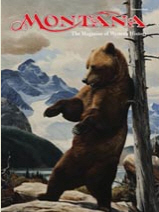
I have been a member of the Montana Historical Society for at least 25 years even though I live in Georgia. Why? I fell in love with the state after working two summers in Glacier National Park. Since the state’s history and environment fascinate me, I look forward to each new issue of the Society’s award winning Montana The Magazine of Western History.

The places where my novels are set always figure strongly into their plots and themes. Much has been written about the Rocky Mountains and Glacier National Park. I try to keep up so I can make my descriptions as accurate as possible and to ensure that my plots are viable within those settings. Even though I don’t write historical novels, I also feel that knowing the history of an area adds to my understanding of a state or region and enriches my storytelling.

Unlike many of our high school and college history classes that focused a great deal on remembering dates, reading the articles and reviews in a historical magazine is a joyful experience. There’s no pressure to take notes and/or to guess which five facts will be on a pop quiz or the final exam. In the  Summer 2012 issue of Montana The Magazine of Western History, the lead article “The End of Freedom: The Military Removal of the Blackfeet and Reservation Confinement, 1880” by William E. Farr features the Indian reservation on the east side of Glacier National Park.

One can hardly visit Glacier without learning about the tribe’s association with the park. If you reach the park by car or train from the east, you’ll pass through the Blackfeet reservation. This well-written article definitely increases my sense of place and the people who are important there.

As a writer, I want to know what I’m writing about—in depth. Obscure facts come to mind long after I read an article and influence plot development in ways I can never predict when each issue of the magazine arrives. My membership in the Montana Historical Society has, I think, been an important component in shaping my three novels set partly within the state: The Sun Singer, Garden of Heaven: an Odyssey, and my recent contemporary fantasy, Sarabande. I always hope that readers, especially those who live in the places I write about, will think that I live there, once lived there, or have spent a great deal of time seeing the sights on multiple vacation trips.

Most states have state, county and local historical societies, tourism departments, and preservation groups that are worth their weight in gold for writers who see place almost like another character in each story.

Table of Contents – Current Issue

  • The End of Freedom: THE MILITARY REMOVAL OF THE BLACKFEET AND RESERVATION CONFINEMENT, 1880, by William E. Farr
  • Protest, Power, and the Pit: FIGHTING OPEN-PIT MINING IN BUTTE, MONTANA, by Brian Leech
  • Breaking Racial Barriers: ‘EVERYONE’S WELCOME’ AT THE OZARK CLUB, GREAT FALLS, MONTANA’S AFRICAN AMERICAN NIGHTCLUB, by Ken Robison
  • Building Permanent and Substantial Roads: PRISON LABOR ON MONTANA’S HIGHWAYS, 1910–1925, Jon Axline
  • Signs of the Times: THE MONTANA HISTORICAL SOCIETY’S NATIONAL REGISTER SIGN PROGRAM, by Ellen Baumler
  • REVIEWS:  Jiusto and Brown, Hand Raised, reviewed by Jon T. Kilpinen / Hedren, After Custer, reviewed by James N. Leiker / Courtwright, Prairie Fire, reviewed by Sarah Keyes / Schackel, Working the Land, reviewed by Susanne George Bloomfield / Wood, Hunt Jr., and Williams, Fort Clark and Its Indian Neighbors, reviewed by Steven Reidburn / Pasco, Helen Ring Robinson, reviewed by Alexandra M. Nickliss / Flint and Flint, eds., The Latest Word from 1540, reviewed by Thomas Merlan / Harvey, Rainbow Bridge to Monument Valley, reviewed by Lawrence Culver

For me, such articles grab my attention like a page-turner novel. Since the reading is fun, I tend to remember it later on when I’m telling another story about the state.

Malcolm

A contemporary fantasy set in Montana, and available on Smashwords in multiple e-book formats.

Briefly Noted: ‘Riting Myth, Mythic Writing: Plotting Your Personal Story’

“Myths are public dreams, dreams are private myths.” – Joseph Campbell

A new book by Dennis Patrick Slattery, a long-time researcher, teacher and author of mythology, depth and archetypal psychology, will help those interested in their own journeys and personal myths take a few more steps down the path.

New from Fisher King Press, Riting Myth, Mythic Writing: Plotting Your Personal Story uses 80 writing meditations to draw readers directly into the process rather than presenting facts and ideas in a lecture-style format. Those of us who write full time already know the power the writing itself has on the author during every writing moment. The book is the next best thing to a workshop in a sacred place with an experienced facilitator and other students of like mind.

In his introduction to the book, Michael Conforti writes, “Imagine sitting in an Irish pub, drinking ale and listening to the bard weave stories about so many different things, or perhaps captivated by the glow of an outdoor fire while listening to an elder telling stories about history, traditions, and ways to navigate the different life portals that each and every one of us will have to enter at some time. And then—there are stories about destiny, that illusive, mercurial something that catches hold of us at the beginning of life and never seems to want to let go. La forza di destino!! These are the experiences one has in knowing and working with Dr. Dennis Slattery. Whether sharing a pizza and beer or having the luxury of attending one of his lectures or classes, one is privileged to experience an authentic ‘elder’ who, in the tradition of all those wise ones who came before him, has the gift of bringing the world of myth and imagination to life and showing us that indeed these are as real as anything we can touch and hold in our hands.”

A pint of ale might go very well with this book.

Malcolm

The hero’s journey myth in a fantasy adventure

Take a look at locations you know for your best stories

The possibilities for swamp stories are infinite

Like most starving authors, I can—on a bad day—be jealous of authors who have the money for multiple research trips to Scotland, Paris or Japan. On the other hand, I’m not writing global thrillers or looking to my highland ancestors for what if romances about Mary Queen of Scots. So, I return again and again to the places I’ve lived and worked for my fictional settings.

Writers often debate whether the old admonition “write what you know” makes sense or is foolish. Obviously, writers do a lot of research to fill in the gaps. Nonetheless, I think it’s much easier to write about a place where you’ve been or an occupation you’ve had or have been exposed to than to have to make everything up from scratch.

If you lived in a town for years, you know the streets, the ambiance, the trees and flowers to be found there, and perhaps some of the history. If you vacation at the same beach, resort or National Park every year or so, these are also prime examples of “what you know.”

In my contemporary fantasies “The Sun Singer” and “Sarabande,” I used Glacier National Park as a setting for the adventures because I worked there and later went back as a tourist. I placed some of the scenes in my magical realism novel “Garden of Heaven: an Odyssey” in Glacier, but also used the Philippines which I saw while in the Navy and the Florida Panhandle where I grew up. And this year, I’ve been writing short stories which have been set in Glacier, a north Florida swamp, and central Illinois where one side of my family came from.

My fiction always has a strong sense of place

To some extent, each of these stories could have unfolded in a dozen other places, but since I always have a strong “sense of location” in my fiction, it was easier to plunk down my characters in places I know well rather having to start from scratch. I know, for example, that you’re going to find chinkapin trees, titi thickets and scrub oak in the Florida Panhandle, and that there are several varieties of Indian Paintbrush flowers in the Montana mountains.

What I know about each location isn’t earth shaking, like state secrets, smuggling rings, or hair-raising stories from years gone by. But what I know does give me a jump start. I may well use Google to fill in a few facts, but knowing a location helps you know what to look for when you do your next Internet search. Yes, I still have dreams about going to the highlands of Scotland, but until then, I can be happy with East Glacier, Montana and Tate’s Hell Swamp on the Florida Coast.

Perhaps you can, too.

One of my favorite Glacier flowers gave me a new story idea – NPS Photo

I just saw a screen saver filled with Indian Paintbrush: ah, that leads me to another Montana short story. A week ago, I started thinking of the chuck-will’s-widow that sang all night in the woods behind the Florida house where I grew up. Oh, good, another story idea about those woods and my old neighborhood.

In many ways, I am probably always on the lookout for stories I can tell in my favorite settings because, well, I know the territory and the kinds of things that happen (or might happen) there. If the location settings in your fiction play a role, then where you’ve been is a lot easier to bring to life in words than a place you’ve always wanted to see.

Malcolm

You may also like: World of Wonder about nature as my primary inspiration as a writer. The post appears as part of an inspiration series running on author Smoky Zeidel’s weblog through June 27.

If you’re not a reader, for Pete’s sake, stop trying to be a writer

When I taught college-level journalism, I was convinced that some of my reporting and feature writing students never read newspapers.

Other than wondering what the hell they were doing in my classroom, it was clear to me that those who didn’t read the news would probably never learn how to write it. News and feature stories have a noticeable organization and style.

Long-time journalists can hear the cadence of a “properly written” news story inside their heads. Stands to reason, then, that reading—in this case, the news—will help you learn the fundamentals of reporting much faster in a classroom and on the job than being clueless about it.

Aspiring poets and novelists who don’t read poems and novels

Author and editor C. Hope Clark (“Lowcountry Bribe”) wrote in a February 28th post at read.learn.write that in her consulting and speaking work, she finds a lot of aspiring writers who seldom read:

The world abounds with writers. Everyone wants his name, photo and title on a bookstore shelf, as a minimum on Amazon. But amazingly enough, most of them are not voracious readers. They are spitting out words, but taking few in. It’s like using a shotgun instead of a high-powered rifle. The result isn’t very refined, the results less satisfactory.

Some years ago, when desktop publishing programs made it easier to create newsletters, brochures, and posters on a PC screen, a lot of big corporations cut the writers from their staffs because—the bean counters seasoned—anyone could use the software and create something that looked like a newsletter, brochure or poster. Who needed actual writers? The results were a mess, and since the bean counters never read anything anyway, they didn’t know the results were a mess.

The Internet is (perhaps) today’s desktop publishing

The Internet has not only reduced our attention spans, it’s given all of us the power to create materials that look like e-zines, blogs, books, magazine articles and poems. No experience necessary. Simply log on and create.  Clark says that “The slogan ‘reading is fundamental’ is remarkably accurate. Somewhere along the line, however, between elementary school and college, reading falls by the wayside. Teaching to tests, however, and not enticing children to fall in love with words, has stolen their ability to perform later in life.”

As a writer, I’m biased: I think all of us need to learn how to read and then not let the skill get away from us. And, we’re talking novels, essays, commentaries, features and criticism here, not just the back of the cereal box or the “Trending Now” links on the Yahoo screen. Having worked in corporate America, I can testify to the fact that a lot of stuff got screwed up because the people reading the reports and white papers and trade magazine article weren’t really getting it. They skimmed and/or couldn’t follow a logical argument in print.

What do I have to do to become a writer?

The Internet, and that includes a few well-known print-on-demand book publishers, gives the impression the answer is nothing. Just put one word after another until you reach the required word count for a short story or a book, format it, and you’re done. And when nobody reads it, the first thing you’ll hear from “the writer” is the accusation that there’s a conspiracy out there. Amazon, BIG PUBLISHING, the government, the search engines, the service providers and the reviewers had nothing better to do that get together in a bar and decide to stomp down some a book that otherwise would have won the Booker, Nobel, and Pulitzer prizes.

The speculation about “What the hell happened to my book?” seldom includes any need to learn the art and craft of writing first. And this goes back to something very fundamental: Reading. That’s where becoming a writer starts, and it never stops.

Malcolm

“Book Bits” provides daily information for writers and readers

Writers like keeping up with contests, tips and techniques, publishers and magazines where they can submit their stories and articles, and advice on how to market their work once it’s published.

Readers like keeping up with their favorite writers, upcoming books in the genres they read the most, and information about authors’ future book signings and other appearances.

Book Bits brings you the links to this kind of information six days a week.  Quite simply, Book Bits is a blog in which every post is a list of links covering the latest reviews, books and author features, contests,  marketing and social networking advice, “writer’s how to” posts, and essays and features about authors, books and publishing.

Book Bits Titles

Book Bits is numbered from the first issue onward toward infinity. The higher the number, the more recent the post.  The titles are designed to attract attention, so they include the names of authors/events most likely to lure people into the post. For example, the title for this morning’s post looked like this:

Book Bits #117 – Hedy Lamarr, Roberto Bolaño, Elmore Leonard and more writing news

So now you know I’ve made 117 posts. This one included a review of Roberto Bolaño’s latest novel, a biography about Hedy Lamarr, and an article about author Elmore Leonard who, says “why not,” when asked why (at age 86) he’s still writing.

This morning’s Book Bits had 24 links.  In addition to those attention-getting names in the title, the other offerings featured a link to a blog hop where you might win a Kindle, a story about the return of the Lit Fest to Haiti, and the names and novels of the ten finalists in Georgia’s Townsend Prize for Fiction.

Naturally, some posts will bore you. My top picks on those days will be authors you’ve never heard of or genres you never read. I try to include a variety, though, in hopes that every time you stop by, you’ll find at least one link you want to click on.

Some posts will take over you’re entire day because, heck, you’ll want to click on every feature, news story and review. The reviews will tempt you to read books. The contest announcements will tempt you to write books, or maybe short stories or poems.

This morning, you might have followed the link to this review:

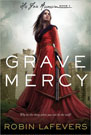
  • Review: Grave Mercy by Robin LaFevers – “With characters that will inspire the imagination, a plot that nods to history while defying accuracy, and a love story that promises more in the second book, this is sure to attract feminist readers and romantics alike.” – Booklist

Or the link to this advice:

  • Lists: 10 Ways to Get Paid for Online Writing, with Lior Levin – “Selling words for dollars is easy, if you are aware of two things: -How to put down the words together. -How to sell your piece in the right market.”

I invite you to surf over to Book Bits, read a few posts and see what you think. That’s sort of like kicking the tires on the car you just might want to buy. Unlike the car, Book Bits is free.

Sure, you’ll see some banners at the ends of the post with links to my author’s site and my novels. Maybe those banners will tempt you. If not, have fun. Goodness knows, I have a lot of fun every day finding the news and rev iews for each post. I tell me wife I’m working, but I think she suspects I’m just surfing the net for the heck of it.

Coming in tomorrow’s Book Bits, a link for a wonderful piece of satire that pokes good-natured fun at the Antiques Road Show (imagine people bringing in crime evidence rather than antiques) and some pithy advice for authors planning to self publish their books. Oh, and reviews, too. There are always reviews.

Malcolm

P.S. When the “Book Bits” title is short enough for me to squeeze in an extra word, I add the #bookbits hashtag to help people find the posts on Twitter. Now, here’s an example of a book banner:

contemporary fantasy for your Kindle

NaNoWriMo – Try writing with a ‘theme song’

Did you sign up for National Novel Writing Month (NaNoWriMo)?

Good for you.

If you participated last year, as I did, then you’ve probably gotten a few e-mails from program director Lindsey Grant with links and advice. Here’s a crucial reminder from a recent note: Warn your friends, family, neighbors, and pets about the upcoming challenge. The more people who  know what you’re working on, the more accountable you’ll feel and the likelier you are to hit the 50,000-word goal.

Now is the time to write at flank speed. If you weren’t in the Navy, flank speed means “fast.” Others will remind you to either shoot your inner editor or lock him or her in a closet this month. You can’t write at flank speed if you’re cutting, pasting, backspacing, using the thesaurus, or playing Angry Birds while you try to think of the perfect word.

All good.

While writing my recently released contemporary fantasy novel Sarabande during last year’s NaNo, I also used a theme song. Actually, it was a theme album.

Some people go to sleep every night listening to a DVD with a selection of restful music, an appropriate radio station, or a white noise machine. The music, or the surf or waterfall on the white noise machine, quickly become associated with sleep. The sound works somewhat hypnotically…sleep…sleep.

I picked a CD with Native American flute music by Mary Youngblood. I knew it would work because I’d used it before. I also knew it wouldn’t make me sleepy. Whenever I sat down for my NaNo writing, I put on my headphones and started the music. It was a jumpstart, and it automatically got me thinking of my characters and plot.

For best results, try not to listen to your writing music when you’re not writing. That might dilute its impact during NaNo when you need at least 1,667 words a day to reach that 50,000-word goal.

I’ve written three novels using theme song music. Sarabande was the second time out for Mary Youngblood’s Beneath the Raven Moon. While writing The Sun Singer, I used a new-age instrumental album called Nivana Road by Deuter. In my case, the music had a double connection. First, it became hypnotic and associated with writing. Second, Sarabande has Native American themes and The Sun Singer has new age themes.

You may not find music that mirrors what you’re writing about. If you do, it’s a bonus. If you don’t, I’m guessing that after listening for a couple of flank-speed, NaNo sessions, you’ll soon find those word counts a bit easier to reach because you will be in the zone with your work—thanks to the theme song.

Malcolm