How to be doomed as a writer

“Get out and see the world. It’s not going to kill you to butch it up a tad. Book passage on a tramp steamer. Rustle up some dysentery; it’s worth it for the fever dreams alone. Lose a kidney in a knife fight. You’ll be glad you did.” – Colson Whitehead

RIPI found an old book in the garage called “How to Get Started as a Writer.” Looked it up on line and saw that when the thing  came out in 1965, Kirkus hated it. I glanced through it to see why I kept it and decided that it’s still in the house because I forgot about it.

I was going to write this post about it, but it drove me nuts reading the book’s advice. I took a Xanax and now I feel better. (All serious writers need to go nuts once or twice during their lives.)

If you type the words “how to be a writer” into your favorite search engine, you’ll find –well, let’s go check–161,000,000 hits. Sure, you may stumble across the Colson Whitehead piece or Stephen King’s On Writing: 10th Anniversary Edition: A Memoir of the Craft. If so, fate has smiled upon you.

If you start reading the rest of the advice, you’re doomed. As a prospective writer, you would only be in worse shape if you stayed in school until you were 35 years old getting a B.A. in English, an MFA in creative writing, and a PhD in God only knows what. Your head’s now filled with rules and, sad to say, not much else.

None of your teachers will suggest getting dysentery because that’s crude, unpleasant and harder to control than, say, using too many adjectives.

I’ve had dysentery several times. Changed my life. Just how, is one of the most guarded secrets every writer has. Hint: you know how to see what if situations (King likes “situations” better than plots) and turn them into stories. A lot of advice sites say you have to have passion. Well, okay, but it doesn’t beat dysentery or losing a toe to frostbite. (I tried to do that but failed and I really think that failure has kept me from selling as many books as King and Rowling.)

I don’t know if either of them lost toes, but I do know neither of them studied the rules in school until they were 35 and then suddenly sold a billion copies.

Doom, is thinking you need advice. Fatal doom is taking whatever advice you find.

Doom is thinking that somebody else knows better than you how to turn your own dysentery, lost toe, going nuts or a frightful encounter with _________ (fill in the blank) into the kind of “been there, done that” raw talent that makes memorable stories happen.

It helps to trust where you’ve been and what you’ve done and how you reacted when you saw what you saw. That is you. This isn’t to say you need to become a serial killer before you can write a novel about a serial killer. TMI, as people say in chat rooms. On the other hand, if you lose your kidney in a knife fight, you’ll be more apt to write memorable prose about killers than the poor doomed soul who studied language for 35 years instead of living a life.

Reading this post will also doom you as a writer. Too late now. But there is an antidote to everything I’ve said here. Get drunk and/or stand in the snow until one or more toes fall off. Only then will you have the passion and instinct to write. If you still need more passion, eating rancid pork is better than reading another “show, don’t tell” article.

Whatever you do, you need to stay alive long enough to write your stories. But fever dreams, oh yes, those will get you on the bestseller list as long as the fever breaks long enough for you to pick up a pencil before your spirit hears a doctor saying “time of death.”
Malcolm


Love that writing advice, the good, the bad, and the strange

If you spend a lot of years writing, you’ll hear a lot of advice. In addition to writing books and the features and lists of tips on Internet sites like NPR, Flavorwire, The Millions and Brain Pickings, Facebook and Twitter supply advice. I visit these sites every week to keep up with books, authors and publishing for my Book Bits blog of links to reviews, author interviews, book news, and “how to” articles for writers.

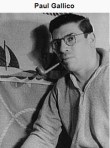
gallicoSome wise and/or humorous words about writing have been around for so long, they’ve become almost lame, yet each new generation of readers and writers discovers them and posts them in writing blogs and Facebook. You’ve probably seen a few of these before:

  • “You simply sit down at the typewriter, open your veins, and bleed.” – Red Smith, Ernest Hemingway and Paul Gallico have been credited with versions of this one.
  • “If you don’t have time to read, you don’t have the time (or the tools) to write. Simple as that.”  – Stephen King and other authors tell us that if we don’t read, we can’t possibly write. (Aspiring writers have enjoyed King’s advice in “On Writing: A Memoir of the Craft.”
  • “Read, read, read. Read everything — trash, classics, good and bad, and see how they do it. Just like a carpenter who works as an apprentice and studies the master. Read! You’ll absorb it. Then write. If it’s good, you’ll find out. If it’s not, throw it out of the window.” – It’s not surprising that William Faulkner’s version of that advice is longer.
  • stephenking“The difference between the right word and the almost right word is the difference between lightning and a lightning bug.” – Mark Twain’s version of this age-old wisdom is memorable.
  • Professional writers don’t sit around every day waiting for their muses to contact them or for imagination to strike. They sit down and write. – So many people have said this, it would take the rest of this post to list them all here.

Famous Authors often Dispense Advice in Lists

  • “There are three rules for writing the novel. Unfortunately, no one knows what they are.” – W. Somerset Maugham – Okay, this is actually a non-list and probably not very helpful.
  • “Every character should want something, even if it is only a glass of water.” – from Kurt Vonnegut’s eight tips.
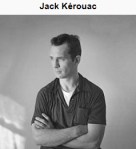
  • kerouacphoto“Write the way you talk. Naturally.” – from David Ogilvy’s ten tips. Actually, most people don’t talk like anything I want to read, especially if they use the words “you know” ten times in each paragraph.
  • “Write what you want bottomless from bottom of the mind.” – Jack Kerouac’s advice from his thirty beliefs and techniques, most of which are as unclear as this one…even if it’s true.
  • “Abandon the idea that you are ever going to finish. Lose track of the 400 pages and write just one page for each day, it helps. Then when it gets finished, you are always surprised.” – from John Steinbeck’s six tips. . .this one probably annoys writers who begin with an outline and a list of character traits and motivations for each character.
  • “Forget the books you want to write. Think only of the book you are writing.” – from Henry Miller’s eleven commandments

And then there are the random gems

  • woolfphoto“Writing is like sex. First you do it for love, then you do it for your friends, and then you do it for money.” – Virginia Woolf…probably true, though most of us try to keep some semblance of love in it.
  • “The first draft of anything is shit.” ― Ernest Hemingway…typical Ernest.
  • “Write the kind of story you would like to read. People will give you all sorts of advice about writing, but if you are not writing something you like, no one else will like it either.” ― Meg Cabot…this sounds reasonable, though it has a sting to it for those of us who like reading James Joyce.
  • “Everywhere I go I’m asked if I think the university stifles writers. My opinion is that they don’t stifle enough of them. There’s many a best-seller that could have been prevented by a good teacher.” ― Flannery O’Connor…this seems more true today than when Flannery said it.
  • Every journalist has a novel in him, which is an excellent place for it. – Russel Lynes…Russel is obviously more cynical than Flannery.
  • “Cut out all these exclamation points. An exclamation point is like laughing at your own joke.” ― F. Scott Fitzgerald…this one ends my lists on a more practical note while also serving as another example about why we shouldn’t write like we talk.

What are your favorite tips, even the ugly ones?

Malcolm

99 cents on Kindle
99 cents on Kindle

Malcolm R. Campbell, who used to dispense writing tips as a college journalism instructor, has turned his talents over to the dark side of writing paranormal short stories and contemporary fantasy novels.

Follow me on Twitter

Catch my author’s page on Facebook

Allowing your story to happen

“Leopards break into the temple and drink to the dregs what is in the sacrificial pitchers; this is repeated over and over again; finally it can be calculated in advance, and it becomes a part of the ceremony.” – Franz Kafka, from his Zürau aphorisms

When I first read Kafka’s temple ritual aphorism in high school, I was enchanted with logic. I believed that including the leopards either suggested that the ritual was meaningless and/or that the leaders were simply lazy and expedient. In high school, we were taught to plan, outline and research our fiction and nonfiction in advance to ensure that we said what we meant. Stray leopards in our prose might suggest otherwise.

Over the years, intuition and a love of apparent chaos have replaced logic in my life–and in my writing–as the primary inspiration behind what I’m doing and saying. Now, when I see Kafka’s aphorism, my thought is that the leopards had, in fact, been missing from the ceremony from day one.

Had the temple leaders maintained security and vigilance, the leopards couldn’t have gotten into ritual. The same is true, I think, for writing. Too much logic and too much planning can keep out the very things your story needs. Needless to say, if you allow something to enter and decide it really doesn’t help the story, you can edit it back out.

Author  Diana Gabaldon once mentioned during a research discussion on a writers’ forum that while doing research about ABC she would inadvertently stumble across XYZ. Once she investigated XYZ, it turned out to be vital to the plot and theme of her book even though she had never considered it before. Was her discovery magic, synchronicity, a butterfly-effect phenomenon, or an example of her subconscious mind “knowing” the material was there and leading her to it?

I’m not sure. And really, I’m less likely to stumble over the leopards trying to get into the temple if I don’t worry about how they found the temple or managed to appear at the proper time.  So, I leave my work open to chance. In his book Voice of the Muse: Answering the Call to Write, Mark David Gerson suggests that the stories we tell are already out there (don’t worry about where), just waiting for us to listen. If we don’t listen, we won’t hear them or, perhaps, if we do hear them, we’ll censor out the leopards because they weren’t included in the original plan.

Over the years, I’ve come to think that events and ideas that seemingly come out of nowhere are often the most meaningful. And, they can send our lives and our stories off on the most surprising pathways. In her post How an African Intruder Taught Me a Lesson on Magic and Writing, author Smoky Trudeau Zeidel wrote about a guineafowl that wandered into her neighborhood. She named the bird Gertie. Its appearance there was probably just as unlikely as a leopard in the local temple.

“All sorts of Gerties have popped up in my Work In Progress (WIP), The Storyteller’s Bracelet. Not guineafowl, these Gerties, but surprises that seem to have materialized out of nowhere,” she said. (She and I were content to label the appearance of a Gertie of any kind as magic.) Her view is that “when magic enters your life, be it through an unexpected visitor from another continent or through your words, it is best to go with it.”

I agree. Going with it is part of allowing your story to happen.

Malcolm

Malcolm R. Campbell is the author of magical realism and contemporary fantasy novels, including “Sarabande.”

Writing Tip: Use Humor as Part of Your Character Development

We remember some friends because they tell lame jokes and other friends because they’re guilty of non-stop puns. Perhaps these traits have little or nothing to do with these folks’ jobs, causes, abilities as parents, or the heroic deeds they may perform. Yet, they are one of the ways we know them.

A sense of humor, or the inadvertent habit of doing funny or odd things, can also help readers get to know your characters in a novel or short story.

For example, in my contemporary fantasy novel The Sun Singer, my fiery red-headed character Cinnabar’s favorite phrase is “Holy Bear Puke” and the blustery blacksmith in charge of weapons constantly misuses everyday words. Such traits become “signature traits,” rather like the theme songs that accompany characters in movies. They not only make the characters three-dimensional, but are like comfort food to readers whenever the humor repeats itself randomly through a story.

I thought of the beauty of humor—as a character trait and as a way of suddenly lightening up the tone of a fast-paced or frightening story—when I found veteran author Lisa Goldstein using it in her fantasy The Uncertain Places to show us “something extra” about protagonist Will Taylor and his long-time friend Ben Avery.

As with many people who’ve known each other since childhood, they’ve developed  their own brand of wild-and-crazy repartee. The humor is part of who they are, and Goldstein uses it to good advantage in developing these characters.

For example, Goldstein drops this old Will-and-Ben riff into a dinner-table conversation:

“Will and I are thinking about writing a movie,”  Ben said. “It’s called ‘Theater Closed for Repairs.'”

We’d told this joke before, of course. It was one of the routines we did, our two-man band. People either got it or told us we were idiots. This time Livvy and Maddie laughed, though Mrs. Feierabend looked a little confused.

I like this because it defines everyone at the table. It’s not only typical Will and Ben, but includes the kinds of reactions the reader is coming to expect from Livvy, Maddie, and their mother. Also, Goldstein doesn’t belabor the joke. Some readers won’t get it. Some will smile and move on. Others (like me) will stop and ponder the beauty of the words THEATER CLOSED FOR REPAIRS on a marquee while wondering about the reactions of passersby.

Set in 1971, The Uncertain Places makes frequent counter-culture references. Maddie, for example mentions marching in a protest parade with a group called the Young Socialist Alliance, leading to this exchange with Will:

“Wait a minute,” I said.”You’re a Trotskyite!”

“Trotskyist,” Maddie said. “Yeah, what about it?”

I knew she had radical politics, but I’d had no idea. To me, Trotskyists were like Cubs fans—their team was never going to win, but you had to admiore their loyalty.

Since my mother was a Cubs fan, I have to smile at this, not to mention knowing full well what her (and any other Cubs fan’s) reaction to such a comment would be. Will and Maddie’s conversation occurs on page 34 of the book, but even this early in the story, everything about it is so typical of both Will and Maddie, that I nod as I read it, and think, “Yes, that’s the kind of thing Maddie would say and the kind of thing Will would think—but leave unsaid.”

I’m getting to know and care about the characters of the book, partly because the there are a lot of strange things going on in the Feierabend household and Will, with some help from Ben, is trying to figure out the mystery. The humor doesn’t move the plot forward, but it is a wonderful part of the author’s character development.

A Word of  Caution

As you consider using a bit of humor to develop the characters in your stories, a word of caution. The humor needs to fit the character. It needs to be just what the reader would expect from him or her. Mrs. Feierabend never would come up with the THEATER CLOSED FOR REPAIRS gag any more than she would burst forth with a string old genie jokes or flirty stories filled with sexual innendos. She’s not that kind of person.

My thought is: make the humor fit and don’t run it into the ground turning it into the kind of flaw in the story reviewers like to point out. A quick laugh, and then get on with the plot.

Malcolm

Malcolm R. Campbell is the author of four novels from Vanilla Heart Publishing, including the recently release contemporary fantasy “Sarabande.”