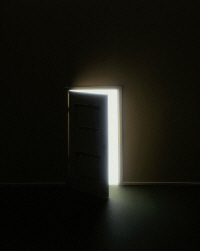
Books: Magic Between the Covers

“A well-composed book is a magic carpet on which we are wafted to a world that we cannot enter in any other way.” – Caroline Gordon

My parents orchestrated Christmas Eve and the following morning with skill, making it a time of magic and expectation even though the gifts beneath the gifts beneath the tree were saturated with love rather than money. More often that not, one or more of the carefully wrapped packages beneath the spruce tree contained a book.

More often than not, each book was inscribed with my name, the date, and the name of the person who found the book and thought I might like the story. Pirates, space ships, wild animals and detectives waited between the covers for me to turn the page and enter an alternate universe. I didn’t see stories as alternate universes at the time, but now when I think of books, I smile at the concept of being in two places at one time.

There I was following the Hardy Boys in their latest attempt to help their police detective father crack a dangerous case AND there I was sitting in a comfortable chair in the living room next to a lamp. According to reports, I often didn’t respond when my parents called me to dinner when I was more there than here within the pages of a book like The Twisted Claw.

Portals, Portkeys and Magic Carpets

Caroline Gordon saw books as magic carpets. Ever fascinated with portals, I see books as doorways to faraway lands like the famous wardrobe in C. S. Lewis Chronicles of Narnia. In today’s Harry Potter series terms, readers might well see a book as a portkey that whisks them away the minute they touch it.

While looking at the Amazon page for Mark Helprin’s upcoming novel In Sun Light and Shadow, I found the novel’s stunning 489-word prologue included there as part of the book’s description. The constraints of fair use don’t allow me to cut and paste the entire prologue into this blog as a shining example of an author’s invitation to his readers asking them to step through the door, touch the portkey or settle themselves onto a flying carpet. But, here’s a taste. . .

An Invitation

Helprin’s prologue begins with the line: If you were a spirit, and could fly and alight as you wished, and time did not bind you, and patience and love were all you knew, then you might rise to enter an open window high above the park, in the New York of almost a lifetime ago, early in November of 1947.

The prologue goes on to describe the view from that window, and then the room itself: full bookshelves, the Manet seascape above the fireplace, a telephone, a desk drawer containing a loaded pistol, and a “bracelet waiting for a wrist.” Then the prologue concludes with: And if you were a spirit, and time did not bind you, and patience and love were all you knew, then there you would wait for someone to return, and the story to unfold.

Even though I was, from the viewpoint of my three cats who were hovering around the den door waiting to be fed, sitting here at my desk, I had in fact stepped through a portal to an apartment in New York 65 years ago. I tell you this: I wasn’t ready to return when Katy, our large calico, rubbed against my leg with a no-nonsense purr because I was thoroughly enchanted by the magic between the covers.

Even though a small percentage of the books I read each year come into my hands as gifts, I approach every book with an interesting premise and a cover splashed with promises as a gift. Years ago, I watched a TV western called “Have Gun, Will Travel.” Today, I gravitate more toward Have Book, Will Travel. Each book is an invitation to adventure, lives hanging in the balance, twisted claws lurking in the dark, castles set high above green valleys, and frightened travelers walking down roads in sunlight and in shadow.

Books cast spells and carry us away and while we are gone, we are changed, writ larger by the experiences now living within our consciousness, and ready to see the word of here with the visions we had while we were there.

Malcolm

Travel to mountains and magic for $4.99. It’s cheaper than Amtrak and Delta Airlines.

The allure of doorways

“Edward Hopper found stillness in motion and geometry in light. His simultaneously strong and subtle images of houses, streets and intimate rooms invite us to quiet our minds and open our eyes to the beauty of the commonplace as revealed by shadow, sun and the warmth or artificial lights.” — Charley Parker

Walk through an exhibit of Edward Hopper paintings and you’ll immediately see he was drawn to windows from both sides and in every  magnitude of light. He is best known for his painting of a brighly lit diner as viewed from the dark street outside called “Nighthawks.” Painted in 1942, the original can be found at the Art Institute of Chicago. If I were an art collector, most of the rooms in my house would be filled with the work of Jamie Wyeth and Andrew Wyeth, but hidden away in my den in the company of paintings of mountains and mountain trails would be Nighthawks.

Nighthawks by Edward Hopper

I am a nighthawk. I like lonely diners where nighthawks can stop for coffee or a piece of pie. I wrote somewhere that in the days before gasoline was expensive, my best ideas came from driving at night, and there was a time when I knew every waitress and fry cook in a one hundred mile radius around Tallahassee, Florida, where I grew up.

Doorways and Supersitions

While windows draw me to look in or out, figuratively or literally, I cannot resist the allure of doorways. Of the many sounds our four cats hear throughout the week, the doorbell causes the greatest disruption. Their response is a mixture of excitement and foreboding until they see who is there and what they want. There are so many doorway-related symbols and superstitions, I won’t even begin to list examples, but most of them come down to the fact that a threshold is a portal between worlds or areas of activity.

The front door to my house separates, in terms of custom and use, inside from outside. Doors separate rooms from each other and often define the activities on one side or the other. The doorway itself is where the danger lies because, as anthropologist Victor Turner observed, the space within the entryway is “betwixt and between.” It reflects both inside and out, but is—in fact—neither.

Doorway superstitions revolve around the spirits and tricksters that are said to lurk, live and cause mischief or bad luck at the undertain spaces between rooms, zones, worlds, and realms. Doorways themselves can make us feel welcome or unwelcome, hopeful, fearful or inspired. They can symbolize the steps in a project, rites of passage, personal development and transcendent expirences.

Shamanistic journeying often begins with a portal, door, or cave entrance. The children in The Chronicles of Narnia fantasy novels by C. S. Lewis enter another world through a doorway in an old wardrobe. Alice’s Adventures in Wonderland by Lewis Carroll uses a rabbit hole to link our world with a world of magic. In my contemporary fantasies The Sun Singer and Sarabande, I use arches, a waterfall cave and a special door in a cabin to connect the world of Glacier National Park with a look-alike universe.

Liminal Space

In myth and psychology, thresholds such as those between worlds and those encountered during rites of passage ceremonies and meditation, are referred to as liminal space. The term comes from “limin,” Latin for threshold. It’s considered an intermediate state, rather like the twilight zone, dusk and dawn, a sleeper’s focus as they begin to awake, and transitional in nature.

Personally, I am drawn to doorways because my point of view about the world is very much shaped by what happens or what can happen in liminal space. As an author, I find that doorways and the boundaries between worlds, either hinted at or utilized, literal or figurative, with or without a guardian entitity or ritual of passage, are among the important tools of the art and craft of fantasy.

Doorways not only open up worlds for my protagonists Robert Adams (The Sun Singer) and Sarabande (Sarabande) to find and step into, but a vast amount of symbolism relating to stages of life or development. In Sarabande, for example, a plunge into a cold mountain lake can be seen as just what it is (a wet and cold experience) as well as a figurative dive into the unconscious and/or a realm of dream and magic:

Her laugh had the rare quality of a wolf’s howl. She flung the dryas flower at Sarabande, then swam or somehow moved closer and playfully pushed her sister’s head under water like she did when they were children playing in Turquoise Lake. Then the light or the clouds changed and Dryad vanished.

Sarabande rubbed the water out of her eyes. The mare’s tail clouds were gone along with the sun and—from growing shadows within the spruce and fir forest in lower valleys—most of the day. She waded ashore, cold. There was no time to change.   She ran down the valley’s long steps, wishing she could fly. Gem—what must she think?

The surface of the lake is the perfect place for fantasy authors and other tricksters to move a character in and our of dream or magic. The liminal space where rooms meet, where night and day come together at the blue hour, and where sleep and dream snuggle up next to each other is the place where things happen. Sometimes those things are obvious and filled with wonderment or terror and sometimes they are more intuited than visual.

Give a fantasy author a doorway (or even an everyday window) and he or she will build you a world, a place where the imagination is unfettered and where change itself is the order of the day.

Malcolm