Stories where we live

from the archives. . .

“One of the best things about folklore and fairy tales is that the best fantasy is what you find right around the corner, in this world. That’s where the old stuff came from.” — Terri Windling
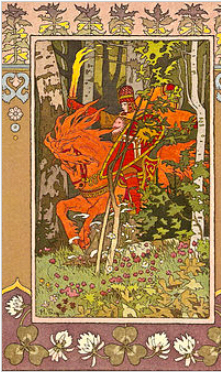
Ivan Bilibin's illustration of the Russian fairy tale about Vasilisa the Beautiful
Ivan Bilibin’s illustration of the Russian fairy tale about Vasilisa the Beautiful

For American audiences, the most famous fairy tales, including those brought to the screen by Disney and others, all came from somewhere else. Such is the power of books and film.

Of course, once upon a time, the more famous stories we know were once local yarns from real places. In fact, many places got their names from something that once happened there with people who were well known at the time. To those who knew the origin of the name, a river or forest or mountain pass was more than water, trees and rocks. It was all that, plus what happened–and, what might happen again.

Almost all places have stories associated with them. You can find some of the more notorious and/or most interesting by running Google searches with such phrases as “Florida ghost stories,” “Glacier Park legends,” and “Illinois haunted places.” The people who live in a town or county often grow up hearing multiple versions of these stories along with others that never get into books, newspapers or websites.

We tell stories to each other almost every day. Sometimes, this is pure gossip. At other times, it’s neighborhood news with a bit of opinion thrown into it.

Storytelling is a very natural pastime even without a front porch or a campfire. We share the good, the bad and the ugly with each other. When that which we’re sharing is larger than life, or stranger than normal, it begins turning into a legend associated with the place where we live.

When we camped pine forests, we told and re-told the tall tales about what happened there "years ago."
When we camped pine forests, we told and re-told the tall tales about what happened there “years ago.”

As a writer of contemporary fantasy, I always love weaving local ghost stories and legends into my work. For one thing, those stories are just as much a part of a place as are the rivers, mountains and towns. Also, they have a lot of flavor in them whether it’s pure local color or an amusing or frightening tale that could have happened anywhere.

Our stories are stronger, I think, when we consider the legends and tall tales connected to a place as part of our research. Almost every town has a haunted house, cemetery, or lover’s lane. If you live there, you know about it already. If you don’t, it’s not too hard to track down through ghost hunter and haunted websites.

Plus, for those of us who love blurring the line between fiction and reality, ghost stories about the places where we’ve set our short stories and novels add a nice touch of mystery.

Malcolm

99seeker

The e-book edition of “The Seeker” is also on sale at Smashwords and OminiLit

Perhaps True Grief Begins After All Has Been Said and Done

Yesterday afternoon, my wife Lesa and I attended the memorial service for our long-time friend Gordon Carper (May 10, 1935 – September 3, 2011) at the Berry College Chapel in Rome, Georgia. We listened to “You Raise Me Up” (Celtic Woman), “If I Can Dream” (Elvis Presley) and “Amazing Grace” (from both granddaughter Kallan Carper and Celtic Woman). We heard joyful, heartfelt and often humourous remembrances from Dr. Carper’s former Berry College colleagues (Richard Lukas, William Hoyt and Chaitram Singh) and from his former students (William Pence, Bert Clark, Timothy Howard and Greg Hanthorn). The memorial service, led by the reverend Paul Raybon, truly was the Celebration of a Life.

After the service, we spent time with family and friends at a reception at the college’s historic Ford Buildings before going back out to the Carper’s house. Lesa and I hadn’t seen some of those people in over 30 years. In the “Ford Living Room,” we continued what began at the memorial service, remembering and telling stories. A nationally known scholar, Gordon Carper taught at Berry College between 1965 and 2003, and those years overflow with memories from the untold numbers of colleagues and students impacted by Gordon’s teaching, mentoring and gregarious, you-oriented storytelling.

After a death, family and close friends are suddenly immersed in details. Doctors, funeral home directors, pastors, newspapers, florists, caterers, and others suddenly loom large in the daily schedule. While details steal away time for grief, they also provide a focal point of necessary busywork that can help friends and family cope with the loss during the stunning and confusing limbo of thoese first days.

Personal Notes

My wife Lesa was one of Gordon’s students at Berry College. I was one of his colleagues between 1977 and 1980. We were married at their house in 1987 with Gordon and Joyce standing beside us, and with their sons Noel and Todd and other friends standing around us. We can spin yarns about Carper-House Moments, Gordon and Berry College until the cows come home, and while staying with his wife Joyce for several days this past week, the stories we knew became intermissions of levity in between the tasks required to prepare for yesterday’s memorial service and all the guests who would arrive.

I won’t presume to speak for Lesa or Joyce, but I felt that we were all too busy to truly grieve. Lesa and I have spoken of this before: the fact that the paperwork and details of a death are so often the full focus of attention until after the memorial service or funeral come and go that there’s little time to think of much else. Not that the paperwork ends there, but it begins to fall away and during the long nights grief is likely to become a close shadow in all those streets, parks, rooms and other places where the memorial service memories and the Ford Living Room reception stories were born.

Lesa and I were part of a close-knit group of faculty and students who came together in the 1970s out of mutual respect, friendship and to support each other during an era in the college’s history when labor troubles tried very hard to trump the process of education. The “dark time,” as we call these years had a huge impact on all of our lives. Time has healed most of the wounds. Perhaps the wounds made us all stronger. While there was much to be said and done during the past week and at yesterday’s memorial service and reception, major dark time stories did not occupy center stage. We all know those stories and they flavor our thinking and they are, perhaps, a subtext to the wonderfully humorous and inspiring celebrations of Gordon’s life at public gatherings and during one-on-one conversations.

Yesterday, we—as a group—were given an opportunity to celebrate and consider the impact of a teacher, mentor, leader, and friend in our lives and in the lives of Berry College’s graduates for over a quarter of a century. Now we personally have time for the grief that begins after all has been said and done.

–Malcolm

Book Review: ‘Fate is a Mountain’

Fate Is A Mountain Fate Is A Mountain by Mark W. Parratt

My rating: 5 of 5 stars
Mark, Monty and Smitty Parratt had a big back yard between 1950 and 1964, the million-acre Crown of the Continent in northwestern Montana called Glacier National Park. The boys’ father, the late Lloyd Parratt and his wife Grace brought the family to the shores of the park’s St, Mary Lake every summer where Lloyd worked as a seasonal ranger naturalist for the National Park Service. Later, Mark Parratt served as a fireguard and the late Monty Parratt worked on a Blister Rust crew.

Since Mark and Monty were avid fishermen, the book includes many great fishing stories along with climbing and hiking adventures, the trials and tribulations of living in a remote cabin accessible only by rail, a stormy night in a fire lookout, canoeing on a rough St. Mary Lake, and encounters with wildlife.

For local residents, these stories will bring back old memories; for park visitors, the delightful exploits of three young men in their coming-of-age years will cast the trails, lakes and mountains along the back bone of the world into a deeper perspective. Comments appended to some of the stories note how the park has changed over the years.

The harrowing centerpiece to the book is “The Otokomi Grizzly Bear Attack” of July 18, 1960. Ten-year-old Smitty Parratt was badly mauled by a grizzly bear as he returned from a fishing trip to Lake Otokomi with two ranger naturalists and two tourists. The story of the attack, the injuries, the rescue and the aftermath demonstrates courage, resourcefulness and grit while serving as a cautionary reminder that wild places are wild.

The “Fate is a Mountain” (June 1962) and “Lone Climber Missing” (July 1963) stories describe mountain search and rescue operations at Mt. Henkel near Many Glacier Hotel and at Going-to-the-Sun Mountain in the St. Mary Valley. Search-team members routinely place themselves in harm’s way while looking for missing climbers, as Parratt describes in a late-night moment on the slopes of Mt. Henkel:

“Suddenly, a tremendous crash echoed from above. Instinctively, we all dove into crouching positions next to a nearby cliff face. A shower of lose scree was rapidly followed by a thunder of large bounders that careened over our heads and plummeted toward the valley below. Smaller pieces of snow and rock pelted our hard hats for several moments.” (This reviewer has climbed Mt. Henkel and appreciates the challenges of a rescue attempt.)

Compiling these stories was obviously a labor of love and of remembering bygone days where a family’s life intersects the world of a beloved tourist destination and wildlife preserve. If there’s an omission here, it’s the lack of a story about the Montana flood of June, 1964, quite possibly the state’s worst natural disaster, that caused extensive damage to roads and facilities throughout the park including those at St. Mary.

The book provides a rich, insider’s look at the world of Glacier National Park as it was over 40 forty years ago. As the park approaches its 2010 centennial, these stories as part of its history add to our understanding of the place and the people who worked and played there.

View all my reviews >>

Published by Sun Point Press in Whitefish, Montana, the book is available on line at Barnes & Noble and Amazon and at selected stores near the park.

SOFbanner1