 The Lords of Discipline by Pat Conroy has been the perfect book for re-reading on this dour Sunday afternoon. In the novel, we read of the terror of attendance at the “Carolina Military Institute.” So many people–including the Citadel’s top brass, I suppose–saw the 1980 novel as a veiled and not very flattering account of education at the Citadel. So, they banned him from the campus for two decades. Conroy is my favorite author and I much prefer South of Broad and The Prince of Tides to this novel.
- I can’t remember what online vendor it was, but when they delivered a package at about 7:30 p.m., they sent my wife a picture of the box sitting on the welcome mat. That’s a first. Too bad the photo didn’t include Robbie (cat) standing by the box while glaring at the camera and hissing at the interloper who dared to step up on our front porch.
 I see this free and downloadable magazine “Learning Justice” from the Southern Poverty Law Center as an excellent chance to consider how teaching should be happening in our schools. According to the center, “Current censorship efforts and attacks on inclusive schools show that education is indeed the battlefield for justice, and the new issue of Learning for Justice magazine highlights the fact that the fight for democracy is built on intersecting struggles for justice.” (Download your copy of Issue 3, Fall 2022 Learning for Justice magazine: https://bit.ly/3gEXeBg ) I’ve been a supporter of the SPLC since its 1971 founding with Julian Bond as its first president.”
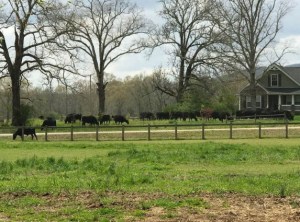 If you’re a constant visitor on Facebook, you’ll remember seeing photographs people took years ago under the designation of FBT (Fall Back Thursday.) One of my favorite FBT pictures shows what happened a lot when we first moved here since the fence around the adjoining pasture was always falling down. The most fun comes when the cows get out at night and we all go out to round them up in the dark when we can hardly see them. Seriously, you don’t want these heavy critters in the yard because they create mini-potholes wherever they go. Those play havoc with the riding mower for weeks.
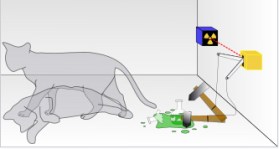 In a recent post called A character is alive or dead or both until the scene is written I said that I was avoiding writing a scene because I didn’t want to character to die. I reasoned–as in the famous Schrödinger’s cat is a thought experiment–that the character wasn’t really dead until I wrote the scene. Okay, I wrote the scene with only three fingers of Scotch to help me make it through the night. Okay, now I can mow I can move on. If my publisher is reading this post, she now knows why I don’t turn out books like hashbrowns at a Waffle House.
 We recently purchased a 2019 Honda HRV because our 2006 Focus wouldn’t start. So, what happened the first time we wanted to go somewhere in the car? Right, it wouldn’t start. The dealer said to jump-start it and bring it in. They figure it just needs a new battery. We figure: (a) that they should have checked the battery before we drove it off the lot, and (b) that they should have driven over to our house to fix the problem rather than saying, “hey, just dump the sonofabitch off and bring it back to the dealership.” I think my wife told them on the phone that that wasn’t the image of customer service they presented to us when we were buying the car. I think the vibes coming from all those cows damage the electrical systems of cars that have sensitive computer systems.
–Malcolm

 Malcolm's Round Table