Clean up your plate: people are starving in. . .

Even though this is only 212 pages, a lot of people didn't have time to finish it.
Even though this is only 212 pages, a lot of people didn’t have time to finish it.

This is a post about books even though you wouldn’t know it from the title. Hopefully, I can connect the dots with or without logic.

My brothers and I were taught that it was not only rude, but just plain wrong, to leave food on our plates. Why?

Generally speaking, food left was food wasted. Years later the giant chow hall sigh at Navy boot camp “suggested”: TAKE ALL YOU WANT BUT EAT ALL YOU TAKE.

It was okay to be a pig as long as you didn’t leave anything in the trough.

Why was leaving food wrong? Because people were starving in country XYZ. We were informed that while eating two or three times the amount of food we needed wouldn’t harm anybody, that throwing away food literally took it off their plates. Asking how that worked in practical terms was considered rude and/or that you thought your parents, school teachers and pastors were liars.

Later, we were told that books cost money (so does food, as it turned out) and that reading only half a book meant that–figuratively and/or literally speaking–you had thrown away half the book’s cover price. Of course, by today’s standards in which people are slinging books out there on Kindle for 99 cents, reading only a third of it means you only threw away 66 cents even though–had you sent that to countries where money goes farther (and often further)–life in general would be better for everyone.

The bottom line on unfinished dinners and unfinished books was shame. Whether it was Aunt Naomi’s brick-hard fruitcake or a dreadfully depressing novel like All Quiet on the Western Front, we were supposed to soldier on to the final battle no matter how much collateral damage our stomachs and psyches suffered in the process.

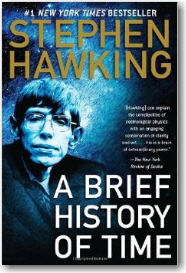
Lured into the book by its sexy cover, people apparently thought 21 was the number of centuries it would take to finish it.

Today, that shame isn’t quite gone with the wind, but it’s getting there. In fact, reviewers on Amazon and GoodReads often confess that “This book sucks even though I stopped reading on page 10.” How brazen is that, shame-wise? You really need to finish the book because some kid in city XYZ is going without a story tonight.

Now we’re getting statistics on unfinished books. People mean well, but like boring stews and bland deserts, their eyes are bigger than their reading endurance. So, consequently, they bought “Capital in the Twenty-First Century” by Thomas Piketty and “A Brief History of Time” by Stephen Hawking seriously intending to eat up every word, but then lost interest a few pages into their literary meals.

Using something called a Hawking Index (H.I.)–explained in The Summer’s Most Unread Book Is…–scientists determined that these two books top the list of unfinished books with folks getting only 2.4% and 6.6% of the way through. These days, fewer people believe in such admonitions as TAKE ALL YOU WANT BUT READ ALL YOU TAKE.

People seem to care less about waste, shame or the value of soldiering on. We’re more comfortable with tweets, texting and sound bites, even though such things often leave us ignorant of the big pictures, full course meals and lengthy tomes the world has to offer. We’re more of a TAKE VERY LITTLE AND PURSUE IT UNTIL BORED kind of society these days. More information, words and food all require commitment and frankly, we don’t want to promise that.

I’ve been tempted of late to throw several books out the window before finishing them. But, I kept on going, not so much because people are staving for words on continent XYZ but because I didn’t have any more fresh books in the house. When that happens, it’s like throwing away your last cracker because it’s a Ritz rather than a Triscuit.

As I read on in spite of the hardships involved, I try not to feel pride for soldiering on or shame for wishing I weren’t. In case it matters, I still clean up my plate.

You May Also Like: Can the Hawking Index tell us when people give up on books? in  The Guardian.

–Malcolm

We could fill cemeteries with neglected books

books“There was a time when a learned fellow (literally, a Renaissance man) could read all the major extant works published in the western world. Information overload soon put paid to that. Since there is “no end” to “making many books” – as the Old Testament book Ecclesiastes prophesied, anticipating our digital age – the realm of the unread has spread like a spilt bottle of correction fluid.” – The Guardian in “In theory: the unread and the unreadable”

Carlos Ruiz Zafón writes about a “cemetery of forgotten books” in his novel The Shadow of the Wind. This cemetery is a library maintained by the secret few who know about it and who may lend you a volume if you will protect it for life. After reading the article in “The Guardian” which led me to The Neglected Books Page which led me author Jo Walton’s lengthy 2010 Neglected Books: The List (with a science fiction and fantasy focus), I wondered if we should build a cemetery, that is, a library, of forgotten AND neglected books.

neglectedbooks

You probably have some favorite authors and books that never seem to catch on with the general public. With my Georgia focus, I can usually name several Georgia authors who seem to be lost in the shuffle even though they have won awards and/or had a book or two made into a movie. While I’ll probably read the upcoming Dan Brown book Inferno, I don’t usually follow fads. Reading outside the latest fad, I’m usually able to think of wonderful books that are being overlooked.

“The Guardian” article mentions information overload. That’s certainly a factor. Adults aren’t known for reading a lot of novels per year. Perhaps high school and college literature classes made fiction seem boring. Perhaps the latest reality show, movie, or trending Internet story gets in the way. There are plenty of reasons.

One can also say that small press authors, not including those published by old-line prestigious small presses, are likely to feel neglected. For the most part, small press books do not get reviews from Kirkus, Booklist, Publishers Weekly and major newspapers. There usually are no noteworthy interviews with small press authors or off-book-page stories about their work. With few exceptions, their books are not entered into awards competitions, included on the media’s best-books-of-the-year lists, optioned for movies, or remotely on the radar of most prospective readers.

If you ask a major critic, book reviewer, literary magazine, or publishing magazine what a neglected or a forgotten book is, it is normally considered one from a major publisher that was well reviewed, but had lower than expected sales and was allowed to go out of print. Books by popular authors that don’t catch on like the authors’ other works are also in the “neglected” category.

The cemetery/library in The Shadow of the Wind resonated with me in part because of the novel’s notion that “Every time a book changes hands, every time someone runs his eyes down its pages, its spirit grows and strengthens.” In “real life,” a secret library that almost nobody knows about won’t serve our need. Perhaps books need patrons or people who love them and talk about them or people who share them with their friends. Perhaps we need more adventurous readers who will commit to buying five books a year that are not on the bestseller list. We need more reviewers: writers often wonder why people say, “hey, I loved youshadowofwindr book” but then don’t follow that up with a reader review on GoodReads or Amazon.

I think I’m only talking about band-aids here unless more people find more reasons to read. According to ParaPublishing, 27% of adults in the U.S. don’t read books for pleasure (based on figures from a few years ago). What books are the remaining adults going to pick from: an old and forgotten book, a book from a small press author, or the book sitting in the bookstore window and at the top of the national bestseller lists? No wonder so many books are forgotten and/or neglected and/or passed over—depending on your definition of those terms.

Years ago when literature and other liberal arts courses were more valued in high schools and college than they are now, most of the students in my classes came from families where their parents read almost no books. The students learned from home that reading wasn’t valued. Our town’s public library has reading classes for kids, and I love seeing the kids there. But I wonder, is the excitement of the reading program reinforced by parents at home or are the kids just dropped off at the library by parents who need time to run some errands elsewhere?

Reading is an investment in time more than an investment of money. I get offers via e-mail, Facebook and GoodReads for free downloads and sample chapters. I read a lot, but I can’t keep up with the deluge. I try to promote new authors on my blogs and on Twitter, but sooner or later, I want to read the books I hear about rather than free books I’ve never heard about. It’s book overload even for those of us who read a lot.

riflogoPerhaps reading just isn’t a modern-day avocation and perhaps it’s too late to change that. Can reading-oriented groups help or did we let lack of reading get so far out of hand that the problem is too broken to fix? More and more people are writing and publishing, but their viable readership seems to be getting smaller no matter how much time we all spend arguing about whether e-books should be almost free or should sell for enough to support the authors who wrote them?

  • So, what books and authors do you like that have fallen into the neglected or forgotten categories?
  • What happens when you tell your friends about these books? Do they yawn and then spend another evening watching reality TV shows or reading only the top ten book on their genre’s bestseller list?

Malcolm

trilogybanner

Books: Magic Between the Covers

“A well-composed book is a magic carpet on which we are wafted to a world that we cannot enter in any other way.” – Caroline Gordon

My parents orchestrated Christmas Eve and the following morning with skill, making it a time of magic and expectation even though the gifts beneath the gifts beneath the tree were saturated with love rather than money. More often that not, one or more of the carefully wrapped packages beneath the spruce tree contained a book.

More often than not, each book was inscribed with my name, the date, and the name of the person who found the book and thought I might like the story. Pirates, space ships, wild animals and detectives waited between the covers for me to turn the page and enter an alternate universe. I didn’t see stories as alternate universes at the time, but now when I think of books, I smile at the concept of being in two places at one time.

There I was following the Hardy Boys in their latest attempt to help their police detective father crack a dangerous case AND there I was sitting in a comfortable chair in the living room next to a lamp. According to reports, I often didn’t respond when my parents called me to dinner when I was more there than here within the pages of a book like The Twisted Claw.

Portals, Portkeys and Magic Carpets

Caroline Gordon saw books as magic carpets. Ever fascinated with portals, I see books as doorways to faraway lands like the famous wardrobe in C. S. Lewis Chronicles of Narnia. In today’s Harry Potter series terms, readers might well see a book as a portkey that whisks them away the minute they touch it.

While looking at the Amazon page for Mark Helprin’s upcoming novel In Sun Light and Shadow, I found the novel’s stunning 489-word prologue included there as part of the book’s description. The constraints of fair use don’t allow me to cut and paste the entire prologue into this blog as a shining example of an author’s invitation to his readers asking them to step through the door, touch the portkey or settle themselves onto a flying carpet. But, here’s a taste. . .

An Invitation

Helprin’s prologue begins with the line: If you were a spirit, and could fly and alight as you wished, and time did not bind you, and patience and love were all you knew, then you might rise to enter an open window high above the park, in the New York of almost a lifetime ago, early in November of 1947.

The prologue goes on to describe the view from that window, and then the room itself: full bookshelves, the Manet seascape above the fireplace, a telephone, a desk drawer containing a loaded pistol, and a “bracelet waiting for a wrist.” Then the prologue concludes with: And if you were a spirit, and time did not bind you, and patience and love were all you knew, then there you would wait for someone to return, and the story to unfold.

Even though I was, from the viewpoint of my three cats who were hovering around the den door waiting to be fed, sitting here at my desk, I had in fact stepped through a portal to an apartment in New York 65 years ago. I tell you this: I wasn’t ready to return when Katy, our large calico, rubbed against my leg with a no-nonsense purr because I was thoroughly enchanted by the magic between the covers.

Even though a small percentage of the books I read each year come into my hands as gifts, I approach every book with an interesting premise and a cover splashed with promises as a gift. Years ago, I watched a TV western called “Have Gun, Will Travel.” Today, I gravitate more toward Have Book, Will Travel. Each book is an invitation to adventure, lives hanging in the balance, twisted claws lurking in the dark, castles set high above green valleys, and frightened travelers walking down roads in sunlight and in shadow.

Books cast spells and carry us away and while we are gone, we are changed, writ larger by the experiences now living within our consciousness, and ready to see the word of here with the visions we had while we were there.

Malcolm

Travel to mountains and magic for $4.99. It’s cheaper than Amtrak and Delta Airlines.

If you’re not a reader, for Pete’s sake, stop trying to be a writer

When I taught college-level journalism, I was convinced that some of my reporting and feature writing students never read newspapers.

Other than wondering what the hell they were doing in my classroom, it was clear to me that those who didn’t read the news would probably never learn how to write it. News and feature stories have a noticeable organization and style.

Long-time journalists can hear the cadence of a “properly written” news story inside their heads. Stands to reason, then, that reading—in this case, the news—will help you learn the fundamentals of reporting much faster in a classroom and on the job than being clueless about it.

Aspiring poets and novelists who don’t read poems and novels

Author and editor C. Hope Clark (“Lowcountry Bribe”) wrote in a February 28th post at read.learn.write that in her consulting and speaking work, she finds a lot of aspiring writers who seldom read:

The world abounds with writers. Everyone wants his name, photo and title on a bookstore shelf, as a minimum on Amazon. But amazingly enough, most of them are not voracious readers. They are spitting out words, but taking few in. It’s like using a shotgun instead of a high-powered rifle. The result isn’t very refined, the results less satisfactory.

Some years ago, when desktop publishing programs made it easier to create newsletters, brochures, and posters on a PC screen, a lot of big corporations cut the writers from their staffs because—the bean counters seasoned—anyone could use the software and create something that looked like a newsletter, brochure or poster. Who needed actual writers? The results were a mess, and since the bean counters never read anything anyway, they didn’t know the results were a mess.

The Internet is (perhaps) today’s desktop publishing

The Internet has not only reduced our attention spans, it’s given all of us the power to create materials that look like e-zines, blogs, books, magazine articles and poems. No experience necessary. Simply log on and create.  Clark says that “The slogan ‘reading is fundamental’ is remarkably accurate. Somewhere along the line, however, between elementary school and college, reading falls by the wayside. Teaching to tests, however, and not enticing children to fall in love with words, has stolen their ability to perform later in life.”

As a writer, I’m biased: I think all of us need to learn how to read and then not let the skill get away from us. And, we’re talking novels, essays, commentaries, features and criticism here, not just the back of the cereal box or the “Trending Now” links on the Yahoo screen. Having worked in corporate America, I can testify to the fact that a lot of stuff got screwed up because the people reading the reports and white papers and trade magazine article weren’t really getting it. They skimmed and/or couldn’t follow a logical argument in print.

What do I have to do to become a writer?

The Internet, and that includes a few well-known print-on-demand book publishers, gives the impression the answer is nothing. Just put one word after another until you reach the required word count for a short story or a book, format it, and you’re done. And when nobody reads it, the first thing you’ll hear from “the writer” is the accusation that there’s a conspiracy out there. Amazon, BIG PUBLISHING, the government, the search engines, the service providers and the reviewers had nothing better to do that get together in a bar and decide to stomp down some a book that otherwise would have won the Booker, Nobel, and Pulitzer prizes.

The speculation about “What the hell happened to my book?” seldom includes any need to learn the art and craft of writing first. And this goes back to something very fundamental: Reading. That’s where becoming a writer starts, and it never stops.

Malcolm

Summer Reading…as the LA Times Sees It

Can you hear the bandwagon, the buzz and the hype? All that sound and fury is the mad rush of newspapers, magazines and blogs to trot out their lists of the hottest, sexiest, and scariest summer reads for beach, boudoir and ballpark. Yes, there’s a lot to like. I have already found some “must reads” on the lists, including The Final Storm by Jeff Shaara and The Chieu Hoi Saloon by Michael Harris.

Yet, from my perspective, the LA Times doesn’t “get it.” Neither do most of the other summer reading lists bring disseminated by the older, well-established newspapers and magazines. What we have here is “old media” promoting “old media.” By that, I mean the traditional big boys in the fading world of print are promoting large, old media publishers as though the congomerates are the only game in town.

It’s been an elite club for years. Look at the names of the publishers on the LA Times’ list. You’ll be hard-pressed to find an independent and/or small press publisher in the group. You’ll find Scribner, W. W. Norton, Penguin, Random House, Knopf and William Morrow.

I’ll stipulate that even in a world where many old-line publishers are in trouble, where book stores are failing, and where e-books are overtaking print books in sales, most of the buzz and the books sold are still coming from the old-media conglomerate publishers. But that’s just the tip of the iceberg when it comes to reading opportunities.

Depending on those estimate you like, there are about 300 medium sized pubishers in the U.S. Most of them, much less the small publishers, never appear on the summer reads or the Christmas reads lists. (I was happily surprised to see a McSweeney’s book on the LA Times list.) But otherwise, what a shame, ignoring most of the publishers in the country.

New Pages features a fine list of Independent Publishers and University Presses here. The majority of the reading public either doesn’t know those publishers exist or inaccurately presumes the books coming from them are filled with footnotes and niche-market symbolism and weird experimental stuff. But take a look. See what you’ve been missing.

Alternative Selections

A Heaven of Others by Joshua Cohen from Dzanc Books.

Knuckleheads by Jeff Hass from Dzanc Books.

Bogmeadow’s Wish by Terry Kay from Mercer University Press.

The Coffins of Little Hope by Timothy Schaffert from Unbridled Books.

Scorpion Bay by Michael Murphy from Second Wind Publishing.

Light Bringer by Pat Bertram from Second Wind Publishing.

Hyphema by Chelle Cordero from Vanilla Heart Publishing.

Maze in Blue by Debra H. Goldstein from Chalet Publishers.

These books ought to be enough to get you started this summer.

Malcolm

Jock Talks…The Collection combines four e-books in one for only $3.99.

Jock Stewart, who refutes charges that he was raised either by alligators or hyenas, believes that modern-day journalism would be going to hell in a hand basket if hand baskets were still readily available. He has chosen to make his stand for old-fashioned reporting at the Junction City Star-Gazer, a newspaper that—while run by fools and buffoons—knows the difference between real news and “stuff that sounds like real news.”

Books on the Nightstand

My nightstand has so many books on it, there’s hardly enough room left over for the reading lamp and the alarm clock. I sleep better when there are plenty of yet-to-be-read books there. When they’re gone, I’m worse than a chain smoker who’s run out of cigarettes.

Running out of books is not an option. After finishing Stieg Larsson’s “The Girl Who Played with Fire,” I started reading two books simultaneously since one of them is on my computer. Yes, I know, if I had a Kindle, I could read e-books in bed.

By night, I’m reading Montana Mist: Winter of the White Wolf by Doug Hiser. In addition to the wolves, this novel is filled with memorable characters and mountains. I couldn’t resist.

Publisher’s Description

In the remote Montana wilderness, a mountain man, once a professional athlete, lives his life in seclusion protecting and raising orphan wolves until he gives his heart to Sassy, a young woman hitchhiking across America. He guards his secrets and the other woman in his life, a beautiful blind woman, known as “Shy Girl.” The wolf pack roams the mountains as he searches for the white wolf, Mist; that he raised and released into the harsh snowy forested peaks, his ties with the wolves as close as the bond with his new love. Montana Mist is the story of one man’s secrets, the two women in his life, and the wild world of wolves of the remote forest in the last untamed region where man has not put his imprint on the land. A man shaped by the mystery of his past and the complication of his future while the adventure of his heart threatens to destroy his solitary precious world of mountain, wolverine, moose, elk, and wolf.

By day, I’m reading Razor’s Revenge by Paul Chandler. I enjoyed Chandler’s previous novel Peeper, and was happy to see the new release. This is very different (as its cover suggests) from Montana Mist, but equally absorbing.

Publisher’s Description

In 1958, a group of unscrupulous men use fabricated evidence, perjured testimony, and a crooked judge to steal Samuel Razor’s company. For ten years Razor allows them to believe they’ve gotten away with their crime. They continue to believe it until the day Razor comes for them.

Five decades later, Samuel Razor is a billionaire and an icon in the business world. His revenge taken, his youth long gone, and his health rapidly failing, there is one last important thing he wants to accomplish before he leaves this world, one more villain he needs to deal with.

The legal justice system-the very system that made the theft of his company legal and binding-is laughably easy to deceive. All it takes to defeat it is something that any human being can do: tell a lie. And from that lie come lawyers, trials, incompetent verdicts, and inevitably, unsatisfying compromises.

To ensure that the law only serves and does not victimize, there can be no lies, no lawyers, no biased judges. Samuel Razor has the money, the influence, and the motivation to reinvent the system. It will be his last and final act of revenge.

Coming up next, Snare by Deborah J. Ledford. The novel has has been nominated for The Hillerman Sky Award and follows Ledford’s outstanding 2009 novel Staccato.

Publisher’s Description

Native American pop singer/songwriter, Katina Salvo’s career is about to take off. There’s one problem: someone wants to kill her. Katina and her bodyguard, Deputy Steven Hawk, are attacked during an altercation at her first live concert. Could the assailant be a mysterious, dangerous man from her youth? Or her estranged father recently released from prison for killing her mother?

Performed against the backdrop of the picturesque Great Smoky Mountains of North Carolina , and the mysterious Taos Pueblo Indian reservation, SNARE is a thriller fans of Tony Hillerman will appreciate.

These will keep me busy for a little while, though I’m already looking for more so I don’t run out. What great books are waiting on your nightstand that I ought to be considering?

You might also like: Quick Sex, Weekend Relationships and Short Books

Malcolm

$4.99 on Kindle

Three posts for writers

Many of you know I also maintain a Typepad weblog called Writer’s Notebook. If you love reading, writing and books, I invite you to take a look at several of my latest posts:

The people who visit you online are more than numbers

NEA: More Americans are Reading Literature

Your passions fuel your reading

You can find recent book reviews posted on my March of Books page on my web site and you can see my author’s web log on Blogger called Sun Singer’s Travels.

As always, thanks for the visit!