Borne back ceaselessly into the past

newyear2013Yesterday tugs at me
like undertow.

Beach bums say
(from birds’ first cries at break of day
to sweet whispers of sunsets and red sails)
that I better watch out
or I’ll be fetched far from the happy shore
along with childhoods, daisies, favorite books,
meaningful looks, old fishermen’s shoes and folktales,
and hauled downward below the continental shelf
where everything that ever happened
is stored for safekeeping
in Davy Jones’ locker.

Titanic is there,
with  Lusitania, Edmund Fitzgerald, Empress of Ireland,
assorted sea monsters, sirens and songs, silenced now,
except in dream remnants flying like prayer flags
while their dreamers ceaselessly seek their future.
Yesterday caresses my feet like undertow
and the lifeguards say
I better watch out
or I’ll be ripped from an uncertain littoral
strewn with shells where long-gone creatures once lived
downward below the surface of known thought
where everything that ever happened
is locked away with ghost stories.

Yesterday whispers to me
like undertow
and the philosophers say
that I better watch out
or I’ll be come and gone with fleeting gestalts,
sunny afternoon dust motes, twilight inklings,
eye-blink gods and lives without faults
left out of history’s footnotes
that are kissed and missed forever
by all that has been borne
into the sleep of the deep.

Ceaselessly,
beach bums, life guards and philosophers
warn me with each red sky of morning
and every menacing grey twilight of gales
that yesterday is made of mirrors and smoke,
merely a mirage of dreams and lights across the bay.
Nonetheless, tomorrow or sooner than tomorrow,
I will ignore those fading cries of reason
because I’m watching less out than in,
aging upon the new season like spirits in oak.

Tomorrow, then, when yesterday calls me
with the words of wondrous once-upon-a-times,
turtle doves and lonely lost loves,
she will promise me many worlds, quantum leaps,
vision quests, and cave shadows in perfect pantomimes,
and like all I lack,
I’ll be borne back.

copyright (c) 2013 by Malcolm R. Campbell

Briefly Noted: ‘Voices of the Elders’ by Shelly Bryant

Shelly Bryant (Cyborg Chimera, Under the Ash) is a prolific poet whose work never fails to inspire readers with pointed and poignant images that rise from the earth on the wings of spare words. Her new collection Voices of the Elders from Sam’s Dot Publishing is startling in the risks taken, the variety of its forms and references and the scope of its vision.

The fifty-five poems in this 59-page volume, many of which have appeared in “Aoife’s Kiss,” “Scifaikuest,” “Sloth Jockey” and other publications, are grouped into four sections—seduction, obstruction, destruction and abduction.

Jason Gantenberg aptly describes Bryant’s scope in these groupings in the book’s introduction: “What I’ve always loved about Shelly’s writing is the breadth of genres and periods in which she embeds her thoughts. There are few writers who will quite so fearlessly juxtapose classical Anglo-Saxon fantasies about fairies and dragons with ruminations on supernovae, historical fiction with futurism, cynical politics with whimsy.”

In “Oort” Bryant writes of “a failed planet” that’s “denuded of destiny,” followed by “Styx” an “eternal river” with an “ever-changing flow,” followed by “Bargain Hunter” about a young man in a store who makes a five-dollar purchase out of books for “aficionados with loads of cash.” The poem ends with these lines:

producing pleasure
properly pirated porn
just like the real thing

“Keep it in the Family,” begins:

familiarity
and its child
contempt
creep into familiar lines

And “Voice of the Elder” ends:

the elder dryad
to the swirling storm
raises his dying howl

I will return to “Memories Shared, Standing on Your Balcony,” the writer’s block in “Project,” “Men of Renown” with their Achilles heels and the other fresh-faced words in Voices of the Elders many times, for while they speak to me of today’s world in today’s language, they are, I think, penned by an old and very wise soul.

–Malcolm

My Book Reviews of 2011

Like most book reviewers who aren’t paid by a newspaper or a magazine to read 24/7, finding the time to read a book and then say something helpful about it is difficult. I could use an extra hour or two ever day just for reading. I don’t review all of the books I read. I currently have three books in the queue:

  1. Mister Blue by Jacques Poulin – I read and enjoyed this book and will post the review this year.
  2. Cinder by Marissa Meyer – Next on my reading list.
  3. The Devil’s Elixer by Raymond Khoury – Book on the way to my house.

Nonetheless, it was a good year for reviews. Here’s a look back at the books I reviewed or noted in 2011 for those you might have missed:

Next Review

Malcolm’s Round Table

Literary Aficionado

 Malcolm R. Campbell is the author of novels filled with fantasy and magic.

For a glimpse into the flavor of “Sarabande” (Vanilla Heart, August 2011) see his post: an assault where willow creek carries water away from the mountains

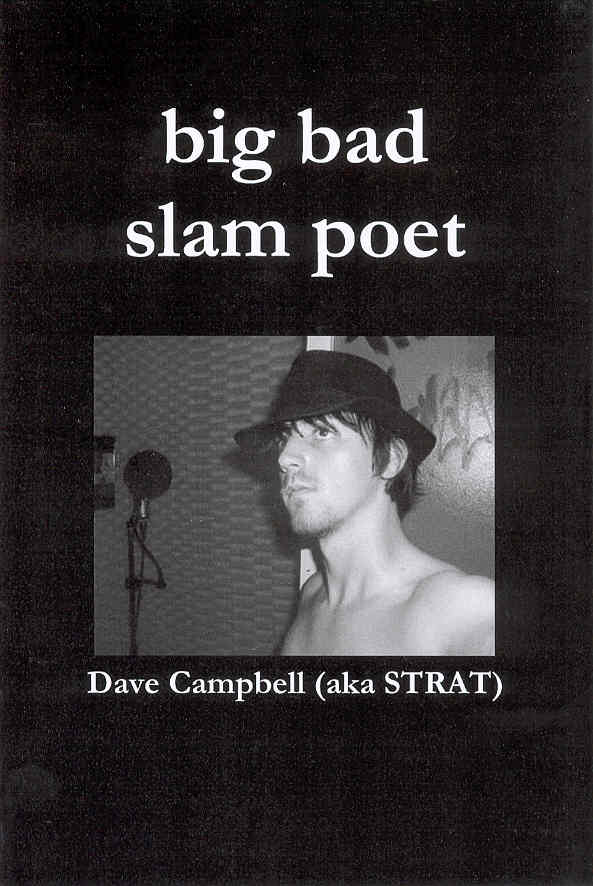
‘big bad slam poet’ released as e-book

The EBook version of Dave Campbell’s “big bad slam poet” was released on August 4, 2011.  This slam poetry EBook is available on iPhone, iPad, and iPod touch with iBooks and on the computer with iTunes.  It is also available from lulu.com as an EPUB for the Adobe Digital Editions computer format.

The EBook includes all of the poems in the print version of the book that was published in October, 2009.  Among the poems are “emergency”, “inspire”, “the way atlas shrugged”, and “kiss the scars”.  Some of the poems in the EBook are also performed by Campbell (aka STRAT) on a CD that has the same title as the book and that was released in November, 2009.

Campbell, who died in 2008, won numerous poetry slams and rap battles.  He is known to many in the Orlando area arts community and beyond as a talented poet and hip hop artist.  He grew up in the Orlando area and refined his poetry and hip hop skills while working at various jobs.  His book and his CD have insightful poems about relationships and life in general.  The name of both the book and the CD are also the title of one of Campbell’s poems.

Malcolm

Review: ‘Telling the Difference’ by Paul Watsky

Telling the DifferenceTelling the Difference by Paul Watsky

My rating: 5 of 5 stars

During the 1960s, high school English teachers carefully served from the literary canon a poesy stew of skylarks, nightingales and albatrosses with a few leaves of grass for seasoning. Contemporary poems howling through the streets in their underwear were adjudged unsafe in the classroom. We were left to discover the likes of Ginsberg and Ferlinghetti after school—at which point, our imaginations became enlightened.

Paul Watky’s collected poems in Telling the Difference (il piccolo editions from Fisher King Press, 2010) are an explosion waiting to happen that today’s students will only discover in a state of reality where lesson plans and outlines are prohibited even though Watsky prohibits nothing.

When yin and yang, sacred and profane, and laughter and tears are encouraged by the poet to sit side by side—perhaps even hold hands—in his work, the result is poetry that’s unsafe at any meter. In the book’s acknowledgements, Watsky notes that he is grateful to his wife and sons “for putting up with what poetry puts people through.”

Let this acknowledgement serve as a warning to the reader that Telling the Difference has the power to unleash the imagination at the borderline of chaos and enlightenment. Bound together, uneasy laughter and joyful pain have great power whether they are borne by a pet crayfish named Cumbersome “all tarted up with dust bunnies,” diver ants who’ll chew up “the fortuitous drunk passed out in the wrong place, Granny when she falls and can’t get up,” or a girl tied to “the nearly-wiggled-out pin of a fragmentation grenade.”

Watsky’s has organized Telling the Difference into four sections, “”Temple of Kali,” “The Closest,” “What People Learn,” and Piglet Mind,” bookended neatly in between a prologue called “All Good Things” and an epilogue called “Twins Discuss Heaven.” When the prologue suggests that saying “all good things must come to an end” is mere consolation like the “dummy nipples proffered between feeds,” the book’s stage is set for multiple associations between the transitory and the infinite. In the epilogue, George says “I believe in outer space. There isn’t room for heaven” and Simon explains that if heaven were real, we “would see Grandpa Seymour flying around in his coffin.” What else is there to say?

In reality, Watsky says a lot within the illusory confines of this 81-page collection. He speaks volumes about Bluejay’s warning in “Toad Fever,” a man who smashes walnuts with his manhood in “The Magnificent Goldstein” and the danger of words in “Language Fallen into the Wrong Hands.”

Telling the Difference is a wondrous, no-boundaries delight. However, if your hands are the wrong hands for a volatile serving of unsafe words, please remember that you’ve been warned that Watsky will put you through heavens, hells and hoops you didn’t know existed.
View all my reviews

Malcolm

New STRAT Recording Released

Orlando, FL, PRLOGJun 07, 2011 – A recording of Dave Campbell (aka STRAT) performing his poem “only love”, was released this month and is available from lulu.com.  

Previous releases include the CD “big bad slam poet” which has a collection of 14 poems written and performed by Campbell and a book with the same name as the CD.   

Campbell, who died in 2008, won numerous poetry slams and rap battles.  He is known to many in the Orlando area arts community and beyond as a talented poet and hip hop artist.  He grew up in the Orlando area and refined his poetry and hip hop skills while working at various jobs.

Malcolm

Book Review: ‘Adagio & Lamentation’

Adagio & LamentationAdagio & Lamentation by Naomi Ruth Lowinsky

My rating: 5 of 5 stars

A delicate writing desk stands ready for use in a sunny room on the cover of Naomi Ruth Lowinsky’s collection of poems, Adagio & Lamentation. The room is filled with light from the world outside the high arched window. The watercolor painting by the poet’s grandmother Emma Hoffman (“Oma”) displays a room Lowinsky saw many times as a teenager when she visited Oma’s house.

One can imagine Lowinsky working in such a room with a pen so sharp that it tears the paper, cutting through the desk’s polished veneer to carry ink and light deep into the primary wood. “I wish you could stop being dead,” Lowinsky writes to Oma in the opening poem, “so I could talk to you about the light.”

The nib on Lowinsky’s pen shreds the curtain of time that conceals her ancestors and allows them to speak. “The spirit of my dead grandmother came to us as we lay after love in the renovated Old Milano on the northern California coast.” The spirit’s words in “ghost gtory” cut deep. In “Adagio and Lamentation,” the poet hears her father playing the piano while “our dead came in and sat around us a ghostly variation/and my grandmother sang lieder of long ago.”

Lowinsky’s collection of poems is organized into four sections, “before the beginning and after the end,” “what broke?,” “great lake of my mother” and “what flesh does to flesh.” With strength, certainty and intuition, the poems live and breathe on their pages, and when experienced together, comprise an ever-new song about long-ago wars, colors, shadows, moments and people.

Joy and sorrow dance slowly in the light throughout Adagio & Lamentation. From the opening invocation to Oma to the closing “almost summer,” Lowinsky’s words—written with “a flicker of serpent’s tongue in her ear”—tear through the paper-thin present and drive their way deep into the underworld of the unconscious where the inspirations of her muse are fiery, erotic, earthy, transcendent and whole.
View all my reviews

–Malcolm R. Campbell is the author of “The Sun Singer,” “Garden of Heaven: an Odyssey” and “Jock Stewart and the Missing Sea of Fire.”

Review: ‘After the Jug Was Broken’

After the Jug Was BrokenAfter the Jug Was Broken by Leah Shelleda
My rating: 5 of 5 stars

Students of the ancient texts tell us that when the infinite flowed into the original vessels of the finite, the vessels shattered. Their shards, each with a spark of light, comprise all we know in a world of apparent opposites.

In the title poem in After the Jug Was Broken, Leah Shelleda writes that if the vessels were too fragile to contain the light, “Then I will be a gatherer of shards.” Shelleda organizes her shards in this luminous collection of sparks into Myth, Experience, Place and Spirit.

Some of the shards are transcendent. In Myth, her “Invocation” asks the Lamias of old to “Send sudden gusts of wild song” and Mary Magdalene asks again the old riddle, “How may a woman also enter?”

Some of the shards are sharp. In Experience, “The Memory of Light” cuts deep when it says “How rare when joy enters history/like fireworks and lasting/about as long” and “Extinct Birds” draws blood when it says “The Great Auk the Madagascar hawk/ the last ones died of indifference.”

Some of the shards are kaleidoscopic, reflecting the visions of multiple places. In Place, Shelleda writes in “Behind the Sacred Heart” that she doesn’t want to write about the Sacred Heart, preferring to tell us about a dream “of an openhearted wise man/who arrives four times a year/once in each season/but that comes later/in a language/that is not yet spoken.”

None of the shards are like the shards of broken pottery displayed dead under glass in museums. They shine with their apportioned photons of light. They live and breathe and if we take them into ourselves with our apportioned share of the infinite breath, we will be changed in ways we should not try to predict. In Spirit, the final poem “Heenayni,” whispers “I am here/here in this world as it is.”

“Heenayni,” from the Hebrew for “I am here” is, according to the students of the ancient texts, the moment where categories, worlds, photons and shards come together and the poet and the reader of the poems experience the whole as divine and as one.

View all my reviews

Coming April 29: Author Pat Bertram contributes a guest post about the light behind her new novel Light Bringer.

Malcolm

The Thirteen Days of Christmas

On the first day of Christmas,
My true love sent me for fun
A cartridge for my shot gun.

On the second day of Christmas,
My true love sent me for fun
Two Victoria’s secrets,
And a cartridge for my shot gun.

On the third day of Christmas,
My true love sent me for fun
Three French kisses,
Two Victoria’s secrets,
And a cartridge for my shot gun.

On the fourth day of Christmas,
My true love sent me for fun
Four calling cards,
Three French kisses,
Two Victoria’s secrets,
And a cartridge for my shot gun.

On the fifth day of Christmas,
My true love sent me for fun
Five beholden kings,
Four calling cards,
Three French kisses,
Two Victoria’s secrets,
And a cartridge for my shot gun.

On the sixth day of Christmas,
My true love sent me for fun
Six hounds a-baying,
Five beholden kings,
Four calling cards,
Three French kisses,
Two Victoria’s secrets,
And a cartridge for my shot gun.

On the seventh day of Christmas,
My true love sent me for fun
Seven mugs a-brimming,
Six hounds a-baying,
Five beholden kings,
Four calling cards,
Three French kisses,
Two Victoria’s secrets,
And a cartridge for my shot gun.

On the eighth day of Christmas,
My true love sent me for fun
Eight aides a-bilking,
Seven mugs a-brimming,
Six hounds a-baying,
Five beholden kings,
Four calling cards,
Three French kisses,
Two Victoria’s secrets,
And a cartridge for my shot gun.

On the ninth day of Christmas,
My true love sent me for fun
Nine caddies prancing,
Eight aides a-bilking,
Seven mugs a-brimming,
Six hounds a-baying,
Five beholden kings,
Four calling cards,
Three French kisses,
Two Victoria’s secrets,
And a cartridge for my shot gun.

On the tenth day of Christmas,
My true love sent me for fun
Ten hordes a-pillaging,
Nine caddies prancing,
Eight aides a-bilking
Seven mugs a-brimming
Six hounds a-baying,
Five beholden kings,
Four calling cards,
Three French kisses,
Two Victoria’s secrets,
And a cartridge for my shot gun.

On the eleventh day of Christmas,
My true love sent me for fun
Eleven gripers pissing,
Ten hordes a-pillaging,
Nine caddies prancing,
Eight aides a-bilking,
Seven mugs a-brimming
Six hounds a-baying,
Five beholden kings,
Four calling cards,
Three French kisses,
Two Victoria’s secrets,
And a cartridge for my shot gun.

On the twelfth day of Christmas,
My true love sent me for fun
Twelve grenades with pins a-missing,
Eleven gripers pissing,
Ten hordes a-pillaging,
Nine caddies prancing,
Eight aides a-bilking,
Seven mugs a-brimming
Six hounds a-baying,
Five beholden kings,
Four calling cards,
Three French kisses,
Two Victoria’s secrets,
And a cartridge for my shot gun.

On the thirteenth day of Christmas,
My true love sent me for fun
A baker’s dozen epiphanies,
Twelve grenades with pins a-missing,
Eleven gripers pissing,
Ten hordes a-pillaging,
Nine caddies prancing,
Eight aides a-bilking,
Seven mugs a-brimming,
Six hounds a-baying,
Five beholden kings,
Four calling cards,
Three French kisses,
Two Victoria’s secrets,
And a cartridge for my shot gun.

–Jock Stewart

To view my FriendFeed posts about books and publishing, click on the icon below.

Subscribe to me on FriendFeed