MAJOR WRITERS FOR CHILDREN AND YOUNG ADULTS AMONG OVER 380 AUTHORS CALLING ON SOUTH CAROLINA LAWMAKERS TO REJECT RESTRICTIONS TO EVALUATE BOOKS IN PUBLIC SCHOOLS

Proposal Could Lead to the Banning of Literary Classics and Acclaimed Contemporary Books

FOR IMMEDIATE RELEASE

Updated on June 6 to add additional publishers that signed the letter

(NEW YORK)— More than 380 authors joined major publishing houses and civil rights, anti-censorship, and writers advocacy groups today to raise alarm over new South Carolina education standards for assessing books and other materials for public schools.

In an open letter to state lawmakers urging them to block the new regulations, the groups, publishers, and authors argue the new standards could lead to the removal of literary classics and critically acclaimed contemporary novels, simply for a sexual reference.

Along with publishers Hachette Book Group, MacMillan PublishersPenguin Random House, Simon and Schuster and Sourcebooks, signers include ACLU of South Carolina, Authors Against Book Bans, Every Library, National Coalition Against Censorship, National Women’s Law Center, PEN America, the Woodhull Freedom Foundation, We Need Diverse Books, and notable authors of books for children and young adults, including Laurie Halse Anderson, Jodi Picoult, Katherine Paterson, Nikki Grimes, Daniel Handler, Elizabeth AcevedoPeter ParnellDavid Levithan, and Ellen Hopkins, among hundreds of others. Nearly 20 percent of the authors are South Carolina residents or have ties to the state.

The proposed regulations would impose a two-part test to evaluate if materials are age and developmentally appropriate and align with state instructional programs. The regulations will also create an appeal process to the State Board of Education, whose decisions on some books would affect all school districts. The regulations are slated to take effect on June 25.

The letter argues that the proposed regulations threaten free expression, the freedom to read, and the First Amendment, noting that librarians and educators are already “well placed” to curate library collections with appropriate books and materials.

“Adding government mandated ‘tests’ for age appropriateness will only chill speech and restrict access to literature for students across South Carolina,” the letter said.

“Bills like this allow the government to determine what can and can’t be read — not parents, not educators, not librarians, not the students who need these stories. We authors want to do everything we can to support the freedom to read, and the power that reading has to give context in an overwhelming world,” said David Levithan, bestselling author and one of the leaders of Authors Against Book Bans.

Similar language in Iowa resulted in mass book bans affecting classics, books used in advanced placement courses, and contemporary young adult novels.

The regulations’ explicit prohibition on “sexual conduct” is vague and broad, meaning books with sexual references are likely to be banned without considerations of context, purpose, or educational value. Experts on sexual violence have repeatedly reported that learning about the signs of abuse and what consent means helps young people to speak up in harmful situations, reach out for help, or recognize abuse they have experienced.

Since 2021, more than 100 books have been banned in South Carolina schools; the authors and organizations fear the new regulations will increase that number.

Across the country, book banning has spread at an alarming rate, ignited by local activists and parents. PEN America documented more than 10,000 bans between 2021 and 2023— an assault on the freedom to read, the lifeblood of democracy.

-30-
PEN AMERICA MOURNS THE DEATH OF ‘WRITER’S WRITER’ PAUL AUSTER

FOR IMMEDIATE RELEASE

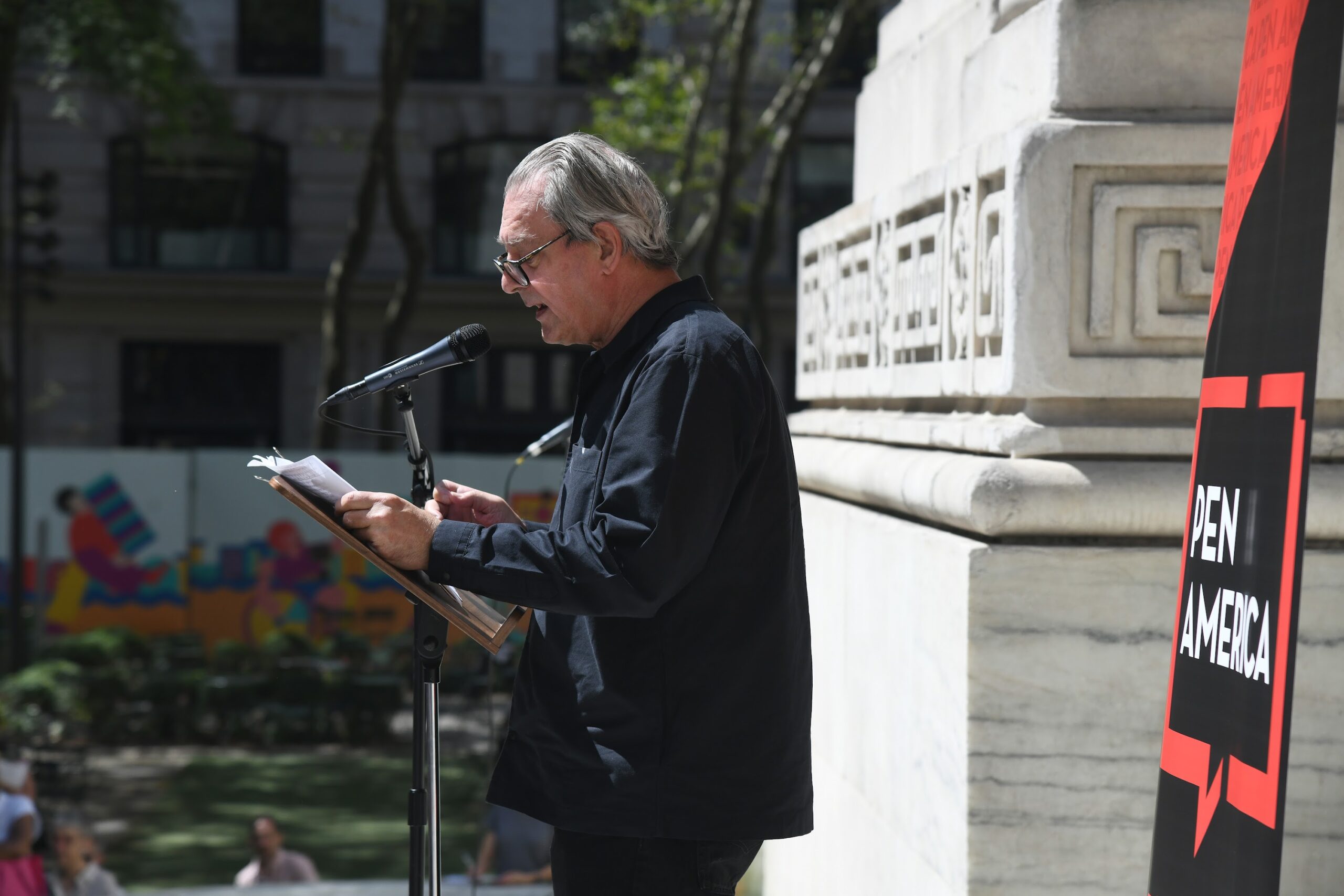
MANHATTAN, NY, AUGUST 19, 2022 Paul Auster reads a passage from Salman Rushdie’s book at a PEN America rally at the New York Public Library in Manhattan, NY. Photo by ©Jennifer S. Altman All Rights Reserved

(NEW YORK) — PEN America mourns the death of prolific author and longtime friend of PEN Paul Auster, who died on Tuesday at age 77. Suzanne Nossel, CEO of PEN America, said the following:

“In addition to shaping the worldviews of generations of Americans through his bracing and beloved novels, Paul Auster was a writer’s writer, consistently standing in solidarity with authors in China, Iran, Russia and around the world who were persecuted for what he was able to do freely: exercise his imagination and tell stories.  A dean of New York City’s literary community, he was a friend and mentor to many and a treasured colleague and stalwart supporter of PEN America and writers in need everywhere.”

Auster, who once served as the Vice President and Secretary of PEN America, and his wife Siri Hustvedt have been active supporters of PEN America’s efforts on behalf of jailed writers worldwide. They joined other members of the literary community in PEN America’s event in support of Salman Rushdie after the horrific attempt on his life in 2022.

Auster participated in the PEN World Voices Festival and numerous other PEN events, including a 2009 event where he read a series of autopsy and death reports of detainees held in U.S. custody in Iraq and Afghanistan, and another where he read new poems from Liu Xiaobo, who received the 2009 PEN/ Barbara Goldsmith Freedom to Write Award.

PEN AMERICA APPLAUDS NOBEL PEACE PRIZE FOR WRITER AND HUMAN RIGHTS ACTIVIST NARGES MOHAMMADI

Nobel Committee recognizes the immense courage and dedication of PEN America Honoree Narges Mohammadi and all the writers and cultural workers like her in Iran

FOR IMMEDIATE RELEASE

(NEW YORK)— The Nobel Peace Prize awarded today to imprisoned Iranian writer, human rights activist, and 2023 PEN/Barbey Freedom to Write Award honoree Narges Mohammadi recognizes her singular courage in standing against government repression of women, writers, activists, intellectuals, and cultural figures who face unspeakable consequences for daring to speak out or write, PEN America said.

Narges Mohammadi

Commenting on the award, PEN America CEO Suzanne Nossel said, “The awarding of the Nobel Peace Prize to Iranian writer and activist Narges Mohammadi is a tribute to her courage and that of countless women and girls who have poured out into the streets of Iran and faced down one of the world’s most brutal and stubborn regimes, risking their lives to demand their rights. For those of us at PEN America, Narges is an inspiration and also a personal friend, a woman whose story of unyielding defiance at crushing personal costs awakens the righteous indignation within each of us. We applaud the Nobel Committee for putting the weight of its Prize behind the struggle of Narges and all Iranian women for their freedom to dress, behave, think, and write as they wish.”

“Narges’ indefatigable will to be heard, even from the darkest, coldest, and most isolated corners of an Iranian prison, is astounding. She championed change in Iran from her jail cell with a passion and bravery that can truly be described as heroic. As a witness to decades of atrocities, she has used her voice as a catalyst to awaken a new generation to understand that their words are one of humanity’s greatest tools. PEN America enthusiastically congratulates Narges Mohammadi and calls for her immediate release.”

PEN America honored Narges Mohammadi with the 2023 PEN/Barbey Freedom to Write Award, which her husband, Taghi Rahmani, accepted on her behalf at the PEN America Literary Gala in New York City in May. Conferred annually, the PEN/Barbey Freedom to Write Award recognizes writers who have been jailed for their expression. PEN America galvanized celebrities including John Mullaney, Colin Jost, Candice Bergen, Diane Sawyer, Alec Baldwin, Chimamanda Ngozi Adichie and others to rally to Mohammadi’s cause, drawing international media coverage and global recognition of her plight. Of the 53 jailed writers who have been honored with the PEN America Freedom to Write Award since its establishment in 1987, 46 have been released from prison within an average of about 18 months due in part to the global attention and pressure generated by PEN America’s recognition. This is not the first time PEN America’s Award has led directly to the conferral of a Nobel Peace Prize. PEN’s 2009 Freedom to Write honoree Liu Xiaobo, the President of the Independent Chinese PEN Center, was awarded the Nobel Peace Prize in 2010, the culmination of a campaign set in motion by PEN America.

Narges Mohammadi has been forced to make unimaginable sacrifices for her work, including currently serving multiple sentences totaling more than 10 years in Iran’s notorious Evin Prison, where she has been threatened, beaten, and kept in periods of solitary confinement, a practice she has termed ‘white torture’ in her books and writings. Additionally, it has been almost nine years since Mohammadi last saw her husband and two children, who are now in exile in France. And yet, despite these arduous circumstances, Mohammadi continues to defend human rights and speak out against authoritarianism from within prison, drawing attention both to ongoing political events and to abuses against her fellow prisoners. “They will put me in jail again,” she wrote in her book, White Torture. “But I will not stop campaigning until human rights and justice prevail in my country.”

Mohammadi’s case is among dozens of cases of writers and activists who have faced political repression in Iran in the last year alone. Starting in September 2022, the country was swept by a widespread protest movement in favor of democracy and women’s rights following the state’s killing of Mahsa (Jina) Amini. In response, the Iranian regime further cracked down on free speech and arrested thousands for their participation in, or support of, the demonstrations. Iran’s literary and creative communities continue to use writing, art, and music as vehicles to express political dissent, even in the face of the brutal government crackdown.

Potpourri for Sunday, September 14, 2023

  • According to Wikipedia, “Potpourri (/ppʊˈr/ poh-puu-REE) is a mixture of dried, naturally fragrant plant materials used to provide a gentle natural scent, commonly in residential settings. It is often placed in a decorative bowl.” I like the word as a synonym for “medley” but not as a vase or bag with dried plants intended to give a room a pleasing scent. That stuff always makes me sneeze in the same fashion as a room full of dust bunnies. Wikipedia says that up to 455 plants have been identified as being used when making potpourri, “including algae, fungi, and lichens.” I have no idea why anyone would want that stuff in their house. Those who do it are apparently putting on airs.
  • Before reading Kathy Reichs’ novel Fatal Voyage, I had never heard the term “DMORT” even though teams from this agency help investigate airline crashes with a focus on passengers; remains. The acronym stands for Disaster Mortuary Operational Response Teams, and I suppose they don’t make the news because (a) the public doesn’t want to hear about the dead, and (b) news organizations tend to focus on why a plane crashed. According to the Administration for Strategic Preparedness and Response, “When natural or man-made disaster strikes, sometimes there are more fatalities than local resources can manage. Disaster Mortuary Operational Response Teams (DMORTs) support local mortuary services on location, working to quickly and accurately identify victims and reunite victims with their loved ones in a dignified, respectful manner.” After reading Fatal Voyage, I have a new appreciation for the kinds of people who can deal with the heart-breaking carnage and make sense of it for the families of the victims.
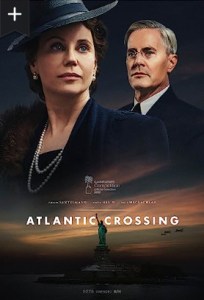
  • We have finally gotten around to watching the PBS series “Atlantic Crossing” which first ran in 2021 on PBS.  The focus here is the plight of Norway in World War II. PBS says that “A European princess steals the heart of the U.S. president in an epic drama inspired by the real World War II relationship between Franklin Roosevelt and Norwegian Crown Princess Martha.” Norway had expected to be spared a German invasion due to its neutrality, but the Germans invaded anyway, forcing the monarchy to flee to England where it established a government in exile. We have enjoyed the series, especially since it covers a portion of World War II that is often neglected in overviews of the war.
  • I often print news releases on this blog that come from PEN America because they focus on attacks on our freedoms of speech and press. According to PEN’s website, “Our strength is our membership—a nationwide community of novelists and nonfiction authors, journalists, editors, poets, screenwriters, essayists, playwrights, publishers, translators, agents, and other literary professionals, and an even larger network of devoted readers and supporters who join with them to carry out PEN America’s mission.” I would join if I could, but the cost is dear at $50. I’m just happy that PEN’s website is available to all who stop by. Keeping up with the issues of press and speech freedom are, to me, mandatory.

–Malcolm

PEN America: ‘Book Bans Spike 33% in 2022-23 School Year’

According to a new report from PEN, “Since PEN America started tracking public school book bans in July 2021, we have recorded nearly 6,000 instances of banned books. Our new report released today documents a 33% increase in book bans in 2023-23 compared to 2021-21, of which 40% occurred in Florida.

“A large share of the individual bans took place in states where legislation or coordinated campaigns by local and national groups have driven mass restrictions on access to literature. Books about race and racism, LGBTQ+ identities, and violence have remained a top target.”

You can read the report here.

Book banning is, I think, part of the recent trend that includes a variety of governmental and private actions focused on reducing our freedoms of speech and press.

According to Freedom House, “The fundamental right to seek and disseminate information through an independent press is under attack, and part of the assault has come from an unexpected source. Elected leaders in many democracies, who should be press freedom’s staunchest defenders, have made explicit attempts to silence critical media voices and strengthen outlets that serve up favorable coverage. The trend is linked to a global decline in democracy itself: The erosion of press freedom is both a symptom of and a contributor to the breakdown.”

All of those who value speech and press freedom should, I think, speak out against this attack on the press. Otherwise, it will become policy even here in the United States. What worries me is that issues in this country have become so partisan with badly slanted news coverage that people are now justifying limiting the rights of those with whom they disagree. It’s as though the people with alternative ideas are without rights.

The U.N. says “Reporters getting killed while chasing a story. Online attacks against women journalists, including death and rape threats. Targeted electronic surveillance to intimidate and silence investigative journalism. This is the dangerous reality for many journalists around the world as media freedom and safety have diminished in the digital age with a grave impact on human rights, democracy, and development.”

According to the PEN report, “Hyperbolic and misleading rhetoric about ‘porn in schools’ and ‘sexually explicit,’ “harmful,’ and ‘age inappropriate’ materials led to the removal of thousands of books covering a range of topics and themes for young audiences. Overwhelmingly, book bans target books on race or racism or featuring characters of color, as well as books with LGBTQ+ characters. This year, banned books also include books on physical abuse, health and well-being, and themes of grief and death. Notably, most instances of book bans affect young adult books, middle-grade books, chapter books, or picture books—books specifically written and selected for younger audiences.”

Those who promote these bans are, quite likely, afraid of the truth. If not, why ban it? In part, there’s a growing patriarchal approach by the government and opinion groups that want to control what we can read. This is unconstitutional on the face of it, so I wonder why so many people are silent and sit at home watching it happen.

If you live in Florida, Texas,  Missouri, Utah, or Pennsylvania, wake up. Or are you sheep, content to eat what the establishment chooses to feed you?

This is not America. This is biased patriarchy run amok on many levels. We need to declare zero tolerance for those who say they should control what we read, hear on the news, and see online. They have no place here and need to move to Russia, China, or North Korea where their views are considered sacred.

–Malcolm

Malcolm R. Campbell writes novels about fighting the KKK, a group that lives on today through its attempts to cancel our freedoms.

ADDITIONAL PARENTS JOIN LAWSUIT AGAINST BOOK BANS IN FLORIDA’S ESCAMBIA COUNTY

FOR IMMEDIATE RELEASE – PEN.ORG

(PENSACOLA, FL)— Five additional parents today joined a first-of-its-kind federal lawsuit filed earlier this spring challenging the removals and restrictions of books from libraries in a Florida school district that violate their rights to free speech and equal protection under the law.

The amended suit, led by the free expression organization PEN America, Penguin Random House and a diverse group of authors and parents of Escambia County students, seeks to ensure access to books on a wide range of topics with a wide range of viewpoints. The plaintiffs are represented by Ballard Spahr LLP and Protect Democracy, a non-partisan, pro-democracy group. Read the amended complaint, filed today, here.
This brings the number of parent plaintiffs in the case to seven, with 10 children from diverse backgrounds in elementary, middle and high school. The suit was filed originally on May 17 against the Escambia County School Board asking for books to be returned to school library shelves where they belong. After the complaint was filed, the plaintiffs were granted time to amend it with additional plaintiffs.

“As a Black mother of two teenage girls, I know how important it is for our children to have access to books like The Freedom Writers Diary and Beloved,” said Carin Smith, a parent who joined  the lawsuit. “I respect the right of parents to make decisions with and for their own children. In my opinion, we should not shy away from the real, raw struggles this country has faced, and my girls shouldn’t be deprived access to books on those issues because our stories make someone else uncomfortable.”

Benjamin Glass, another parent joining the suit, noted, “Someone with a master’s degree in library science, also known as a librarian, should be deciding what’s in libraries – not politicians. Parents, of course, should be involved in what is in their own child’s best interest to read. But they shouldn’t be making decisions on behalf of other people’s children. You parent your child, I’ll parent mine, and we’ll let librarians do their jobs. That sounds good to me.”

Since the lawsuit was filed in May, the Escambia School District has continued its policies of removing books from school libraries. In that time an additional 21 book titles have been challenged and 17 have been restricted, including Pulitzer Prize winning Middlesex by Jeffrey Eugenides, the landmark graphic novel Watchmen by Alan Moore, and the horror novel It by Stephen King.

“School officials shouldn’t use their authority to force their own ideological convictions on students,” said Suzanne Nossel, CEO of PEN America. “The new plaintiffs have kids in middle and high schools, going through a pivotal time of learning, exploration and intellectual development. We should not be sending them the message that books are dangerous. By defending their freedom to read, we will ensure that schools remain places where students are exposed to complex ideas and stories instead of being taught that society does not trust them enough to allow them to pick up a book.”

The authors involved in the suit, all of whom have either already had their books removed by the district and/or restricted from student access, include author and children’s book illustrator Sarah Brannen, young adult fiction authors David Levithan, George M. Johnson and Ashley Hope Pérez, and children’s book author Kyle Lukoff, all of whom have published works focusing on identities that are historically underrepresented in school libraries.

Lynn Oberlander, counsel at Ballard Spahr LLP, noted, “In removing and restricting access to over 150 books from the libraries on the basis that they expressed disfavored viewpoints, the school board in Escambia County violated the constitutional rights of students, parents, authors and publishers. We are pursuing this case to vindicate those rights, and to stop agents of government from limiting access to ideas and perspectives with which it disagrees in our nation’s schools.”

“The school board is removing books from the school library based on the political views of a small minority,” said Shalini Agarwal, counsel for Protect Democracy. “In removing and restricting the books, the school board is overriding the recommendations of district review committees designed to evaluate books with parent and community feedback. This isn’t simply an affront to parents, it’s a violation of the First Amendment and Equal Protection Clause.”

PEN AMERICA AND 3 OTHER FREE SPEECH GROUPS FILE AMICUS BRIEF IN 1ST AMENDMENT HERNDON V. NETFLIX CASE

Legal Filing Argues that Netflix Can’t be Held Liable for Depicting Suicide in Fictional Series Under 1st Amendment

FOR IMMEDIATE RELEASE

(NEW YORK) – PEN America, the Foundation for Individual Rights and Expression (FIRE), the National Coalition Against Censorship (NCAC), and the Student Press Law Center (SPLC) on Monday jointly filed an amicus brief to support the First Amendment rights of Netflix in a lawsuit over the series 13 Reasons Why, which depicted suicide.

Netflix is being sued for damages following a 15-year-old girl’s tragic suicide after watching the series. The  lawsuit filed in 2022 by the girl’s father, John Herndon of Livermore, CA, alleged that viewers were not adequately warned or shielded from the show’s content. A federal judge dismissed Herndon v. Netflix in 2022; Herndon has appealed.

In its amicus brief, the four free speech organizations argued that the program is fully protected under the First Amendment and therefore Netflix cannot be held liable for the death.

The brief states: “Suicide is an enduring, though tragic, facet of human existence. Many great works of literature, history, and religion depict it, and those works are routinely taught to teenagers.  For just some of the most famous literary examples, consider Shakespeare’s Romeo and JulietOthello, and Julius Caesar, as well as the novels Anna Karenina, Madame Bovary, Les Miserables, The Catcher in the Rye, and The Great Gatsby. … Yet all the books, plays, and films that include such suicides are of course fully protected by the First Amendment, whether or not they include minors among their audience, and however they may be sold or marketed.”

Kate Ruane, Sy Syms director of the U.S. Free Expression programs at PEN America, said: “Understandably it is difficult to adhere to principles when faced with a tragedy like this one. But to hold Netflix liable in this case would violate constitutional protections, court precedent and, in addition to chilling Netflix’s speech, would undoubtedly risk chilling the speech of other writers, filmmakers, artists and creators on sensitive topics like suicide, drug addiction, or mental health.”

“The plaintiff’s demands fail to take into account the far-reaching ramifications of excluding groups of ‘impressionable audiences’ from essential conversations, blocking student journalists from engaging and informing their peers in an era already fraught with misinformation,” said Jonathan Gaston-Falk, staff attorney for the Student Press Law Center.

FIRE Attorney Jeff Zeman said: “Freedom of speech isn’t the freedom to speak in a vacuum; it necessarily includes the right to promote your speech to an audience. Whether it’s Romeo and Juliet, Dead Poets Society or 13 Reasons Why, fictional works that portray difficult topics like suicide don’t lose their First Amendment protection just because their creators seek to find an audience.”

-30-

PEN AMERICA: REMOVAL OF ART EXHIBIT ON FLORIDA CAMPUS SHOWS THE STATE AGAIN EXERTING CONTROL OVER FREE EXPRESSION

FOR IMMEDIATE RELEASE

(NEW YORK) – PEN America expressed disappointment today over another incident in which a Florida campus removed an art exhibit last month that explored the topic of prison abolition. PEN America said the free exchange of ideas should be “paramount” on college campuses.

University of Florida seal.svgThe exhibit at the University of Florida was taken down, after administrators said they wanted to clarify that the art represented the views of the artist, not the university. After the exhibit was taken down, the building was vandalized with “Fuck off, fascists” written on the plywood over a shattered window. In turn, the university displayed a sign next to that graffiti saying, “This is artists’ speech, not UF speech.”
In response to the removal, PEN America’s senior manager of free expression and education Kristen Shahverdian, said: “It’s disappointing to see yet another removal of art on a Florida campus this year based on its political subject. While it is always acceptable for a university to denounce a political view that runs counter to their mission or values, it is absurd that anyone would confuse a gallery exhibit, let alone graffiti, with a university’s official positions. It is unfortunate to see university administrators order an art show taken down, without respect to artistic freedom; this is even more worrisome amid other recent art cancellations and the growing efforts to exert government control over expression state-wide. A wide range of artistic expression must be allowed on college campuses, where the free exchange of ideas is paramount.”

This kind of crap is getting really old.

PEN AMERICA CEO: PROTECTING FREE SPEECH ON COLLEGE CAMPUSES ESSENTIAL TO PRESERVING ACADEMIC FREEDOM

FOR IMMEDIATE RELEASE

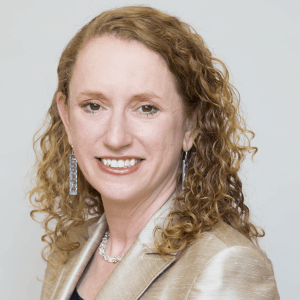
(WASHINGTON) — Today, PEN America CEO Suzanne Nossel (pictured here) testified before the House Committee on Education & the Workforce’s hearing, “Diversity of Thought: Protecting Free Speech on College Campuses.”

Nossel testified that protecting free speech on college campuses is essential to preserving the academic freedom and institutional autonomy necessary for universities to continue to serve as incubators of democratic citizenship.

Suzanne Nossel“Students often lack awareness of the First Amendment or the precepts of academic freedom, sometimes believing that the best answer to noxious ideas is to drown them out, or to call on university authorities to shut them down,” Nossel said in her opening statement. “At PEN America we argue that the essential drive to render American campuses more diverse, equitable, and inclusive need not – and must not – come at the expense of robust, uncompromising protections for free speech and academic freedom.”
In response to Ranking Member Robert Scott’s (VA-03) question regarding enacted laws restricting what can be taught in schools, Nossel stated:

“A principle is not a principle if it is not applied to all equally. To cherry pick certain ideas, certain course materials, certain theories and say, ‘these are out of bounds,’ that’s the core of what the First Amendment protects against – viewpoint-based discrimination, the notion that the government would be listing out particular topics, subjects of discussion, aspects of curriculum, and saying they are out of bounds.

Read Nossel’s full remarks here and watch the full hearing video here.

My father and mother were both journalists and journalism teachers. This means I grew up respecting the first amendment and supporting it at all costs, most often against our own government, and–when schools are involved–parents who believe their own personal comfort levels should supersede a teacher’s lesson plans and assigned books.

–Malcolm

Some of my best experiences were co-teaching journalism courses at Florida junior colleges with my father. I still learn from his textbooks even though technology has made the methods out of date.

Online harassment remains high, but there’s help

“Roughly four-in-ten Americans have experienced online harassment, with half of this group citing politics as the reason they think they were targeted. Growing shares face more severe online abuse such as sexual harassment or stalking.”Pew Research: The State of Online Harassment (Click on the link to read the report.)

Pew Research defines online harassment as:

  • Offensive name-calling
  • Purposeful embarrassment
  • Stalking
  • Physical threats
  • Harassment over a sustained period of time
  • Sexual harassment

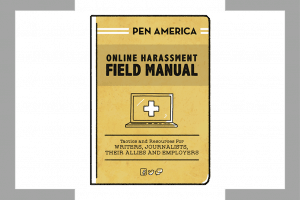
Online Harassment Field Manual“Whether you’re experiencing or witnessing online abuse, this Field Manual offers concrete strategies for how to defend yourself and others. We wrote this guidance with and for those disproportionately impacted by online abuse: writers, journalists, artists, and activists who identify as women, BIPOC, and/or LGBTQIA+. Whatever your identity or vocation, anyone active online will find useful tools and resources here for navigating online abuse and tightening digital safety.” – PEN America

Launched in 2018, the field manual offers tips in two general areas, “Safety and Security” and “Community and Counterspeech.”  The manual will teach you how to (a) Prepare for online abuse, (b) Respond to online abuse, (c) Practice Self-Care, (d) Review legal considerations, (e) Request and Provide Support, and (f) Learn about what constitutes online abuse.

PEN provides a list of additional resources here.

PEN considers writers at risk to be a separate focus issue. “PEN America and its Members advocate on behalf of writers at risk globally, rallying to their defense and promoting the freedom to write through direct support, advocacy, and behind-the-scenes assistance. PEN America also tracks detained writers in its annual Freedom to Write Index, and catalogues historic cases in the Writers at Risk Database.” Learn more here.

In an article several years ago on The Conversation “Fighting online abuse shouldn’t be up to the victims,” the author said, “Perhaps the most important element to addressing online harassment is behaving like it is happening in the ‘real world.’ Abuse is abuse. Online spaces are created, shaped and used by real humans, with real bodies and real feelings.”

I agree with that and believe none of us should sit alone at our phones and computers and suffer from online bullying in silence.

–Malcolm