When a cousin we hardly knew died without a will, the State of Oregon tracked us down

Mostly, she ignored our side of the family. Old family films and photographs show us playing together during our preschool years.  Afterward, little or nothing.

I’ll refer to her as G.

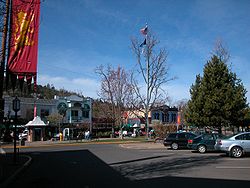
G probably shopped in this plaza

I never knew where G was or what she was doing. She wanted it this way for reasons I’ll never know. Now the State of Oregon has found my two brothers and me while looking for relatives, notably one who lives in or near Ashland who could handle the estate. Fortunately, an Oregon relative turned up and agreed to handle an estate that consists mainly of household items and a car.

I have no idea what happened to G’s husband.

I feel like a voyeur. I don’t want to know about her now because when G was alive, she didn’t want me to know her then. In a sporadic letter to one of my brothers, she once informed us that our favorite aunt had passed away months before. To me, this kind of slap-dash approach to family was unconscionable.

So, when I did know something, I was usually ticked off.

Now I’m suddenly an heir and that ticks me off, too.  I want to remain just as anonymous as she was.  I don’t want to see an accounting of the personal items in her house or the loose change in the glove compartment of her car.

Or maybe there will be a 1960s letter from my mother in a box in the attic. If so, it will be friendly and chatty, ending with “Why don’t you ever write?”

G never answered that question. If the answer lurks within the confines of G’s estate, I don’t want to hear it now.  Hearing that G died was more than I wanted to know. Is that cold? If so, I’m slow to forgive.

–Malcolm

Haunted by a 1949 auto accident

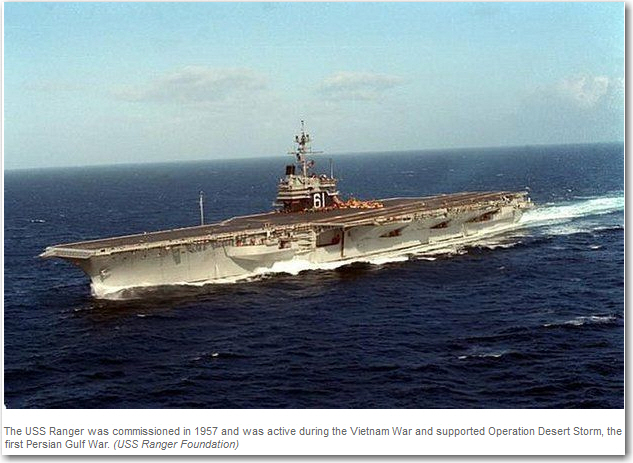
I was born in the San Francisco Bay area where we had countless relatives and lived there until the family moved to Eugene, Oregon. We drove back and forth between the two places in our bulky 1949 Nash similar to the one in the picture.

On one of these trips, we were almost hit by a flatbed truck while passing on a two-lane road in Oregon. My brothers and I were in the backseat, though both of them were too young to remember the near miss that might have proved fatal to the truck driver. At the time, I didn’t understand the potential consequences to the truck driver.  Years later, I searched news reports and accident listings without finding anything about the wreck

Mother honked the horn twice, typical in those days, as we pulled out into the other lane and began passing. We were halfway around the truck when it suddenly began pulling over to pass a smaller car in front of it. I thought the truck was going to hit us, but Mother honked the horn again, the truck driver pulled away, over-correcting so that the truck ran off the right-hand side of the road so sharply that it rolled over multiple times before coming to a stop.

I remember sitting in the hot car for ages on the roadside. Police came and went. My folks talked to them outside the car. I don’t remember if there were witnesses. Probably. Finally, an officer leaned inside and said, “There’s no reason to punish the children by sitting here any longer.” And so we were allowed to leave.

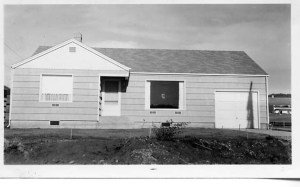
Our house on Alder Street in Eugene before the porch was built.

Afterward, my parents never spoke about the accident in my presence, though I’m sure they called people from elsewhere in the house. At the time, I was too young to understand why the truck rolled or to imagine the consequences to the occupants of the cab in a pre-seatbelt era. So I didn’t ask. The matter was too far outside my realm of understanding. However, the memory of that truck rolling endlessly across a field has never left me.

On Alder Street, I saw my first snowstorm and built a snow fort in the front yard. Life went on without nightmares or answers. We soon moved to Florida as Dad’s university job positions kept changing. We drove to Florida in the Nash. En route, I never liked passing trucks. I still don’t.

I’m still looking for closure.

–Malcolm

National Human Trafficking Awareness Day

FOR IMMEDIATE RELEASE
Tuesday, January 11, 2022

U.S. Attorney’s Office Commemorates National Human Trafficking Awareness Day–January 11, 2022

PORTLAND, Ore.—Today, the U.S. Attorney’s Office for the District of Oregon commemorates National Human Trafficking Awareness Day—January 11, 2022—and joins its federal, state, local, and Tribal law enforcement partners in declaring a continued commitment to combating all forms of human trafficking.

“More than 150 years have passed since our nation ratified the 13th Amendment, abolishing the cruel and repugnant practice of enslaving humans. And yet, in its modern form of trafficking, this abhorrent crime persists here in the U.S. and across the globe. Combatting human trafficking is a top priority for the Justice Department and our office. Together with our law enforcement partners, we will do everything in our power to end this horrible crime,” said Scott Erik Asphaug, U.S. Attorney for the District of Oregon.

“We are a country built on the promise of freedom and dignity for every person. Unfortunately, it’s a promise that we see broken all too often for the most vulnerable among us,” said Kieran L. Ramsey, Special Agent in Charge of the FBI in Oregon. “Victims of labor trafficking and sex trafficking are not only exploited in the worst ways, they also live in constant fear. They wake every morning to threats of violence and outright abuse. Help us help them. If you have information about trafficking in your area, please call us.”

Human trafficking, sometimes referred to as trafficking in persons or modern slavery, is a serious federal crime involving the exploitation of individuals for labor, services, or commercial sex through force, fraud, or coercion. This coercion can be subtle or overt, physical or psychological. Exploitation of a minor for commercial sex is human trafficking, regardless of whether any form of force, fraud, or coercion was used.

Victims of human trafficking can be anyone regardless of race, color, national origin, disability, religion, age, gender, sexual orientation, gender identity, socioeconomic status, education level, or citizenship status. Although there is no defining characteristic that all human trafficking victims share, traffickers around the world frequently prey on individuals who are poor, vulnerable, living in unsafe or unstable environments, or are in search of a better life.

In the U.S., trafficking victims can be American or foreign citizens. Some of the most vulnerable populations for trafficking in the U.S. include American Indian and Alaska Native communities, LGBTQ individuals, individuals with disabilities, undocumented migrants, runaway and homeless youth, temporary guest-workers, and low-income individuals.

The U.S. Attorney’s Office for the District of Oregon is committed to continuing its victim-centered, trauma-informed approach to detecting hidden human trafficking crimes, holding perpetrators accountable, and helping to restore the lives of survivors, while strengthening strategic anti-trafficking partnerships.

If you or someone you know is in immediate danger, please call 911.

If you believe you or someone you know is a victim of human trafficking or may have information about a trafficking situation, please call the National Human Trafficking Hotline toll-free at 1-888-373-7888 or visit https://humantraffickinghotline.org. You can also text the National Human Trafficking Hotline at 233733.

January is National Slavery and Human Trafficking Prevention Month. Every year since 2010, the President has dedicated the month to raising awareness about the different forms of human trafficking and educating people about this crime and how to spot it. To learn more, visit https://www.whitehouse.gov/briefing-room/presidential-actions/2021/12/30/a-proclamation-on-national-human-trafficking-prevention-month-2022/.
Shameful: ‘USS Ranger, aircraft carrier once sought as Fairview tourist destination, heading to scrap heap’

“BREMERTON, Wash. — Naval Sea Systems Command says the mothballed aircraft carrier USS Ranger, once sought as a Columbia River tourist destination in Fairview, will be towed out of Puget Sound on Thursday on its way to be scrapped in Texas.

“The Ranger was commissioned in 1957 and was active during the Vietnam War and also deployed in support of Operation Desert Storm, the first Persian Gulf War. The carrier was decommissioned in 1993 at the Puget Sound Naval Shipyard.” – The Oregonian

rangerstobescrapped

Yes, I know, Naval Sea Systems Command (NSSC) has no reason to expect anyone to save the old treasure now as last-ditch efforts to bring the ship to San Diego as a museum apparently went nowhere.

The ship is in relatively good shape, as pictures showed last fall when the State of Oregon named the Ranger as a Heritage Site. That action had no apparent impact on NSSC or on other cities who could have brought together movers and shakers to secure the ship as a lucrative tourist attraction and educational destination.

I was a member of the USS Ranger Foundation, though from the other side of the country, I never could get enough feedback from them to find out why they were moving so slowly, why they couldn’t work with BNSF to work out the problem of a low railway bridge blocking the ship’s passage to the proposed site in Fairview, Oregon, or why they couldn’t attract the interest of more heavy hitters to get the job done.

I was a museum consultant at the time and offered to help, but never got a response. Sometimes, membership doesn’t have its privileges.

So now the Navy has sold the ship for a penny. Perhaps the Navy can spend that penny on a stick of gum or as a down payment on a sheet of stamps. We are not well served by this action. It is short sighted.

A carrier museum could serve a municipality well, for cultural tourist destinations typically bring in visitors who stay longer and who spend more in the community (hotels, gas stations, restaurants) than the average tourist. Some of the ship’s compartments could be devoted to exhibits, while others could have been used for classes, presentations or even as spaces for rental to groups wanting unique places to meet.

Short of a miracle–(Dear Mr. President: How about an executive action on this project?)–the ship will be turned into scrap metal, thrown out with the trash, so to speak, in a way that benefits nobody and does not preserve our history.

–Malcolm

I served on board the Ranger in 1968 and 1969 in the Gulf of Tonkin and used my experiences as inspiration for my novel “At Sea.”

FSU v Oregon in the playoffs

I’ve been going to FSU games since I was a kid. First, as a high school student selling peanuts and Cokes at the stadium and then as an FSU student. So, I’m happy to see the Seminoles are in the playoffs after winning 29 straight games through two consecutive seasons and winning their third ACC Championship in a row.

FSUplayoff

More of a baseball person, I seldom watch football unless there’s an FSU game on TV. And, as (apparently) an out-date-viewer, I dislike the idea of having a formal college playoff system. But, if we have to have playoffs, it’s good to be there.

As for Oregon, they had a heck of a year. Nice to see in the playoffs. My father taught at the University of Oregon for several years and I still have snowy wintertime memories of Eugene. Plus, one of my brothers lives in Oregon and the other one used to live there.

FSU doesn’t have the dominant team they had last year, so heaven only knows how the Oregon game will end up. We’re probably going in as the underdog in spite of our record. (Too many close calls this year.)

Nonetheless, my prediction is FSU 65, Oregon 56. You heard it here first and probably won’t hear it anywhere else.

Malcolm

UPDATE: Obviously, the game was a mess for those who follow FSU. Frankly, I would have put in the backup quarterback in the third quarter to show Oregon something different for a series of downs or so and to give Winston time to calm down.