WASHINGTON – The National Parks Conservation Association (NPCA) and park advocates across the country are demanding the Trump administration put an end to devastating staffing cuts that will wreak havoc on the National Park System. The Department of the Interior will exempt 5,000 seasonal positions under the current hiring freeze, while simultaneously terminating 1,000 National Park Service employees, just as visitors are planning their spring break and summer vacations to national parks.
Unfortunately, today’s cuts will leave parks understaffed, facing tough decisions about operating hours, public safety and resource protection.
Statement by Theresa Pierno, President and CEO for the National Parks Conservation Association (NPCA):
“Allowing parks to hire seasonal staff is essential, but staffing cuts of this magnitude will have devastating consequences for parks and communities. We are concerned about smaller parks closing visitor center doors and larger parks losing key staff including wastewater treatment operators.
“Exempting National Park Service seasonal staff from the federal hiring freeze means parks can fill some visitor services positions. But with peak season just weeks away, the decision to slash 1,000 permanent, full-time jobs from national parks is reckless and could have serious public safety and health consequences.“
“Years of budget cuts are already weakening the agency’s ability to protect and preserve these incredible places.
“National parks fuel local economies across the country, generating billions of dollars for area businesses and supporting hundreds of thousands of jobs. Slashing staff could have a ripple effect on gateway businesses and communities that depend on parks for survival.
“Park staff work tirelessly to protect our nation’s most treasured places, from Yosemite to Gettysburg. They educate visitors, safeguard history and preserve what makes our country special. This isn’t how we treat the places we cherish or those who protect them. We’re calling on our leaders to prioritize our parks and the staff who keep them safe and running.”
Unfortunately, today’s cuts will leave parks understaffed, facing tough decisions about operating hours, public safety and resource protection.
This plan marks historic progress,incorporating Tribal collaboration into the care and stewardship of this critical landscape“–Theresa Pierno, NPCA’s President and CEO
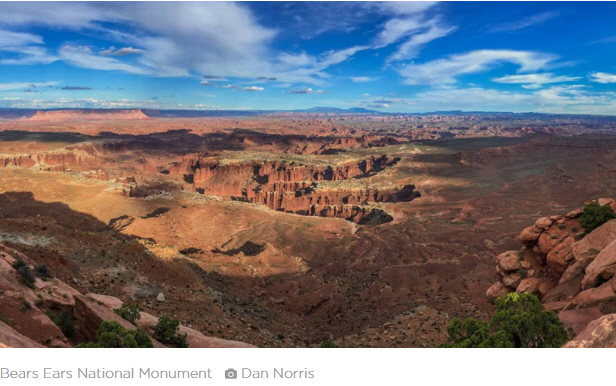
The plan aims to manage the lands and resources of Bears Ears in collaboration with Tribes, to fulfill the vision of President Obama’s proclamation that established the monument and President Biden’s proclamation that restored its boundaries.
The proposed resource management plan will guide resource policies and procedures for the monument’s 1.36 million acres of public lands. It is the result of a multi-year collaboration with the Bears Ears Commission – the Ute Indian Tribe, Ute Mountain Ute Tribe, Zuni Tribe, Hopi Tribe and the Navajo Nation – and federal partners at the Bureau of Land Management and the U.S. Forest Service.
NPCA is carefully reviewing the final plan which is expected to shape policies that protect Bears Ears National Monument for years to come and help connect one of America’s most diverse national park landscapes from Glen Canyon to Canyonlands National Park.
Statement by Theresa Pierno, President and CEO for the National Parks Conservation Association (NPCA):
“Since time immemorial, Bear Ears has been a place of healing and refuge, connecting many Tribal communities to their ancestors across centuries. By placing Tribal collaboration at the forefront, we all benefit along with our national parks and public lands.
“Years of determination and hard work by Tribal Nations, local communities, businesses, and people across the country have led to this moment. This plan marks historic progress, incorporating Tribal collaboration into the care and stewardship of this critical landscape.
“This would not have been possible without the unwavering leadership of the Ute Indian, Ute Mountain Ute, Zuni, and Hopi Tribes and the Navajo Nation. NPCA is proud to have worked alongside the Tribes, whose leadership reinforces the integral role of Traditional Ecological and Indigenous Knowledge in shaping the future of our public lands.”
Washington DC – The Biden administration in collaboration with five Native American Tribes released a historic draft management plan for Bears Ears National Monument in Utah. Through this plan, the lands and resources of Bears Ears will be managed in collaboration with Tribes, utilizing Indigenous knowledge and Tribal input, as was intended in President Obama’s proclamation that established the monument and President Biden’s proclamation that restored the monument.
This management plan was the result of a two-year collaboration among five Tribes of the Bears Ears Commission – Ute Indian Tribe, Ute Mountain Ute Tribe, Zuni Tribe, Hopi Tribe and the Navajo Nation – along with federal partners at the Bureau of Land Management and the U.S. Forest Service. Once finalized the plan will inform resource policies and procedures for the protection of Bears Ears National Monument, connecting one of America’s most diverse national park landscapes, for years to come.
Statement by Theresa Pierno, President and CEO for the National Parks Conservation Association (NPCA):
“This landmark management plan is proof that through collaboration and elevation of voices traditionally underrepresented in public lands management, our country can preserve culturally important places and ecosystems while also balancing recreational opportunities. It’s clear the Biden administration understands that true Tribal consultation in the management of our public lands benefit all of us, as well as the future of our national parks and public lands.
“Bears Ears connects and protects one of America’s most iconic national park landscapes. It is a sacred place that provides healing and sustains life for so many. This historic collaborative management plan safeguards those values. It commits to long-term Tribal consultation and ensures that the management of this landscape honors traditional Indigenous knowledge and cultural wisdom. Once realized, this plan will create a future where visitors learn about the full history of Bears Ears and the people who have understood and cared for these lands for thousands of years.
“For years, NPCA worked alongside Tribal Nations, local communities and businesses, and countless people across the country to protect the Bears Ears landscape. But this plan would not have become a reality without the leadership of Ute Indian, Ute Mountain Ute, Zuni, and Hopi Tribes and the Navajo Nation. We are proud to stand with them, together as partners, in the fight to protect Bears Ears, and all our national monuments, for generations to come.”
Every year about this time, every charity in the known universe comes out online and in snail mail with matching deals for my consideration. In fact, there’s a tsunami of donation opportunities that will drive most Americans into bankruptcy if they give $20 here and $20 there to everyone begging for their help. How much extra money do any of us have for all the good causes asking for help?
In general, I try to support KIVA, Tibet, and the National Parks. This puts me on a list of people who would have to be rich to respond to all the projects that need funding. I support the International Campaign for Tibet because I believe that China’s illegal occupation of Tibet and its ongoing policy of erasing Tibetan culture and religion is one of the most noxious atrocities on the planet.
I support Kiva because they fund individuals with loans that are designed to help people survive on their own through small businesses and education. And I support the National Parks because Congress doesn’t provide the funds required. Things come up like Ukaine’s need for help and the help required in Gaza. Then, too, there are local causes that also need financial support.
But how much can we give, those of us living primarily on Social Security and the sales from a few books on Amazon? Not enough. And yet, there’s constant pressure to give more. In some ways, I resent this, and in some ways, I understand this. What about you? Do you have trouble keeping up with this yearly onslaught of requests?
The Blackwell National Historic Site will soon shed light on an often-overlooked injustice in American history and will be an important step forward for including Latino stories at our parks.
Mrs. Bentley’s class at Blackwell in 1956. Photo Courtesy of The Blackwell School Alliance
Today, the U.S. Senate passed The Blackwell School National Historic Site Act, which would designate a half-acre school campus in West Texas as one of the first national park sites dedicated to Latino history. The Senate made minor changes to the bill, so it will now go back to the House of Representatives for a vote, and the last step remaining is for President Biden to sign it into law.
The National Parks Conservation Association and Blackwell School Alliance are leading a grassroots campaign for a park that will honor the stories of Mexican American students and their families during this nationally significant chapter of history.
Led by Representatives Tony Gonzales (R-TX-23) and Filemon Vela (D-TX-34) and Senators John Cornyn (R-TX) and Alex Padilla (D-CA), the Blackwell School National Historic Site Act is a historic bipartisan agreement amid challenging conversations about race across the country.
National Register Listing Photo of School Children
Until the mid-1900s, school systems across the American Southwest segregated Mexican American students from white peers, sending Mexican Americans to separate schools with fewer resources. Nestled in the borderlands town of Marfa, Texas, the Blackwell School is one of the last remaining “Mexican schools,” standing in good condition, where the so-called “separate but equal,” doctrine applied.
Many years after the school closed following integration, a group of Blackwell alumni formed the nonprofit Blackwell School Alliance and saved the property from possible destruction down the line.
NPCA has long been a leader in campaigns to designate national park sites dedicated to diverse history, including the Birmingham Civil Rights National Monument and Stonewall National Monument. At NPCA, we believe we must expand our national parks system to tell the full American story, which includes stories like the Blackwell School’s and beyond.
Statement of Theresa Pierno, President and CEO for The National Parks Conservation Association:
“There are so many chapters of American history that have gone unseen, unheard, and unacknowledged. Despite the difficult history connected to the Blackwell School, today is a day of joy and celebration that these students’ stories will soon be told by our country’s greatest storytellers at the National Park Service. The students of Blackwell deserve no less.
“Despite the enormous impact Latino people have had on our country and continue to have today, their stories are underrepresented in our national parks. The Blackwell National Historic Site will soon shed light on an often-overlooked injustice in American history and will be an important step forward for including Latino stories at our parks.
“The National Parks Conservation Association stands with the students of Blackwell and we are proud of the years of teamwork that have led to today’s unanimous consent Senate passage. We are grateful to Senator John Cornyn, Senator Alex Padilla, Representative Tony Gonzales, and members of Congress across the country for recognizing that the unique history at this little one-room schoolhouse deserves protection in perpetuity.”
Statement of Gretel Enck, President of the Blackwell School Alliance:
We used to think of the Blackwell School, rightly, as an important local and personal story. Yet the more research we did and the more people outside Marfa learned about it, the more we came to understand how much critical American history is represented inside these old adobe walls. We have worked a long time to advocate for this special place, and now we have the opportunity, and the obligation, to share these stories with a wider audience. Alumni deserve to have their stories known, and today that goal is one step closer to achieved.
“An even bigger goal is that the success of the Blackwell School will open the door for other untold American Hispanic and Latino histories to gain attention and resources. The National Park Service— through its Historic Sites, Historic Landmarks Program, and Heritage Areas — provides unparalleled leadership in telling the complicated history of our country. We look forward to final House passage and the President’s signature.”
###
About the Blackwell School Alliance: The Blackwell School Alliance and its partners preserve and restore historic resources associated with the Blackwell School; interpret and commemorate the era of segregated Hispanic education; and serve the Marfa, Texas, community culturally, historically, and educationally for the benefit of all Marfa residents and visitors, now and into the future. For more information, visit www.theblackwellschool.org.
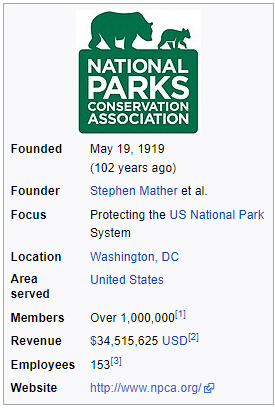
The National Parks Conservation Association (NPCA) is the only independent, nonpartisan membership organization devoted exclusively to advocacy on behalf of the National Parks System. Its mission is “to protect and enhance America’s National Park System for present and future generations.” Founded in 1919 as the National Parks Association, the organization was designed to be a citizen’s watchdog for the National Park Service (NPS) created in 1916. Among the founders of NPA was Stephen Mather, the first director of the National Park Service — Wikipedia
I renewed my membership today as I have for more years than I can remember. No doubt there are a few gaps in my membership due to lean years, but I support the parks and the support groups that speak on the parks’ behalf. The parks are simultaneously underfunded and loved to death by massive numbers of visitors that are unsustainable.
I often wonder why more people aren’t members of NPCA. Glacier Park alone has more visitors every year and I think that if even half of those joined the NPCA, we might solve more of the problems facing the national park system.
The NPCA’s mission, as stated on its website, is “We’re protecting and enhancing America’s National Park System for present and future generations.” Since I’ve been following the problems of the parks since the 1960s, I’m rather cynical about park visitors, many of whom could probably care less about future generations as long as they got their visit checked off the bucket list before the system fell apart.
The organization has a lot on its plate. Here are the issues it tracks:
Air Climate Change Energy History and Culture Landscapes Park Funding Visitor Experience Water Wildlife
My feeling is that all of these are at risk and have been for years, long before climate change was included in NPCA’s concerns. On the NPCA’s advocacy page, there’s a simple message: “Learn about the challenges and opportunities facing national parks, then use your voice to advocate on their behalf.”
On August 9, the Intergovernmental Panel on Climate Change released its assessment of the state of the climate — the panel’s grimmest yet. The window to stop some of the worst effects of the climate crisis is rapidly closing, the report found, and world leaders must act with urgency to prevent catastrophe.
The report, prepared by more than 200 top scientists around the globe and approved by the 195 UN member states, is the first of three expected this year to inform emission reduction commitments at the 26th annual international summit known as the Climate Change Conference of the Parties (COP26) this November in Glasgow, Scotland.
Do most people worry about climate change? Apparently more people are taking it seriously as shown, in part, by their willingness to switch to products that they think are better for the environment.
In this article, the NPCA suggests four critical areas we can focus on:
Reducing emissions from cars.
Retiring power plants to clear skies of haze pollution.
Reducing methane, one of the most potent climate-warming emissions, from oil and gas development.
Securing critical climate provisions in the federal budget.
Climate change is such a huge issue, it often seems outside the power of the individual to address. Articles like this one help us narrow down target areas where we can focus our efforts.
from the National Parks and Conservation Association
Record-visitation pumps billions into national, local economies in 2016
WASHINGTON – National park visitation generated $34.9 billion for the U.S. economy in 2016, a $2.9 billion increase from 2015, and supported 318,000 jobs, the U.S. Department of the Interior announced today. The number reflects the significant, positive economic impact national park visitors have on gateway communities, including sales, lodging and jobs, as well as the impact on the national economy as a whole.
It’s widely known that our national parks are having infrastructure problems because funding has been so insufficient that keeping roads, bridges, structures, trails, and emergency and communications systems up to date is impossible.
Like infrastructure needs outside the park system, allocating money to roads and bridges isn’t sexy in spite of the fact that we see periodic reports about the number of bridges, dams, locks, levees and other vital transportation and safety structures and systems that are below par throughout the country.
Writing for SmartAsset in January 2016, Amelia Josephson said that, “According to the NPS, the nearly $3 billion appropriated for the NPS budget falls short of what’s needed. In May 2015 the park service said it had delayed $11.5 billion in necessary maintenance in 2014 due to budget shortfall. Although national parks charge fees, these fees are not nearly enough to fund the national park system, which is why the NPS depends so heavily on Congress’ budget appropriations.”
A small fraction of this money can be made up by friends of the parks organizations that raise money and fund discrete projects within the parks they’re associated with that would otherwise fall outside NPS’ spending. But this is like bailing a lake with a thimble. It does help, but the overall park’s system continues to fall behind.
Cheating the parks isn’t just about nature, protected areas, and outdoor recreation. It impacts the local economies as well–generally those within 60 miles of a park. As the NPCA press release notes, park visitation doesn’t simply bring money to the park, but also to gas stations, camp grounds, stores, restaurants and hotels in the surrounding area. Those who visit national parks tend to stray longer than random tourists who make brief stops at roadside attractions and less-well-known tourist destinations. Of course, park service employee salaries add to the “new money” brought into the regional economy from the park.
Cheating the parks and other public lands is cheating the future, and not just the environment on which we all depend even if we never go out and visit it. It reduces the value of the country in terms of assets and makes the ultimate loss of parks, or parts of parks, more and more likely in the future. We can pretend it isn’t happening just as many pretend there’s no such thing as global warming. That’s the head-in-the-sand approach. We can do better.
from the National Parks and Conservation Association
Background: The release of President Obama’s 2014 budget April 10 proposes that the National Park Service budget would increase by $56.6 million over FY12, but the increase is partially offset by programmatic decreases to park base operations. The proposal includes important investments but also provides a reduction of nearly a hundred staff in park operations.
“The National Park Service is experiencing deep impacts from the sequester and other continued reductions. This year will be the most challenging in some time for national park superintendents who will have fewer rangers and smaller budgets to manage each park from Yellowstone to Acadia. Funding the operations of the National Park Service needs to be more of a priority than it has been to date. We’re pleased that the President recognizes the need to reverse the mindless sequester, but it will take more than that recognition to address the reality facing national parks.”
“The sequester has already cut more than $130 million from the National Park Service budget, forcing places like Yellowstone, Acadia, Independence Hall, and Cape Cod National Seashore to delay seasonal openings, close visitor centers, picnic areas, and campgrounds, and eliminate ranger positions that are critical to protecting endangered species and historic buildings, as well as greeting park visitors and school groups. Further cuts will only impair the national park experience.
“National parks draw international tourists and are economic engines that support more than $30 billion in spending and more than a quarter million jobs. Yet they suffer from an annual operating shortfall exceeding half a billion dollars and a maintenance backlog of many billions more. And in today’s dollars, the Park Service budget has now declined by more than 20 percent over the last decade.
“We need the President and Congress to make sure America’s national parks are open and well-staffed and nothing in this budget provides us with any confidence that will happen. Our national parks are not just great destinations to visit, they are our national treasures that should be treated with honor. They drive the economy for many rural and urban communities. The severe under-funding of our most prized places needs to be reversed. We hope to work with the President and Congress as they debate how to repair a failed federal budgeting process to better address the true causes of the nation’s deficits and better serve our national parks and the American people.”
–
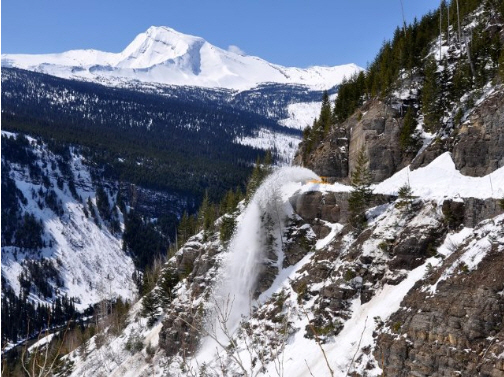
Glacier National Park
NPS Glacier Photo
According to NPS Glacier, “The park’s base budget of approximately $13.5 million was reduced by $682,000. The park must absorb that cut in the remaining months of this fiscal year that ends September 30.”
Due to Congress’ failure to adequately support the parks, budgets were already far short of basic infrastructure and operating requirements. Cutting funding further through a failure of the federal budgetary process adds insult to injury. Inasmuch as jobs and tourism income in areas with parks benefit greatly, any reduction of park hours, season dates, and attractions impacts more than the parks themselves.
Fortunately, a donation to NPS Glacier by the Glacier National Park Conservancy has kept budget cuts from delaying the spring plowing of the Going to the Sun Road. However, visitors will see impacts elsewhere:
Delayed trail access and decreased trail maintenance,
Reduction in native plant restoration,
Reduced shoulder-season access to campgrounds and visitor centers,
Decrease in entrance station hours,
Less maintenance work on park facilities, roads and utility systems,
Limited and delayed emergency response outside the core season,
Decreased educational programming and ranger-led activities,
Less back-country volunteer coordination,
Reduction of revenue from impacted campgrounds, and
Reduced partner financial aid assisting interpretive programs resulting from loss of revenue of partner bookstores in park.
from the National Parks and Conservation Association
Historic gathering of leading national park champions shapes outline for supporting National Park Service’s mission for 2016 centennial and the century to follow
Recognizing a growing need to unite the advocates, partners and supporters of national parks in advance of the upcoming 2016 National Park Service (NPS) centennial and beyond, the most diverse group of national park leaders ever convened gathered last week in Washington, D.C. to attend America’s Summit on National Parks. The Summit was a first of its kind event established in coordination with the NPS through a partnership of the National Park Foundation (NPF), the National Parks Conservation Association (NPCA), and the National Park Hospitality Association (NPHA).
The two-day Summit, which took place January 24-26, was inspired by NPS’ recent Call to Action report[PDF download] and was designed to create unifying, clear objectives that will ensure the protection, enhancement, and support America’s iconic landmarks for centuries to come. The Summit inspired thought-provoking dialogue on some of the greatest challenges and opportunities facing national parks currently. The Summit produced a working document outlining the participants’ shared “Statement of Principles” and “Action Items” to ensure that the seeds of progress begun from the passionate and inspired conversations will take root, leading to growth, change, increased accessibility and ultimate strengthening of the national park system and national park programs. The Summit drew prominent members of Congress, Interior Secretary Ken Salazar, major political advisors and top conservation, tourism and communication leaders.
In a joint statement regarding the Summit, Tom Kiernan, president of NPCA; Neil Mulholland, president of NPF; and Derrick Crandall, counselor of NPHA said:
“Our parks need to evolve with us. The passionate leaders and advocates who attended this Summit are committed to a united vision for the national parks to thrive in the next century. We understand that appropriate funding, diverse outreach, natural resource protection and conservation, updated facilities, and adequate staff are necessary to make sure our national parks remain attractive, healthy places for people to visit and enjoy. And, though there are many challenges, we are confident that this newly unified focus, support and dedication by the park community will make these goals obtainable.”
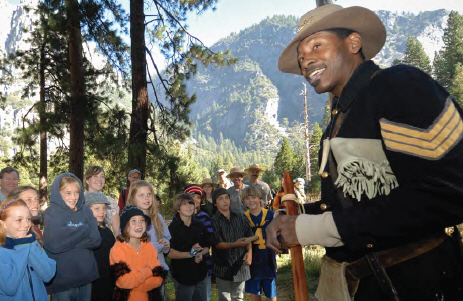
Yosemite - Call to Action Report
Among the most notable directives coming out of the Summit were to increase outreach to youth and other diverse populations; to make units within the NPS system more representative of the diverse makeup of the nation; to use technology, such as social media, smart phone applications, video games and other electronic technologies to attract visitors and improve park experiences; to highlight healthy food and opportunities for safe, active fun during park visits; to increase public awareness of the 2016 centennial; to create an endowment to provide the NPS with secure funding for the future; to encourage supporters and lovers of national parks to become more engaged with their members of Congress and other decision makers, and to grow the base of support for national parks, particularly among the health, education and tourism communities.
Leading up to the 2016 centennial, the current stewards of our national parks will take up the gauntlet thrown by this Summit. Through their work, these original goals will be enhanced and the shared vision will become action.
–
For more information about the Call to Action, click here.

 In general, I try to support KIVA, Tibet, and the National Parks. This puts me on a list of people who would have to be rich to respond to all the projects that need funding. I support the International Campaign for Tibet because I believe that China’s illegal occupation of Tibet and its ongoing policy of erasing Tibetan culture and religion is one of the most noxious atrocities on the planet.
 I support


 The National Parks Conservation Association (NPCA) is the only independent, nonpartisan membership organization devoted exclusively to advocacy on behalf of the National Parks System. Its mission is “to protect and enhance America’s National Park System for present and future generations.” Founded in 1919 as the National Parks Association, the organization was designed to be a citizen’s watchdog for the National Park Service (NPS) created in 1916. Among the founders of NPA was Stephen Mather, the first director of the National Park Service —



 Malcolm's Round Table