Thank you for the 14,000 views in 2012

WordPress claims—and I believe them—that Malcolm’s Round Table had 14,000 views of its 115 new posts this past year. Thanks for visiting.

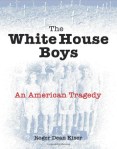
whitehousebook1A fair number of you were reading my post about an organization called “The White House Boys”, an ongoing story about alleged abuses at the now-closed Marianna, Florida  Arthur G Dozier School for Boys. I grew up 90 miles away from that school in Tallahassee.

Obviously, I was aware of the school. I drove past it multiple times. Classmates at my high school always speculated about the people who ended up there. But abuses, that was all new to me until this year. I mentioned this school indirectly in “Cora’s Crossing,” my Kindle short story about the nearby (and purportedly haunted) Bellamy Bridge.

goatsongA lot of you have stopped by to read the book reviews both here and on Literary Aficionado. I saw in GalleyCat this morning that GoodReads users published 20,000,000 reviews on that site this past year. I can’t compete with that even though some of those reviews are mine! In 2012, I liked The Casual Vacancy by J. K. Rowling, In Sunlight and In Shadow by Mark Helprin, Goatsong by Patricia Damery and The Storyteller’s Bracelet by Smoky Zeidel.

Many of you stopped by while searching for information about the hero’s journey. Since my reading and writing have been influenced by Joseph Campbell’s The Hero With a Thousand Faces, I write about the steps on the heropath frequently.

Coming in 2013

Kindle Edition
Kindle Edition

You’ll see more about the hero’s journey on this blog in 2013 as my publisher releases my series of novels called The Garden of Heaven Trilogy. Two of my 2012 short stories (“Moonlight and Ghosts” and “Cora’s Crossing”) are now available on Kindle, but there are more on the way. That means, you’ll also be seeing more posts about ghosts, swampy Florida settings, and stuff that happens on dark and stormy nights.

There will be more reviews, too, beginning in January with Paul Blaney’s Handover which is set in Hong Kong during the country’s transfer of power from British to Chinese rule. I had a chance to visit Hong Kong in the 1960s, so I was interested in the author’s perspective of the city as it was in 1997.

I’m waiting for the second installment in Maggie Stiefvater’s four-book series The Raven Boys and Diana Gabaldon’s Written in My Own Heart’s Blood (coming in the fall of 2013). Yes, we’ve had to wait a while for the eighth book in her Outlander series.

As a writer, I don’t like being rushed. As a reader, I’m always in a hurry for the next best thing. With a bit of luck, 2013 will be another great year for both reading and writing, and for sharing thoughts about our favorite books with each other.

Malcolm

MRCcoversDec2013

Got book lovers? Here are three Christmas ideas

If you still have some holiday shopping to do, here are a few of my favorites this year that might make for some very nice gifts:

goatsong “Goatsong” by Patricia Damery, il piccolo editions Fisher King Press (November 1, 2012), ISBN-13: 978-1926715766 – A wise view of the world through the eyes of a child, homeless women, a goats.

  • From my review: When you read Goatsong, you are breathing in fresh air off the Pacific ocean, smelling the sweet scent of the bay laurel, and cooling your tired feet in sacred streams flowing through old redwoods in the company of wise women who, without agenda, may well change you as they changed the ten-year-old Sophie in those old family stories about the town of Huckleberry on the Russian River.

sunlightshadow“In Sunlight and Shadow” by Mark Helprin, Houghton Mifflin Harcourt (October 2, 2012), 978-0547819235 – A combat veteran whose business is threatened by the mob falls in love with a young woman from a rich and influential family. Readers will discover a poetic view of New York  City played off  against the Mafia’s protection racket and the protagonist’s combat experiences as a behind-enemy-lines pathfinder.

  • From my review: Mark Helprin recalls post World War II New York City throughout In Sunlight and in Shadow with the accuracy and atmosphere of A Winter’s Tale (1983) and his protagonist’s combat experiences with the chilling combat detail of A Soldier of the Great War (1991).

vacancy“The Casual Vacancy” by J. K. Rowling, Little, Brown and Company (September 27, 2012), ISBN-13: 9780316228534 – Rowling steps away from teenagers and contemporary fantasy with a story about the people and politics of a small English town.

  • From my review: Winesburg, Spoon River, Grover’s Corners and Peyton Place reside so powerfully in the consciousness of readers as accurately rendered representations of small town life that their people, town squares, relationships and secrets are forever in our memory almost crossing the boundary from fiction into reality. The English village of Pagford in J. K. Rowling’s The Casual Vacancy belongs on this list.

Malcolm

Malcolm R. Campbell is the author of contemporary fantasy novels, including “Sarabande.”

Contemporary fantasy for your Kindle.

Dear Reader: If you buy books like widgets, I don’t want you

“We get on social media, we try different kinds of events, we create interesting displays, we sell the hell out of the books we love, but none of that reaches the boardrooms where the big decisions are made. If I could get one wish from the ghost of Sylvia Beach, it’s that she, or someone who cares about the inherent value of books, gets a seat in those boardrooms to advocate for readers not consumers, for books as a pillar of culture not as a unit of sales, and for bookstores as community centers not retail outlets and merchandise showrooms.” – Josh Cook of Porter Square Books, Cambridge, Mass

We hear stories from time to time about artists, jewelers, furniture makers and other stubborn souls who, after perfecting the art and the craft of their work for nearly a lifetime, refuse to sell their work to customers whom they believe won’t appreciate the work for its inherent beauty and artistry or who try to prostitute themselves, the art and the artists by acquiring the perfect bentwood rocker, diamond ring or sonnet at a rock bottom price.

Amazon, the Internet and parents who rear children to believe they (the children) are the center of the universe are conspiring like planets in trine to create a book buying atmosphere in which many (but thankfully, not all) prospective readers feel entitled to free, or almost-free books. This attitude is strengthened by the unfortunate, but popular, mindset that anyone selling or making anything is corrupt, cheating at taxes, and trying to rip off customers one way or the other. Therefore, like every other false right people are claiming to have these days, cheap books have become a component of the public’s feelings of entitlement and a way to get back at those who are purportedly stealing us blind.

If you listen to Amazon and to those who believe Amazon has done more for authors and readers than anyone since Gutenberg, then you are hearing that an e-book is just a file.  That means that neither the publisher nor the author is paying printers to print it, nor warehouses to store it.  Those who buy books as units or widgets or just files, see no value in the product other than the momentary gratification of reading them. They not only do not see the inherent artistry in the storytelling, nor the expenses an author incurs in creating that file which might include: (a) a year or two of full-time work, (2) hiring at editor, (3) paying for cover art, (4) travel and other research, (5) promotional efforts including mailing off free review copies, maintaining a website, traveling to book signings, purchasing bookmarks and fliers.

Some authors who have become household names by selling their books through large publishers, can take their fame—as well as their talents—off into the self-publishing world and earn a living selling books for a dollar or two on Amazon. They will lead you to believe that any author or publisher who asks you to pay, say, $5.00 for an e-book is ripping you off because (after all) the book is just a file.

According to the Census Bureau, the current poverty income level in the United States is $8,959. Looking at this simplistically, if I take a year to write an 80,000 word novel, I would have to sell at least 8,959 copies of that book on Amazon at the $1 price to break even at the poverty level. If I had any expenses in creating the book, I’d be under the poverty level.

In spite of the success stories we read about from time to time, most self-published books sell less than a hundred copies. Small-press authors are lucky if they sell 1,500 copies. In both cases, the authors are under the poverty level.

My great hope is that my readers will be happy with my books and will feel that a near-lifetime of art and craft has gone into them. I’m just an everyday, journeyman writer, so I do not feel like a “Hemingway in the making” or a “not-yet-discovered” Pat Conroy or John Grisham. Nonetheless, I do work very hard to tell exciting stories, with three-dimensional characters, pitch-perfect descriptions and themes that provide food for thought. Yet, and I tell you this without vanity or guile, if you want to purchase any of my novels at rock-bottom prices to you and to others like you, don’t bother.

If you think my e-book is just a file rather than the words and the work within the file, I don’t want you buying any of my books because, while we might have to agree to disagree about this, I don’t think you will appreciate them for their value as art/craft/culture. And, if you are earning an income above the poverty level, my strong belief is that if you want me to live below the poverty level selling my books with a rock-bottom, Amazon-style price, then you’re not the kind of person who will appreciate me as an author.

Based on the comments I’ve received on this blog, either directly, or when I post the links on Twitter or Facebook, I know that my regular visitors agree with the Josh Cook quotation I used to set the stage for this essay. I’m not talking to you because that would be rather like preaching to the choir. I’m talking to the people who will find this post via search engines with search words like “rock bottom prices” and “Amazon.” If you are one of those people and if you came here hoping I can “get it for you wholesale” or give it away for nothing, then I don’t want you.

For everyone else out there who respects books for their stories, words fail me in telling you how much I appreciate you.

Malcolm
Briefly Noted: Angel is a Lady and a Mob Boss in S.R. Claridge’s Series of Mystery Novels

In Tetterbaum’s Truth, Angel Martin thought she’d find happy ever after by marrying Tony. Her plans changed when Tony vanished and she took a job at a pub to help her pull herself back together. The pub was a Mafia hangout, but she didn’t know that.

Released in 2011, S. R. Claridge’s Tetterbaum’s Truth began, one might say, both a series of defining moments for Angel and a series of mysteries for readers who like staying up late at night with exciting books.

The “Call Me Angel Series” also includes Traitors Among us, Russian Uprising and this year’s release, Death Trap. Here’s the publisher’s* description for Death Trap:

When Giovanni’s private jet explodes with Angel presumably on board, the family is thrust into a state of crisis and mourning. Learning that the explosion was not due to a malfunction but a well-planned attack,Angel’s men set out on a course for revenge; while Giovanni must face the hard reality of assigning a new Boss to the family.Unknown to anyone Angel is alive,but is forced into hiding from the terrorist group exacting revenge on her grandfather, Salvatore. She watches in horror as her men are lured one-by-one into a trap of death, with their only chance for survival falling on the shoulders of a stranger with an unstable past.

Tempers flare and bullets fly as the lines of family loyalty blur into a melting pot of Mafia destruction, thickening when Angel’s men discover that the stranger behind the attack isn’t a stranger at all. Emotions run high as Angel must face the suffocating reality that her only hope for staying alive is to play dead.

To learn more about the series, check out an interview with Susan on Smoky Talks. All four novels are available on Kindle and Nook, and in multiple e-book formats on Smashwords.
*S. R. Claridge and I are both published by Vanilla Heart Publishing.

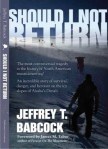
Review: ‘Should I Not Return’ by Jeffrey T. Babcock

“Denali, that Great Grail Castle in the Clouds continues to thrill and kill with each passing year. As of the fall of 2011, 133 climbers have perished on Denali, ever since Allen Carpe and Theodore Koven became the first to die on its icy slopes in 1932.” – Jeffrey T. Babcock in the dedication to “Should I Not Return”

When Jeffrey T. Babcock and his older brother Bill set out to climb the highest mountain in North America, Alaska’s 20,320-foot Denali (Mt. McKinley) in 1967, they knew before they reached “The Great One” that they would be tested in a dangerous world of rock, ice, snow and wind where every climber is at risk and may not return. They did stand on top of the continent on a cold and windy day that July, but en route to the summit, their Mountaineering Club of Alaska (MCA) team stared into the eyes of tragedy from an unexpected combination of events.

The MCA team was several days behind the twelve-person Wilcox-Snyder Expedition. A class-6 storm suddenly raged over Denali, separating the members into those who were able to retreat and those who were stranded high up on the mountain in the bitter cold blizzard conditions. Injured and greatly worried about the other members of their group, the descending Wilcox-Snyder team members met the advancing MCA team, made radio contact with the National Park Service to report their status, and then made their way off Denali. Due to its position on the mountain, the MCA team became the primary rescue group. Jeffrey and Bill Babcock found two of the dead; the others were never found.

The death of seven members of the Wilcox-Snyder group in one day has been called North America’s worst mountaineering tragedy. It has also generated a fair amount of controversy as the actions of leaders Joe Wilcox and Howard Snyder and the National Park Service have been scrutinized under multiple microscopes leading to multiple accusations of blame. Jeffrey T. Babcock, who went on to lead other climbing expeditions including another successful summiting of Denali, has spent a lifetime pondering whether or not the MCA team could have accomplished the impossible and saved any of the Wilcox-Snyder climbers. Now, most experts think not.  But nobody knew this during the summer of 1967.

Babcock has, to the extent it’s possible, come to terms with Denali in 1967 via his “non-fiction novel” Should I Not Return. While the novelization combines real life events from two climbs into protagonist Henry Locke’s coming-of-age climb of Denali on a team led by his brother Johnny, the book’s account of the tragedy and the rescue attempt is based on facts. The result is a compelling and accessible adventure story for a general audience as well as a riveting true-to-life account of a widely known mountaineering event for climbers familiar with techniques, routes and high-altitude weather conditions.

West Buttress of Denali – NPS Photo

Should I Not Return is richly illustrated with photographs from the MCA and other teams as well as sidebars containing historical information about earlier Denali ascents and the climbers involved. While the sidebars are nice time capsules for climbers and others interested in Alaska and its mountains, they can be skipped by those who prefer to stick with Henry and Johnny’s trial by wind and ice.

The emotional and practical need for young Henry—whom some of the other characters view as “Johnny’s baby brother”—to prove himself adds impact to the story. While Johnny and the other MCA team members know each other well, Henry is viewed as a neophyte easterner who will more than likely them back or put them at risk. The terror of the story is amplified because readers see events unfold through the eyes of the youngest team member rather than a veteran climber.

In addition to their geographical and historical value, the photographs serve the same purpose as the illustrations in adventure novels of an earlier era. For example, when Johnny falls through a snow bridge into a crevasse, an accompanying photograph of a Lower Ice Fall snow bridge on Muldrow Glacier demonstrates for non-climbing readers how precarious Johnny’s situation was. The inhospitable conditions Henry and the others face on that glacier is illustrated by a bleak photograph  (by the author) showing just how tiny a man is when he stands next to the sheer walls of Pioneer Ridge. While Babcock’s prose is strong enough to stand on its own, the pictures add greatly to the reading experience.

If Should I Not Return were the product of Jeffrey T. Babcock’s imagination, I would recommend it to everyone who loves compelling adventure stories. For mountaineers, the book adds immeasurably to the historical record of Denali from a very capable writer who was first on the scene of a controversial climbing tragedy.

Malcolm R. Campbell

Malcolm R.  Campbell is the author of four novels, including the 2011 contemporary fantasy adventure “Sarabande”

“Book Bits” provides daily information for writers and readers

Writers like keeping up with contests, tips and techniques, publishers and magazines where they can submit their stories and articles, and advice on how to market their work once it’s published.

Readers like keeping up with their favorite writers, upcoming books in the genres they read the most, and information about authors’ future book signings and other appearances.

Book Bits brings you the links to this kind of information six days a week.  Quite simply, Book Bits is a blog in which every post is a list of links covering the latest reviews, books and author features, contests,  marketing and social networking advice, “writer’s how to” posts, and essays and features about authors, books and publishing.

Book Bits Titles

Book Bits is numbered from the first issue onward toward infinity. The higher the number, the more recent the post.  The titles are designed to attract attention, so they include the names of authors/events most likely to lure people into the post. For example, the title for this morning’s post looked like this:

Book Bits #117 – Hedy Lamarr, Roberto Bolaño, Elmore Leonard and more writing news

So now you know I’ve made 117 posts. This one included a review of Roberto Bolaño’s latest novel, a biography about Hedy Lamarr, and an article about author Elmore Leonard who, says “why not,” when asked why (at age 86) he’s still writing.

This morning’s Book Bits had 24 links.  In addition to those attention-getting names in the title, the other offerings featured a link to a blog hop where you might win a Kindle, a story about the return of the Lit Fest to Haiti, and the names and novels of the ten finalists in Georgia’s Townsend Prize for Fiction.

Naturally, some posts will bore you. My top picks on those days will be authors you’ve never heard of or genres you never read. I try to include a variety, though, in hopes that every time you stop by, you’ll find at least one link you want to click on.

Some posts will take over you’re entire day because, heck, you’ll want to click on every feature, news story and review. The reviews will tempt you to read books. The contest announcements will tempt you to write books, or maybe short stories or poems.

This morning, you might have followed the link to this review:

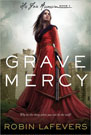
  • Review: Grave Mercy by Robin LaFevers – “With characters that will inspire the imagination, a plot that nods to history while defying accuracy, and a love story that promises more in the second book, this is sure to attract feminist readers and romantics alike.” – Booklist

Or the link to this advice:

  • Lists: 10 Ways to Get Paid for Online Writing, with Lior Levin – “Selling words for dollars is easy, if you are aware of two things: -How to put down the words together. -How to sell your piece in the right market.”

I invite you to surf over to Book Bits, read a few posts and see what you think. That’s sort of like kicking the tires on the car you just might want to buy. Unlike the car, Book Bits is free.

Sure, you’ll see some banners at the ends of the post with links to my author’s site and my novels. Maybe those banners will tempt you. If not, have fun. Goodness knows, I have a lot of fun every day finding the news and rev iews for each post. I tell me wife I’m working, but I think she suspects I’m just surfing the net for the heck of it.

Coming in tomorrow’s Book Bits, a link for a wonderful piece of satire that pokes good-natured fun at the Antiques Road Show (imagine people bringing in crime evidence rather than antiques) and some pithy advice for authors planning to self publish their books. Oh, and reviews, too. There are always reviews.

Malcolm

P.S. When the “Book Bits” title is short enough for me to squeeze in an extra word, I add the #bookbits hashtag to help people find the posts on Twitter. Now, here’s an example of a book banner:

contemporary fantasy for your Kindle

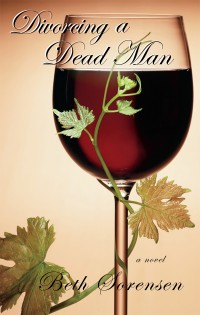
Review: ‘Divorcing a Dead Man’ by Beth Sorensen

In her fine-vintage debut romantic mystery Crush at Thomas Hall (Chalet, August 2010) Beth Sorensen introduced readers to Cassandra Martin who buried an abusive husband Tony, left home to see the world and ended up in northern Virgina running a small winery and deeply in love with the son of Thomas Hall’s owner, Edward Baker. In spite of murder and embezzlement, Cassandra and Edward appeared destined to lead a charmed life at the end of the novel.

The title of Sorensen’s sequel, Divorcing a Dead Man, is the first clue to the fact there may be more than grapes to be crushed at the winery—potentially, hearts and lives, as Cassandra discovers that Tony faked his death and wants to control her life again if he doesn’t kill her first. As a rich, successful CEO, Edward is used to getting his way, and to him that means controlling Cassandra’s life as well.

In my review of Crush at Thomas Hall, I noted that while former college professor Cassandra Martin was an intelligent protagonist when it came to running the winery, she was indecisive about personal matters, especially emotional commitments. She remains indecisive in Divorcing a Dead Man.

But, she has cause:  two men want to control her life, one out of hate and love; one man makes threats while the other keeps secrets; she is a devout Catholic who must now contemplate filing for divorce while her wedding is approaching as a potential train wreck; and, since Cassandra’s life is in danger, those closest want to hover even closer when she would prefer to run the winery (or run away) and have some unfettered time to think.

While Divorcing a Dead Man is not quite as tightly written as Crush at Thomas Hall, this contemporary romance successfully develops the character of Cassandra Martin in an environment of danger and betrayal. Meanwhile, Cassandra is not without doubts. While Tony was a mistake, she wonders as she accuses Edward of trying to run their relationship like a corporation, if marrying him will be another mistake.

Sorensen has written a compelling story about relationships and how easy it is for them to come into question and come under fire during times of great stress. From the outset, it’s clear that Cassandra and Edward are deeply in love and want only the best from each other. It’s also clear, whether fate plays a deadly hand or not, that they’re facing a steep learning curve in how to make a relationship work with very little time to do the necessary homework.

Malcolm R. Campbell is the author of four novels, including the recent contemporary fantasy, “Sarabande.”

Changing Writing Hats When the Need Arises

Today’s guest post is contributed by author Phyllis Zimbler Miller

I met Mitch Miller in January of 1967 when I a freshman and he a junior were both writing for the editorial staff of MSU’s college newspaper, the State News.

During Mitch’s time at MSU he wrote, among other things, articles about the Vietnam War, especially as he was a member of R.O.T.C.  I wrote feature articles, such as on the controversy of a college health clinic giving out birth control pills.

Fast forward ahead:  We married in September 1969, and in May 1970 Mitch went on active duty at Ft. Knox, Kentucky,  for Armor Officers Basic.  I went with him although the Army had not officially invited me.  (For a fictionalized account of my experiences, see my novel Mrs. Lieutenant, which was a 2008 Amazon Breakthrough Novel Award semifinalist.)

When we returned to the States in May of 1972, I eventually became a reporter and editor for Philadelphia’s weekly Jewish newspaper, the Exponent.  Mitch went to law school on the GI Bill and then I went to Wharton to get an M.B.A.

In the summer of 1980 we moved to Los Angeles, where we got “bitten” by an interest in writing for the entertainment industry.  We both took several screenwriting courses at UCLA Extension.  And we began writing and  rewriting and writing and rewriting screenplays that did not sell.

Both of us had to learn to go from a newspaper reporting style to a screenplay format where characters’ inner thoughts could not be portrayed.  The only way a screenplay character could convey his/her thoughts was by telling it to someone, talking to himself/herself, or by certain representative body actions.  (Remember when a movie actor would light a cigarette to show nervousness?)

Then I got interested in writing mystery novels – and I again had to learn a new writing style.  I had to write POV (point of view) characters whose thoughts I could convey while being careful not to switch to a different POV in any one section of a novel.

It took me 20 years of writing and rewriting the novel Mrs. Lieutenant, plus hiring an expert to figure out the one thing missing from the story, before I knew the book was ready to go.  And, of course, the book was then rejected by agents and publishers.

I decided to self-publish at the same time I submitted the manuscript to the Amazon Breakthrough Novel Award competition. Being named a semifinalist helped convince me that there was a market for this type of book.

And as ebooks exploded from a slow start by Kindle in late 2007, I got an idea.  Why not take Mitch’s and my screenplay “Lt. Commander Mollie Sanders,” which had been a 2005 Nicholls Fellowship quarterfinalist, and combine the script with a prequel script we had written titled “A Needle in a Haystack” in order to create an ebook?

Now I had to change writing styles again, and some people feel there is not enough character development in the book Lt. Commander Mollie Sanders.  (This is why we call the story a technothriller rather than a novel.) This ebook is meant to be an action/adventure story with a female
protagonist rather than the usual male protagonist.

On the other hand, some of the criticism of the character Mollie Sanders has been revealing of other people’s own issues. In fact, it has been so revealing that I felt compelled to write the post “A Fictional Character Is Fiction.”

In the end, though, I am grateful for having the opportunities to learn different writing styles and to then have the option to determine which ones work best  for me and for the stories I’m telling.

And,  oh, yes, who would have thought my journalism undergraduate degree would be so helpful now in writing short blog posts?

Phyllis Zimbler Miller (@ZimblerMiller on Twitter) is the co-founder of the marketing consulting company Miller Mosaic, LLC.
You can learn about her fiction and nonfiction books at http://budurl.com/PZMbooks

My Birthday Gift to You

Pennsylvanian L. E. Harvey, author of “Unbreakable Hostage,” “Loving Her,” “Imperfect,” and the recently released “Impeccable,” contributes today’s guest post. The Kindle edition of Impeccable was released on September 9 by Vanilla Heart Books. The trade paperback edition is due out in November. You may also like Lauren’s previous guest post “On Writing as Entertainment” which appeared here in April.

My Birthday Gift to You

Today is my birthday. Normally, I’ve hated my birthdays. And today throws me one foot deeper into my thirty-something’s and one frightening step closer to the big four-oh. Yet, today, I can’t help but have a stupid grin on my face.

You see today just plain rocks.  Today is bringing me quite a bit of change in my personal life in addition to the bigger number.  Professionally, though, I am celebrating not just my age, but also the release of my newest book, Impeccable.

Impeccable is the sequel to Imperfect, a book that I have discussed with the fabulous Malcolm Campbell previously. (See L. E. Harvey’s novels focus on women’s strengths.)  Now, we continue the story.  Now we see how everything from Imperfect ties together and affects every character.  Now we, and the characters, move forward.

So many people were shocked to hear there was a second book.  Ah ha!  Leave it to a writer to be tricky (we love doing that)!  Anyway, yes, there is a
second book.  Yes, Impeccable is it.  No, Imperfect is not the ending to it all.  And Impeccable is not the ending you expected.

Impeccable is the emotional, cerebral twin to the logical Imperfect.  Together, they blend and create a full story of which I am tremendously proud.  I always say that these two books are sure to touch your heart and change your mind.  I say that with good reason: as I wrote them, that is how they impacted me!

These books are not thrillers, nor are they erotic, nor are they fantasy, nor are they exciting.  They are simply touching.  They were written from my heart and I was literally transformed in the process of writing them.  I know that if I can be that affected by a book, you most certainly will be too!

So today, I am celebrating! I am celebrating my day, but moreover, I am celebrating my book.  I am celebrating a book that I loved writing.  I am celebrating a book that touched me on a spiritual level.  And I am celebrating a book that I hope – no I know – will have a tremendous impact on its readers and our society today. That is worth celebrating, don’t you think?

Would you please celebrate along with me?  Could you help me revel in my birthday?  Would you go out on a limb and purchase your copy of Impeccable today?  You might just be surprised at just how deeply this book touches you.  And it will only make my birthday grin bigger!

Thanks, and happy reading!

Publisher’s Description for Impeccable

Carol – abandoned – waiting… for what, she couldn’t know. She couldn’t see that there was more life waiting for her. Carol is forced to face the demons of her past as well as begin to face life without Alex. Struggling to make sense of it all, Carol experiences her new life and all of the highs and lows that come with that life. Will Carol finally make peace with both her past and present?

Teaser from the Novel

She couldn’t feel her body. She felt nothing, no pain, nothing, no heat, and no cold. She couldn’t feel anything. Where was she that she lacked all sensation? Carol diligently tried to focus on her surroundings and tried to make sense of all the activity going on around her, but she was unable to sustain that for long. Once again her eyes rolled back and Carol was consumed by black.

Fantasy briefly noted: Redemption in Indigo

Karen Lord’s debut novel Redemption in Indigo (Small Beer Press, July 2010) was this year’s winner of The Mythopoeic Fantasy Award for Adult Literature at Mythcon 42 in July. The novel also won the William L. Crawford Fantasy Award and Frank Collymore Literary Competition. The awards are a testimony to the book’s creative storytelling.

Writing in the Los Angeles Times, reviewer Jayna Brown, said that “Lord’s strengths as a writer are her witty, often satirical understatement and her ability to juxtapose folk- and fairy-tale devices with modern idioms and cultural references.” Brown noted Redemption in Indigo’s Senegalese, Caribbean, and European influences.

Publishers Weekly said that Lord’s “retelling of a Senegalese folktale, packs a great deal of subtly alluring storytelling into this small package.”

Publisher’s Description

Karen Lord’s debut novel is an intricately woven tale of adventure, magic, and the power of the human spirit. Paama’s husband is a fool and a glutton. Bad enough that he followed her to her parents’ home in the village of Makendha—now he’s disgraced himself by murdering livestock and stealing corn. When Paama leaves him for good, she attracts the attention of the undying ones—the djombi— who present her with a gift: the Chaos Stick, which allows her to manipulate the subtle forces of the world. Unfortunately, a wrathful djombi with indigo skin believes this power should be his and his alone.

Excerpt

A rival of mine once complained that my stories begin awkwardly and end untidily. I am willing to admit to many faults, but I will not burden my conscience with that one. All my tales are true, drawn from life, and a life story is not a tidy thing. It is a half-tamed horse that you seize on the run and ride with knees and teeth clenched, and then you regretfully slip off as gently and safely as you can, always wondering if you could have gone a few metres more.

Thus I seize this tale, starting with a hot afternoon in the town of Erria, a dusty side street near the financial quarter. But I will make one concession to tradition…

…Once upon a time—but whether a time that was, or a time that is, or a time that is to come, I may not tell—there was a man, a tracker by occupation, called Kwame. He had been born in a certain country in a certain year when history had reached that grey twilight in which fables of true love, the power of princes, and deeds of honour are told only to children. He regretted this oversight on the part of Fate, but he managed to curb his restless imagination and do the daily work that brought in the daily bread.

Today’s work will test his self-restraint.

–Malcolm

contemporary fantasy about a woman's trials and choices