Review: ‘Glacier Ghost Stories,’ by Karen Stevens

“Glacier Ghost Stories,” by Karen Stevens, Riverbend Publishing (May 7, 2013), 103 pages, trade paperback.
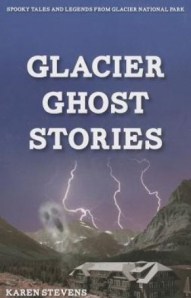
GlacierGhostStories2Karen Stevens (“Haunted Montana,” “More Haunted Montana”) has been collecting Montana ghost stories for thirty years and has been visiting Glacier National Park for forty years. Glacier Ghost Stories brings her passions together in a slim, but informative volume that follows her search for strange and inexplicable events at the park’s historic hotels.

Steven’s book is, in one sense, a reporter’s travelogue: she talks about her investigative trips, the weather, the accommodations, and her interviews with hotel personnel. In the process, she includes a fair amount of park history with details for each hotel: Apgar Village Inn, Belton Chalet, Glacier Park Lodge, Lake McDonald Lodge, Many Glacier Hotel, Prince of Wales Hotel and Sperry Chalet.

Glacier Park Lodge celebrated its 100th anniversary this summer. The other hotels are elders in the lodging business as well. The hotels are busy during their short summer seasons. They’re isolated from the world throughout the rest of the year. The schedule and the wild country are, it seems, the perfect recipe for legends, yarns and a long list of things that defy logical explanation.

While they don’t advertise ghosts in travel brochures, hotel managers and long-time employees had a lot to day about things that go bump in the night: people who suddenly disappear, objects that move when nobody’s looking, doors that lock by themselves, music and other sounds from unoccupied rooms, footsteps in the dark. Stevens includes the room numbers where things seem to happen. Take note of these before your next visit.

Glacier Ghost Stories includes legends about Marias Pass, Going-to-the-Sun Road, Two Medicine Valley and the Belly River. In the book’s postscript, Stevens writes that visitors to Glacier and Waterton parks “follow in the footsteps o those who came before us: Native Americans, trappers, hunters, explorers and others whose spirits even today may roam the land they loved so much in life.”

Stevens does not hear about or witness the over-the-top paranormal happenings we associate with Edgar Allan Poe and Stephen King. She did uncover enough to make us wonder and to look over our shoulders the next time we visit any of the park’s hotels. The book is an engaging portrait from a ghostly point of view.

Malcolm

Malcolm R. Campbell is the author of paranormal short stories and four contemporary fantasy novels partially set in Glacier National Park.

A Glacier Park Novel

Review: ‘Glacier Park Lodge: Celebrating 100 Years’ by Christine Barnes

Glacier Park Lodge: Celebrating 100 Years, by Christine Barnes, photography by Fred Pflughoft, David Morris, and Douglass Dye, Farcountry Press (May 2013), 64 pages.

GlacierParkLodgeThe Swiss-style Glacier Park Lodge on the eastern side of Montana’s Glacier National Park was built by the Great Northern Railway (now BNSF) one hundred years ago as a tourist destination for railroad passengers. While the railroad sold its lodging facilities in 1957 and ended its passenger service in 1971, the rustic hotel with its central roof supported by massive Douglas firs has endured through the years as the “Gateway to Glacier.”

Christine Barnes has captured the spirit of the historic hotel with an accurate overview of “Big Tree Lodge” accompanied by an extravagant collection of archival and color photographs in Glacier Park Lodge: Celebrating 100 Years.

If the Great Northern Railway’s transcontinental route from Minnesota to Washington was the grand dream of tycoon James J. Hill in the late 1800s, the hotels and chalets built by the railroad at the dawn of the new century were the great vision and legacy of Hill’s son Louis W. Hill.

“Louis had taken over from his father, James J. Hill, in 1907, but temporarily stepped down in December 1911 to devote his time to railway-financed projects in and around Glacier National Park,” writes Barnes. “‘The work is so important I am loath to [entrust] the development to anybody but myself,’ he explained to the press.”

As a book of memories, Glacier Park Lodge: Celebrating 100 Years describes the establishment of the park in 1910, the building of the hotel in 1912 and 1913, the railroad’s back-country chalets, and the area’s mountains and wildlife. The book includes a bibliography of standard Glacier references, recipes from the hotel dining room and travel information.

With the help of three talented photographers, Barnes’ experience as a veteran chronicler of old hotels allows her to distil salient facts and images into this small-format book in an accessible style. Her other books include Great Lodges of the West, Old Faithful Inn at Yellowstone National Park and Great Lodges of the Canadian Rockies. She was the senior consultant and historian on the PBS series Great Lodges in the National Parks which included two companion books.

Glacier Park Lodge: Celebrating 100 Years is a perfect introduction to the hotel for first time visitors and a keepsake for long-time hikers, climbers and other enthusiasts of the Crown of the Continent.

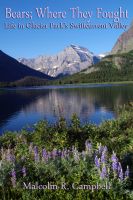
In addition to three novels partially set in the park, Malcolm R. Campbell is the author of Bears; Where they fought: Life in Glacier Park’s Swiftcurrent Valley and “High Water in 1964” in the National Park Service’s Glacier centennial volume A View inside Glacier National Park: 100 years, 100 Stories.

Review: ‘The Best of Glacier National Park,’ by Alan Leftridge

The Best of Glacier National Park, by Alan Leftridge, Farcountry Press (April 30, 2013), 136 pages, photographs, maps, resources

BoGlacier cover flat r1.indd“We’re here! What should we do, what is there to see?” In the preface to his practical and well-illustrated Glacier National Park guidebook, Alan Leftridge writes that as a park ranger, he often heard those questions from excited visitors who “wanted to start making memories.”

Many of Glacier’s two million annual visitors travel a long way to reach northwestern Montana, and when they arrive, they are not only in awe of the scenery but of the scope of the prospective activities that await them in a 1,012,837-acre preserve with 762 lakes and 745.6 miles of trails. While Glacier is best experienced without hurry or stress, the economics of vacation travel make it necessary for visitors to maximize their time in the park.

The Best of Glacier National Park highlights, as Leftridge puts it, the park’s “iconic features.” The book begins with an overview of park facts, geology, and cultural history. This is followed by twenty-six “best of” chapters describing everything from scenic drives, picnic areas and nature trails to wild flowers, birds and photography opportunities.

Each chapter includes a map, color photographs and clearly marked headings and subheadings that make the information easy to find. This book is meant to be used as a quick and easy reference whether you are stopped at an overlook on the Going-to-the-Sun Road or standing in a subalpine fir forest on the Swiftcurrent Nature Trail. The hiking sections, which are broken down into nature trails, day hikes and backpack trips, include directions and special features you’ll want to see and photograph.

Glacier’s rangers, naturalists, boat crews and saddle tour operators are probably asked more questions about the park’s flora and fauna than anything else. The “Best Wildlife” chapter includes a mammal checklist and tells you where to find marmots, deer, elk, bighorn sheep, moose and bears. The book includes appropriate warnings about Grizzly bears, suggesting that they be observed at a distance. “Best Birds” highlights ospreys, eagles and ptarmigans, among others.

Naturally, “Best Wildflowers” begins with beargrass. Leftridge notes that “It is a myth that bears rely on this lily to satisfy their diet. If you see beargrass’ tall stalks with missing flower heads, know that other animals, including rodents, elk and bighorn sheep, nibbled here.”

According to the National Park Service, there are 1,400 plant species in Glacier. While “best” is a subjective term, this guidebook focuses on such popular and showy wildflowers as the Glacier Lily, Indian Paintbrush, Lupine and other visitor favorites.

Naturalist John Muir said Glacier National Park includes the “the best care-killing scenery on the continent” and suggested that visitors  “Give a month at least to this precious reserve. The time will not be taken from the sum of your life. Instead…it will make you truly immortal.”

Whether you have a month, a week or a only few days for the high country known as the Crown of the Continent, The Best of Glacier National Park is an excellent all-purpose, general guidebook for discovering everything to do and see when faced with thirty-seven named glaciers, 175 mountains, and 151 maintained trails of waiting memories.

Malcolm

TSScover2014A former Many Glacier Hotel summer employee, Malcolm R. Campbell is the author of nonfiction and fiction with a Glacier Park focus, including Bears; Where They Fought: Life in Glacier Park’s Swiftcurrent Valley and three contemporary fantasy novels set in the park, “Sarabande,” “The Seeker” and “The Sun Singer.”

Briefly Noted: ‘I Do: A Cultural History of Montana Weddings’

“A young and plucky eastern girl moves to the Wild West to be swept off her feet by a handsome and muscular cowboy: it’s the stereotypical plot of countless romance novels set in Montana.” – Montana Historical Society Press

We’ve all seen wedding stories like this in movies, novels and television shows. Some of those stories might even be real. However, historian Martha Kohl, a fifteen-year specialist at the the Montana Historical Society in Helena, found that the reality of Montana weddings over a 150-year period was every bit as romantic and absorbing as the fiction.

If you live in or near Helena, you can meet the author and enjoy the society’s new exhibit “And the Bride Wore…Montana Weddings, 1900-1960” on January 10th, between 6:30 and 8:30 p.m. at the MHS headquarters at 225 North Roberts.

IdoFrom the Publisher:

Through engaging stories of romance, insightful analysis, and historic intriguing photographs, I Do: A Cultural History of Montana Weddings provides an intimate and surprising look at an important tradition. I Do journeys through the last 150 years of Montana history, from the 1860s gold rush to the internet age, to reveal the lives of ordinary people, from Finnish homesteaders, Chinese restaurateurs, and Métis fiddlers to struggling miners, Blackfeet students, and Jewish merchants.

About the Exhibit:

MHSlogoThe Montana Historical Society’s newest temporary exhibit, will examine how history has shaped weddings—and particularly wedding fashion—during the first half of the twentieth century. Sixteen delightful and diverse dresses will be on display, including a hand-stitched dress made of white lace and yellow silk ribbon (worn in Butte in 1907), a Crow elk-tooth dress (worn in Lodge Grass in 1945), and a ballerina-style white dress of synthetic satin, lace and tulle (worn in Hardin in 1957). An opening reception will be held January 10, 2013, from 6:30-8:00. The opening will feature a wedding dress fashion show, a 1950s style cake and punch reception, a book signing by Martha Kohl, author of I Do: A Cultural History of Montana Weddings, and Slovenian wedding dance music. Don’t miss the fun! Viewers will be asked to participate in the exhibit by voting for their favorite ensemble and trying their hand at an old-fashioned Singer treadle sewing machine. The dresses will remain on exhibit through November 2013.

The exhibit is listed on line here with contact information and other details.

Malcolm

A long-time member of the Montana Historical Society, Malcolm R. Campbell is the author of contemporary fantasy novels partially set in Glacier National Park, including “The Sun Singer,” “Sarabande,” and the upcoming new adventure, “The Seeker.” Watch the trailer.

gohFBcover

Glacier Park Fund and Glacier Association to Merge

from the Glacier Park Fund

West Glacier, MT, September 25, 2012 – The Board of Trustees of the Glacier National Park Fund and the Board of Directors of the Glacier Association (formerly the Glacier Natural History Association) have agreed to a merger of these two Glacier National Park Partners.

The merger will be effective January 1, 2013, and the new organization will be the Glacier National Park Conservancy. The conservancy’s goal will be to generate financial support for the Park in an era of reduced federal budgets through increased private fundraising and philanthropic activities, and continued operation of the bookstores within Glacier National Park and at other federal agency partner sites in Montana.

The Glacier Park Fund has provided close to $4 million to Glacier National Park and is pleased to take another exciting step in growing our commitment and support to Glacier.

From extensive support of trails, to research and management of wildlife and plants, to educational programs and preservation of the red buses and historical records, artifacts and buildings, the Glacier National Park Conservancy (GNPC) will continue in the same tradition of helping to preserve a quality of visitor experience while protecting a very special national treasure.

The Glacier National Park Fund was established in 1999 as the non-profit fundraising partner of the Park. The Glacier Association is a non-profit cooperating association of the National Park Service that was originally formed in 1941 and incorporated in 1946.

As a 1980s volunteer with the Glacier Association when it was called the Glacier Natural History Association and as member of both organizations, I look forward to seeing a strengthening of the efforts of both approaches to park stewardship and fundraising through the merger.

–Malcolm

Malcolm R. Campbell, the author of contemporary fantasy and satire, also created the Kindle e-book “Bears; Where They Fought” about the land and history of Glacier National Park’s Swiftcurrent Valley. His article about the Glacier Park flood of 1964 appears in NPS-produced “A View Inside Glacier National Park – 100 Years 100 Stories” available through the Glacier Association on line bookstore.

Visit the Glacier page on my website.

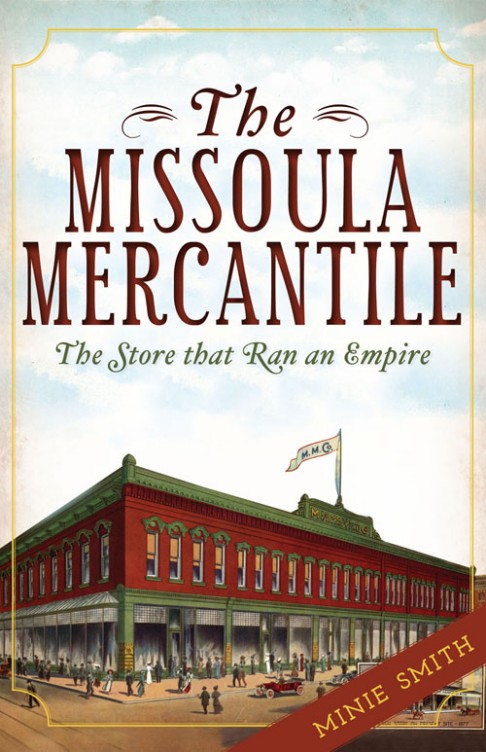
Briefly Noted: ‘The Missoula Mercantile’ by Minie Smith

Minie Smith’s The Missoula Mercantile traces the history of an 1866 Missoula, Montana trading post that ultimately became—according to a story about the book in The Missoulian–“the largest department store between Minneapolis and Seattle.” The 192-page book, which includes 82 historic pictures–was released by The History Press in August.

According to The Missoulian, “Allied Stores Corp. bought the Merc in 1960 but retained the name until the Bon Marche bought Allied in 1978. Federated Department Stores took over in 1989, and the name changed over the years from the Bon to Bon-Macy’s and, in 2005, to Macy’s. Macy’s closed the doors in early 2010.” Smith’s history follows the store up until 1960.

Publisher’s Description: From its log cabin beginnings at a dusty crossroads in Montana Territory, the Missoula Mercantile grew to become the largest department store between Minneapolis and Seattle. Under the guidance of A.B. Hammond and C.H. McLeod and their policy of community involvement and customer satisfaction, the Merc became a household word in Montana, synonymous with square dealing. Join historian Minie Smith as she traces the story of a western institution, remembering everything from the Missoula Mercantile’s hardware department, with its creaky wooden floors and drawers of nuts and bolts, to its ladies’ apparel department, which offered a taste of the big city with silks, satins and velveteens. From horseshoes to hosieries, the Merc had what customers needed and knew what they wanted.

Today’s look-alike stores are pretty much the same from town to town, but the old stores were a part of local history, giving one the impression that if the old walls could talk, one would know everything about a place that could ever be known. Fortunately, the store’s old building is being preserved and The Missoula Mercantile is telling its story.

Book Signing: Smith will be signing copies of The Missoula Mercantile this Saturday Morning at 10:30 at Fact and Fiction Downtown  in Missoula and at the University of Montana Bookstore at 2 p.m. on Friday, September 21.

Malcolm

A Glacier Park fantasy for your Nook.

Knowing the history of your favorite states makes your stories better

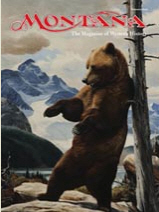
I have been a member of the Montana Historical Society for at least 25 years even though I live in Georgia. Why? I fell in love with the state after working two summers in Glacier National Park. Since the state’s history and environment fascinate me, I look forward to each new issue of the Society’s award winning Montana The Magazine of Western History.

The places where my novels are set always figure strongly into their plots and themes. Much has been written about the Rocky Mountains and Glacier National Park. I try to keep up so I can make my descriptions as accurate as possible and to ensure that my plots are viable within those settings. Even though I don’t write historical novels, I also feel that knowing the history of an area adds to my understanding of a state or region and enriches my storytelling.

Unlike many of our high school and college history classes that focused a great deal on remembering dates, reading the articles and reviews in a historical magazine is a joyful experience. There’s no pressure to take notes and/or to guess which five facts will be on a pop quiz or the final exam. In the  Summer 2012 issue of Montana The Magazine of Western History, the lead article “The End of Freedom: The Military Removal of the Blackfeet and Reservation Confinement, 1880” by William E. Farr features the Indian reservation on the east side of Glacier National Park.

One can hardly visit Glacier without learning about the tribe’s association with the park. If you reach the park by car or train from the east, you’ll pass through the Blackfeet reservation. This well-written article definitely increases my sense of place and the people who are important there.

As a writer, I want to know what I’m writing about—in depth. Obscure facts come to mind long after I read an article and influence plot development in ways I can never predict when each issue of the magazine arrives. My membership in the Montana Historical Society has, I think, been an important component in shaping my three novels set partly within the state: The Sun Singer, Garden of Heaven: an Odyssey, and my recent contemporary fantasy, Sarabande. I always hope that readers, especially those who live in the places I write about, will think that I live there, once lived there, or have spent a great deal of time seeing the sights on multiple vacation trips.

Most states have state, county and local historical societies, tourism departments, and preservation groups that are worth their weight in gold for writers who see place almost like another character in each story.

Table of Contents – Current Issue

  • The End of Freedom: THE MILITARY REMOVAL OF THE BLACKFEET AND RESERVATION CONFINEMENT, 1880, by William E. Farr
  • Protest, Power, and the Pit: FIGHTING OPEN-PIT MINING IN BUTTE, MONTANA, by Brian Leech
  • Breaking Racial Barriers: ‘EVERYONE’S WELCOME’ AT THE OZARK CLUB, GREAT FALLS, MONTANA’S AFRICAN AMERICAN NIGHTCLUB, by Ken Robison
  • Building Permanent and Substantial Roads: PRISON LABOR ON MONTANA’S HIGHWAYS, 1910–1925, Jon Axline
  • Signs of the Times: THE MONTANA HISTORICAL SOCIETY’S NATIONAL REGISTER SIGN PROGRAM, by Ellen Baumler
  • REVIEWS:  Jiusto and Brown, Hand Raised, reviewed by Jon T. Kilpinen / Hedren, After Custer, reviewed by James N. Leiker / Courtwright, Prairie Fire, reviewed by Sarah Keyes / Schackel, Working the Land, reviewed by Susanne George Bloomfield / Wood, Hunt Jr., and Williams, Fort Clark and Its Indian Neighbors, reviewed by Steven Reidburn / Pasco, Helen Ring Robinson, reviewed by Alexandra M. Nickliss / Flint and Flint, eds., The Latest Word from 1540, reviewed by Thomas Merlan / Harvey, Rainbow Bridge to Monument Valley, reviewed by Lawrence Culver

For me, such articles grab my attention like a page-turner novel. Since the reading is fun, I tend to remember it later on when I’m telling another story about the state.

Malcolm

A contemporary fantasy set in Montana, and available on Smashwords in multiple e-book formats.

Montana’s Uncommon Critters Posters

Montana Fish, Wildlife & Parks has four great posters featuring the burrowing owl, paddlefish, cutthroat trout, and coeur d’alene salamander. As you can see from the salamander art shown here, artist Peter Grosshauer uses vivid colors to bring these critters alive for your PC’s wallpaper or as illustrations for your next nature talk or hike.

You can find these posters ready for download on the Glacier Park Fund’s “Just for Kids” page. (I hope it’s legal for adults to enjoy these posters as well.)

You May Also Like: Good Nature Stories Make Good Earth Stewards posted yesterday on Magic Moments.

Coming June 22: An interview with author Smoky Trudeau Zeidel, who will be talking about her new novel The Storyteller’s Bracelet.

Coming Soon: Author Melinda Clayton will stop by to talk about her new novel Entangled Thorns.

Malcolm

Time to pick up a 2012 Montana Calendar

I look forward to my yearly calendars from the Montana Historical Society that come as part of my membership. They are filled with western scenes from the society’s photographic collection. Calendars are 8.5 x 11 inches and feature black and white photography.

The front of the 2012 calendar features a historic photo of Mt. Wilbur and Swiftcurrent Lake from Glacier National Park. If you love western history, you can join the MHS by calling 406-444-2918 or heading out to their website at www.montanahistoricalsociety.0rg. Memberships are $55 per year and include a subscription to the quarterly Montana The Magazine of Western History. Or, you can buy the calendar alone for $8.50, order from the museum store.

Maybe the 2012 calendar will inspire me to get started on my next novel set in Glacier National Park. Maybe it will inspire you to think of wild places in the Rocky Mountains.
Ledger Art by Curly, Crow - MHS

New Museum Exhibits: Two exhibits open tonight (December 1, 2011)  from 6-8 p.m. at the Montana Historical Society’s museum at 225 North Roberts in Helena, The Art of Story Telling: Plains Indian Perspectives and Mapping Montana: Two Centuries of Cartography. Wish I could be there.

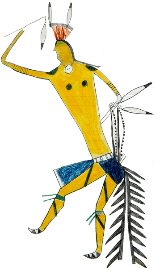
The drawing pictured here is an example of “ledger art,” a transitional approach to recording stories and events by plains Indian nations between 1860 and 1900 as artists switched from the traditional paints and hides to ledger paper with crayon, colored pencils and water colors. The new exhibit will include the Walter Bone Shirt ledger book, on loan to the society.

According to the Plains Indian Ledger art Project, “Changes in the content of pictographic art, the rapid adjustment of Plains artists to the relatively small size of a sheet of ledger paper, and the wealth of detail possible with new coloring materials, marks Plains ledger drawings as a new form of Native American art.”  For more information about ledger art, click here.

Malcolm

Malcolm R. Campbell’s contemporary fantasies “Sarabande” (new) and “The Sun Singer” are set in the Swiftcurrent Valley of Glacier National Park.

a young woman's harrowing story