Congress should pass a law that mandates more novels from non-prolific authors

And why not? The feds are already sticking their noses into a lot of stuff that isn’t the government’s business. And if Congress were fair about the matter, it wouldn’t force everyone to churn out books like James Patterson who, as we all know, has a truckload of co-authors except on his Alex Cross novels.

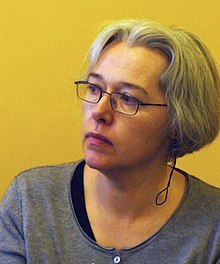
Clarke has aged since this 2006 photo was taken.

Since the idea for this legislation is mine, I get to choose the authors: they would include Mark Helprin, Erin Morgenstern, Susanna Clarke, and Donna Tartt. Oh shoot, Clarke has chronic fatigue syndrome, so we can’t put her on the list. We want to, but we shouldn’t. While it’s taxing to write books, maybe the feds should impose a tax on authors who really ought to write more, the rationale being that we need their stories to stay sane–or mostly sane.

Jonathan Strange and Mr. Norrell (2004) and its alternate history of Britain and magic, is probably one of the best magic/fantasy novels anyone has written.  We need more, much more because these books show us the world as it really exists. Perhaps Congress can convene a committee of dunces to learn why there’s been no sequel.

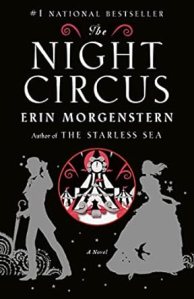
One pleasant surprise of 2012 was the appearance (without warning) of Morgenstern’s The Night Circus about a strange circus that appears without warning and spreads magic and humor in the towns where it manifests. The Starless Sea (2020) also captured our imagination with a magical world just as stunning as that of the circus.

Perhaps the tactic Congress should take is that readers need more of these books for national security reasons. We know that rationale is always bullshit, but it seems to work.

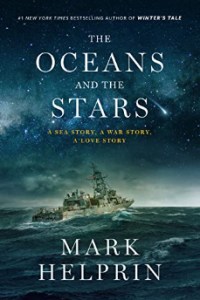
Mark Helprin, at 76, has appeared with another novel that will help save us from the Ruskies, Hamas, and other bad people called The Oceans and the Stars. I like all of his work, but think nothing holds a candle to Winter’s Tale.

Donna Tartt who–thank the good Lord is only 59–has always written at a snail’s pace. Congress can fix this because the country, as the Department of Homeland Security would say, “needs the security of books,” and that means that Tartt cannot take a few years off to play video games or watch “Survivor” and “Hells Kitchen” while the Pulitzer gathers dust on the shelves.

We need the stories, but we wither on the vine when we’re stuck waiting for them for too long.

–Malcolm

‘The Oceans and the Stars,’ by Mark Helprin

The Oceans and the Stars: A Sea Story, A War Story, A Love Story, by Mark Helprin, The Overlook Press (October 3, 2023), Kindle and Hardcover available for pre-order.

All of Mark Helprin’s novels are on my shelf. It’s an understatement to say that, as a former Navy man and fan of his work, I much enjoyed this book–and was inspired by a 75-year-old author who is still at work.

From the Publisher

“Mark Helprin, the #1 New York Times, best-selling author of Winter’s Tale and A Soldier of the Great War, returns with a fast-paced, beautifully written novel about the majesty of the sea; a life dedicated to duty, honor, and country; and the gift of falling in love.
     
“A Navy captain near the end of a decorated career, Stephen Rensselaer is disciplined, intelligent, and determined always to do what’s right. In defending the development of a new variant of naval ship, he makes an enemy of the President of the United States, who assigns him to command the doomed line’s only prototype­––Athena, Patrol Coastal 15­­––with the intent to humiliate a man who should have been an admiral.
     
“Rather than resign, Rensselaer takes the new assignment in stride, and while supervising Athena’s fitting out in New Orleans, encounters a brilliant lawyer, Katy Farrar, with whom he falls in last-chance love. After failed marriages for both, this is a completely unexpected and exhilarating last chance. Soon thereafter, he is deployed on a mission that subjects his integrity, morality, and skill to the ultimate test, and ensures that Athena will live forever in the annals of the Navy.
   
“As in the Odyssey, Katy is the force that keeps him alive and the beacon that lights the way home through seven battles, mutiny, and court martial. In classic literary form, an enthralling new novel that extolls the virtues of living by the laws of conscience, decency, and sacrifice, The Oceans and the Stars is nothing short of a masterpiece.”

From the Author’s Website

Helprin in the Italian Alps

“Mark Helprin belongs to no literary school, movement, tendency, or trend. As many have observed, and as Time Magazine has phrased it, “He lights his own way.” His three collections of short stories (A Dove of the East and Other Stories, Ellis Island and Other Stories, and The Pacific and Other Stories), seven novels (Refiner’s Fire, Winter’s Tale, A Soldier of the Great War, Memoir From Antproof Case, Freddy and Fredericka, In Sunlight and in Shadow, and Paris in the Present Tense), and three children’s books (Swan Lake, A City in Winter, and The Veil of Snows, all illustrated by Chris Van Allsburg), speak eloquently.”

Helprin’s plots are solid and his writing is among the most beautiful on the planet. This book is also action-packed and filled with much food for thought about contemporary themes.

–Malcolm

Malcolm R. Campbell is the author of the Vietnam War novel “At Sea.” The author’s cover photo is of the USS Ranger (CVA-61).

Review: ‘Paris in the Present Tense’ by Mark Helprin

Paris in the Present TenseParis in the Present Tense by Mark Helprin
My rating: 5 of 5 stars

With great love, there is often great loss. Musician, composer and teacher Jules Lacour has, at age seventy-four, experienced both and will continue to do so as long as he can draw breath and hear music. As Helprin’s “In Sunlight and in Shadow” is a love song to New York City,” “Paris in the Present Tense” is a love song to the City of Lights (la Ville Lumière).

Like “In Sunlight and in Shadow,” this novel is non-linear, atmospheric, and a sprawling immersion into the location as viewed by the protagonist, in this case, a man who not only hears music in everyday sights and sounds, but who believes the listener is experiencing the Divine:

“The world had courage, faith, beauty, and love, and it had music, which, although not merely an abstraction, was equal to the greatest abstractions and principles – its power to lift, clarify, and carry the soul forever unmatched.”

Physically fit from daily runs and swims that give him more stamina and a more athletic physique than men half his age, Lacour is pragmatic about health and has a laser-focus on the need to raise money to save his terminally ill grandson. Yet he has a complex past that haunts him to great distraction, an unusual and somewhat chaotic approach to his music students, and the romantic’s ability to fall deeply in love with a woman at a moment’s notice. He owes allegiance to his past and to the here and now and must learn how to juggle memories and defining moments.

This complex character provides more focus and a tighter plot to this novel than what we saw in “In Sunlight and in Shadow” as well as a more satisfying conclusion. The story is beautifully told with shimmering prose that is almost music.

View all my reviews

Malcolm

Briefly noted: ‘Refiner’s Fire’ by Mark Helprin

While Kirkus Reviews called Mark Helprin’s first novel Refiner’s Fire (1978) “grandiose,” it received more positive reviews from other major media outlets. I first read it five years after it came out when, my excited reading of Winter’s Tale (1983), led me on a search for another Helprin book. Winter’s Tale remains my favorite, followed by A Soldier of the Great War (1991). While In Sunlight and Shadow (2012) seemed to be to be less successful than the others, it contains the same dazzling images, imagination, and prose I loved in Winter’s Tale and Refiner’s Fire. In rereading Refiner’ Fire this past week, I believe it still holds up as a compelling novel about a man whose diverse experience refine and purify him as surely as a refiner’s fire purifies silver.

Publisher’s Description: “Born on an illegal immigrant ship off the coast of Palestine, Marshall Pearl is immediately orphaned and soon brought to America, where he grows up amidst fascinating and idiosyncratic privilege that is, however, not nearly as influential in regard to his formation as the pull of his origins though they are unknown to him. A cross between Fielding´s Tom Jones and the story of Moses, Refiner´s Fire is a great and colorful adventure that ends in a crucible of battle, suffering, and death, from which Marshall Pearl rises purely by the grace of God. Addressing the holy and the profane, but never heavy handedly, it is not so much a meditation on the fate of the Jews after the Holocaust, the rise of Israel, and the spirit of America, as it is an elegy and a song in which the powers of life and regeneration are shown to gorgeous effect.”

From the Reviews: 

  • “Mark Helprin, who must be legend to his friends, risks more than most novelists dare in ten years. Helprin writes like a saint, plots like a demon, and has an imagination that would be felonious in all but the larger democracies . . . . The sound that drowns all others in this novel is that of kingdom-come ignition.” (The Village Voice)
  • “Marvelous . . . . A brilliantly sinuous tale that sets an Augie March-like young man into a Gabriel Garcia Marquez universe . . . There are so many things to admire in Mark Helprin’s first novel that one’s problem is where to begin.” (Joyce Carol Oates, The New York Times Book Review)

From the Novel: “You know,” said Al in a daze of hunger and cold, “when you see this, you realize that despite all the crap that goes on in the cities, despite all the words and accusations, the country has balance and momentum. The whole thing is symmetrical and beautiful; it works. The cities are like bulbs on a Christmas tree. They may bum, swell, and shatter, but the green stays green. Look at it,” he said, eyes fixed on the horizon, not unmoved by the motion of the train. “Look at it. It’s alive.”

There is a lot of magic in Helprin’s writing, though I believe he doesn’t care for the term “magical realism” and doesn’t see his work in that way. However, the fact that much of this novel is told in flashbacks dreamt by protagonist Matther Pearl, allows Helprin a lot of flexibility in his use of dazzling images and exuberant language. I’m glad I experienced the story again.

–Malcolm

Malcolm R. Campbell is the author of two, magical realism “conjure and crime” novels, “Conjure Woman’s Cat” and “Eulalie and Washerwoman.”

Magical Realism: betwixt and between

In folklore, mythology and fantasy, and real or acted-out rites of passage, the boundaries where worlds meet are variously considered volatile, dangerous and rich in possibilities. Why is a bride carried over the threshold? Yes, it’s traditional, but it harkens back to the notion that a doorway was a dangerous boundary.

Myths and superstitions have flourished around the doorways, thresholds, crossroads, the littoral between ocean and beach, the lines where forests and meadows meet, dusk and dawn, and other dividing lines between realities.

You’ll find these “uncertain places”—as Lisa Goldstein calls them in her fantasy by that name—referred to as “neither here nor there” and “betwixt and between.”
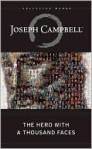
herothousandfacesIn his groundbreaking The Hero with a Thousand Faces, Joseph Campbell writes that in the hero’s journey, “A hero ventures forth from the world of common day into a region of supernatural wonder: fabulous forces are there encountered and a decisive victory is won: the hero comes back from this mysterious adventure with the power to bestow boons on his fellow man.” Strategic points in this journey occur where worlds and realities meet.

Even in a contemporary fantasy such as the Harry Potter series, the magic of Hogwarts is distinguished from the unknown and potentially darker magic of the forest. However, as Luke in Star Wars and Harry in Rowling’s series learn, the hero doesn’t grow within, much less advance on the physical part of his/her journey without going into the swamp, the dark forest, or the unknown world outside the city gates.

Magical Realism

Magical realism usually focuses upon the boundaries between the worlds of the known and the unknown. The stories combine the natural and the supernatural in a straightforward manner and without commentary or judgement as equally real. Characters dance back and forth across the “uncertain places” as the stories progress.

In a fantasy novel, the characters approach and enter supernatural worlds while noting they’re stepping into realms that are acknowledged as magical, different or strange. In a magical realism novel, events or places that readers may consider supernatural are, by contrast, accepted by the characters as no more or less real than the everyday science and technology world in place at the time when the novel is set.

MamaDayGloria Naylor’s novel “Mama Day” is a perfect example of the juxtaposition of realms. Her first novels, The Women of Brewster Place and Linden Hills took a realistic approach. However, in writing Mama Day, Naylor said, “I needed to find a way structurally to have you walk a thin line between that which is real and that which is not real.”

New York City in this novel represents the real. The fictional Willow Springs, on an island near the Georgia and South Carolina border represents what—in our consensual everyday reality—is not real. Writing in Challenging Realities: Magical Realism in Contemporary American Women’s Fiction, Maria Ruth Noriega Sanchez says that Naylor’s novel is an “extraordinary exploration of the intangible and the power of belief that brings into question the limits or reality and truth.”

Naylor’s approach to magic in Mama Day can be seen in my favorite passage from the novel: “She could walk through a lightning storm without being touched; grab a bolt of lightning in the palm of her hand; use the heat of lightning to start the kindling going under her medicine pot. She turned the moon into salve, the stars into swaddling cloth, and healed the wounds of every creature walking up on two or down on four.”

If this were written in a realistic novel, Naylor would have produced something more like this: “She could purportedly walk through a lightning storm without being touched; imagine grabbing a bolt of lightning in the palm of her hand; or appear to use the heat of lightning to start the kindling going under her medicine pot. In her dreams, she turned the moon into salve, the stars into swaddling cloth, and healed the wounds of every creature walking up on two or down on four in her mind’s eye.”
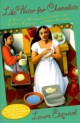
waterforchocolateRealism demands the qualifying words and phrases. Magic realism omits them and keeps the reader guessing and unsettled about what is really happening in the uncertain realms that are betwixt and between.

In this passage from Laura Esquivel’s Like Water for Chocolate, “Her body was giving off so much heat that the wooden walls began to split and burst into flame,” the reader finds no “as if,” “as though,” or other qualifiers to indicate the event is figurative—because it isn’t. How you react to that as a reader depends on how you see the world and/or on how well the author has enchanted you to see things differently while reading the book.

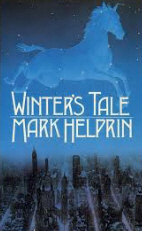
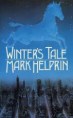
In Mark Helprin’a Winter’s Tale, Peter Lake is riding Athansor, a guardian angel in the form of a horse: “They got up steam and proceeded calmly to the north – where there seemed to be no people, but only mountains, lakes, reedy winterstalecoversnow-filled steppes, and winter gods who played with storms and stars.” Here again, the winter gods are mentioned as matter of factly as the mountains and lakes.
When initiates go through a ritual, they begin with the everyday world and end up transformed in some way. The place where these two stages meet is often called “liminality.” Here the initiate is not quite who s/he was and not quite who s/he will become.

Early studies in this area were done by Arnold van Gennep, who coined the word, in his 1909 book Rites de Passage. Folklore, myth, fairytales and stories following the “hero’s journey” typically involve plots ritesofpassageand scenes that are similar to rites of passage. The protagonist is buffeted by storms, monsters, magic forces, conscious landscapes and other dangers during his/her physical and inner journey to the intended destination.

Magical realism lives at that liminal point, leaving the reader with one foot over the threshold and one foot in the comfortable world s/he knows. Unsettling as this can be, that’s the genre’s greatest strength—a cauldron of worlds where stories simmer and readers become part of the spell.

You may also like: Just starting out? Beware of Magical Realism

–Malcolm

This post is part of the Magical Realism Blog Hop. About twenty blogs are taking part in the hop. Over three days (29th – 31st July 2015) these blogs will be posting about magical realism. Please take the time to click on the button above to visit sit them and remember that links to the new posts will be added over the three days, so do come back to read more.The button should go live on or after 12:01 a.m. July 29th.

Malcolm R. Campbell is the author of “Conjure Woman’s Cat,” a magical realism novella set in the Jim Crow era of the Florida Panhandle where granny and her cat take on the Klan.
Got book lovers? Here are three Christmas ideas

If you still have some holiday shopping to do, here are a few of my favorites this year that might make for some very nice gifts:

goatsong “Goatsong” by Patricia Damery, il piccolo editions Fisher King Press (November 1, 2012), ISBN-13: 978-1926715766 – A wise view of the world through the eyes of a child, homeless women, a goats.

  • From my review: When you read Goatsong, you are breathing in fresh air off the Pacific ocean, smelling the sweet scent of the bay laurel, and cooling your tired feet in sacred streams flowing through old redwoods in the company of wise women who, without agenda, may well change you as they changed the ten-year-old Sophie in those old family stories about the town of Huckleberry on the Russian River.

sunlightshadow“In Sunlight and Shadow” by Mark Helprin, Houghton Mifflin Harcourt (October 2, 2012), 978-0547819235 – A combat veteran whose business is threatened by the mob falls in love with a young woman from a rich and influential family. Readers will discover a poetic view of New York  City played off  against the Mafia’s protection racket and the protagonist’s combat experiences as a behind-enemy-lines pathfinder.

  • From my review: Mark Helprin recalls post World War II New York City throughout In Sunlight and in Shadow with the accuracy and atmosphere of A Winter’s Tale (1983) and his protagonist’s combat experiences with the chilling combat detail of A Soldier of the Great War (1991).

vacancy“The Casual Vacancy” by J. K. Rowling, Little, Brown and Company (September 27, 2012), ISBN-13: 9780316228534 – Rowling steps away from teenagers and contemporary fantasy with a story about the people and politics of a small English town.

  • From my review: Winesburg, Spoon River, Grover’s Corners and Peyton Place reside so powerfully in the consciousness of readers as accurately rendered representations of small town life that their people, town squares, relationships and secrets are forever in our memory almost crossing the boundary from fiction into reality. The English village of Pagford in J. K. Rowling’s The Casual Vacancy belongs on this list.

Malcolm

Malcolm R. Campbell is the author of contemporary fantasy novels, including “Sarabande.”

Contemporary fantasy for your Kindle.

Books: Magic Between the Covers

“A well-composed book is a magic carpet on which we are wafted to a world that we cannot enter in any other way.” – Caroline Gordon

My parents orchestrated Christmas Eve and the following morning with skill, making it a time of magic and expectation even though the gifts beneath the gifts beneath the tree were saturated with love rather than money. More often that not, one or more of the carefully wrapped packages beneath the spruce tree contained a book.

More often than not, each book was inscribed with my name, the date, and the name of the person who found the book and thought I might like the story. Pirates, space ships, wild animals and detectives waited between the covers for me to turn the page and enter an alternate universe. I didn’t see stories as alternate universes at the time, but now when I think of books, I smile at the concept of being in two places at one time.

There I was following the Hardy Boys in their latest attempt to help their police detective father crack a dangerous case AND there I was sitting in a comfortable chair in the living room next to a lamp. According to reports, I often didn’t respond when my parents called me to dinner when I was more there than here within the pages of a book like The Twisted Claw.

Portals, Portkeys and Magic Carpets

Caroline Gordon saw books as magic carpets. Ever fascinated with portals, I see books as doorways to faraway lands like the famous wardrobe in C. S. Lewis Chronicles of Narnia. In today’s Harry Potter series terms, readers might well see a book as a portkey that whisks them away the minute they touch it.

While looking at the Amazon page for Mark Helprin’s upcoming novel In Sun Light and Shadow, I found the novel’s stunning 489-word prologue included there as part of the book’s description. The constraints of fair use don’t allow me to cut and paste the entire prologue into this blog as a shining example of an author’s invitation to his readers asking them to step through the door, touch the portkey or settle themselves onto a flying carpet. But, here’s a taste. . .

An Invitation

Helprin’s prologue begins with the line: If you were a spirit, and could fly and alight as you wished, and time did not bind you, and patience and love were all you knew, then you might rise to enter an open window high above the park, in the New York of almost a lifetime ago, early in November of 1947.

The prologue goes on to describe the view from that window, and then the room itself: full bookshelves, the Manet seascape above the fireplace, a telephone, a desk drawer containing a loaded pistol, and a “bracelet waiting for a wrist.” Then the prologue concludes with: And if you were a spirit, and time did not bind you, and patience and love were all you knew, then there you would wait for someone to return, and the story to unfold.

Even though I was, from the viewpoint of my three cats who were hovering around the den door waiting to be fed, sitting here at my desk, I had in fact stepped through a portal to an apartment in New York 65 years ago. I tell you this: I wasn’t ready to return when Katy, our large calico, rubbed against my leg with a no-nonsense purr because I was thoroughly enchanted by the magic between the covers.

Even though a small percentage of the books I read each year come into my hands as gifts, I approach every book with an interesting premise and a cover splashed with promises as a gift. Years ago, I watched a TV western called “Have Gun, Will Travel.” Today, I gravitate more toward Have Book, Will Travel. Each book is an invitation to adventure, lives hanging in the balance, twisted claws lurking in the dark, castles set high above green valleys, and frightened travelers walking down roads in sunlight and in shadow.

Books cast spells and carry us away and while we are gone, we are changed, writ larger by the experiences now living within our consciousness, and ready to see the word of here with the visions we had while we were there.

Malcolm

Travel to mountains and magic for $4.99. It’s cheaper than Amtrak and Delta Airlines.