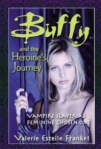
 In February 20121, McFarland released a new book for authors and readers interested in the heroine’s journey in fiction and myth and for fans of the Buffy the Vampire Slayer movie (1992) and the subsequent television series (1997 – 2003). A well-researched book, Buffy and the Heroine’s Journey is a natural extension of Valerie Frankel’s work in From Girl to Goddess: The Heroine’s Journey through Myth (McFarland, 2010).
On her website, Frankel writes that “Though scholars often place heroine tales on Campbell’s hero’s journey point by point, the girl has always had a notably different journey than the boy. She quests to rescue her loved ones, not destroy the tyrant as Harry Potter or Luke Skywalker does. The heroine’s friends augment her natural feminine insight with masculine rationality and order, while her lover is a shapeshifting monster of the magical world—a frog prince or beast-husband (or two-faced vampire!). The epic heroine wields a magic charm or prophetic mirror, not a sword. And she destroys murderers and their undead servants as the champion of life. As she struggles against the Patriarchy—the distant or unloving father—she grows into someone who creates her own destiny.”
A new era in film and fiction for three-dimensional female action characters?
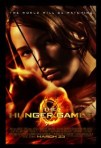 Frankel’s new book appears at a time when readers, authors and reviewers are discussing whether or not Lisbeth Salander (in Stieg Larsson’s Millennium series) and Katniss (in Suzanne Collins’ The Hunger Games series) represent a positive trend in the development of female protagonists that are more than male-gaze eye candy. That is, can authors and film makers step away from the patriarchal idea that women—whether they kick ass or not—are little more than sex objects?
Unfortunately, Frankel—along with author Maureen Murdock (The Heroine’s Journey)—appear to represent a minority view. Most film makers are still trotting out female characters in mini-skirts and bikinis fighting alongside male counterparts who are dressed in normal uniforms or SWAT team gear, while many authors and screenwriters are arguing that the heroine’s journey is no more than a female character following Joseph Campbell’s hero’s journey sequence.
As the author of a contemporary fantasy novel featuring the hero’s journey (The Sun Singer) and another that features the heroine’s journey (Sarabande), I find it refreshing to find another author/researcher who sees a difference between solar and lunar journeys. While I think my heroine’s journey story would make a great film, I don’t want Hollywood to turn my title character into a male-gaze Lara Croft-style protagonist transported to the mountains and plains of Montana in a tight and/or skimpy outfit.
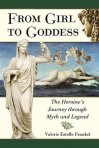 Publisher’s Description: The worlds of Percy Jackson, Harry Potter, and other modern epics feature the Chosen One–an adolescent boy who defeats the Dark Lord and battles the sorrows of the world. Television’s Buffy the Vampire Slayer represents a different kind of epic–the heroine’s journey, not the hero’s. This provocative study explores how Buffy blends 1990s girl power and the path of the warrior woman with the oldest of mythic traditions. It chronicles her descent into death and subsequent return like the great goddesses of antiquity. As she sacrifices her life for the helpless, Buffy experiences the classic heroine’s quest, ascending to protector and queen in this timeless metaphor for growing into adulthood.
The paperback edition, for reasons that are not readily apparent, is priced considerably higher ($35.00) than other paperbacks of a similar length (226 pages ). However, at $9.99, the Kindle edition is more in line with today’s prices.
I bought the Kindle edition even though I didn’t see the Buffy the Vampire Slayer television series or feature film. I liked From Girl to Goddess: The Heroine’s Journey through Myth and am finding Buffy and the Heroine’s Journey to be another very readable and credible look at the heroine’s journey.

 Malcolm R. Campbell is the author of three novels, including the 2010
  Malcolm's Round Table