Those ubiquitous Templars

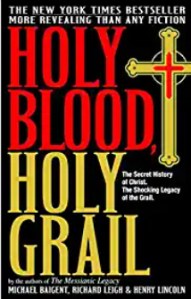
I’m re-reading for the second or third time Holy Blood, Holy Grail by Baigent, Leigh, and Lincoln because the subject matter is fascinating. I’ve lost track of all the Templar-related books I’ve read, not counting Dan Brown’s The Da Vinci Code.

When I was twelve, I joined the DeMolay  Club affiliated with my school because I liked its values which are related to the values of the Masons. Unfortunately, I had to leave when their chosen meeting day conflicted with the meeting day of my Scout group. Jacques de Molay was the last grandmaster of the Knights Templar before the group was virtually destroyed by the French king and the Pope in 1307.

Prior to that, when visiting my grandparents in Illinois, I first heard those values from my grandfather who was the commander of the local Masons which were affiliated with The Knights Templar of North America. The commandery, the building of the local Ilinois chapter, was a wonderous place and I was tempted to become a Mason after hearing about the values of the group. I chose instead to join the Rosicrucian Order because of its strong commitment to esoteric teachings. I did not think I should also become a Mason, though they have my support.

History Channel Photo

Now as I watch the ongoing coverage of the treasure hunters on Oak Island, I find it interesting that the team doing the work there is excited about the possible Templar connection to the treasure that might have been hidden there. I have zero interest in treasure, but I’m drawn to this show because I’m curious about the potential connection between the Knights Templar and what, if anything, is ultimately found on this privately-owned island off the coast of Nova Scotia.

Re-reading this book brings back many memories of the research I did in the past into such subjects as the work of artist Nicolas Poussin (1594–1665), especially his two paintings labelled Et in Arcadia ego which are also mentioned in the books of the Francis Bacon Research Trust. Arcadia represents, is it said, heaven on earth and yet the coffin in the painting suggests the presence of a darker side. The prospective bloood line of Christ, notably in the French Merovingan dynasty and the Plantard family is also interesting.

How many of these mysteries are real and how many are pure fiction. I may never know. But I like delving into real or imagined secrets.

–Malcolm

Knights Templar in Illinois

In my footnote to yesterday’s post about the Knights Templar, I mentioned that my grandfather was a commander in the Illinois Commandery of the Knights Templar in the United States. Since he was the boss, he could take us on tours of this building, including the basement where the pool tables were. (My two brothers and I could never beat Grandpa had pool or billiards.)

As an elementary student and a junior high school student, I was too young to understand the heritage of the organization or the goals of its current incarnation. The Knights Templar is a York Rite organization and, while it’s associated with the Freemasons now, it seems doubtful that there’s any provable direct link between the ancient Knights Templar and the modern-day Masons.

I joined DeMolay, associated with the Masons, while I was in junior high, and then had to drop out when its meetings conflicted with my Boy Scout activities to which I already had committed.

When my grandfather moved to Florida, he was disappointed in the Masonic organization there. I suspect they were a craft lodge, a level he would have already passed through and, therefore, quite different than what he was used to in Illinois.

My first crisis of conscience came when I left DeMolay for the Boy Scouts (which Grandfather approved of, reminding me I was already on that track). My second came when I was older and joined the Rosicrucian Order (a mystery school) rather than the Masons. I didn’t have time for both, and the “mysteries” seemed to be where I belonged.

Even now, I wonder. Would my life be different if I was a “Sir Knight” of the Knights Templar? I’m sure it would be. And yet, I have no excuses for the journey I chose. There are many routes leading to becoming oneself. And as Frost said, “I took the one less traveled by, And that has made all the difference.”

My novels usually focus on the transformation of the main character. That’s my main focus because I have been there over and over–as have we all.

Malcolm

Malcolm R. Campbell is the author of “The Sun Singer,” a hero’s journey novel.

The ubiquitous fascination of the Knights Templar

“As late as the medieval era and beyond, social groups claiming to hold secret wisdom– such as the Gnostics, the Cathars or the Knights Templar, sought to establish their pedigree by linking themselves explicitly to the deep wisdom held by the ancient mystery religions; and scholars have demonstrated, in fact, that such linkages do exist.

“Fast forward to modern times. With the Enlightenment, a more secular, scientific, and overtly political outlook permeated Western society, and these elements were reflected in the secret societies that arose at the time, such as the Freemasons and the Carbonari.” – Paul Witcover

In the years after the crusaders captured Jerusalem in 1099 many Christians wanted to visit sites in the Holy Land free from interference by robbers and others in Muslim-controlled areas. Out of this need grew the Knights Templar, an organization of religious knights that ultimately became so large and wealthy, that its existence and prospective control of holy artifacts became a huge threat to Rome by the 1300s.

From time to time somebody writes a new novel or nonfiction book and the Knights appear on the bestseller lists and our fascination with the power and magic and treasure they might have controlled is reborn. Public interest was especially strong when Dan Brown’s The Da Vinci Code was released in 2006. Currently, there is speculation amongst the treasure hunters on the History Channel’s “The Curse of Oak Island” series that the Canadian island might contain the lost treasure of the Templars.

A lot of people tend to see the Templars, the Freemasons, the Illuminati, the Rosicrucians, and other mystery-school-styled groups (If they exist at all) as wholly evil and secretly in control of the world or as groups interested in the mystical side of the Christian religion and its predecessors. So much fiction (some with a lot of farfetched straying from the facts) and nonfiction about these organizations has been written that it’s often hard to sort out the real from the absurd. The “mysteries” refer to the Eleusinian Mysteries, the Dionysian Mysteries, and the Orphic Mysteries.

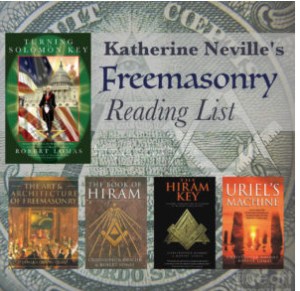
The author Katherine Neville, who was writing Dan-Brown-style novels before Dan Brown was writing them has a nice list of secret society references on her website that help separate the wheat from the chaff when it comes to the Templars, the Masons, and other groups. If you’re trying to find a starting point in Templar lore–after exhausting Wikipedia–may I suggest her list of references?

I’ve read many of the books on the list and yes, they are fascinating.

For information about the Knights Templar as they exist today in the United States, see the Grand Encampment of Knights Templar of the USA website.

My grandfather was a member of this organization and as such the commander of the Illinois Commandery where I spent many hours as a child.

–Malcolm