“A fairy tale is a type of short story that typically features European folkloric fantasy characters, such as fairies, goblins, elves, trolls, dwarves, giants, mermaids, or gnomes, and usually magic or enchantments. Fairy tales may be distinguished from other folk narratives such as legends (which generally involve belief in the veracity of the events described) and explicitly moral tales, including beast fables.” Wikipedia
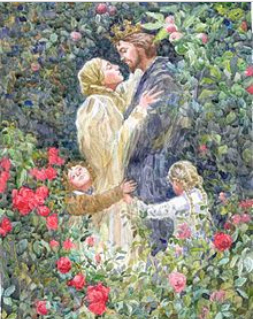
Are parents reading fairy tales to their children today? I hope so. At Thanksgiving, people often tell us to ponder what we’re thankful for. That’s probably to keep us from thinking it’s all about food, football and getting stuck washing dishes in the kitchen. I’m thankful for fairy tales, the ones my parents read to me, the ones I read to myself, and the ones kept alive in all their forms and versions by those who love the stories enough to spend their lives collecting, translating and studying them.
Here’s what those lovers of the stories have to say about them. . .
- “The more one knows fairy tales the less fantastical they appear; they can be vehicles of the grimmest realism, expressing hope against all the odds with gritted teeth.” – Marina Warner, From the Beast to the Blonde: On Fairy Tales and Their Tellers
- “The fairy tale is in a perpetual state of becoming and alteration. To keep to one version or one translation alone is to put robin redbreast in a cage.” ― Philip Pullman, Fairy Tales from the Brothers Grimm: A New English Version
- “Deeper meaning resides in the fairy tales told to me in my childhood than in the truth that is taught by life.” ― Friedrich von Schiller
-
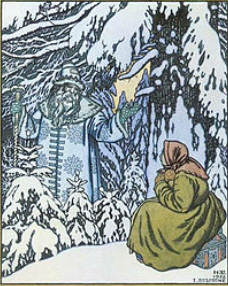
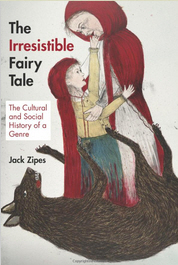
Father Frost acts as a donor in the Russian fairy tale Father Frost, testing the heroine before giving her riches. “Fairy tales begin with conflict because we all begin our lives with conflict. We are all misfit for the world, and somehow we must fit in, fit in with other people, and thus we must invent or find the means through communication to satisfy as well as resolve conflicting desires and instincts.” ― Jack Zipes, The Irresistible Fairy Tale: The Cultural and Social History of a Genre
- Fairy tales are more than true: not because they tell us that dragons exist, but because they tell us that dragons can be beaten.” ― Neil Gaiman, Coraline
- “Fairy Tales always have a happy ending.” That depends… on whether you are Rumpelstiltskin or the Queen.” ― Jane Yolen, Briar Rose
- “If you want your children to be intelligent, read them fairy tales. If you want them to be more intelligent, read them more fairy tales.” – Albert Einstein
- “Fairy tales were not my escape from reality as a child; rather, they were my reality — for mine was a world in which good and evil were not abstract concepts, and like fairy-tale heroines, no magic would save me unless I had the wit and heart and courage to use it widely.” ― Terri Windling
- “People need to believe in more than what they see in everyday life. Somewhere inside, we all know that there is more out there than we experience normally. A belief in the other world can help explain why things happen to us. It can give us hope. I feel that we all hope we never get to be too old to fly to Never-Never Land or go through a wardrobe into Narnia. We want to think that there is something looking back at us when we look at the stars. We want to think that just around the bend in the forest, we’ll find fairies dancing in a ring. I hope that my work affirms those beliefs,” she continues. “I want people to think of my work as a key to that other world.” – Wendy Froud
 “The child intuitively comprehends that although these stories are unreal, they are not untrue …” ― Bruno Bettelheim, The Uses of Enchantment: The Meaning and Importance of Fairy Tales
- “ Truly, I think the degree to which the bourgeoisie has appropriated the culture of the poor is very interesting, it’s very shocking. Fairy tales are part of the oral tradition of Europe. They were simply the fiction of the poor, the fiction of the illiterate. And they’re very precisely located.” – Angela Carter, author and also the translator of Charles Perrault’s work
- “More effectively than any of the other tales, ‘The Emperor’s New Clothes’ established Andersen’s reputation as a man who created stories for children — not just in the sense of target audience, but also as beneficiaries of something extraordinary. The lesson embedded in it is so transparent that its title circulates in the form of proverbial wisdom about social hypocrisy. But more importantly, ‘The Emperor’s New Clothes’ romanticizes children by investing them with the courage to challenge authority and to speak truth to power.” – Maria Tatar, author of The Classic Fairy Tales
- “I will tell you, too, that every fairy tale has a moral. The moral of my story may be that love is a constraint, as strong as any belt. And this is certainly true, which makes it a good moral. Or it may be that we are all constrained in some way, either in our bodies, or in our hearts or minds, an Empress as well as the woman who does her laundry. … Perhaps it is that a shoemaker’s daughter can bear restraint less easily than an aristocrat, that what he can bear for three years she can endure only for three days. … Or perhaps my moral is that our desire for freedom is stronger than love or pity. That is a wicked moral, or so the Church has taught us. But I do not know which moral is the correct one. And that is also the way of a fairy tale.” ― Theodora Goss, In the Forest of Forgetting
 “Far more often [than asking the question ‘Is it true?’] they [children] have asked me: ‘Was he good? Was he wicked?’ That is, they were far more concerned to get the Right side and the Wrong side clear. For that is a question equally important in History and in Faerie.” ― J.R.R. Tolkien, On Fairy-Stories
- “The way to read a fairy tale is to throw yourself in.” ― W.H. Auden
- “People who’ve never read fairy tales, the professor said, have a harder time coping in life than the people who have. They don’t have access to all the lessons that can be learned from the journeys through the dark woods and the kindness of strangers treated decently, the knowledge that can be gained from the company and example of Donkeyskins and cats wearing boots and steadfast tin soldiers. I’m not talking about in-your-face lessons, but more subtle ones. The kind that seep up from your sub¬conscious and give you moral and humane structures for your life. That teach you how to prevail, and trust. And maybe even love.” ― Charles de Lint, The Onion Girl
The two illustrations are from Wikipedia. Click on the book cover graphics to see Amazon’s listing for them. Happy Thanksgiving and happy reading.
 Malcolm R. Campbell is the author of contemporary fantasy, including “The Betrayed,” and fantasy short stories, including “Emily’s Stories.”
 Malcolm's Round Table