 I discovered Thistle Farms in Nashville while looking at the list of grantees of the Isabell Allende Foundation. According to Thistle Farms’ website:
Your support helps create sanctuary and healing for women survivors.
- 2 Years of Free Housing
- Healthcare and Trauma Therapy
- Meaningful Employment
- Advocacy and Public Policy Initiatives
It’s horrifying to discover just how many women, including those in the United States, need this kind of sanctuary. In addition to donations, Thistle Farms supports its programs through the sale of candles, essential oils, soaps, and similar products that you can find here.
The organization houses “up to 36 residents at a time in a therapeutic setting that offers healing and transformation through housing, healthcare, counseling, employment, and community building. Housing and clinical services are free of charge and provided without Federal assistance. Five years after program completion, 75% of our graduates are living healthy, independent lives. Broken relationships have been restored. Hopelessness has been replaced with hope.”
In an on-site article called “The Many Faces of Human Trafficking,” Tasha Kennard writes, “90-percent of sex trafficking victims in the US are female, of which women and girls of color make up a disproportionate number of trafficked individuals. Meanwhile, the overwhelming majority of those purchasing sex – creating the demand that drives even more bodies into the sex trade – are men.
“Most of the women Thistle Farms serves report having first experienced sexual abuse between the ages of 7-11, began using alcohol or drugs by the age of 13 as a means of coping with trauma, and are first on the streets between the ages of 14 and 16.”
The problem is worse than most of us know. According to Child USA, “1 in 5 girls and 1 in 13 boys are sexually abused before the age of 18.” Empower The Fight states, “Human trafficking is the fastest-growing organized crime activity in the United States. Estimating 250,000 children per year are victims of sex trafficking. Most older children are trafficked while still going to school and living at home!”
I celebrate the organizations such as Thistle Farms that help fight the results of this evil and, like many, am surprised that it’s so pervasive in the U.S., especially within indigenous groups.
–Malcolm
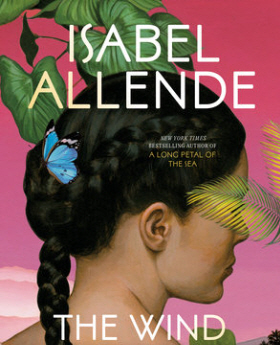
 “Telling a story that is rooted so deeply in political events can be a difficult balancing act; an author walks a fine line between writing immersive fiction and explaining historical and social context. “The Wind Knows My Name” contains little of the magic that defined Allende’s earlier novels. Instead, she turns her focus to the brutal details of government-sponsored violence and asks her reader to look closely at the devastation. Allende draws a straight line from Nazi Germany to modern-day atrocities — not because the specifics are the same, but because the damage is.”
 I am re-reading The House of the Spirits for the first time since it came out in English in 1985, most likely from the copy I read then. Allende is one of my favorite writers (perhaps above all others) because the stories she tells resonate with me as does the fact she begins each of her books–and I’ve read most of them–without knowing where the story is going. The House of the Spirits didn’t disappoint me in the mid-1980s, and yet, I was afraid to go back to it for fear the most perfect novel would have become imperfect over time like a first lover you don’t dare meet again after both of you have grown up.
 Adults are hard to buy for unless they all live in the same house like the Waltons. When we’re living far flung around the country, we seldom know what people might want, and should we guess wrong and send something without checking, they’ll probably already have it or they won’t like it.
 But, the adults can do nothing for each other without a list. For better or worse, the older I get, the less “stuff” I want. If I need it, I’ve already bought it. So, that leaves books. I give the list to my wife, she picks something and gives the rest of the list to my brother and his wife.
  I’ve read most of Shaara’s books and like them a lot. When this book about Pearl Harbor first came out, an early reviewer on Amazon said Shaara’s research on To Wake a Giant was sloppy. Fortunately, another reader reviewer proved that the first reviewer was incorrect. Thank goodness! Shaara tells readers in most of his books that he’s a novelist rather than a historian. Yet, he takes special care to be accurate. Authors are not supposed to take on reviewers, but I hoped he would correct the Amazon reviewers who offered up fake history to prove he didn’t know what he was talking about.
 John Hart writes tough, detailed novels such as The Hush. While I’m looking forward to The Unwilling, a book Hart held back a year due to the pandemic, it’s still in pre-order status. So, I opted for Down River for my list. You’ll notice I only have books from major publishers here.

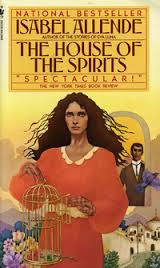 The world is probably stranger than we know, so it’s safe to assume we change in between the readings. I’m not the same person I was when I first read The House of The Spirits in 1986 when my Bantam mass market paperback edition was published. Years have passed and governments and attitudes have come and gone since then.
 Malcolm's Round Table