What’s a dead rat on a Leprchaun’s dinner table?

It’s a writing prompt. Writing prompts, which feature a potential plot scerario, are used to inspire writers to try out their skills and create a sense of adventure by writing a scene or a story based on the prompt. His works fine in a creative writing class where all the students work on the same project. The results are critiqued and/or discussed after the work is turned in.

I used a variation of the wrting prompt when teaching journalism classes. The students would be presented with a list of facts and asked to write a news story, feature story, editorial, or obituary. This allowed the class to practice the techiques and/or be tested on them.

What I don’t like are writing prompts that take over the content of a writing website or blog because they’re cheap excuses for providing meaninful content. Staff can think of dozens of these prompts with lot less effort than covering writing news, how-to discussions, book reviews, and other valuable content.

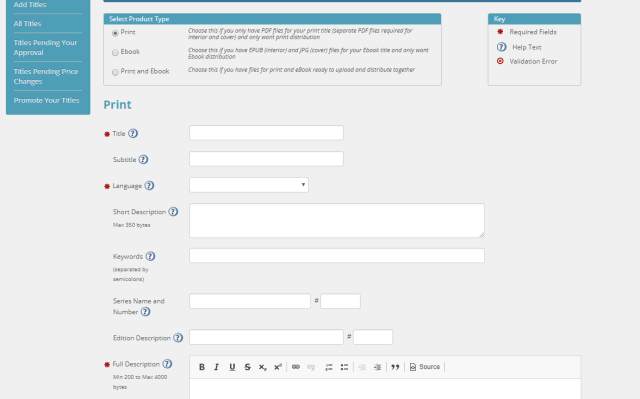
current P&W home page

Two sites that do this are the “Poets & Writers” organization’s website and the Indies Unlimited blog. The “Poet’s & Writers” site does present other valuable home page content, so the page isn’t a total loss.  I would prefer discussions there about the magazine itself or books and authors news instead of his cheap alterantive. I used to be a member of Poets and Writers membership program, so I’ve seen the website a lot.

Indies Unlimited is an authors’ blog that displays e-book deals submitted by involved small-press authors, a resource page, a knowledge base, and a flash fiction challenge based on a writing prompt. The website’s FAQ still says that it presents articles and editorials but as far as I can tell, the blog has had few, if any, of these in a long time. I believe IU is all-volunteer and that in recent years it’s gone through some staff changes and a declining number of available writers for other submitting content. However, I miss the other content and find no excitement in reading writing-prompt-based flash fiction. The site is still fun but would be more usefu without the heavy reliance and the flash fiction.

Margarita

Many other writing sites offer writing prompts, including “Writer’s Digest,” purportedly as inspiration and/or a way to combat writer’s block. Do they work? Possibly so. Personally, I’m not going to spend my time away from the work in progress writing about some BS that some staff member thought up while having a large margarita at the local watering hole.

–Malcolm

Where Should I Buy My ISBNs?

“But wait a minute,” you say. “I saw a site on the internet selling really cheap ISBNs. Why can’t I buy one of those?

”You can, but I wouldn’t. While Bowker does have a very select few legitimate ‘Channel Partners’ with whom they work, such as Amazon, those fly-by-night companies you see all over the internet selling cheap ISBNs are almost certainly not affiliated with Bowker, and thus are not authorized to sell you an ISBN. So why do they do it?

Source: Where Should I Buy My ISBNs? | Celebrating Independent Authors

Look before you leap; there are a lot of scammers out there targeting aspiring writers who are trying to cut costs. Yet, those authors might actually be cutting their throats.

I’m happy to have a publisher who writes for Indies Unlimited. She does a lot of research and that saves us money. ISBNs don’t grow on trees. So, if somebody is selling them cheaply, there’s a reason and it probably ain’t good. If you’re into self-publishing or are running a small press for your books, this is a must-read article.

–Malcolm

What happens to your book cover when you change publishers?

If this issue resonates for you, the first thing we would suggest — first, last, and always — is to read your contract. Only there can you discern what the original agreement was, and what you signed off on. In 99.99 times out of a hundred, the publisher retains the rights to the cover image. What this means is that if you part company with them but still want to self-publish your book on your own, you must come up with a new cover design.

Source: When You Split with Your Publisher: Book Covers ‹ Indies Unlimited ‹ Reader — WordPress.com

Melissa Bowersock, at Indies Unlimited, tells us that there are legal reasons for this based on where the cover art came from. So, it’s not a matter of your old publisher being nasty. When I left my previous publisher, I wanted new covers because old, out-of-print editions of books seem to remain on Amazon forever. I can still find books my father wrote in the 1940s, 1950s, and 1960s. Most of these are there because third-party seller frequently use Amazon as their preferred site for reselling books in their collections or warehouses.

So, I thought it best to begin with a new cover to keep my new editions from getting mixed up with the old ones. Some publishers will let you keep the old covers if you’re willing to buy them. Might work, or might not work. I did it once because one publisher never managed to get the books into print.

Interesting article and a part of book publishing to keep in mind when your publisher goes out of business or when you want a fresh start.

Malcolm

Malcolm R. Campbell is the author of satire, magical realism, contemporary fantasy, and paranormal stories and novels. Click on my name for more information.

The ‘Rules’ on Writing Inner Thoughts in Books

Sometimes a disagreement gives me pause to explore how I see a certain style of writing and why. In this case, a member of my critique group and I differed on the use of italics for inner dialogue, or thoughts. He hates them. I use them. It has caused some strong discussion. (Yes, we remain good friends.)

Source: The “Rules” on Writing Inner Thoughts in Books ‹ Indies Unlimited ‹ Reader — WordPress.com

Basically, how you approach a character’s thoughts comes down to personal preference unless your work is going to a publisher with a strong editor and/or a strong style sheet.

In my novel Conjure Woman’s Cat and its two sequels, I used italics to indicate that the cat was using telepathy to talk to the conjure woman. My editor thought I didn’t need to do that, but I didn’t want to go through entire pages of “thought speech” with “Lena thought” and “Eulalie thought” tied onto all the lines. That might make readers think they were just thinking about those things when they were communicating them.

Italics becomes a bit of a problem when passages become lengthy. It’s generally considered harder to read–or a “put off” to readers–when it covers entire pages.

This piece in Indies Unlimited is, I think, a catalyst for us to think about what we’re doing when we write.

–Malcolm


KDP Print vs. IngramSpark 

“Last month, I wrote a refresher post comparing Smashwords and Draft2Digital. This month, I think it’s probably time for a refresher post comparing KDP Print and IngramSpark. First up, KDP Print Own…”

Source: KDP Print (formerly CreateSpace) vs. IngramSpark | Celebrating Independent Authors

This handy overview lists the pros and cons of both routes of taking your book into print. Self-published and small-press authors have many decisions to make about production, publicity, and promotion, so finding this kind of information cuts through the chaos.

The author has also written an article comparing Smashwords and Draft2Digital here.

–Malcolm

A Few Creative Book Marketing Ideas

“I was talking with a class that I was teaching this past week about marketing strategies and realized we haven’t had a marketing post in a while. Twitter and Facebook are what I think of as old marketing standbys, but there are other, more creative ways to market. Of course, as the kids say, YMMV (your mileage may vary) with all of them. Below is a summary of what we discussed.”

Source: Creative Book Marketing Ideas – Indies Unlimited

As an author, I like reading posts about book marketing because there’s usually something new to me in each one. Plus, times change, and what worked five years ago may not be quite as effective now. Melinda Clayton is a publisher and a university teacher, so she sees more of what works and what doesn’t work than most of us.

She also includes links to other articles for writers at Indies Unlimited.

–Malcolm

Malcolm R. Campbell is the author of “Conjure Woman’s Cat,” “Eulalie and Washerwoman,” and “Lena.”

Making Free Book Trailers with Lumen5

“When was the last time you had fun doing book promotion? I know; not my favorite thing, either. However, that was before I discovered Lumen5.com.”

Source: Make Free Book Trailers with Lumen5 – Indies Unlimited

Author Melissa Bowersock provides a handy introduction to Lumen5 that you can use to get started making book trailers for your books. Fortunately, my publisher does this for me. But some of my books are self-published and somehow, I hadn’t heard of this app.

I think book trailers, along with author websites and updated Amazon author’s pages are among the promotional techniques that help indie (the word now means self-published) authors sell books. It’s part of your platform.

–Malcolm

P.S. Bad news for Georgia’s independent authors. The Georgia Writers Association has announced that it is no longer accepting self-published books in its annual author of the year competition.

Happy Birthday to Indies Unlimited

“Seven years ago, the Evil Mastermind launched Indies Unlimited. Since then, we’ve had over 2.5 MILLION page views, been named as one of Six Great Blogs for Indie Authors in Publishers Weekly, and ranked as one of the top writing-related sites by Alexa.”

Source: Indies Unlimited – Celebrating Independent Authors

Indies Unlimited is the go-to blog for writers learning their craft and then learning how to market their work in competition with the one million self-published books released each year. Since the blog is run by volunteers, it’s obviously a labor of love, though I hate using that hackneyed old phrase to describe their work.

Even if you don’t have time to check the blog every week, a scan through their archive of posts will usually materialize what you’re looking for whenever you have a question or the need for a little inspiration.

I hope Indies Unlimited is going strong seven years from now.

Malcolm


Publishing via IngramSpark 

“As you may have heard, Createspace is being absorbed by KDP Print. Many folks expressed interest in finding a different publisher/distributor for their print books. Indies Unlimited has had articles comparing different paperback options and explaining how to move books from CreateSpace IngramSpark, but we haven’t had one yet that shows you how easy it is to publish directly to IngramSpark.”

Source: Publishing on IngramSpark Is Easy ‹ Indies Unlimited ‹ Reader — WordPress.com

This post offers a helpful step-by-step tutorial for uploading your manuscript, including screenshots. If you’re looking for a viable alternative to CreateSpace, this post is well worth checking out. My publisher uses Ingram and I’m happy with the way my books are printed. The option of offering standard bookstore discounts and returnability is a strong point, in my view, for using this platform.

–Malcolm

Can an author quote from a review?

“I heard a rumor that some authors were wondering about the rules regarding quoting reviews of their books. Whether you’re doing this in a tweet, a post on Facebook or your blog, or using the quote as a blurb in an advertisement or on the back cover of a paper book, the same basic rules apply. The considerations fall into two groups: those that are legal issues and those that are more a matter of etiquette.”

Source: Book Reviews: Can You Quote Me on That? – Indies Unlimited

I liked seeing this article because it helps clarify points about quoting and copying that have gotten rather fuzzy with our online world. Most people, including authors, don’t seem to grasp the fact that there are rules and those rules really don’t allow somebody on Facebook (for example) to copy an entire article or poem and then say “infringement not intended.”

That makes about a much sense as busting into a store and claiming “breaking an entering not intended.”

A good review is a godsend, so as authors we really don’t need to step over the line when deciding how to use them or cite them. This article will help keep us out of trouble.

–Malcolm