Relief of National Park Seasonal Hiring Overshadowed by Reckless Staff Cuts

National Parks and Conservation Association

News Release – February 2025

WASHINGTON – The National Parks Conservation Association (NPCA) and park advocates across the country are demanding the Trump administration put an end to devastating staffing cuts that will wreak havoc on the National Park System. The Department of the Interior will exempt 5,000 seasonal positions under the current hiring freeze, while simultaneously terminating 1,000 National Park Service employees, just as visitors are planning their spring break and summer vacations to national parks.

Unfortunately, today’s cuts will leave parks understaffed, facing tough decisions about operating hours, public safety and resource protection.

Statement by Theresa Pierno, President and CEO for the National Parks Conservation Association (NPCA):

“Allowing parks to hire seasonal staff is essential, but staffing cuts of this magnitude will have devastating consequences for parks and communities. We are concerned about smaller parks closing visitor center doors and larger parks losing key staff including wastewater treatment operators.

“Exempting National Park Service seasonal staff from the federal hiring freeze means parks can fill some visitor services positions. But with peak season just weeks away, the decision to slash 1,000 permanent, full-time jobs from national parks is reckless and could have serious public safety and health consequences.“

“Years of budget cuts are already weakening the agency’s ability to protect and preserve these incredible places.

“National parks fuel local economies across the country, generating billions of dollars for area businesses and supporting hundreds of thousands of jobs. Slashing staff could have a ripple effect on gateway businesses and communities that depend on parks for survival.

“Park staff work tirelessly to protect our nation’s most treasured places, from Yosemite to Gettysburg. They educate visitors, safeguard history and preserve what makes our country special. This isn’t how we treat the places we cherish or those who protect them. We’re calling on our leaders to prioritize our parks and the staff who keep them safe and running.”

Unfortunately, today’s cuts will leave parks understaffed, facing tough decisions about operating hours, public safety and resource protection.

Malcolm


President Biden establishes Chuckwalla National Monument, expanding the largest protected landscape in the lower 48 states

NPCA News Release

January 7, 2025

Mecca Hills, part of the Chuckwalla Natl. Monument

WASHINGTON– Today, President Biden established Chuckwalla National Monument, protecting over 600,000 acres of public lands in the California desert. The National Parks Conservation Association (NPCA) joins the Protect California Deserts coalition and partners in celebrating this historic designation, decades-in-the-making.

Named after the iconic Chuckwalla lizard, this remarkable landscape bridges the gap between Joshua Tree National Park and the Colorado River, protecting critical wildlife habitat, connecting migration corridors and preserving centuries of cultural history.

“Chuckwalla National Monument is a cornerstone in a vast network of protected landscapes across the Southwest. Stretching from Joshua Tree to the Grand Canyon to Bears Ears, this corridor forms the largest swath of protected lands in the continental U.S.,” said Theresa Pierno, President and CEO for the National Parks Conservation Association. “This designation protects an extraordinary stretch of the California desert, preserving a landscape shaped by millennia for those who find inspiration in the timeless beauty of our national parks.”

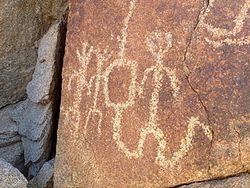
Petroglyphs at Corn Springs

Chuckwalla National Monument is part of the Biden administration’s legacy of landscape conservation. By connecting protected lands from Southern California to Utah, the monument becomes a keystone in the largest connected and protected landscape in the lower 48 states, covering nearly 18 million acres.

This corridor connects national parks, monuments, and protected public lands, including Joshua Tree, Grand Canyon, Capitol Reef, and Mojave National Preserve.

“This 18-million-acre corridor links the Mojave Desert to the Colorado Plateau, providing safe migration routes for wildlife like the iconic desert bighorn sheep and ensuring clean water flows through the Colorado River and its tributaries. It protects sacred sites central to Tribal nations for countless generations, and welcomes millions of visitors each year, inspiring exploration and bringing lasting economic strength to surrounding communities,” said Theresa Pierno. “NPCA has been proud to work locally and nationally for decades to preserve the extraordinary landscapes in the California desert and beyond.”

Designating Chuckwalla National Monument would honor Tribal sovereignty and protect a cultural landscape, boost the economy, and ensure access to nature for local residents.

A proposed Chuckwalla National Monument near Joshua Tree National Park would protect the threatened Mojave Desert tortoise and help many other species thrive, including people.

Chuckwalla is home to the desert’s most iconic and vulnerable species, including the Mojave Desert Tortoise, which relies on roughly 400,000 acres of protected habitat within the boundaries of the new national monument. The designation also ensures connectivity for wildlife migration, supporting desert bighorn sheep, golden eagles, burrowing owls, and more.

Luke Basulto, NPCA’s Ruth Hammett California desert program manager, has dedicated his career to desert conservation, working with local communities to protect the delicate desert landscapes.

“Growing up as a desert kid shaped me into the California desert advocate I am today, and I couldn’t be prouder to see Chuckwalla National Monument become a reality,” said Luke Basulto. “This landmark designation expands one largest desert preserves in the world, teeming with wildlife like the Mojave Desert Tortoise and bighorn sheep and is home to multiple plant species found nowhere else on the planet.”

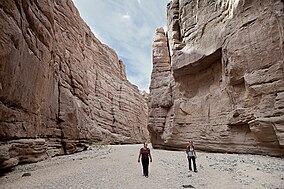
Beloved destinations like Painted Canyon and the historic Bradshaw Trail will now be permanently protected, offering opportunities for hiking, camping, backcountry exploration, and stargazing. For nearby communities, where extreme heat and pollution pose daily challenges, the monument provides equitable access to the beauty and solace of the California desert.

Audubon Map

“For communities in the East Coachella Valley, Chuckwalla offers a place to visit, to connect with the desert landscape, and to find respite. Experiences like this are what build a passion for these special places,” said Luke Basulto. “Protecting this landscape isn’t just about today; it’s about creating a legacy of conservation that future generations can experience and connect with, just as I did.”

The area within Chuckwalla National Monument is sacred to several Tribes, including the Iviatim, Nüwü, Pipa Aha Macav, Kwatsáan, and Maara’yam peoples. These lands hold centuries of cultural and historical significance, preserving sacred sites, traditional practices, and historic trade routes.

While the designation of Chuckwalla National Monument is a monumental victory, the work to protect the California desert continues. Expanding Joshua Tree National Park to restore a key piece that was historically a part of the park area remains a vital next step for a more connected and resilient desert landscape. Congress now has an opportunity to ensure that Joshua Tree National Park is made whole once again.

Malcolm

Four novels in one Kindle volume

Mountains. . .before I got too old to climb them

Now as I was young and easy under the apple boughs
About the lilting house and happy as the grass was green,
The night above the dingle starry,
Time let me hail and climb
Golden in the heydays of his eyes. . .

from “Fern Hill” by Dylan Thomas

When I first explored the mountains of Glacier National Park, “time let me hail and climb golden in the heydays of his eyes.” I thought those trails and those days would go on forever even though I had read the Dylan Thomas poem many times and knew how it ended. Even though grandparents are around us when we are young, we still think we will always be young and, that if we won’t, old age is eons away in a future too far away to fathom.

When we’re young, it’s hard to imagine being old. When we’re old, it’s easy to remember being young just as I remember the first time I read “Fern Hill” and was concerned about the words: “ In the sun that is young once only, time let me play and be golden in the mercy of his means.”

As I write a novel now about a character following a trail near Piegan Mountain, I must rely on the videos and descriptions of younger men and women, those who are still healthy in time’s golden era. If I’d only known, some 50 years ago, that I’d be writing this novel, I would have taken a hundred photographs along the trail that led from Going to Sun Road to Many Glacier Hotel. But I was too enchanted within the moment to create a photographic diary on Ektachrome film. (Regrets, I’ve had a few.)

If there’s a learning experience in all this, it’s to push on with the writing using the resources I can find rather than wishing (a) I could be young again, (b) took 1000 photographs of everything, and (c) ruined my life experiences by slavishly documenting them for those old-age years when they would be beyond reach.

When we have finally followed time out of grace, our memories must suffice, all the more sweet because they are so tangled and unclear rather like a dream of once walking the high country when knees and ankles and breath were strong and the sky was blue and full of endless promise from side to side.

–Malcolm

Malcolm R. Campbell

Publisher: Thomas-Jacob Publishing

Website

Facebook Author’s Page

Amazon Author’s Page


Bryson City, NC: First trip back in 20 years

We go to the Blue Ridge Mountains a lot and have tended to stay in and around Asheville. So it was nice to get away from it all for the last five days and return to the Smoky Mountains. Did a little hiking and sightseeing and looked at the view from our rental cabin.

Our nephew Taylor Campbell who, as usual, is concentrating on his cell phone.

My brother Barry and his wife Mary drove up from Orlando with Taylor. Long drive. Makes me feel guilty (but only slightly) for our mere three-hour trip to to Bryson City from the Georgia mountains.

When we were relaxing inside, we got out one of our typical puzzles that show patches, signs, labels, and logos:

The national parks theme seemed appropriate since we did a little hiking in the Smoky Mountains around Deep Creek.

Now we have to recover from our vacation.

Malcolm


Freshly washed woods

GorgeMost of us don’t like hiking in the rain. Last September, my brother and I got caught in a very cold Glacier Park thunderstorm near Mt. Gould. Before we got back, we had also been pelted with hail. Without umbrellas, we were drenched.

Fortunately, we found a warm fire in the hotel fireplace after the hike

When my brother and I, along with our wives and a spirited nephew hiked in light rain at Tallulah Gorge in the Georgia mountains last week, we carried umbrellas. We weren’t as cold as we were in Glacier. And we weren’t hiking in a hurry because–unlike the Glacier hike–it was raining when we started.

MalcolmLesaTallulahEverything was fresh and the scents of wet rocks, wet earth and wet leaves were a far better than anything thing you can buy in an aerosol can at the grocery store. When we were kids, we walked and rode our bikes in the rain on purpose. Whether it was our feet or our wheels, we splashed through the biggest puddles we could find.

We avoided the puddles at Tallulah. Nonetheless, I enjoyed the freshly washed woods. It reminded me of childhood walks.

It reminded me of how much we miss by purposely setting up most of our hikes under sunny skies. Within moderation, there’s much to be said for night, wind, rain and snow.

So-called “bad weather” is a face of nature we miss by staying inside.

–Malcolm

Malcolm R. Campbell is the author of the of “Conjure Woman’s Cat,” available as an audiobook (shown here), paperback, and e-book.

Lawn Mowing for the First Time This Year

mower2My wife tells me that if we’re going to hike in the mountains late in the summer, we need to start getting in shape now. Walking from our house to the main street and back again is two miles, round trip. After mowing the lawn today for the first time this year, I see it’s time to star walking that walk.

Every muscle aches as though I spent the day playing football rather than walking behind our relatively light-weight rotary lawn mower. The first-of-spring grass-and-weed combination was almost too high for the mower, so my excuse is that things ache because I had to do more pushing.

I can tell you from experience, the first adventure in lawn mowing gets harder every year. Goodness knows what a five mile hike at 5,000 feet of elevation would have been like.

When I lived in Florida, I went to a college summer session at the University of Colorado in Boulder. It took me weeks to get used to the elevation. When I came back, though, I felt like Superman in my Gulf Coast World.

I’m hoping that means that when we get back from the mountains this year, I’ll feel half my age while mowing the lawn for the last time before winter, such as it is, in Georgia.

Malcolm

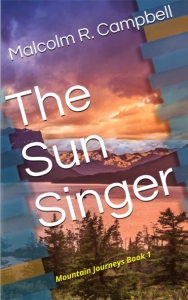
Malcolm R. Campbell’s contemporary fantasies, “The Sun Singer” and “Sarabande,” are set in the mountains of Glacier National Park, Montana

Read it now on your Kindle

A talk with Scott and Smoky Zeidel, authors of ‘Trails’

scottandsmokyIt’s a pleasure to welcome Smoky and Scott Zeidel to Malcolm’s Round Table to talk about their new book Trails: Short Stories Poetry and Photographs released in paperback and e-book this month by Vanilla Heart Publishing.

Smoky is the author of fiction and nonfiction, including The Storyteller’s Bracelet (2012) and Observations of an Earth Mage, (2010). Her husband Scott, who plays the guitar, teaches music history as an adjunct professor at Mt. San Antonio College in California.

MALCOLM: Trails has been dedicated to the squirrels. Is this the entire family of tree or ground squirrels or a bird-feeder robbing band in your yard?

SCOTT: The squirrels are metaphors for nature. So, to answer your question, the book is dedicated to every type of squirrel in the world, the little bastards.

SMOKY: I started to say, “He doesn’t really mean that last part.” But then, I looked out my studio window, and there’s a pregnant ground squirrel out on the deck, ripping a rug to shreds, to get wool to line her nest, and I think, maybe Scott’s right.

trailsMALCOLM: I’ve had many conflicts with squirrels over the years, usually a difference of opinion about just who the bird feeders are for. Scott, when you write that you once thought everyone remembered their own birth, I thought of people who had either bad vision or better than normal vision and supposed everyone’s eyesight was the same. What has this memory given you that others do not have—long-term vision, connectedness to your family going back in time, insight into the big picture of our incarnation, or something else?
crescentSCOTT: I can’t speak for others, but, like I said, I do remember my birth. Nevertheless, was I instantly awake, instantly aware, at the moment of my birth? On a purely rational level, is this even possible? I think not. On a metaphysical level, when did my life really begin as a sentient being? When will it end? These are the big questions.

MALCOLM: Smoky, some people say that old stories change every time they’re told. Did you hear different versions of your childhood stories over time and do you now find yourself telling them differently when you relate them to others? Do you begin to wonder what parts of them have slowly become fiction?

SMOKY: I assume you’re referring to the stories I relate in the book about how I became a storyteller; the stories about my mother being a turkey murderer and my uncles’ wild snake stories. Hell, when I heard them the first time I wondered how much of them were true and how much my mother and my uncles made up. Even as a little girl I recognized these magical stories as being part truth, part fiction. What I garnered from them wasn’t whether my elders were being totally truthful or not, but rather the love they poured into the stories as they told them. Stories without love are dull, and seldom are they remembered. But these stories? There was so much love in them it wouldn’t have mattered if my mother said she’d slain a dragon, or my uncles done battle with Kaa (from Rudyard Kipling’s The Jungle Book) himself. The stories would have stayed with me.

MALCOLM: Scott, when you follow Smoky into the hospital for seemingly an infinite number of visits leading back to her being struck by lightning in 1989 and you sit, as you wrote, in another waiting room that looks the same as all the others, do you see it all as being within the hands and plans of the universe or do you watch people, read books and wait in a stoic limbo mode?

SCOTT: My intention was not to be particularly deep or philosophical here. I’m just a man. This is what I do; this what everyone should do. We all should hold out our hands and arms to others, friends, enemies, loved ones. What else is there? I comfort Smoky because this is what I do.

MALCOLM: Smoky and Scott, before either one of you wrote the first word of this book, did one of you say to the other, “Let’s co-author a book about life, walking and nature” or was it a muse or a publisher that suggested the project?

SCOTT: Our wonderful publisher, Kimberlee Williams, suggested the project. She has been so supportive and helpful. Kimberlee is our muse.

SMOKY: Let me clarify that “Kimberlee is our muse” thing. I talk about Muse frequently in the book; Kimberlee is not that muse. Kimberlee could ask me a thousand times to dive naked into a freezing mountain river and I wouldn’t do it. Muse, however… well, you’ve read the book, Malcolm. And whoever reads this here, on your blog, can read the book to learn more about that Muse.
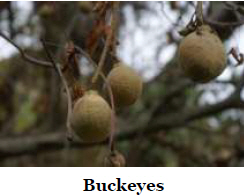
buckeyeMALCOLM: Smoky, has it taken a lifetime to learn the lesson of the California buckeye, that it’s part of a continuing process of life rather than a work of art to be preserved for all time as it was during one moment? Or, did the beauty of nature’s changes come to you more as an epiphany when you looked at the seeds you collected?

SMOKY: The beauty of nature’s changes first came to me when I was three years old and sitting in a blooming apple tree in my parents’ back yard. (I wrote about that experience in my “I Am Nature” essay in my book, Observations of an Earth Mage.) I’ve always been keenly in tune with the cyclical nature of Nature. In tune so much, in fact, I feel intense physical pain when rain is coming, for example, or when I’m near a place where our Mother Earth has been ravaged by bulldozers or mining equipment. The lesson of the buckeye is best summarized as a lesson in the impermanence of beauty; the impermanence of life as we know it. Life goes on, of course. It just changes form. The buckeye becomes a sprout, then a seedling, then, over time, an enormous tree. It would be wrong—it would be impossible, in fact—to try to contain it in any one form, no matter how beautiful. We also talk about that in the last chapter of Trails.

MALCOLM: Scott, you traveled a long way—and many years—from your childhood play in the dirt outside your house to the Big Sur where you re-discovered the land on a rainy night while reading Vonnegut. Do you wonder now why the journey to the Big Sur took as long as it did or whether you had missed signs and hunches early on that you needed to go there, or somewhere, to re-connect?

SCOTT: I do wonder why it took so long. I certainly missed signs along the way, many signs. When I would sit at a table in one of my many Ph.D. seminars, I felt like a robot, a machine, waiting for something. But sometimes I felt something taping, taping on my shoulder. Now I know what it was. It was Poe’s raven. It was my muse. I just brushed it away.

MALCOLM: Smoky, you write that you “find there are two kinds of people: those who believe it is possible to talk and listen to trees, rocks, animals, and rivers, and those who do not.” You talk and listen. Are you “wired differently” or are whose who don’t understand the dialogue brainwashed that it’s impossible or too busy to consider it?

SMOKY: Brainwashed might be too harsh a term. I think children hear Nature speaking. But as they grow, they’re told to put aside their playful, creative natures and buckle down and study hard so they can get a good job and support a spouse and 2.3 children and begin the cycle all over again. The quashing of creativity quashes the ability to hear Nature speak. By the time we reach adulthood, we’ve learned the only people who talk to rocks and trees are crazy people. So call me crazy, but I know what I know, and I know when Nature and her children—the rocks, trees, birds, rivers—are talking to me. And I think other people hear it too. They just don’t remember the language. It’s not unlike being dropped on some random street in, say, the Middle East, and all you hear is Farsi. You hear something. You just don’t understand it. The good thing is, this is a skill that can be re-learned, understanding what the trees and rocks are saying. You just have to sit still and listen long enough.

MALCOLM: Scott and Smoky, what draws you to the Kings River in the Sierras? Would another river serve the same purpose or is the voice of this one Sympatico with your thoughts and feelings?

SCOTT: All mountain rivers inspire us: the movement, the sound, the color, the smell. So sensual. But there are many levels to a mountain river. They’re veins through the natural world; they’re Gaia’s poetry; they’re the beauty of life; they’re spirit. But the Kings River is special; it’s a mountain river on steroids.

SMOKY: For me it’s all that Scott said, but I’d add one thing: the Kings was the river of a profound spiritual renewal I experienced and write about in Trails. While other rivers are sacred to me—the Little Pigeon in the Smokies especially comes to mind—none of them have affected me, spiritually, as profoundly as the Kings. The Little Pigeon is the river of my heart; the Kings is the river of my soul.

scottMALCOLM: My feelings about mountain rivers are the same. Smoky and Scott, one of you is inspired by a guitar and one of you is inspired by Snake. Is this an example of opposites (or differences) attracting, or is there a synchronicity here that lurks within your respective muses?

SCOTT: Yes, synchronicity! Someone strums a snake; someone strums a guitar. There’s really no difference. As Rumi said, “Everything is music.”

SMOKY: Our muses are definitely entwined, which evokes an image of Snake. And music is a theme of our lives: there are times we live our lives at a fevered pitch, and times when we sit in quiet repose. There are slow, dark sonatas when I am sick; there are times the music plays so fast we can hardly dance fast enough to keep up.

MALCOLM: Does each of you have a favorite line from the book that best communicates the depth and breadth and intent of the book?

SCOTT: For me, it’s what I just said, “Everything is music.”

SMOKY: For me it would be “ …we went to the mountains, deep in the wild Sierra, to refresh our tired bodies and restore our faith in all that is Nature, and wild, and sacred, and good.” I hope our book, Trails, is like that, that it restores readers’ faith that there is good, and it is as close as our own back yards.

MALCOLM: Thank you for stopping by the Round Table today with your wonderful background about Trails.

Trails is available on Kindle, Payloadz and OmniLit. More formats will be released in the coming weeks.
47,000 Miles and Counting

47,000 miles. That’s the combined length of all the trails in the U.S. National Trails System. Created by Congress in 1968, the system began with two, well-known established trails, the 2,158-mile Appalachian and the 2,648 Pacific Crest. Since that time, the system has been increased to include eight scenic and 18 historic trails.

The trails in the system are variously maintained and managed by the National Park Service, Department of Agriculture and Bureau of Land Management.

In March of this year, the National Park Service announced grants to five “Connect the Trails to Parks” projects totaling $333,000. According to acting director of the NPS Dan Wenk, the grant program (established last year) “will enable our visitors to better appreciate both the national parks and the national trails that touch or cross the parks through new connections, better information systems, and upgraded facilities. It is wonderful way to commemorate the anniversary of the National Trails System.”

For an excellent overview article (with a title I borrowed for this post) about the National Trails System, see the digital edition of Land & People produced by the Trust for Public Land.

If you click on the Appalachian and Pacific Crest links above, you’ll see examples of associations that support and help maintain two of the trails in this system. Volunteer opportunities and hiking information are available for most trails in the system.

Volunteer hours come into play when trail maintenance needs exceed the Federal funding. For example, as reported in Land & People, volunteer hours for trails across the system totaled 720,000 with a “sweat equity” value of $22 million in 2007.

Work continues to enlarge the system as evidenced by the upcoming 12 Conference on Scenic and Historic Trails in Missoula, Montana July 12-15. The conference will address the following general issues: (1) Expanding Outreach about the National Trails to all Americans; (2) Protecting the natural and cultural resources and completing the on-the-ground trails; and (3) Increasing the Capacity of public agencies and non-profit organizations to sustain the trails and their resources.

For a list of trails and their associated nonprofit agencies, click here.

While you may never have the time and energy to be a thru-hilker, one who completes an entire trail, you’ll find many sites and sounds and a lot of good exercise hiking bits and pieces of this marvelous system.