Feverfew in medicine and conjure

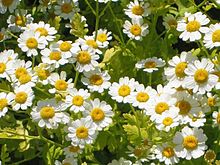
“Tanacetum parthenium, known as feverfew, is a flowering plant in the daisy family, Asteraceae. It may be grown as an ornament, and may be identified by its synonyms, Chrysanthemum parthenium and Pyrethrum parthenium.” – Wikipedia

In conjure, feverfew is used for love, protection against accident or illness, purification, uplifting the spirit, breaking biding spells, and for aspirin-oriented treatments. Do not ingest the plant without consulting a doctor. It can be purchased in powdered form for teas and in capsules.

Witch in the Woods says that “On an energetic plane, Feverfew is a balm for the spirit, calming and soothing the nervous system, particularly during times when the shadow self emerges. It aids in the alchemical transformation of nervous energy, preventing the manifestation of shadow habits and emotions. As a green ally in the herbalist’s enchanted garden, Feverfew offers its strength, adaptability, and confidence, illuminating the path during times of decision-making and shadow work. It opens the portals to higher realms of understanding, fostering trust in one’s intuitive gifts, and maintaining an anchored spirit amidst the dance of chaos and change.”

In medicine, it’s been used to fight headaches, including migraines, as well as other inflamations. Studies are following research into feverfew and cancer and depression. In addition to the capsules, feverfew can be taken in tea and as a tincture. Drugs.com notes” An optimal dose of feverfew has not been established. For prevention of migraine, dried leaf preparation dosages ranging from 50 to 150 mg/day for various treatment durations have been evaluated in clinical trials.”

Preparations in a variety of forms such as the one shown here are available online and at herbal shops.

–Malcolm

What Macbeth’s Witches Were Really Mixing Up

Wikipedia graphic

Fillet of a fenny snake, 
In the cauldron boil and bake; 
Eye of newt and toe of frog, 
Wool of bat and tongue of dog, 
Adder’s fork and blind-worm’s sting, 
Lizard’s leg and howlet’s wing, 
For a charm of powerful trouble, 
Like a hell-broth boil and bubble. 

Macbeth, Act 4, Scene 1

When you read Macbeth and hear the witches chanting about the eye of newt and tongue of dog, don’t worry. Most of those ingredients are the folk names of herbs, not critters’ body parts. Here are those added by the second witch.

  • Fenny Snake – Fenny refers to fens (swamps).
  • Eye of Newt – Seeds of Black or Brown Mustard (Brassica juncea), which–in hoodoo- are used to confuse enemies. They are often mixed with sulfur powder.
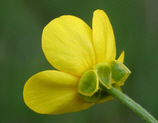
  • Buttercup: Steve Matson photo from Califlora

    Toe of Frog – Yellow Buttercup, including within the United States, the Western Buttercup (Ranunculus occidentalis Nutt), the seeds of which were ground up by Indians with other seeds for making a flour-like staple called pinole. The flowers themselves are considered poisonous.

  • Wool of Bat – Holly (Ilex aquifollium), meaning “holy,” used by Druids and other ancient Europeans. Holly symbolized male and female and Yule and is still considered in conjure as not only a blessing to the household and as protection for the home.
  • Tongue of Dog – Houndstongue (Cynoglossum officinale), also called dog’s tongue and gypsy flower. It was once considered a cure for madness and has been used by herbalists for a variety of ailments, including venereal disease and inflammations.
  • Dog-tooth Violet – Wikipedia photo.

    Adder’s Fork – Dog-Tooth Violet (Erythronium americanum) and related species. It’s also referred to as rattlesnake violet and serpent’s tongue. It’s not related to the violet. In conjure, it’s used to stop slander and gossip and those who are using it against you. It is placed on the doorsteps of enemies or when meddling inlaws are the problem, mixed with slippery elm into a body wash.

  • Blind Worm’s Sting – This is a lizard that looks like a worm. It’s sting is it’s bite. Perhaps they used the poison or tossed in the worm.
  • Lizard’s Leg – Ivy, genus (Hedera) and other creeping plants. Potentially, might include poison ivy and poison oak. Ivy is for binding things together as well as for ensnarring unwelcome desires (including drinking too much.) One can spend days trying to unravel the folklore and symbolism of ivy throughout the ages, including the use of the plant as a crown. Holly and ivy are among the evergreens used to decorate houses for Christmas and Yule as symbols of rebirth.
  • Howlet – That is to say, an owl.

–Malcolm

Florida Folk Magic Stories: Novels 1-4 by [Malcolm R. Campbell]Florida Folk Magic series of four conjure novels. Save money buying them together in this set.

Hope you enjoy the novels.

If your conjure woman stocks Belladonna, run like hell

Wikipedia photo.

Belladonna (nightshade) and the potato you eat with your steak are related. Solanaceae, plants that prefer shade or dappled sunlight, is a large family! However, if your conjure practitioner keeps belladonna in stock, its primary use–other than as a curiosity or an ornamental–in folk magic is to poison people. In 1915, plant researcher Henry Walters said nightshade was a plant filled with hatred.

Several berries might do the trick. Touching it will badly inflame your skin. In areas where belladonna grows wild, medical students were (and perhaps still are) taught to recognize the symptoms of belladonna poisoning by memorizing this phrase: “Hot as a hare, blind as a bat, dry as a bone, red as a beat, and mad as a hatter.”

It’s use now in cosmetics is rare, though it once was fairly common. It was once used by women to accentuate their eyes, hence bella donna (beautiful woman). It still has some medical uses, though the dangers it presents are outside the skill set of most herbalists and root doctors.

It can be used in the treatment of whooping cough, Parkinson’s disease, motion sickness, psychiatric conditions, and as a painkiller. (See WebMD for more information.)

How apt that the active agent in belladonna, atropine, is named after Atropos, the Greek fate who snipped an individual’s threat of life. Or, as Milton said, “Comes the blind Fury with the abhorred shears/And skits the thin-spun life.

The plant often appears in myths and fairy lore. Purportedly, it put Snow White to sleep when it was injected into the apple she was given. Like Henbane and Thornapple (aka Devil’s Apple), Belladonna is associated with the goddess of night and death, Hecate.

According to Amy Stewart (in a handy and fun little guidebook called Wicked Plants) says that nightshade “causes rapid heartbeat, confusion, hallucinations, and seizures. The symptoms are so unpleasant that atropine is sometimes added to potentially addictive painkillers to keep patients from getting hooked.”

The plant’s names, nightshade and belladonna sound like magic, mystery and enchantment. Yet, it’s not the kind of mystery I want my friendly neighborhood herbalist or conjure woman playing around with.

Malcolm

Malcolm R. Campbell is the author of Conjure Woman’s Cat and its sequel Eulalie and Washerwoman.