The Glacier Park Fund’s “Spring for Glacier” is a annual fundraising event benefiting Glacier National Park’s four non-profit partners. It features local silent auction items and live auction art from several well known artists. Lodging is also available at a special rate for the event night only – at both the Belton Chalet and Lake McDonald Lodge.
If I didn’t live on the far side of the country, I would definitely put on some railroad man clothes and show up for this event. For more information, click on the invitation graphic here:
While updating the Glacier page on my author’s website, I was happy to discover that the park’s concessionaire, Glacier Park, Inc. has also updated its website with fresh graphics and new information. I like the words on the company site: “Where the ordinary stops and the journey begins.”
Spring Plowing: According to the National Park Service, “Currently 17.0 miles of the Going-to-the-Sun Road are open for travel. Visitors can drive 11.5 miles from the West Entrance to Lake McDonald Lodge, and 5.5 miles from the St. Mary Entrance to Rising Sun.” With luck, the spring plowing won’t be as lengthy as it was last year. Check here for the latest on road status.
Proposed Apgar Transit Center Parking Expansion: According to NPS Glacier, The Apgar Transit Center Parking Lot Expansion Environmental Assessment conducted by Glacier National Park specialists is available for public review and comment. Comments are due by May 7, 2012. The park is proposing to expand the Apgar Transit Center parking lot to accommodate increased visitor use of the transit center following the relocation of activities of the Apgar Visitor Center to the transit center. Click here if you wish you wish to comment.
11th Annual Crown of Continent Managers’ Forum: The 2012 Crown Manager’s Forum was held March 19-20 at the Lethbridge Lodge in Lethbridge, Alberta with “Tribes and First Nations in the Crown of the Continent” as this year’s theme. For information about the forum, click here.
Glacier National Park Fund Projects: Current projects include Historic Art and Archives, Historic Structures, Red Bus Endowment, Trails Endowment, Trails Rehabilitation and Native Plant Nursery. For information on these projects and ongoing research, click here. While the Fund has a $100,000 annual goal for trail restoration, I’ve seen no information yet on the proposed adopt-a-trail program mentioned in an earlier post.
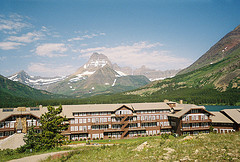
Many Glacier Hotel Rehabilitation: According to NPS Glacier, “the rehab work is continuing this spring, but it will be complete by the opening on June 15th. All of the rooms will be available unlike last summer. The dining room is complete as well and the ceiling has been restored to its original height. In the future there is a potential there will be more work done, but at present, the rehab work is finished.” Updated 4/14/2012.
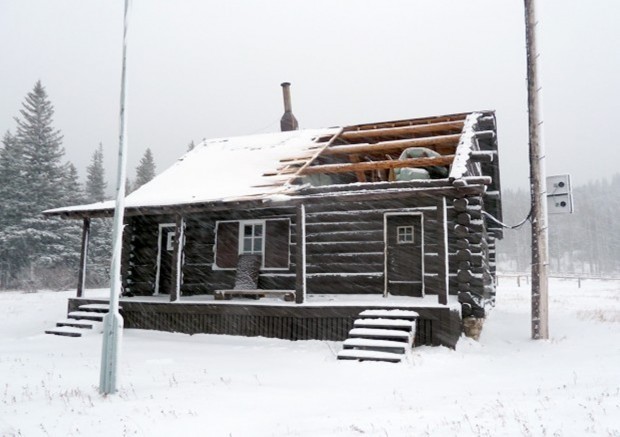
WEST GLACIER, MONT. -Park employees recently completed a challenging task to make emergency repairs and construct temporary roofing on the historic back-country cabin at the Belly River Ranger Station
The cabin was severely damaged during a winter storm in late December or early January. More than half of the roof shingles and a quarter of the roof were blown off by high winds, leaving the cabin directly exposed to rain and snow. A significant amount of snow accumulated inside the structure resulting in water and ice damage to the flooring, interior finishes, furnishings, and equipment. The storm also damaged a jack-leg fence at the site.
The damage was discovered by a resource management crew conducting work in the area during the second week of January. The crew surveyed the site, removed some of the accumulated snow inside the structure and moved materials and furnishings for better protection from the weather.
In anticipation of additional damage to the historic and culturally significant structure, including loss of the entire roof, and destruction of furnishings and equipment inside the cabin, an emergency response plan was created. A four-person crew and materials were flown to the site via helicopter. The crew removed snow from the building, constructed a temporary roof, heated the cabin with the wood stove to dry out the building and furnishings, and inventoried the site to help prepare for final repairs this summer. After four days of intense work, the crew skied out.
Anyone that may be in the surrounding area of the cabin is encouraged to use caution and be on the lookout for debris materials. Nails, ripped shingle pieces and wood debris are scattered about the area. Some of the debris was picked up, but some of the debris is buried in snow and may be a potential hazard, especially as the snow melts.
The Belly River Ranger Station was built in 1925 and is a significant cultural resource listed in the National Register of Historic Places. The station has been in use since it was built, housing rangers, trail crews and others. It is an integral part of Glacier’s cultural legacy, and contributes to the unique character of the park’s back-country landscape. The Belly River Ranger Station complex retains the classic configuration of structures (combination residence and office, barn, woodshed and fire cache) with few intrusions and excellent physical integrity. The local legendary Joe Cosley, the first Belly River District Ranger, lived at this site in the early years.
Support from the Glacier National Park Fund helped with the emergency response plan. The Fund assists the park with preservation of historic structures within the park, and is an official partner of the park. The Fund’s mission is to support the preservation of the outstanding natural beauty and cultural heritage of Glacier National Park for the use and enjoyment of present and future generations by fostering public awareness and encouraging private philanthropy. For more information about the Glacier National Park Fund visit www.glacierfund.org.
–
On a personal note, I took refuge in this ranger station on a very rainy night in the summer of 1963 when another hiker and I got caught by a sudden storm on a hike from Many Glacier Hotel to Canada via the Ptarmigan Tunnel and Lake Elizabeth.
Learn more about Joe Cosley in “Glacier’s First Ranger” in my free, PDF e-book Celebrate Glacier National Park that you can download from Payloadz.
“Hikers in the Northern Lewis Range area of Glacier National Park following the trail above Lake Elizabeth northeast along the Belly River are walking in a world once favored by the park’s first ranger Joe Cosley (1870-1944). To the west of Lake Elizabeth is Cosley Ridge (shown as Crossley on some maps), one of several landforms Cosley named after himself.”
During Glacier National Park’s 2010 centennial, I wrote quite a few posts about the history, personalities, facilities and environment of Montana’s shining mountains for this weblog. Now, Vanilla Heart Publishing has compiled a selection of those posts into a free PDF e-book that you can download from PayLoadz.
Highlights of the 49-page e-book
Fast Facts and Photographs
All Aboard for Glacier National Park
Glacier by the Grace of God and the Great Northern
Mountains and Rock
Remembering James Willard Schultz
Glacier’s Long-Ago Mining Town
Remembering George Bird Grinnell
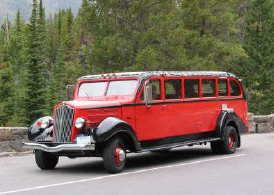
Those Historic Red Tour Buses
Kinnikinnick
Glacier’s First Ranger
Heavens Peak Fire Lookout
Mary Roberts Rinehart
The Scenery Behind My Stories
While working as a bellman at a Glacier Park hotel, I fell in love with the park. I’ve been back several times, but it’s too far from northeast Georgia for easy commuting. I returned in my imagination, though, while setting three novels in the park: The Sun Singer (contemporary fantasy, 2004), Garden of Heaven: an Odyssey (magical realism, 2010) and Sarabande (contemporary fantasy, 2011). If you’ve visited Many Glacier Hotel on the east side of the park, you’ll recognize many of the settings in all three books from Swiftcurrent Lake to Grinnell Glacier
I hope you will enjoy Celebrate Glacier National Park and the scenery behind my stories with a bit of the history of how Glacier came to be and who took part in developing it as both a park and a playground. Of course, you need to do more than read about “backbone of the world” in northwestern Montana.
How about a trip? You’ll need to stay for a couple of days so you have time to see both sides of the park, experience Going-to-the-Sun Road, hike to Sperry or Grinnell Glacier, take a launch trip on Lake McDonald, Swiftcurrent Lake or Lake Josephine, and ride in one of those ancient red buses with the top down so you can enjoy the mountain air.
When I joined the National Parks and Conservation Association (NPCA) in the 1960s after working in and taking trips to many of the parks, the group had a oval-chaped logo with the silhouettes of three bears. That logo was around for 50 years.
Now NPCA has decided it’s time for a change: “After about a year and a half of research, focus-group testing, surveys, and outreach, NPCA finally unveiled a modernized logo yesterday.” Naturally, some people wanted to keep the old logo. I support the changes, the logic of which is explained here.
Even before setting three of my novels in Glacier National Park, I was a “friend” of the parks. Since I live in the southeast, I’ve been to Smoky Mountain National Park more than any other. When I joined the NPCA, the Internet as we now know it did not exist. I depended on the print magazines from the Sierra Club and the NPCA for parks and conservation information.
Now, I’m happy that with the logo, the NPCA has also updated its online presence with a new blog called the Park Advocate. As NPCA suggested to members in this morning’s e-mail message, “Check out the blog for regular news on the parks, read about NPCA’s latest work in the field, enjoy photos and videos from around the country, and share your ideas and opinions on issues affecting our national parks.”
What a great way to keep up! Even if you’re not at NPCA member, the blog and its RSS feed will help you keep up with the latest news about the National Parks. If you’re a Facebook member, you’ll find the NPCA is there, too.
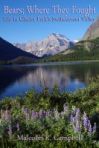
If you’re a fan of Montana’s Glacier National Park and/or are planning a visit to Many Glacier Hotel, you might enjoy my e-book about the history of Swiftcurrent Valley: “Bears, Where They Fought.”
The 15-page booklet is available on your Kindle for only 99 cents. (Click on the cover to learn more.) You’ll also find it included in Vanilla Heart Publishing’s anthology of fiction, nonfiction and poetry “Nature’s Gifts.”
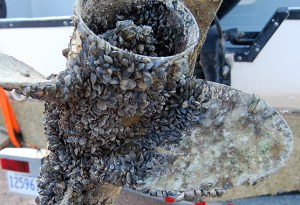
“Aquatic Invasive Species (AIS) are aquatic and terrestrial organisms and plants that have been introduced into new ecosystems (i.e. Great Lakes, San Francisco Bay, Florida, Hawaii) throughout the United States and the world and are both harming the natural resources in these ecosystems and threatening the human use of these resources. AIS are also considered to be ‘nuisance’ species or ‘exotic’ species and the terms are often used interchangeably.” NOAA Research
from NPS Glacier National Park:
Glacier National Park personnel performed almost 1,300 boat inspections during this past summer intended to reduce the risk of unintentional movement of aquatic invasive species (AIS) into park waters.
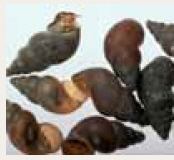
New Zealand mud snails - Nature Conservancy photo
“We put a lot of energy and resources into this program, but realize this is just the beginning of a long-term effort to protect the pristine waters of Glacier National Park and the Crown of the Continent Ecosystem against the devastating effects of aquatic invasive species,” said Glacier National Park Superintendent Chas Cartwright.
Glacier National Park contains the headwaters of three continental-scale watersheds. An infestation would pose a serious threat to all downstream waterways.
In 2010 the park initiated a boat inspection and permit program that required all motorized boats users to obtain a boat-launch permit prior to launching in any water body within the park. Inspections were only focused on boats believed to pose a high risk of transport of aquatic invasive species to park waters. The program also included an educational awareness component.
In May of this year, the park began an expanded boat inspection and permit program in response to an increasing threat of aquatic invasive species, which required an inspection and permit for all boaters. A free permit is required to launch any motorized or trailered watercraft in Glacier National Park. Hand-propelled water craft and personal flotation devices such as float tubes do not require a permit at this time. After an inspection of the watercraft indicates no signs of aquatic invasive species present, a launch permit will be issued. Boats must be clean, drained and thoroughly dry, including the bilge areas and livewells, upon inspection. A new permit is required upon each entry into the park.
From January to the beginning of October, 1,257 boats were inspected in the park. Six boats were denied launch permits for a variety of reasons, including that some that were not clean enough to properly inspect. No aquatic invasive species were found. The majority of the inspections were boats launching in Lake McDonald. Approximately 88% of the boats were registered from Montana with the remainder coming from 18 states and two Canadian Provinces.
Park visitors planning to launch a boat into any park waters throughout the winter are encouraged to call the park at 406-888-7801 to arrange for an inspection. Launching a boat without an inspection in Glacier National Park threatens park resources and is illegal, with a fine up to $500. Waterton Lakes National Park also has a boat inspection program.
Cartwright said, “Trailered boats with mussels attached to the boat and/or the trailer have been detected in Montana, as well as some aquatic invasive plants in local waters recently. This is a serious threat and we must be proactive to reduce any risk.”
Park managers and specialists recently met with Glen Canyon Recreation Area representatives to learn and share ideas on additional prevention measures, and to develop a response plan if something is detected in the area. Glacier National Park is also cooperating with other federal, state and local agencies and organizations, and Parks Canada to protect the lakes, rivers and streams of Montana.
Cartwright conveys his appreciation to park visitors for helping maintain the pristine waters in Glacier National Park by complying with the boat inspection and permit program.
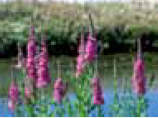
Aquatic Invasive Species Threats to Glacier – NPS AIS “Resource Bulletin in PDF format that includes information about non-native species already in the park as well as “what’s on the way.” Primary threats include: Zebra mussels/quagga mussels, New Zealand mud snails, Eurasian watermilfoil and Purple loosestrife.
Glacier Park Volunteer Opportunities includes information about specific opportunities for volunteers, including work in the Aquatic Invasive Species program.
Malcolm R. Campbell is the author of three novels set in Glacier National Park, including the recently released contemporary fantasy “Sarabande” available on Kindle.
As the author of two contemporary fantasies and one magical realism novel, I enjoy blurring the line between the real settings in my novels and the stuff I make up.
Real settings provide a foundation for the magic of my imagination whether they’re well-known locations such as Glacier National Park or personal locations such as the house my parents owned in Eugene, Oregon when I was in kindergarten.
However, the trickster in me wants the reader to always be in doubt where reality begins and ends. When people tell ghost stories around a camp fire, the stories often begin with: “Many years ago in these very woods on a summer night just like this one, a monster watched a patrol of Boy Scouts cooking their evening meal.”
Suddenly, everyone around the camp fire starts hearing strange noises in woods—perhaps it’s just the wind, or perhaps it isn’t. When I set my contemporary fantasy novels Sarabande (2011) and The Sun Singer(2004) in Glacier Park, I not only had a lot of photographs and reference materials helping me make my descriptions accurate, but also the benefit of knowing that many of my readers will have been there or seen pictures or TV programs about the area. (I also had my memories of hiking a good many trails in the park.)
So, is there magic at Many Glacier Hotel in Swiftcurrent Valley? Maybe yes, maybe no.
Garden of Heaven
InGarden of Heaven: an Odyssey (2010), I used well known locations in Glacier National Park such as Chief Mountain and Many Glacier Hotel. For my own personal amusement, I also used the starter-house my parents owned on Alder Street in Eugene. While I barely remember the house, I do have pictures of it. My readers, of course, don’t know anything about an obscure street in Eugene, but they have heard of the town. That’s why I used the name in this stream-of-consciousness, vision quest sequence in the novel:
My mother at the house in Eugene
He woke up in the centre of the prairie where the land lay like a calm sea and the black mountains were small in the west. On his mind there was a predominant thought, ‘I am east of the sun and west of the moon,’ and though that was true, for it was sometime past noon, the thought was on his mind in a strange déjà vu way, pulling him he knew not where. His memory danced like a frail aspen leaf in the north wind until he was carried southwest by south on more or less a straight course past the grey ice of Api-natósi, the north fork of the Flathead, the Kootenai National Forest, the Bitterroots, south of Couer d’Alene Lake, the boiling confluence of the Columbia and Snake, the Cascades, to Eugene and Alder Street, to the little buff-coloured house with the blue roof and white picket fence and a snowman to the left of the driveway, and then inside to a room bluer than the roof where an inviolate circle of light from the lone lamp encompassed mother and child, she in a chair reading aloud from an old tan book of stories, he sleepy-eyed beneath covers hearing about trolls, witches, winds that talked, a castle, and a prince, the stuff that dreams and futures are made of before seasons matter and life hardens the soul.
In a vision quest, the real and the unreal are often tangled up. I always want the reader to wonder which is which. In this passage, most readers will recognize the real places such as the Snake River and the Cascades even if they’ve never been to the area. I added “Alder Street” just for me because I’m a spinner of tall tales that are occasionally true.
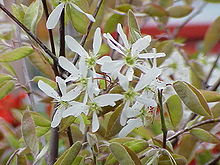
This rosaceous shrub is often divided into several poorly defined varieties, but the delicate white flowers make it easy to recognizee. The apple-like fruits are 3/8 t0 1/2 inch in diameter, becoming dark purple at maturity. — “Plants of Waterton-Glacier National Parks” by Richard J. Shaw and Danny On.
Like many Glacier Park hikers, I snagged hundreds of the more widely known huckleberries, ending up with purple fingers, and usually missed out on this highly versatile and widespread berry.
As Shaw and On suggest, you’ll find it called by multiple names throughout the country, including sarvis berry, sarviceberry, wild pear, chuckley pear, wild-plum, Saskatoon, Juneberry and shadbush. In Canada, Saskatoon, after an old Cree word, is the preferred name. In fact, Saskatoon, Saskatchewan is named after the berry. The variety in the park is Amelanchier alnifolia.
The berries were one of the traditional foods of the Blackfeet. They were mixed into pemmican with dried meat and eaten raw. You’ll find them referenced in the works of George Bird Grinnell (How the Blackfoot Lived), Walter McClintock (The Old North Trail), James Willard Schultz (My Life as an Indian) and other western writers.
In my old, dog-eared copy of The Old North Trail, I enjoy reading McClintock’s detailed accounts of Blackfeet stories and customs, including the sarvis berry information in chapter XXXXVI:
DURING my visit at Brings-down-the-Sun’s camp, the women were gathering their winter supply of sarvis berries. The bushes, which the old chief so carefully guarded, were loaded down with ripe fruit. Their method was to strike the bushes with sticks, catching the berries in blankets, and then spreading them in the sun to dry. Berry-bags for carrying them were made of small skins from deer legs, wolf-pups or unborn calves of large animals such as the elk, or deer, or, most often, of the buffalo. I saw a beautiful berry-bag made of a spotted fawn skin and ornamented with coloured porcupine quills. Sarvis berries are a favourite article of diet with all the plains-tribes. They are eaten raw or cooked in soups and stews. My Indian friends warned me that the berries sometimes make people very ill, who are not accustomed to eating them.
The berries work well in jams, pies, beer, cider and wine, though some people supplement them with huckleberries for color and taste. When you’re gathering them, you may have to fight off a few bears, squirrels and chipmunks. Moose and elk like the foliage.
In my contemporary fantasy, Sarabande, the native healer stirs flour, sugar and dried meat into a pot of boiled berries for a soup that can be eaten hot or cold. If you want to try the berries in pie, you’ll find two recipes here. Here’s a pie recipe that includes rhubarb. For wine, check this site.
Since the serviceberry—under one name or another—can be found throughout Canda and the United States (except Hawaii), chances are you might enjoy a few tasty berries on your next summer hike.
During the summers I worked in Glacier National Park, I hiked the same trails many times, partly because they served as feeder trails to longer hikes, or somebody suggested going for an after breakfast walk, or the sky and the air seemed to be offering an invitation.
Over the course of three summers, I learned a lot about my favorite trails. Most of it was five-senses knowledge. The number of miles between one place and another. The steepest climbs. The best-tasting water. Mountain sheep meadows. Wildflowers. Birds. But, over time, a fair amount of what I picked up was intuitive knowledge. I came to know those trails the way one knows any good friend. And, like what we know about a good friend, that knowledge as in large measure a felt thing.
In earlier times before we became entertained and enslaved by such distractions as cars, cell phones and the Internet, people walked the same paths everyday to get to school, work, the high pasture, the fishing hole, or to buy supplies. While the walking was focused on the practical need to get somewhere and do something, it nonetheless became a ritual, supplying the individual with a great deal of felt knowledge over time.
Breathing in the Land
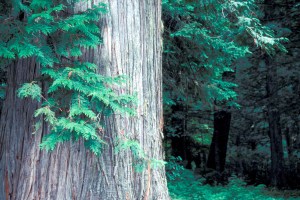
Glacier cedars - NPS photo
As a writer in love with symbols and metaphors, I like thinking of what I learn about the land as breathing it in. It takes time and commitment to breathe in anything or anyone. You don’t walk into the woods once and come away with a head full of knowledge any more than you learn everything about your prospective soul mate on the first date.
Anthropologist Mary Catherine Bateson calls this breathed-in-over-time knowledge a longitudinal epiphany. In her book Peripheral Visions: Learning along the Way, she likens this knowledge with what a husband and wife experience from taking time to have breakfast together every day for 40 years or in making it a habit to go somewhere and watch the autumn leaves falling every year.
Our attention spans have become too short for very much ritual whether it’s formal, as in a religious service or a meditation, or whether it’s informal as in eating dinner with one’s spouse every night or hiking between Many Glacier Hotel and Grinnell Glacier every morning while in the national park.
Bateson writes that “Rituals use repetition to create the experience of walking the same path again and again with the possibility of discovering new meaning that would otherwise be invisible.” One has to walk the path, I think, to gain the knowledge; you don’t learn it by reading what somebody else experienced on the path or by using MapQuest or Google Earth to look at the path.
A Favorite Tree or Meadow
One need not visit their favorite national park and can hike, for example, around Lake Josephine every evening at dusk or listen to the water at Virginia Falls at the break of day. Like the Glacier Park cedar in the photograph, the old oak tree in your backyard will work or, perhaps, a meadow, lake or stream in a nearby park.
Decide how much time you can spend, and then sit in or walk through or around this place once a day, once a week, or once a month. Listen, observe, smell, touch with nothing on your mind other than where you are and what you are breathing in with your five senses and your intuition.
Don’t expect a psychic experience the first night that fills your head with a hundred years worth of history nobody knows about the place. Instead, experience the changes from visit to visit.In time, you will form a relationship with that place.
You will trust it and know it because you have made the commitment to go there and be there. In time, you will know that place through the loving ritual of your walking and your breathing in everything you encounter.
WEST GLACIER, MT. – Apgar Bike Path, a popular paved hiking and biking trail that connects Apgar Village with West Glacier, is under construction to prune roots and repave the path.
Roots growing beneath the bike path have caused the paved trail to buckle and break open. A contractor will prune the roots, then remove and replace the pavement in those sections. Initial pruning and removal of pavement has been completed between the park headquarters area and the Going-to-the-Sun Road.
Work continues on the trail between Glacier Institute Field Camp and Apgar Village. Trail users are encouraged to use caution as they will encounter some off-trail detours, temporary closures and equipment along the trail. Before biking or hiking the trail, please check trail conditions by contacting a visitor center, ranger station or calling 406 888-7800.
Work is anticipated to be completed by early August.
–
Apgar Fast Fact: The village and mountain are named after early homesteader Milo B. Apgar who arrived in 1892. The famous artist Charlie Russell, who maintained a summer home in Apgar, was among the famous residents and visitors to the area.
–Malcolm
With my third Montana novel (“Sarabande”) coming out this fall, I have updated my website to show the connection between my fiction and Glacier National Park’s Swiftcurrent Valley.
 The Glacier Park Fund’s “Spring for Glacier” is a annual fundraising event benefiting Glacier National Park’s four non-profit partners. It features local silent auction items and live auction art from several well known artists. Lodging is also available at a special rate for the event night only – at both the Belton Chalet and Lake McDonald Lodge.
 – Malcolm











 Malcolm's Round Table