No need to destroy a Georgia mountain to build a new road

When I lived in Rome, Georgia in the late 1970s, driving to Atlanta—a mere 56 miles to the southeast, as the crow flies—became problematic in Bartow County. Quite simply, the route that began as a four-lane highway at Rome turned into a mess of urban sprawl before one reached I-75 South for the remainder of the trip.

Today, when I visit friends in Rome, the US 41/411/SR 20 interchange has another 30 years worth of development around it to make it a driver’s nightmare. The Georgia Department of Transportation (GDOT) has a proposed a 411 Connector solution.

For reasons that are not easy to comprehend, DGOT favors a costly and an environmentally unsound solution (Route D-VE) that includes the destruction of the beautiful Dobbins Mountain.

Members of the Coalition for the Right Road (CORR) want a 411 Connector. But they believe alternative routes are not only cheaper, but also avoid destroying a mountain.

If you live in northeast Georgia and believe it’s important to guard the environment against massive and unnecessary civil engineering projects that also represent a waste of taxpayer dollars, you can sign the petition here asking GDOT to select a cheaper and shorter route.

According to the latest CORR update, GDOT has announced it is studying up to three modified routes for the 411 connector. The cost of the original GDOT “solution” may be as high as $279.5 million. The estimated cost of at least one alternative route is $98.4 million.

Upcoming CORR events

  • Saturday, April 30: Taste of Cartersville at Friendship Plaza in downtown Cartersville.
  • Saturday, April 30: Southern Veterans Festival at Adairsville Middle School from 10 am to 7 pm.
  • Saturday, May 7: Spring Fling Festival in Kingston from 11 am to 4 pm.
  • Saturday, May 14: Duck Derby Day at Riverside Park Day Use Area in Cartersville from 10 am to 5 pm.
  • Monday, July 4: Stars, Stripes & Cartersville at Dellinger Park in Cartersville. Parade starts at 9 am; activities at 10 am.

We Need a Road

Drivers between Rome and Atlanta need the new road. It will cut time off the trip and reduce gasoline usage. Those who live and work around the current US 41/411/SR 20 interchange need long-distance traffic removed from their surface streets.

We just don’t need to move a mountain to make this happen.

Malcolm

CORR graphic showing proposed mountain cut

That Little Horse They Call ‘Miracle’

While horses have played important roles in my novels “The Sun Singer” and “Garden of Heaven: an Odyssey,” I haven’t ridden a horse in 30 years. Nonetheless, within the infinite pastures of my memory, I recall riding bareback across a snowy field on a cold morning, sitting like a proverbial sack of potatoes on an old roan named “Flame” in the sunshine on a high Alberta mountain trail, and fording a wide Montana river by the light of a bright moon.
These days, I might find a stationary carousel horse to be a riding challenge, proving, I think, that my practical horsemanship skills are limited. Yet, even from my limited perspective, I’m quite sure that there’s a special hell for those who abuse horses and a special heaven for those who save them.

Miracle: “Well Broke Under Saddle”

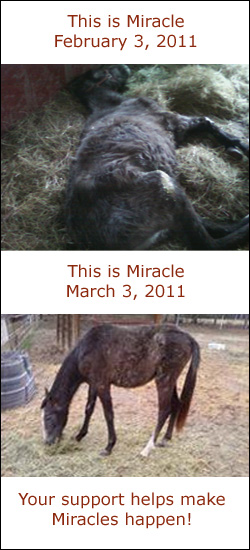
In February, a friend whose farm stands across the road from my father-in-law’s farm here in Georgia, drove out to look at an 8-10-month-old filly he saw advertised as well broke under saddle. The horse he found had been so badly injured, starved and otherwise abused, that he convinced the seller to let him haul it away and at least give it a decent burial.

The top photo, taken February 3, shows the horse lying down because it couldn’t stand or walk. The lower photo shows Miracle a month later. Our friend cared for her until she could travel again, and then she was moved to the nearby Sunkissed Acres in Summerville, Georgia for a rehabilitation.

According to the Sunkissed Acres blog of February 3rd, “She has no legs, she has no chest, she has no hope. She is literally run into the ground. I can almost pick the little thing up by myself. She is eating and drinking well, when we stand her up, she can walk around but when she gets tired, she lies down again and cant get herself up.” (Click on the photo for the entire post from SunKissed.)

Miracle’s New Home

On March 14th, the angels at Sunkissed Acres finished their work. The starved and damaged horse that couldn’t stand up was now able to run. Miracle now runs and eats well in the heaven of a horse retirement farm named Paradigm.

On the day the filly arrived, the Paradigm Farms blog said, “Today Miracle had an ending and a beginning. Her time at Sunkissed Acres came to an end today. Lori, the founder of Sunkissed Acres Rescue, did an amazing job of rehabilitating Miracle and getting her healthy and strong enough to move on to her new life. When one chapter ends a new one begins, and today was the beginning of Miracle’s new life with us.”

The U.S. Equine Rescue League defines neglect “as failure to provide sustenance and care sufficient to maintain an equine’s good health. This includes food, water, shelter, veterinary and farrier care.” Because of the compassion of a farmer named David, the loving rehabilitation by a rescuer named Lori and the long-term care being provided by Jason, the little horse they still call Miracle no longer fits this definition.

This is one story with a happy ending. With our donations and with the good work of the folks at farms such as Sunkissed Acres, the number of prospective miracles is infinite.

You May Also Like: Night in the Shape of a Horse

Malcolm

When the Grits Trees are in Bloom

Grit Flower

“Giving Northerners unbuttered instant grits is an old remedy for getting rid of tourists.” — Lewis Grizzard, author of “Don’t Sit Under the Grits Tree with Anyone Else But Me.”

You know it’s spring in south and central Georgia when the grits trees are in bloom.

True grits, as the late Atlanta humorist Lewis Grizzard would attest, are not INSTANT: “The idiot who invented instant grits also thought of frozen fried chicken, and they ought to lock him up before he tries to freeze-dry collards.”

After a hearty breakfast of grits and red eye gravy, true Southerners drive south on I-75 through Macon into what was once Stuckeys and pecan praline country toward Tifton where, years ago, Captain Tift once built a saw mill in support of his family’s shipping business.

The captain was also into turpentine, tobacco, pecans, sweet potatoes and grits. Northern historians, thinking grits were made in factories, overlooked Tift’s grit orchards, so you won’t find them in your grade school history books. But those orchards flourish today and every year on March 25, the kind of people who might take exception to freeze-dried collards, head into the lush agricultural lands of Georgia’s coastal plain in search of evergreen trees with large white flowers.

Years before the white man knew there would one day be a Southern state named Georgia, the Apalachee Indians discovered that the natural result of crossing a Live Oak (Quercus virginiana) with a Southern Magnolia (Magnolia grandiflora) was the Grits Tree (Quercus grandiflora Zea mays).

Like pearls in oysters, Grits are created in the soft tissue of the tree’s magnificent flowers. In the late summer and early fall, Grits fall like rain from the trees where Grits Sweepers gather them into windrows that look like dunes of snow. They dry in the sun until they are ready to be vacuumed up and cast before swine in the form of bacon, ham, and breaded pork chops.

But in the spring, it’s the white grits flowers that attract the attention. The kind of person who would eat freeze-dried collards or who thinks red eye gravy is the airline food served on long, over-night flights, will mistake a grits flower for a magnolia blossom. Magnolias have a musky, cloying scent. Grits flowers smell like Waffle House.

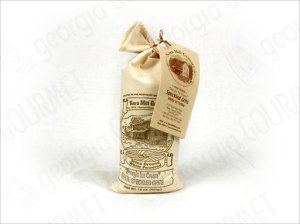
True Grits are in the Bag

“Sitting under the grits tree” is a phrase that goes back to founding of Georgia Grits Day on March 25, 1901 in honor of the birth of Georgia Brown beneath such a tree near Tifton. Sitting under a grits tree is about jazz and having babies and eating red eye gravy on a hot summer afternoon when it seems like every breath of air between Macon and the Florida border smells like breakfast at a Waffle House.

There’s no love better than the love built with true grits. It’s Southern love and you can’t get it in a factory and you won’t find it in the hashed browns part of the country. Every March, we celebrate true grits, not the movie, but the food and all it stands for.

Malcolm R. Campbell is the author of the satirical novel, “Special Investigative Reporter” on Kindle for about the same amount as a steaming bowl of grits.

Crawford W. Long Museum Included in Civil War Sites Guidebook

The Crawford W. Long Museum in Jefferson is among the 350 historic sites included in Crossroads of Conflict: Guide to Civil War Sites in Georgia from the University of Georgia Press.

The entry, which includes a photograph of the museum’s historic 1858 Pendergrass Store, notes that the facility “honors the physician Crawford W. Long, who attended the University of Georgia where he roomed with Alexander H. Stephens, the future vice president of the Confederacy. Long is credited as the first physician to use ether for surgical purposes.” Long served in the Athens, Georgia Home Guard and as a surgeon for the Confederacy.

Written by Barry L. Brown and Gordon R. Elwell, the Georgia Civil War Commission publication is an expanded update of the 1994 edition of the guidebook. The 304-page new edition, which arranges Georgia sites into nine regions beginning with the Chickamauga Battlefield in the northwest, includes 65 black and white photographs, 190 color photographs and images, and twenty maps.

According to the University of Georgia Press, “The impact of the Civil War on Georgia was greater than any other event in the state’s history. Approximately eleven thousand Georgians were killed and the state suffered more than one hundred thousand in total casualties. Georgia was extremely influential in this nation’s most tragic conflict, and the war touched every corner of the state.”

Born in Danielsville, Georgia, Crawford W. Long (1815-1878) first used ether for surgical anesthesia on March 30, 1842.

“Do a Georgia resident, friend planning a cultural tourism vacation to the South, or student of the Civil War might enjoy this guidebook? If so, click the Share This button below to send a link by email or recommend this post on your favorite social site.”

Coming Attractions on Malcolm’s Round Table

November 17 – An interview with author Vila Spiderhawk
November 21 – Second Annual Blog Jog Day
December 17 – Virtual VHP Dine-a-Round

Malcolm

Hello North Georgia Readers

I’m happy to announce that “Jock Stewart and the Missing Sea of Fire” and “The Sun Singer” are both available at the Bookstand of Northeast Georgia in Commerce.

For those of you traveling through the area, that’s at exit 149 on I-85 about 60 miles north of Atlanta.

This bookstore is well organized with hundreds and hundreds of books grouped into easy-to-find categories. Great prices on used books! My books join some other cool books on the LOCAL AUTHORS shelf just a few feet past the register.

The store is on Pottery Factory Drive in Commerce Crossing shopping center, just across the parking lot from OUTBACK STEAK HOUSE.

Buy the book, then read it with a glass of Black Opal Cabernet while waiting for your dinner.

bookstand