Hello Florida Readers: Need fantasy, magic and ghosts?

One of my contemporary fantasy novels, three paranormal short stories and a collection of three folk tales have Florida settings. I grew up in Tallahassee and explored most of the state’s panhandle, so I enjoy going back for story locations.

  • The Seeker: (Tallahassee, Panacea, Carrabelle, Tate’s Hell Forest) – Contemporary fanntasy novel about a perfect love gone horribly wrong between a young man from Montana and a young woman from Carrabelle who meet on a summer job in Montana’s Glacier National Park. Misunderstandings arise after the young woman is assaulted on a dark, Tallahassee street.

    Paperback, Kindle and Audiobook, and they are family friendly.
    Paperback, Kindle and Audiobook, and they are family friendly.
  • Emily’s Stories: (Tallahassee, St. Marks) – This three story set of magical paranormal stories features a 14-year-old girl who talks to ghosts and birds to solve problems. She doesn’t want a housing development in her favorite woods, sees a bear stalking her father on a Montana vacation, and wonders why her grandmother loves the sweetbay magnolia tree in her back yard so much. The audiobook was narrated by actress Kelley Hazen who makes you feel like you’re right there in the stories.
  • Cora’s Crossing (Marianna) – In this paranormal story, two college students driving home on a stormy night find their route oddly detoured across an ancient, haunted bridge north of Marianna. What they find there, and the danger it gets them into, will make them truly believe that Bellamy Bridge is haunted. The bridge, which is still there, is closed to vehicles but can be reached by a trail.
  • Moonlight and Ghosts (Tallahassee) – An abandoned and purportedly haunted mental hospital attracts the attention of a young man who used to work there. Something or someone wants him to return and, as it turns out, solve a crime in progress. Needless to say, this is a paranormal story, but it also ties into my experiences years ago as a manager at a center for the developmentally disabled.
  • Spooky Stories (Marianna, Tallahassee) – This two-story set bundles “Cora’s Crossing” and “Moonlight and Ghosts” together in one volume. This edition is also available as an audiobook.
  • Kindle and Audiobook
    Kindle and Audiobook

    The Land Between the Rivers (Tate’s Hell Forest) – This three-story set of folktales features Panther, Snakebird and Bear at the dawn of time as they make their way through the wetlands and flatwoods between the Apalachicola and the Ochlockonee rivers. I camped and hiked throughout this area when I was growing up, so it’s a favorite of mine–one that still needs the determined efforts of those protecting Florida’s endangered species of plants and animals in the state’s at-risk ecosystems.

  • My work in progress is a folk magic story set in Liberty County in the 1950s. The characters include a conjure woman, her cat, her customers, and some really nasty people who need to be jinxed. More on this later.

Malcolm

New Personal Note: The HVAC Georgia Summer Blues

Review: ‘Butterfly Moon,’ by Anita Endrezze

butterflymoonThe fifteen stories in this finely honed and well-polished collection have the power to cut away assumptions and alter a reader’s focus and direction as only a storyteller’s magic can do. Borrowed and reshaped from older folktales out of Anita Endrezze’s heritage and imagination, these stories take on new life in their contemporary settings.

In her author’s note, Endrezze writes, “I hope Butterfly Moon will take you adrift in another world that challenges and transforms your perceptions, yet leads you back home to yourself.”

Reality, the oldest shapeshifter we know, dances lightly on the pages of Butterfly Moon and often gives way to enchantments, supernatural events, and the whims of gods and fate. As prospective blessings for the reader’s journey, these stories don’t necessarily fit the traditional narrative arc of a problem leading to a climax. Endrezze’s tales are often unresolved slice-of-life glimpses into her characters and settings that end with a dire occurrence, an acceptance of fate, a troubling paradox or the workings of karma.

The joy, anger, life, and death in Endrezze’s vision are not bound by time, nor are they distinctly separate from the active and sentient world in which they’re set. “On This Earth” begins with the words, The house was a forest remembering itself. The pine trees that held up the walls dreamed of stars dwelling in their needles. When Desetnica leaves home to roam the world in “The Dragonfly’s Daughter” because she is the tenth child, it’s clear that the forest is watching when The blackberry bushes parted their thickets as I waded through green knots of fruit. After I passed, still following the dragonfly, the vines knitted together again, so that I was lost to the other side of kinship and orphaned into the unnamed forest.

While tightly knit into the stories’ plots, myth and symbolism add depth without intruding into the author’s economy of words, understated approach and matter-of-fact reverence to the cultural origins of her material. Endrezze does not explain or editorialize, but her omniscient care is everywhere through this collection from the paradoxes of “Raven’s Moon” to the grim unfolding of “The Vampire and the Moth Woman” to the humor of “Jay (Devil-may-care!)”

For the lovers of myths, legends, and folktales, this collection is highly recommended and a unique delight.

Malcolm

Malcolm R. Campbell is the author of paranormal short stories and contemporary fantasy novels, including the recently released mix of love and fate called “The Seeker.”

Briefly Noted: ‘The Last Selchie Child’ by Jane Yolen

Jane Yolen’s collected poems in The Last Selchie Child, from A Midsummer Night’s Press, are a celebration of storytelling. Part I, Story explores the craft itself; Part II, Stories takes us to the sea and elsewhere into the distant past when the world’s once-upon-a-times were more intangible than they are today; and Part III, Telling the True, gets to the heart of the matter, the veracity of the tales a storyteller tells.

In “The Storyteller,” in Part I, Yolen writes about the fundamental essence of the art of a tale:

It is the oldest feat
of prestidigitation.
What you saw,
what you heard
was equal to a new creation.

The title poem “The  Last Selchie Child” begins Part II:

But I am the last selchie child,
my blood runs cold in my veins
like an onrushing tide.

In Part III, “Family Stories” reminds readers of the childhood stories they heard, but no longer recall:

My brother and I
are pieced together
like crazy quilts.
We keep warm
on winter evenings
with the weight
of all those tales.

Publisher’s Description:

Magical transformations, enchanted mirrors, talking animals, familiar tales in unfamiliar guises, all these and more are found in the pages of The Last Selchie Child.

Retellings of archetypal myths and fairy tales and the nature of storytelling itself are explored in this new collection of poems by Jane Yolen.

This tiny book of tales, published in a 6×4 format, grows larger and larger with each reading of its magical poems.

Malcolm

Creating Magical Animals in Fiction – Part 2

“The Twa Corbies”, Illustration by Arthur Rackham to Some British Ballads – Wikipedia

In Part 1, I suggested that magical animals in fantasy, magical realism and folktales should start out on your imaginary drawing board as factually accurate as possible. Real-world facts make your animal believable.

Whether your animal can perform overt acts of magic, such as my flying horse Sikimi in The Sun Singer and Sarabande, or mysteriously appears on the scene when important things happen to the characters, such as the crows in Verlyn Flieger’s The Inn at Corbies’ Caw, you can add great depth by linking it to traditional myths and superstitions, American Indian creation myths and real or imaginary local stories and beliefs. When you do this, you are building either on what the reader already believes (ravens hang out in grave yards and bring bad luck) or you are layering the story with information that, while probably new to the reader, helps  make your magical animal three dimensional.

In a recent short story about the rare Florida panther, I noted that according to Seminole myth, the creator placed all the animals into a birthing shell from which they emerged when the time was right. The first animal to come into the world was the panther, and she had certain qualities that made her special. Since my story is set in a long-ago time period before humans arrived, the animals view the birthing shell as real. They mention it in an off hand way because my short story is not retelling the myth; the mythic backstory gives my panther a larger than life ambiance.

Many writers turn to Nature-Speak and/or to Animal-Speak: The Spiritual and Magical Powers of Creatures Great and Small by Ted Andrews for a comprehensive introduction to a large number of animals as they are seen in myth and folklore. The books are especially valid for stories set in the United States since they have an American Indian flavor. I prefer to find out about my prospective magical animals before I start writing so I can build their characterizations and actions around the myths and superstitions rather than pasting a “surface-level” set of qualities on top of an otherwise realistic creature.

The Internet is an amazing resource as long as one double checks everything from multiple sources to: (a) insure the myth or legend is widely known rather than being one writer’s imaginary story or religious belief, (b) locate enough detail to keep your account (including the adjectives and phrases you use) from sounding too much like the one source you located. When setting a story in a real location, a you can start with such online searches as creation myths of the Seminoles (insert appropriate tribe for the region) , panther (insert appropriate animal) myths and legends, and Florida (insert state, city, park, forest or resort) animal legends.

How Magic Do You Want Your Animal to Be?

Magic has to be used carefully, for if you make your main character (human or animal) all powerful, then you won’t have a way to build an exciting story. When your animal is all powerful, then you can build in understood “rules” that keep it from solving all the challenges in the story the minute it arrives. My flying horse, for example, is on the scene to transport my human characters from place to place. But he allows them to decide where they’re going and what they’re going to do when they get there. While he occasionally takes strong action, he generally doesn’t interfere in the fate, destiny or logical plan of the humans.

You can, of  course, make all of the magic indirect. That is, if an character’s totem animal is the raven, the raven need not have Superman-like powers to play a role. He can appear in dreams and visions with cryptic messages, can be seen flying in a certain direction as a hint to the characters to go that way, and can be placed in trees or in flight overhead when things are beginning to get frightening. This approach works well in contemporary fantasy and magical realism where your magical animals generally don’t have the capabilities of science fiction and fantasy animals in other worlds where the rules are different.

In “real life,” an overtly magical animal would attract attention. Of course, if that attention and how the human and animal deal with it, is important to your story, then hiding the animal’s abilities wouldn’t be an issue. Otherwise, magical animals tend to be more overt when they appear in parallel worlds, spooky uncertain regions, and deserted places. You can also blur the level of reality by opening up the possibility that the magical things a character saw and/or took part in, might have been the stuff of his imagination and dreams. You will see when you do your research into animal superstitions and tales, that magic tends to happen in places where the whole world cannot see it. This not only makes the magic potentially more frightening (it happens at midnight where two roads cross, for example), but keeps it from getting out of control in your story.

If your protagonist is a human, the rules of storytelling (depending on the genre) generally call for him or her to have more control over the direction of the plot than the animal. When placed within a dangerous situation, you character—knowing or not knowing the magic that’s “available”— will make choices to run, to hide, to fight, to be heroic, to find hidden strengths, or perhaps to fail. The magical animal cannot run in out of nowhere and “fix” all of the character’s problems. If so, the story become very anticlimactic.

In most fantasy, there are various “rules in place” in the parallel universe and in adjoining or overlay worlds that contain or restrict all the magic. This also makes stories more suspenseful and mysterious and keeps them from ending on the first page. Even Superman can’t do everything and be everywhere at once: the fact that he can’t, is what makes the story a story. The same is true for your magical animals.

Malcolm

Old Books, Old Stories, Old Memories

“An inviolate circle of light from the lone lamp encompassed mother and child, she in a chair reading aloud from an old tan book of stories, he sleepy-eyed beneath covers hearing about trolls, witches, winds that talked, a castle, and a prince, the stuff that dreams and futures are made of before seasons matter and life hardens the soul. While she liked reading ‘Why the Bear is Stumpy-Tailed’ and his father liked reading ‘Why the Sea is Salt,’ David asked each night for ‘The Lad Who Went to the North Wind’ or his favourite  ‘East o’ the Sun and West o’ the Moon.'” – Malcolm R. Campbell in “Garden of Heaven: an Odyssey”

I grew up in a house filled with books. Many of the older books were owned by my parents all the way back to their college years. When I was little, they read stories to me out of fading editions of Andersen’s Fairy Tales, Grimm’s Fairy Tales, Mother Goose, and others. My favorite folktales were the Norwegian stories collected in a 1912 volume by Gudrun Thorne-Thomsen (1873 – 1956) with illustrations by Frederick Richardson (1862 – 1937) called East o’ the Sun and West o’ the Moon.

While I heard the following stories dozens of times, the excerpt from my novel Garden of Heaven: an Odyssey tells you which ones were my favorites:

  • East o’ the Sun and West o’ the Moon
  • The Three Billy Goats Gruff
  • Taper Tom
  • Why the Bear is Stumpy-Tailed
  • Reynard and the Cock
  • Bruin and Reynard Partners
  • Boots and His Brothers
  • The Lad Who Went to the North Wind
  • The Giant Who Had No Heart in His Body
  • The Sheep and the Pig Who Set Up Housekeeping
  • The Parson and the Clerk
  • Father Bruin
  • The Pancake
  • Why the Sea is Salt
  • The Squire’s Bride
  • Peik
  • The Princess Who Could Not Be Silenced
  • The Twelve Wild Ducks
  • Gudbrand-on-the-Hillside
  • The Princess on the Glass Hill
  • The Husband Who Was to Mind the House
  • Little Freddy with His Fiddle

You can read these stories in multiple collections, including a version on Project Gutenberg and in reprints available on Amazon. Or, you can see the Wikipedia synopsis here. Even though the book is in poor condition, I like the old copy on my shelf the best. I grew up with it. It’s a link to my childhood. According to the inscription “Kathryn Gourley from Aunt Mary and Aunt Margaret,” my mother was given the book long before she was married.

Chicago School Teacher

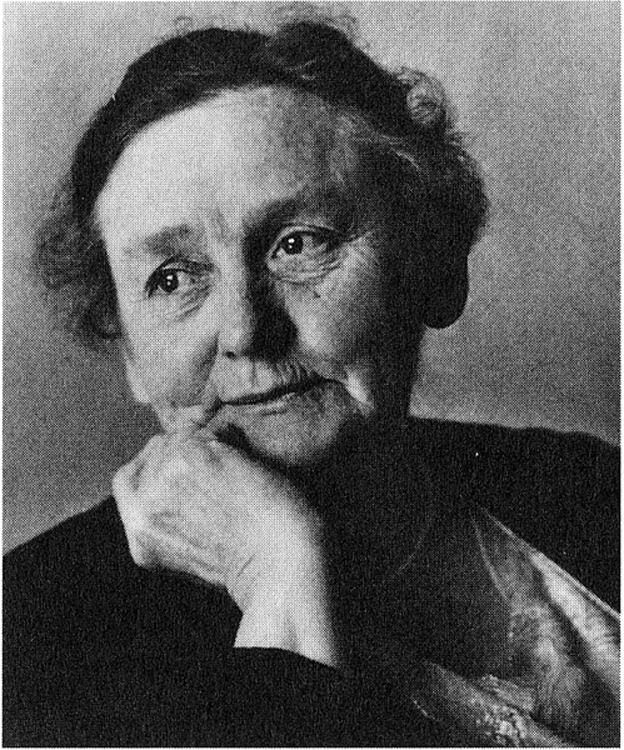
My mother’s side of the family came from Illinois, so I’m guessing my aunts heard about the book because Thorne-Thomsen (shown here) was a librarian and school teacher in Chicago. Or, perhaps they heard about the illustrator first: Richardson was probably best known for his work in L. Frank Baum’s books. I’m fairly certain my parents never read me the book’s foreword when I was little. I came to appreciate the author’s rationale behind the book much later:

In recent years there has been a wholesome revival of the ancient art of story-telling. The most thoughtful, progressive educators have come to recognize the culture value of folk and fairy stories, fables and legends, not only as means of fostering and directing the power of the child’s imagination, but as a basis for literary interpretation and appreciation throughout life.

Storytelling was a powerful influence in my early life because that’s what people did before radio, television and the Internet infected their homes with the latest, greatest and most awesome of what’s happening right now. My two brothers, my parents and I read stories, made up stories, shared stories around the table, and wrote them down on notebook paper and kept them until they were crumpled beyond recognition.

As was the practice in those days, some of the stories in East o’ the Sun and West o’ the Moon were accompanied by illustrations. The first drawing shown here goes with “The Princess on the Glass Hill.” Before I learned how to read, I could spend hours looking at the pictures, remembering the stories.

East o’ the Sun and West o’ the Moon

The title story begins like this: Once on a time there was a poor woodcutter who had so many children that he had not much of either food or clothing to give them. Pretty children they all were, but the prettiest was the youngest daughter, who was so lovely there was no end to her loveliness.

And it ends like this: But the Prince took the lassie by the hand and they flitted away as far as they could from the castle that lay East o’ the Sun and West o’ the Moon.

Obviously, it’s a “happily ever after” story. Or, to be more formal about it, this is a type 425A story (search for the lost husband) in the Aarne-Thompson classification system, that was originally collected by Asbjörnsen and Moë.

As a child, I liked the White Bear in the story. Who wouldn’t want a friend like that? According to Mary Lou Mitchell, “In Norse tradition, the bear is a valiant warrior, representing ‘the lonely champion, fighting in single combat and leading his men.'” (Later on in my own novels, I used a great black horse as a friend of the main characters.) Long before I knew anything about totem animals and their traditional meanings, my appreciation of “animal helpers” began with this story.

I think, perhaps, that my love of stories and storytelling began with old books and old stories and then remained a part of my psyche via the old memories. Now that I’m a grandfather, I begin to wonder if there will be a day in the future when my four-year-old granddaughter Freya with her Norse-inspired name will hearing these Norwegian folktales as much as I did.

Malcolm

Malcolm R. Campbell is the author of Celebrate Glacier National Park, a free e-book released this week by Vanilla Heart Publishing. Available as a PDF download, the 49-page book covers the famous red buses, the land, the personalities and the park’s history.

Campbell, who worked in the park while in college, wrote the articles for this e-book during Glacier’s 2010 centennial.