Briefly Noted: ‘Uncle Monday and Other Florida Tales’

Uncle Monday and Other Florida Tales, Edited by Kristin G. Congdon, Illustrated by Kitty Kitson Peterson (University Press of Mississippp, 2001), 196pp

unclemonday“Uncle Monday” is a widely known legend about a central Florida shape shifter and conjure man first collected in print by Zora Neale Hurston in the 1930s as part of her fieldwork throughout the state.

It’s an apt title story for this collection of oral-tradition stories compiled and annotated by Kirstin G. Congdon. I have the hard cover edition which is out of print; the paperback is available via Amazon. Unfortunately, it’s not available on Kindle.

These stories are part of what makes Florida, Florida. This volume makes them accessible, though some can be found throughout the Internet (oddly enough, sometimes copyrighted by those who own the sites) as well as in Florida’s Folklore Programs archives and volumes published by the Federal Writers Project.

Congdon is also the author of Happy Clouds, Happy Trees: The Bob Ross Phenomenon (with Doug Brandy) and Just Above the Water: Florida Folk Art (with Tina Bucuvalas).

From the Publisher

Few states can boast the multitude of cultures that created Florida. Native American, African American, Afro-Caribbean, White, and Hispanic traditions all brought their styles of storytelling to fashion Florida’s legends and lore.

Uncle Monday and Other Florida Tales captures the way the state of Florida has been shaped by its unique environment and inhabitants.

Written for adults, children, and folklorists, this gathering of forty-nine folktales comes from a wide variety of sources with many drawn from the WPA materials in Florida’s Department of State archives. Kitty Kitson Petterson’s detailed pen-and-ink drawings illustrate each narrative. The stories represent a cross-section of the ethnic diversity of the state.

The book is divided into five sections: “How Things Came to Be the Way They Are,” “People with Special Powers,” “Food, Friends and Family,” “Unusual Places, Spaces, and Events,” and “Ghosts and the Supernatural.” Within these sections are stories with titles ranging from “How the Gopher Turtle was Made” to the improbable “The Woman Who Fed Her Husband a Leg Which She Dug Up from a Cemetery.” In these tales Florida is a world full of magic, humor, and adventure. There are tall tales, old magical legends, even quirky, almost straightforward narratives about everyday living, such as one story titled, “My First Job.”

Kristin G. Congdon’s informative introduction discusses the origins of Florida tales and the state’s storytelling tradition. A reflection accompanies each story to guide readers to a deeper understanding of historical context, morals, and issues. Although oriented towards children, Uncle Monday and Other Florida Tales is also accessible to adults, particularly scholars interested in the state’s folklore and oral traditions. Whether in a classroom or home, this guide adds great value to the collection.

Reviews

The book has three five-star reviews on Amazon, including this one by “grasshopper4”:  “Uncle Monday is a shape-shifter who for years has resided in a lake near Orlando. Uncle Monday is also a terrific compilation of folklore from Florida. There are myths, legends, tall tales, fairy tales, family stories, and a plethora of excellent oral narratives that have been and remain told in Florida. The introduction to the book is well-written, and each section provides good background information on various characters and tale types. The book also has wonderful illustrations that capture the feel of various stories, and the book includes excellent ideas for teachers to use when presenting the texts in class. It’s a model study by a fine folklorist.”

The book is a wonder for folklore students, writers researching old legends for use in Florida stories, and anyone enjoying a great story.

–Malcolm

Uncle Monday is mentioned in my novel “Eulalie and Washerwoman.” This post originally appeared on “Sun Singer’s Travels”
Ground Zero In Florida: Labor Day 1935

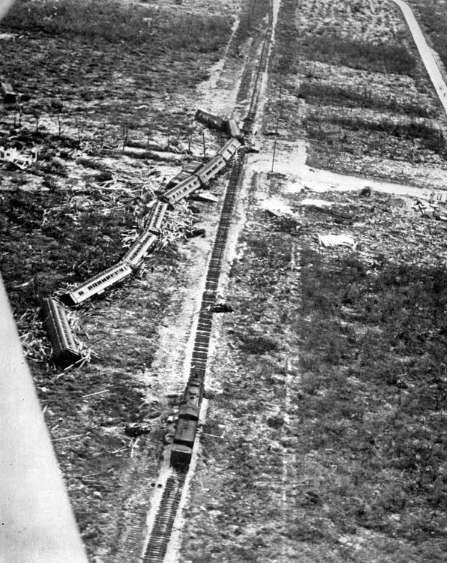
Rescue train blown off tracks.

When I was in grade school in Florida in the 1950s, the parents and grandparents of my fellow students compared every tropical storm and hurricane to The Labor Day Hurricane of 1935.

While the cat 5 hurricane is still listed as the worst hurricane (in terms of intensity) to hit Florida, it’s seldom mentioned by forecasters and reporters now in spite of its sustained winds of 185 miles per hour and gusts at 200 mph. Its landfall pressure was 892 mbar, followed by Camille at 900 mbar in 1969 and Karina at 920 mbar in 2005.

I guess it happened so long ago, it’s no longer real to us.

The fatalities, at 405 were, however, far short of the deadliest hurricanes: Galveston in 1900 (8,000 dead), Lake Okeechobee in 1928 (2,500 dead), and Katrina in 2005 (1,200 dead). The worst hurricane to hit Florida when  I was growing up there was Donna, a cat 5, which got more than our attention in 1960 with 160 mph winds.

I doubt that most people driving the overseas highway to Key West these days know that between 1912 and 1935 Henry Flagler’s extension to the Florida East Coast Railway traveled 128 miles past the end of the Florida peninsula to Key West. All that ended in 1935 when the tracks were destroyed and never rebuilt.

As hurricane Irma approaches, I can’t help but think back to the stories our elders told us when I was a kid, long before the Weather Channel and 24/7 news channels gave us minute to minute reports of the hurricanes’ locations. “Yep,” they said, “you should have been here in 1935.”

Heck, I don’t want to be there now even though the storm seems to be headed toward us here in North West Georgia.

–Malcolm


Florida Wildflowers: Seaoats

“Seaoats are important dune builders and protect beach dunes from erosion. It is unlawful in Florida to destroy or take this grass.” – “Florida Wildflowers: a Comprehensive Guide” by Walter Kingsley Taylor

“It shall be unlawful for any person to cut, collect, break or otherwise destroy sea oat plants, Venus’s-flytrap plants or any part on public property or on private property without the owner’s consent. Any person violating the provisions of this section shall be guilty of a misdemeanor and upon conviction shall be fined not more than two hundred dollars or imprisoned not more than thirty days nor less than five days. Each violation shall constitute a separate offense.” – SC Code § 16-11-590 (2013)

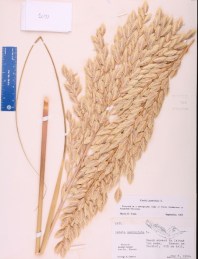
Herbarium Specimen – Atlas of Florida Plants photo.

Seaoats (Unicola paniculata) are perennial grasses, often clumped and with vast root systems, that can grow over six feet tall that are found throughout the state in coastal uplands and beach dunes. The flat, inch-long flowers (spikelets), which are slightly purple or the color of straw, blooms throughout the year.

Seaoats can be found along the coasts and on barrier islands along the eastern seaboard from Virginia to Florida. Seaoats are very tolerant of salt spray. They are also very heat and drought tolerant and green until late in the summer. While the conditions under which they thrive reduce encroachments from other plants, beachfront development is a primary threat. (As you can see in the Florida state park photo below, developers, dune buggy enthusiasts, and others are likely to write the plant off as a weed.)

Some people like using them as accents in flora arrangements or as the focus of dried arrangements–one reason why some areas classify the grass as a threatened or endangered species as well in addition to being vital to soil stability within its habitats. They not only protect dunes year around but are an important factor in protecting coastal areas from the erosion associated with tropical storms. Restoring seaoats often becomes an important part of dune restoration programs.

Seaoats provide food for songbirds, burrowing owls, mice and marsh rabbits. While the grass produces numerous spikelets, these don’t generate a lot of viable seed. Fortunately, the seeds don’t have any important commercial value.

Seaoats on the crest of a dune at the John U. Lloyd Beach State Park, Florida – Wikipedia photo.

“What is so tantalizing about sea oats, making one wish to break the law to have sea oats in their own garden? For starters, they have a striking appearance growing and swaying in the slightest breeze. The decorative plumes (seed heads) are often dried and placed in floral arrangements, or displayed alone as a focal point. Sea oats are quite easy to have without breaking the law, but few people are aware seeds and/or plants may be bought legally from nurserymen licensed by the state of Florida to propagate them. These nurseries supply sea oat plants to local, state and federal government agencies for dune restoration after hurricanes; the nurseries are allowed to sell them to the public as well.” – Darius Van d’Rhys

Seaoats are edible (browned or used as a cereal), but if you want to try them, you have to grow your own. Note that the plant is not the same as Inland Sea Oats (Chasmanthium latifolium) that often grows as a ground cover in open areas and is found in northern states as well as the southeast.

–Malcolm

For a chance to win a free Kindle copy of “Conjure Woman’s Cat,” see the Amazon giveaway which runs through August 8th.


Keeping up with Florida’s trees

“The clearest way into the Universe is through a forest wilderness.” – John Muir

If you live in Florida, you probably already know that–other than Hawai’i–the state has more species of native trees than any other. My easy-to-use tree guide was published in 1956, so I can only consider it as a starting point since some of the nomenclature has changed since then.

Chinkapin Oak – Wikipedia photo

For example, the Chinkapin Oak (Quercus muehlenbergii) used to be mixed up with the Pin Oak and the Chestnut Oak. Confusing matters more is the fact that one of the popular names for a Chinkapin still is “Chestnut Oak” even though the Chestnut Oak (Quercus montana) is another species. Both are in the white oak group. There are so many popular names for Florida’s trees, shrubs and flowers that it’s often difficult to be sure what another author is talking about, especially when names change from region to region. Many of those names figure into the state’s old stories.

I refer to trees a lot in my novels, so I’m constantly reading about them, looking them up, verifying habitats, and enjoying myths and legends about them. Florida has a lot of species because of its diverse habitats. That’s a lot to keep up with. Fortunately, there are plenty of sites available on line. When I first started writing, one had to call or send a letter to get the kind of information that can not be found with a few good Google search words.

There are 50 species of oak in the eastern U.S. and that means you’ll find a lot of them in Florida in addition to Tupelo, Cypress, Slash Pines, Longleaf Pines, and Palm trees if you know where to look. Longleaf pines are a sad story because the original forests covered so much of the southeastern U.S. (a 140,000-mile swath through nine states). Naturally, most were logged off and the land was converted to other uses or replanted with the faster-growing Slash Pines. Not the forest service and others are trying to re-educate landowners about the value of Longleaf Pines, especially their important wiregrass habitats that are sustained by fires that clear the unwanted and choking invasive shrubs and trees out of the forests. See the Longleaf Alliance’s page.

Florida Yew – Floridata Plant Encyclopedia photo

The Torreya (also called Gopher Wood) and the Florida Yew are endangered and may well disappear except in managed arboretums. That’s sad to see. Look for those still around on the Garden of Eden trail near Bristol in the Florida Panhandle.

According to exploresouthernhistory.com, Because the Torreya is one of America’s most endangered trees, a major effort is underway to save it. The Florida Park Service is working with the Atlanta Botanical Garden in a commendable effort to grow new Torreya trees. Using seed obtained from living trees, the agencies are growing seedlings that are being planted in the ravine habitat at Torreya State Park. Perhaps over time, the Torreya will once again thrive along the Apalachicola.”

Always nice to see people using native trees in their yards rather than stuff that really doesn’t belong there. (If you’re not sure and there’s no native nursery when you live, check this link and this link for names and pictures.)

In case you were going to ask: no, I don’t hug trees. Yet, I agree with Hermann Hesse, who wrote: “Trees are sanctuaries. Whoever knows how to speak to them, whoever knows how to listen to them, can learn the truth. They do not preach learning and precepts, they preach, undeterred by particulars, the ancient law of life.”

–Malcolm

My upcoming e-book short story “En Route to the Diddy-Wah-Diddy Landfill While the Dogwoods Were in Bloom” obviously focuses on the dogwood (Cornus florida), not to be confused with the imported Jamaica Dogwood that’s often called the Florida Fishfiddletree or Florida Fishpoison Tree.
 

Florida Swamps: no, ducks don’t smoke duckweed

It’s easy to overlook this as well as the gators that might be hiding it it.

When you drive past a Florida swamp, it’s easy to see the duckweed without seeing the duckweed for it often covers the surface completely.

Swamp plants are classified as submersed, immersed, and free floating. As a group, they’re referred to as aquatic macrophytes to distinguish them from algae. All of them are large enough to be seen by the naked eye. Florida’s varieties of duckweed are included in the free floating group:

  • Water Meal (Wolffia columbiana) the world’s smallest flowering plant is a duckweed variety
  • Duckweed (Lemna valdiviana)
  • Giant Duckweed (Spirodela polyrhiza)

Even though private property owners are often at war with the duckweed that covers the surfaces of their ponds, the plant has more protein in it than soybeans. It’s eaten by waterfowl, can be skimmed off the surface and fed to cattle, and humans consume it in some parts of the world. It also “cleans the water” of farm and industrial waste.

Water Meal and Giant Duckweed – wikipedia photo

Ansel Oommen writes in The Incredible, Magical Properties of the Ugly Duckweed “the common duckweed provides an almost magical solution [to water pollution]. Duckweeds are natural super-filters, sucking up minerals and organic nutrients from the water, which then accumulate into the plants’ biomass. This process, called bioremediation, is not only safe, but effective. Central to the duckweeds’ success is their ability to grow at a rapid rate and hence, their ability to consume large quantities of contaminants such as ammonia, lead, and arsenates. In fact, duckweeds can double their weight in one to two days under ideal conditions.”

It’s often hard to convince those who see duckweed as a habitat-choking, invasive pest that there are benefits to it, including potential use as a biofuel.

Why do I read about duckweed? It’s in the Florida Panhandle swamps where I grew up, and Eulalie and Lena, two of the characters in my Florida Folk Magic series of novels see it and (in the work in progress) have to contend with it.

I love tromping around in the swamps and leafing through the stack of reference books that remind me what everything is–and whether it will attack me. As far as I know, ducks don’t dry it and smoke it in order to fly.

Malcolm


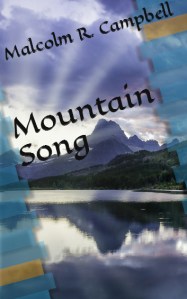
‘Mountain Song’ is a story about love that might be too broke to fix

As far as I know, we all experience “first love” and ultimately we all “come of age,” yet these subjects have become so cliched, that they are very difficult for writers to tackle with any hope of getting it right. We know in spades what it’s like to experience what our elders in a other era used to call “puppy love,” telling us it was immature, part of growing up (like falling off a bike), and ultimately wouldn’t matter.

mountainsongcover4We all know the territory, don’t we: the love that seems both fresh and infinite that for reasons unknown collapses without warning as thought it never happened. But we never forget and we could easily bore young people with our stories about it, but just in telling old secrets about long-gone moments, we would appear to be discounting what people in high school and college are feeling right now.

There’s always something heroic about the risks of first love, yet when it comes to fiction, we can hardly turn a boy-meets-girl story in a college geography class into and epic of star-crossed lovers such as Romeo and Juliette. It strikes me odd that such a common occurrence as first love boils down to something each of us must suffer alone when we experience its collapsing.

The world seems to end for us and while it’s ending, we’re mostly silent. From time to time, I read a short story or a novel where the author gets it right. I’ve tried to get it right–but the words never seem to match the experience. Perhaps they can’t because we’ve all been there and have our own stories to tell (should we ever dare) about what it was like.

Based on a true story (kind of)

That said, Mountain Song has kernels of truth in it. I’ve obscured them because the real life characters, one of whom was me, were two people who had a summer romance while working at a resort hotel. By itself, that doesn’t make for a compelling novel because we took long walks in the moonlight and stole guarded kisses while on duty, and there’s just so much that can be said about that.

Plus, the characters had to be very different than their real-life counterparts. Otherwise, one has to worry about libel and invasion of privacy. So, in Mountain Song, the characters’ diverse backgrounds provided the framework for the story. Bottom line, as was true in real life, the two main characters were poles apart in terms of upbringing, home towns, and lifetime goals. But neither of us had the bizarre, flawed upbringings of the characters representing us in the novel.

The people who knew me then, said the true story ruined me. It did for a while. Then I recovered (mostly). If you’ve read everything I’ve ever written about Glacier National Park (and heaven help you if you have), then you’ll know I’ve tried twice before to tell this story. The first time was in an experimental novel that made Finnegans Wake look like an easy read. The second time, I had a publisher who wanted the book turned into commercial fiction. That didn’t work.

I’m not sure whether I’ve gotten it right yet because, truth be told–and it can’t be–I’m not a fan of sentimentality, worse yet novels where the protagonist comes across as a whiner with a “poor me” attitude because, well, nobody likes reading that schlock and one way or another we’ve all had a wedding ring ready and waiting in our pocket for the right moment when things fell apart.

–Malcolm


Florida: it’s like living in an asylum and loving it

“The deal with Florida is the charlatans and lunatics and Snapchat-famous plastic surgeons. It is the Ponzi schemes, the byzantine corruption, the evangelical fervor and the consenting-adult depravity. It is the seasonless climate. The lack of historical consciousness. The way in which this nation’s unctuous elements tend to trickle down as if Florida were the grease trap under America’s George Foreman grill.” – Kent Russell in a tongue-in-cheek review of the book “What Makes Florida So Weird”

Shug, I’m not a Florida native. That means I’m not allowed to psychoanalyze the state, as Kent Russell says natives are inclined to do. I will say that time has ground away some of the state’s weirdness, the alligator wrestling and jungle petting zoos that once lined major tourist arteries from the Georgia border to Key West like dead skunk roadkill.

gatorgirlSad to say, most of the real jungles and pristine beaches have been paved over by the grease trap of a million condos and bikini-clad bodies per square foot enjoying nature in a former natural setting. I know this will offend some people, but when I saw what was happening to the sunshine in the sunshine state as a kid, I frankly hoped a badass hurricane would clear away all the crap in the peninsula part of the state like a giant flush in a huge toilet so that “we” could start over.

God knows, Mother Nature has tried, but there’s more work to be done before the seas rise and the state slides down into the Bermuda Triangle with the missing ships, squadrons of military aircraft, and maybe Atlantis. Word is, Atlantis sank because its movers and shakers abused their power. By the time I graduated from college and left home, I thought Florida would go that route, compliments of rogue developers more prevalent than palmetto bugs and equally able to slither away out of the light.

When my fiance came down to Florida to meet the family, she decided one afternoon while we were tip-toeing through the alligators at a nearby wildlife refuge that we were crazy. “What about those gators?” she asked. “No worries, Sugar, they’re in the swap and we’re here on the road through the swamp.” That made her feel about as safe as a can of tuna in a room full of cats.

But here’s the thing. When one moves into the state, one usually starts out sane. But things happen. Maybe it’s the water or too much sun or a million mosquitoes per square foot no matter how many times Mother Nature tries to blow them out to sea. Nobody knows because the people who’ve been there long enough to judge are no longer competent to judge.  With more data, people could get out before they’re involuntarily committed.

Looking back on it all–chasing stingrays, sinking speed boats, teasing copperheads, crawling into dark caves, camping in the piney woods, getting addicted to boiled peanuts, dining on bait fish–I truly think the large blue welcome signs on I-75 and I-10, need to say “No exit,” meaning once you drive into paradise almost lost,  you become lost and can’t leave. You won’t know any better.

If you figure out how to leave, you’ll miss it fierce. If you’re a writer, you write about it. If not, you’ll look at your summer vacation  slides on an old Carousel projector and tell people that in those days, you had it bad and that wasn’t good. Of course, if you’re an FSU Seminoles fan, you’ll still hate the U of F Gators while you watch every game on ESPN. You’ll watch folks boarding of their windows with plywood on the Weather Channel during hurricane season, and you’ll remember the good old days when you road out all the storms because you didn’t know any better.

(Fact of life: people buy new plywood every year when the first big storm approaches because they threw it all away last year, thinking they wouldn’t need it again. If this isn’t a clue to something or other, I don’t know what is.)

Here’s a tip. If you’re planning a Florida vacation, keep it short because if you stay there long enough to start believing the Swamp Booger is read–maybe even in your closet–then you’ve gone native, lost in the swamp, so to speak.

–Malcolm

In a continuing search for sanity, former Florida resident Malcolm R, Campbell is the author of the following stories and novels set in Florida: “Conjure Woman’s Cat,” “Eulalie and Washerwoman,” “Visiting Aunt Ruby,” “Carrying Snakes Into Eden,” “Cora’s Crossing,” “Moonlight and Ghosts,” “Snakebit,” “Dream of Crows,” “College Avenue,” “Emily’s Stories,” and “The Land Between the Rivers.” Learn more on his Amazon page.


Rescued Florida Bobcat Release in Protected Preserve

florida-bob-catThis cute kitten is called Spirit Feather. She was found on a road near Orlando last summer, turned over to Big Cat Rescue, and given medical care, food, and the kind of training she needed to live in the wild–including how to hunt.

“Spirit Feather has grown up to become a strong, feisty bobcat equipped with the skills to return to the wild where she belongs,” said Jamie Veronica, President of Big Cat Rescue. “We are very happy that she will be released on a vast, protected property and find everything she needs there to thrive.”

You can see pictures of the work behind the scenes here as well as a video showing the bobcat’s release several days ago. I really applaud the work of these folks. Florida has diverse habitats and animals. If things had been done right over time, we wouldn’t see long lists of flora and fauna on endangered lists. The Nature Conservancy is a partner in many of the rescue, re-establishment and conservation projects,

Let’s hope it’s not too late to save the Gopher Tortoise, the Indigo Snake, and the Florida Panther as well.

–Malcolm

Malcolm R. Campbell’s Florida Piney Woods novel “Conjure Woman’s Cat” will be on sale Friday, January 20th on Amazon.

Florida Legends: The man who could turn into an alligator

One of my favorite stories out of the Federal Writers Florida Folklore project, is the one about Uncle Monday collected by the author Zora Neale Hurston in the 1930s. Among other places, it appears in “Uncle Monday and Other Florida Tales” by Kristin G. Congdon.

Uncle Monday was a powerful conjure man who brought his magic from Africa. He was sold into slavery. When he escaped, he joined up with the Seminole Indians to fight against federal troops. He vowed that he would never be taken captive and enslaved again.

ewgatorDuring a ceremony at Blue Sink Lake in central Florida held by Africans and Indians, Uncle Monday danced and transformed into an alligator and plunged into the lake with all the other alligators. He is said to live there even now and to change into a man again when it suits his fancy. At the end of the day, though, he returns to the lake and, as Congdon writes in her rendition, folks “feel more comfortable with Uncle Monday home in the waters with his reptile family.”
If you search on line, you’ll probably find a number of tales about the alligator man, one of which relates the story of one Judy Bronson of Maitland who claimed she was a more powerful conjure doctor than anyone else. One night when she was fishing at Blue Sink, she saw Uncle Monday walking across the water in a beam of light with an army of gators.

She tried to escape, but her legs wouldn’t function. Uncle Monday told her she would stay right there until she admitted that her magic wasn’t as powerful as his. This was the last thing she wanted to do, but she had no choice. When she confessed she could not do such magic, she was carried back to her house. Soon, she threw away her conjure bottles, candles and herbs and claimed that she fell ill on the shore of Blue Sink and that Uncle Monday cured her.

As Congdon writes, “Folks will try to tell Judy that she only suffered a stroke and fell in the lake, but she knows better.”

Since I’ve read more than one story about this man, I couldn’t resist mentioning him in my Florida folk magic novel Eulalie and Washerwoman, along with other legends such as the giant gator named Two-Toed Tom, the Swamp Booger, and the ghost from Bellamy Bridge near Marianna.

Malcolm


Florida Legends – All You Can Eat if You Know How to Find It

Zora Neale Hurston’s “tales from the turpentine camps, on the surface, could be seen as silly, promoting these stereotypes. A sweet potato floating through the air with a knife sticking out of it? Pure fantasy. But a closer reading shows a culture of resistance and resilience. In the camp workers’ wildest dreams, all they want is unlimited access to food, a basic need that often locked them into the camp through debt racked up at the company store, or one that they were sometimes flatly denied. Food was hope and optimism.” – Julie Botnick in “Zora Neale Hurston, Diddy-Dah-Widdy, and the WPA Federal Writers’ Project”

The legendary Florida town called Diddy-Wah-Diddy, collected–or perhaps, imagined–by Zora Neale Hurston in 1938, has been celebrated by numerous blues singers and included in anthologies and re-tellings by Mary E. Lyons and others for years.

zoradiddyIn his New York Times review of The Food of a Younger Land, Jonathan Miles writes, “Couched between a selection of black Mississippi recipes transcribed in dialect (‘wrop cakes in a collard leaf, place on dese coals coverin wid some more hot so hot’) and the Christmas dinner menu at the Brown Hotel in Louisville, Ky., is a stunning prose poem by Zora Neale Hurston about a mythical place in African-American folklore — a kind of barbecue version of Shangri-La — known as ‘Diddy Wah Diddy.'”

While the WPA Federal Writers project featuring the story was never completed, Hurston’s work lives on, describing her take on the many dreams of food and better times and magical places from Blacks enslaved in the turpentine camps, usually for minor or imaginary offenses.

Unfortunately, Lyons’ book appears to be out of print. Her website description sounds tempting: “During Virginia’s 2008-2009 Big Read for Little Readers, Mary E. Lyons rewrote these same stories for young people. Now children in grades 1-4 can travel with Zora to a magical land where nobody cooks, but the food is always ready. In Diddy Wah Diddy readers meet Chicken, Pie and Moon Man. They wander to Zar and stroll through Bella. They amble across Amen Avenue, then fly down to West Heck with High John.”

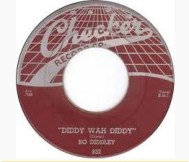
bodiddleysingleI came across the mythical town while researching Florida legends for my upcoming novel Eulalie and Washerwoman. I couldn’t resist including a reference to the place, a town nobody knows how to get to, but if they happened to find it, all that had to do was sit and wait and pretty soon the best food they could possibly want appeared, ready to eat, with knife, fork and spoon ready to go.

In her collection, Uncle Monday Monday and Other Florida Tales, Kriston G. Congdon’s version includes the line about a town “way off somewhere” that “Is reached by a road that curves so much that a mule pulling a wagon-load of feed can eat off the back of the wagon as he goes.” Congdon says that most people think the place exists.

Perhaps so.

–Malcolm

Malcolm R. Campbell is the author of “Conjure Woman’s Cat,” “The Sun Singer,” and other magical novels. The soon-to-be released “Eulalie and Washerwoman” is a sequel to “Conjure Woman’s Cat.”