Potpourri for Sunday, 11/12/23

Unlike real potpourri, this post won’t make you sneeze. If it does, please consult a psychologist or, possibly, a conjure woman.

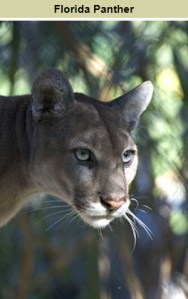
  • Since I grew up in Florida, I see the Florida Panther as “Florida’s Buffalo.” They used to be found throughout the Southeast. When my family moved to Florida in 1950, they were still roaming throughout the Florida Panhandle. Now, those that remain are confined (mostly) to a refuge in South Florida just north of Alligator Alley. In the old days, there was a bounty on them for about the same reasons there’s often a bounty on wolves–a threat to livestock. Now, development is the primary threat to the Panther. You can become a member of the Friends of the Florida Panther for $25.  I’m happy to say I have seen one. Magnificent! Sadly, it was in an outdoor zoo.

  • I hope most people take a moment or so to think about Veterans Day. I like this poster from 2018 because it brings back the ambiance of the time when the holiday was created as Armistice Day in 1938, before expanding into Veterans Day in 1954. I called it Armistice Day for years because that was its name when I was a kid. I know this is “flip,” but we kept saying “Armistice Day” and “Boulder Dam” instead of “Hoover Dam” for the same reason that many of us still refer to aluminum foil as “tin foil.” The name doesn’t matter as much as an acknowledgment that we owe a lot to those who came home.
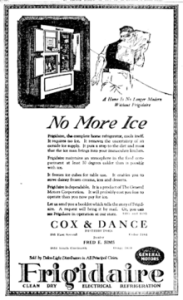
  • 1922 Ad

    As was thinking over the old names that got engraved in stone, I realized that many of my friends (and sometimes me, horrors) still refer to the refrigerator as the “ice box.” Yes, we called our Frigidaire the ice box when were were kids because ice boxes were still common. My parents bought our Frigidaire when the brand was still made by General Motors and, it was still running many decades later (outlasting my parents). Now, like the word “cellophane,” often used to refer to any clear wrap, many people call their refrigerator a Fridge even though it’s not a Frigidaire.  It’s rather like calling any facial tissue a “Kleenex.” We always use Kleenex so we’re in the clear when we refer to our tissues and “Kleenex.”

  • As I continue re-reading Holy Blood, Holy Grail, I wonder how many of the “hoaxes” (or unproven speculations) in the book and Dan Brown’s subsequent novel are really hoaxes and how many are coverups for organizations that really exist. (Nothing to see here, that’s all been faked.)  For example, the Priory of Sion (which some say was the parent of the Knights Templar and which others say was founded in 1956 and made to appear older than it was), probably wasn’t the nasty child of the Vatican as portrayed in The Da Vinci Code. Well, fooey. But unlike the real or imagined Priory, I do think the evidence suggesting Mary Magdalen probably was Jesus’ wife is correct. Margaret Starbird’s The Woman with the Alabaster Jar is for me, the most definitive on that point.

–Malcolm

Floridians: Stop the Northern Turnpike Extension

I grew up in Florida, so I can say this. Florida is famous (infamous) for its toll road boondoggles. If you live in Citrus, Levy, Marion, or Sumter countries, you’re at ground zero for a proposed turnpike extension that’s bad for you, the land, the panthers, and your pocketbook.

There’s been a continuing disconnect between what the people in your part of the state say you don’t want and what the Florida Department of Transportation (FDOT) seems bound and determined to shove down your throats.

As the No Roads to Ruin coalition says, “FDOT’s current approach to SB 100 completely ignores (1) the overwhelming public opposition, (2) the M-CORES Northern Turnpike Corridor Task Force’s failure to find any need for a northern extension of the turnpike, (3) the M-CORES Northern Turnpike Corridor Task Force’s findings on the fragility of the region’s environmental and agricultural resources, and (4) the reality that this folly is wasting, once again, precious Florida taxpayer dollars.”

This graphic from the coalition’s website sums up the situation nicely:

The evidence shows that the FDOT proposal is bad for water, wildlife, health, taxpayers, agriculture, rural communities, and the climate. It’s not just the roads themselves, it’s the sprawl and pollution that follow.

There’s also a disconnect between FDOT and the damage it does. My primary concern is the endangered Florida Panther. Estimates vary, but there are less than 200 left.
Wildlife ecologist Randy Kautz, writing at the request of the Nature Conservancy, said, “The construction of a new toll road expressway from Central into Southwest Florida is likely to have two primary effects on Florida panthers. First, there will be a direct loss of panther habitat within the footprint of the new road. Second, the toll road will accelerate the predicted loss of panther habitats, increase roadkill mortality, result in increasing fragmentation of remaining panther habitats, and likely jeopardize panther population survival by facilitating the movement of new residents and developments into regions of Southwest Florida that are now rural.”

FDOT doesn’t care about the panther or the water or the agriculture, much less the quality of life. Its job is to bring money into the state with toll roads and the tax money generated by sprawl. Your protests will never change FDOT’s thinking. The only thing to do is lean on the public, the legislature, the governor–and if need be–the courts to stop its absurd fixation on paving over the state.

Malcolm

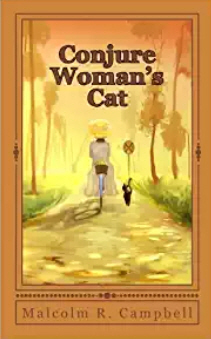
Malcolm R. Campbell’s novels are set in the Florida Panhandle where FDOT devastation isn’t as extreme as it is in the peninsular part of the state.

Saving the Florida Panther – I hope it’s not too late

“The Florida Panther is one of the most endangered mammals on the planet. Less than 160 cats remain in the wild. Most live around Okaloacoochee Slough, including the Florida Panther National Wildlife Refuge, near Naples.” – The Nature Conservancy

floridapantherI grew up in North Florida during the 1950s and 1960s before the state became as overdeveloped as it is now. At the time, there was a captive Florida Panther at a local animal museum that had been injured either by guns or automobiles and was there to recover. It was my favorite animal in the place, one that still lived in the wild in the Florida Panhandle.

In my contemporary fantasy novel The Seeker, (2022 update – now out of print) some of the action takes place at a wild, wonderful and somewhat forbidding tract of piney woods, swamps and wet prairies near the mouth of the Apalachicola River called “Tate’s Hell.” That name comes from the legendary man named Cebe Tate who chased a panther through the swamp because he thought it was killing his stock. He disappeared.

He was bitten by a rattlesnake. When searchers found him, his last words were, “My name’s Tate and I’ve been through hell.”

I grew up with that legend–one that included a folk song about Tate by Florida singer Will McLean–and knew the area well. So naturally, I mentioned the legend in my novel which is set at a time when Panthers were still there.

Catching up on the status of the Panther as I wrote the novel was a sad experience. While I was pleased to hear that in addition to the Nature Conservancy, organizations like Panther Net and Friends of the Florida Panther Refuge were working hard to protect the panther and its vanishing habitat, I was saddened to see how much ground and how many panthers had been lost since the says when I hiked in Tate’s Hell.

One conservation push in many areas of the country is wildlife corridors, protected strips or chunks of land that link up with vital habitats, creating a way for animals to travel between them. In some places, you will see green-space overpasses and underpasses routing animals past Interstate highways. Last year, the Nature Conservancy was able to protect a 1,278 acre tract in Glades County, Florida that Panthers in protected areas can use to increase the size of their range near Naples, FL.

According to the Nature Conservancy, “This acquisition will encourage the natural recovery of the Florida panther population by providing habitat where animals can den and stalk prey, and migrate from southern Florida to areas north of the river. Other species will benefit as well.” The range for a male panther is 200 square miles. The range for a female panther is a 75-mile block within the male’s territory.

I hope the efforts of hard-working people to save the Florida Panther will succeed. In a tourist and development-minded state, playgrounds often trump wild places and vital habitats in the eyes of the government, Chambers of Commerce, and the public. Too bad. It’s a short-sighted view of one’s world.

Malcolm

helppantherbanner

Poll: Most Americans See Population Growth as Threat to Wildlife, Climate

from the Center for Biological Diversity:

biologicalMIAMI— A new poll finds a majority of Americans believe the world’s growing human population is driving wildlife species toward extinction and is making climate change worse. Respondents also said addressing the human population — which topped 7 billion in 2011 — is an important environmental issue and that society has a “moral obligation” to address wildlife extinctions related to population growth.

The national poll of 657 registered voters was commissioned by the Center for Biological Diversity. It was conducted by Public Policy Polling on Feb. 22, 23 and 24. The poll has a margin of error of +-3.85 percent.

floridapanther“It’s now more clear than ever that Americans are concerned about the toll that human population growth is having on wildlife and our planet,” said Jerry Karnas, population campaign director at the Center. “Population is clearly a driving factor in so many of our environmental issues today, whether it’s sprawling development crowding out Florida panthers and sea turtles, loss of wild habitat for San Joaquin kit foxes in California or the climate crisis pushing polar bears ice seals toward extinction. It’s heartening to see that most Americans understand these connections and don’t want to see them ignored.”

“Although it’s an issue that doesn’t get talked about that much, this poll shows population is an emerging environmental issue that Americans recognize, especially when it comes to protecting wildlife from extinction,” said Jim Williams, of Public Policy Polling.

Among the poll’s results released today:

  • 64 percent said that, with the human population expected to hit 10 billion by 2050, wildlife will be adversely affected.
  • 61 percent said they are already concerned about the rate that wildlife are disappearing.
  • 60 percent said they “strongly agreed” or “somewhat agreed” that human population growth is driving animal species to extinction.
  • 60 percent said our society has a “moral responsibility” to address wildlife extinctions in the face of a growing population.
  • 59 percent said they “strongly agreed” or “somewhat agreed” that addressing the effects of human population growth is “an important environmental issue.”
  • 57 percent believe human population growth is “significantly impacting the disappearance of wildlife.”
  • 57 percent said they “strongly agreed” or “somewhat agreed” that population growth is making climate change worse.
  • 54 percent said stabilizing population growth will help protect the environment.

kitfoxThe Center for Biological Diversity launched its human population campaign in 2009 to highlight the connection between the world’s rapidly growing population and the effect it has on endangered species, wildlife habitat, the climate and overall environmental health. As part of the campaign, the Center has given away nearly 500,000 Endangered Species Condoms intended as a way to get people talking about this critical issue.

The Center advocates for a number of ways to address population, including universal access and adequate funding for family planning services, empowerment of women, sustainable development, a reduction in the consumption of natural resources and personal decisions that lessen the impacts on wildlife and the environment.

“If we’re going to address some of the biggest environmental problems we face, population has to be part of the conversation,” Karnas said. “These poll numbers show Americans are ready to start talking about population and dealing with impacts.”

To download a copy of the poll go to http://www.biologicaldiversity.org/population_poll.

Background

Government scientists have highlighted population as key environmental issue in recent months.

coloradoIn a decision to protect 66 coral species under the Endangered Species Act, the National Marine Fisheries Service said population and consumption of natural sources was “the common root or driver” of ocean acidification and other threats corals face.

The Department of the Interior recently released a report on the future of the Colorado River, concluding that, in 50 years, the river that supplies water to 40 million people may be unable to meet the demands of a burgeoning human population.

The U.S. Forest Service issued a report with another grim prediction: that 36 million acres of the nation’s forests will be lost to houses, strip malls and roads by 2050. That’s an area 16 times larger than Yellowstone National Park.

You May Also Like: Mare Cromwell’s Messages from Mother, a guest post on Smoky Talks

Malcolm