Many of us, authors included, have a few unsettling memories of some of the book discussions that occurred during our high school and college English classes. I wondered at the time how many prospective readers would swear off books forever after being subjected to highly technical book criticism discussions in survey and other general literature courses.
In contrast, book discussion clubs and readers’ groups can provide a breath of fresh air. The catch is, you have give some thought to your club’s membership, book selection methods and discussion format at the beginning, and then select a moderator who keeps things on track and gives everyone a chance to talk. Rachel Jacobsohn provides a few tips that will get you started. The American Library Association also has had some great ideas.
In fact, if you search on line with search terms like “readers group tips” and “how to start a book discussion club,” you’ll find more than enough ideas from publishers, The Library of Congress and libraries to get your group up and running.
Basic Discussion
Personally, I think you can have a great evening talking about a novel by focusing on relatively standard discussion questions:
What happened?
What plot twists surprised you?
Who were the main characters and how did they interact with each other?
Did the characters change during the course of the story?
Did the author have a theme and/or a message behind the story?
If a novel fits into a specific genre, you might want to add a question about, say, its approach to fantasy, how romance fit into the storyline, or whether the mystery/thriller aspects of the plot were set up and then resolved.
Adding Depth
Many publishers provide discussion guides or book club starter questions to help reading group moderators lead memorable discussions. You can decide whether this information should be handed out to all members after they read the book but before the discussion begins, or whether to keep these materials on hand for use by the discussion leader as needed.
Since most clubs are discussing novels for the members’ enjoyment rather than approaching fiction as it might be taught in a college course, I think you’ll usually get more spontaneity out of your group if you don’t show them in-depth discussion questions in advance. Sure, these questions provide food for thought, but they can also lead to members planning their answers in advance rather than listening to and responding to what other members are saying as the discussion unfolds.
I’ve spent the morning writing “starter questions” for the novels in my upcoming series of fantasy adventures. As I wrote them, I wished I could turn myself invisible and listen in on some of the discussions. I haven’t been in a reading group for a long time and miss the great discussions that come up right after people finish reading a memorable novel.
When friends and family visited us in north Florida, we would often take them to nearby Wakulla Springs to ride in the glass bottom boats and then on the so-called “Jungle Cruise” along the St. Marks River. First, they noticed all the alligators along the river’s bank. And the turtles.
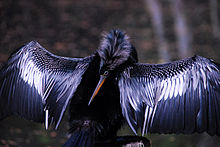
The anhingas, also called snake birds, attracted a lot of attention, because they spent a fair amount of time on tree limbs holding their wings out while drying their feathers. Why? Their plumage lacks the oil of ducks and other water birds and takes a while to dry before they can easily take off again. As the excerpt below shows, taking off with wet wings was a noisy business.
Snake birds swim under water with only their heads and above the surface. They look like snakes. Well, odd snakes. We always told tall tales about this. I finally wrote one down. It appears in Quail Bell Magazine and can be read the story here .
It begins like this:
On a long-ago summer afternoon in the land between the rivers, Tcheecateh was enjoying a long, cat-like stretch of a nap on a fallen sabal palm until the snake bird created a raucous spectacle by running, splashing and wing flapping across the previously calm water of the swamp. Although the blissful quiet returned when the bird finally became airborne, the panther kitten hissed at a blowing leaf out of frustration and stood up to see who else was awakened by Chentetivimketv’s noisy takeoff.
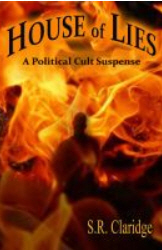
Picture this: You spend many months writing a mystery/thriller, work with your publisher to fine-tune the story and the cover art, and experience the thrill of seeing your novel appear on Amazon. Then, suddenly, a high-profile crime occurs, and it seems to have borrowed your plot.
Claridge told FOX news, “From my regular readers who knew more about me and from personal friends — they were saying, ‘Have you seen this? Like, this is your book playing out in real life’ and that was kind of scary.”
Publisher’s Description: A strange message sets Skylar Wilson on a perilous journey to rescue her sister from a deadly cult. Searching for answers, Skylar discovers that the cult stretches far beyond its pseudo-evangelical veil, penetrating the upper echelon of the United States government and pushing a lethal international agenda.
To expose the truth, she must first unravel the lies, each one leading her down a trail filled with dangerous scandals and mysterious deaths. For this nightmare to end, Skylar will have to go back to where it all began.
Opening Lines:Tess grabbed her cell phone and dashed into the bathroom of her tiny, one bedroom apartment, locking the door behind her. With trembling fingers, she sent a text: COME HERE! HURRY! Within moments she heard them burst into her apartment, hollering her name. Diving into the tub, she pulled the white shower curtain closed and prayed. She knew it was only a matter of time before they would kick through the door and take her.
Claridge, who also wrote the popular Just Call Me Angel series, is writing a sequel to House of Lies that will be released next year. House of Lies is dedicated to Claridge’s family and to “anyone who has fought to rescue a loved one from the grips of a cult-type organization.”
Author Don Westenhaver (Nero’s Concert) returns to the ancient world with a historical thriller set in Alexandria Egypt at a time when the Roman Empire’s rule was being challenged by a group known as “The Mob.” Set in 92 AD, Alexander’s Lighthouse is a smooth mix of fictional characters and events in a thoroughly researched historical setting.
Marco, a young Greek doctor arrives in Alexandria to study for a year at the city’s Museum and Library with something most visiting students do not have: a famous Gladiator father remembered fondly by the Empire. He secures a meeting with the Roman Prefect Titus Cornelius which leads to a position with a museum department tasked with the discovery of new weapons and other practical equipment. Marco’s access to the royal palace, his courtship of the prefect’s daughter, and his work on secret projects soon bring him to the attention of the mob.
The historical detail in this well-written novel provides readers with three-dimensional characters living, working and fighting within the scope of the long-ago politics and culture of Egypt in the city founded by Alexander the Great after it came under Roman rule. While Alexandria is an advanced, shining city with more than the usual amount of tolerance for its mix of Roman, Greek, Egyptian, Christian and Jewish citizens, there are conflict areas ready to be exploited by Free Egypt, the latest incarnation of the mob.
The inventive plot features a weapon under development by Marco and three colleagues in the museum’s special projects group that both the Roman rulers and the Free Egypt rebels desperately want to have. Spies are everywhere. It’s difficult to know whom to trust. And the friction between those who relish the laws and order of Roman rule and those who want the return of an independent Egypt lurks beneath the surface. The story builds through one intrigue after another toward the inevitable open rebellion. Marco, his co-workers, the prefect’s daughter, Paula, and a rich and alluring widow named Nebit are simultaneously players and pawns in a very deadly game.
While the novel’s historical detail intrudes at times, the story moves at a rapid and believable pace in Westenhaver’s re-created Alexandria with a powerful what-if premise: what-if the weapon in the book had been created at the famous museum? No, it isn’t historical. But as Westenhaver says in the Author’s Note, “My only defense is that the weapon should have been invented much earlier than it was.” (It contained well-known and commonly used materials.)
Like Nero’s Concert (2009), Alexander’s Lighthouse has great depth along with the kind of action that keeps readers turning pages. The novel is available in trade paperback and on Kindle.
Malcolm R. Campbell is the author of four novels, including the contemporary fantasy “Sarabande.” His “Book Bits” writers’ links appear several times a week on his blog The Sun Singer’s Travels.
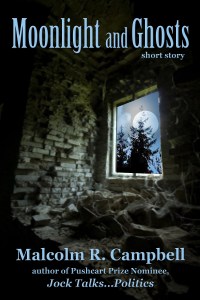
I’m happy to announce my really spooky short story “Moonlight and Ghosts” was published today by Vanilla Heart Publishing in an e-book format.
Publisher’s Description: On a moonlit night, Randy’s intuition is drawing him back to an abandoned psychiatric hospital where he once worked. He and his friend, Alice, have heard the ghost hunters’ claims the building is haunted, filled with strange lights, apparitions and the voices of former patients calling for help. The Forgotten point Randy and Alice to a crime in progress… and there’s not much time to save the victim.
That abandoned building…
There used to be an abandoned psychiatric hospital and developmental center near the house where I grew up. Before it was converted from a secondary hospital for use by the state department of mental health, I visited patients there–and it all seemed normal enough. It closed for a variety of reasons, including lack of funding and ended up sitting as an abandoned and often vandalized building for over two decades.
During this time, it became a magnet for ghost hunters. The more I looked at the pictures on line, the more my imagination started tinkering with an idea for a story. Like the main character in the story, I once worked as a unit manager at a center for the developmentally disabled. Fortunately, I never worked in this building. But what if I had and what if I went back on a moonlit night and found several ghosts waiting for me with an emergency message? Hmmm…
I hope you like it!
Price: 99 cents on Kindle, and in multiple formats, on Smashwords.
Each chapter heading of Patricia Damery’s beautifully written novel Goatsong begins with the words “tell me about.” Sophie’s daughter Stacey is asking her mother to tell her the old and ever-changing family stories about the days she spent as a ten-year-old child with the three Goat Women on Huckleberry Mountain and was reborn into the fullness of the world.
Young Sophie’s single mother works as a waitress at an all-night diner and sleeps all day, sometimes alone and sometimes with the man she brings home: “Ma didn’t want me making noise during the day while she slept, so I left the house and did all kinds of things most kids would not have the opportunity to indulge in, you might say.”
That summer, Sophie meets Nelda, Dee and Ester on the mountain above the Russian River in northern California, and in the process of learning about herding goats, “logging in” garbage dumped alongside the roads, and dancing naked in the meadow, she discovers love and acceptance from her ad hoc surrogate family. Among other things, Sophie learns to see and acknowledge that which others often miss, roadside trash included.
Wise, practical and nurturing, Nelda knows the Goatsong. Strong, persistent and dependable, Dee takes exception to those who dump garbage on the mountain as well as those who won’t lift a hand to stop it. Forever taking notes as the women do their daily errands, the relatively silent Ester is a witness, logging in the garbage. She finds, for example:
“1 beer bottle, label torn and unreadable, green. 1 plastic freezer bag, Safeway, good condition. 1 16 oz. paper cup, 7-11, good condition.”
The three Goat Women, who know they are “undesirables” from the townspeople’s point of view, accept Sophie as one of their own during their daily adventures on a mountain that Damery describes with the prose of a poet. The novel is a hymn to nature and natural living as well as an eternal and memorable story. Original, unorthodox and wise, the Goat Women provide Sophie with an unfettered, practical and loving worldview that is absent at her home and school.
In their own way, the goats (Natalie, Boris and Hornsby) are also Sophie’s teachers. The author, who has run a biodynamic farm in the Napa Valley for the past twelve years with her husband, said on her blog this past summer that “Walking the goats is truly an art.” Damery brings her knowledge of that art into her novel, creating goat characters who are as three dimensional and essential to the story as the women.
In the introduction, Damery writes that “Goatsong is the mysterious combination of humility and that essential ability to climb above, like a goat, or a song. To know the Goatsong of tragedy, Nelda told me, is to be reborn.”
When you read Goatsong, you are breathing in fresh air off the Pacific ocean, smelling the sweet scent of the bay laurel, and cooling your tired feet in sacred streams flowing through old redwoods in the company of wise women who, without agenda, may well change you as they changed the ten-year-old Sophie in those old family stories about the town of Huckleberry on the Russian River.
“To our indigenous ancestors, and to the many aboriginal peoples who still hold fast to their oral traditions, language is less a human possession than it is a property of the animate earth itself, an expressive, telluric power in which we, along with the coyotes and the crickets, all participate. Each creature enacts this expressive magic in its own manner, the honeybee with its waggle dance no less than a bellicose, harrumphing sea lion.” — From Becoming Animal: An Earthly Cosmology by David Abram, quoted by Terri Windling in her recent series of posts.
The plots and imagery of my short stories and novels frequently evoke the powers of Earth and invite meditations on and respect for the natural world. This is especially true in my 2011 heroine’s journey adventure novel Sarabande.
The phrase heroine’s journey indicates that this is a woman’s adventure story and that the trials and tribulations will strongly test the main character. The story is written with a feminine point of view, that of Sarabande, the young title character. Since Earth and the forces of nature are often viewed as feminine, the title character’s adventure is supported by “Earth language.”
Sarabande is attracted to rivers, the earth’s life blood and she is healed by an Indian’s Earth-centric approach. And, for a short period of time, she truly experiences becoming animal when she merges with Coyote, a magical creature in the mountains where she finds the ghost who has been haunting her.
I’m attracted to David Abram’s books because they place humans back into nature rather than as creatures at odds with nature. In Sarabande, the title character’s interactions with nature are important to her physical survival and to her inner growth. As readers will soon discover, her life is in danger quite often: knowing “Earth Language” will be essential.
David Abram suggests that rather than describing nature, we should listen to and talk to nature. He relates the story of a man who has trained himself so well to understand “the dialects of trees” that he can be taken blindfolded to any location in the Pacific Northwest. Once there, he will tell you who the nearby trees are. Perhaps our best contemporary fantasies can lead readers back to an appreciation for such skills.
In Sarabande, I hope readers will not only enjoy the adventure, but will take away a bit of Earth language.
Today’s Writing Links
Why We Have Both “Color” and “Colour” by Mignon Fogarty for Grammar Girl – “Have you ever wondered why the British spell “color” with a “u” and Americans don’t? Or why the British spell “theater” with an “re” at the end and Americans spell it with an “er” at the end? We all know that these spelling differences exist, but not everyone knows why they exist.”
The Stephen King Guide to Marketing by Jason Kong for Jane Friedman’s blog – “…you need both good writing and good marketing. Many writers see this as two steps. Write first, then worry about marketing once the words are published. The belief is that the writing and marketing processes are distinct.”
Quote: I am obsessive about titles. Even for my second and third book in the series, I couldn’t move forward until I had the right title for it. With Crewel, I didn’t want it to be so sewing-based that it would be off-putting. I stumbled upon “crewel,” and I thought, obviously this is the title. I take liberties with it. There’s someone out there who does crewel who’s going to say, “There isn’t one crewel work in the book.” – Gennifer Albin, author of “Crewel” – from Shelf Awareness
In Tetterbaum’s Truth, Angel Martin thought she’d find happy ever after by marrying Tony. Her plans changed when Tony vanished and she took a job at a pub to help her pull herself back together. The pub was a Mafia hangout, but she didn’t know that.
Released in 2011, S. R. Claridge’s Tetterbaum’s Truth began, one might say, both a series of defining moments for Angel and a series of mysteries for readers who like staying up late at night with exciting books.
The “Call Me Angel Series” also includes Traitors Among us, Russian Uprising and this year’s release, Death Trap. Here’s the publisher’s* description for Death Trap:
When Giovanni’s private jet explodes with Angel presumably on board, the family is thrust into a state of crisis and mourning. Learning that the explosion was not due to a malfunction but a well-planned attack,Angel’s men set out on a course for revenge; while Giovanni must face the hard reality of assigning a new Boss to the family.Unknown to anyone Angel is alive,but is forced into hiding from the terrorist group exacting revenge on her grandfather, Salvatore. She watches in horror as her men are lured one-by-one into a trap of death, with their only chance for survival falling on the shoulders of a stranger with an unstable past.
Tempers flare and bullets fly as the lines of family loyalty blur into a melting pot of Mafia destruction, thickening when Angel’s men discover that the stranger behind the attack isn’t a stranger at all. Emotions run high as Angel must face the suffocating reality that her only hope for staying alive is to play dead.
To learn more about the series, check out an interview with Susan onSmoky Talks. All four novels are available on Kindle and Nook, and in multiple e-book formats on Smashwords.
“The Twa Corbies”, Illustration by Arthur Rackham to Some British Ballads – Wikipedia
In Part 1, I suggested that magical animals in fantasy, magical realism and folktales should start out on your imaginary drawing board as factually accurate as possible. Real-world facts make your animal believable.
Whether your animal can perform overt acts of magic, such as my flying horse Sikimi in The Sun Singer and Sarabande, or mysteriously appears on the scene when important things happen to the characters, such as the crows in Verlyn Flieger’s The Inn at Corbies’ Caw, you can add great depth by linking it to traditional myths and superstitions, American Indian creation myths and real or imaginary local stories and beliefs. When you do this, you are building either on what the reader already believes (ravens hang out in grave yards and bring bad luck) or you are layering the story with information that, while probably new to the reader, helps make your magical animal three dimensional.
In a recent short story about the rare Florida panther, I noted that according to Seminole myth, the creator placed all the animals into a birthing shell from which they emerged when the time was right. The first animal to come into the world was the panther, and she had certain qualities that made her special. Since my story is set in a long-ago time period before humans arrived, the animals view the birthing shell as real. They mention it in an off hand way because my short story is not retelling the myth; the mythic backstory gives my panther a larger than life ambiance.
Many writers turn to Nature-Speak and/or to Animal-Speak: The Spiritual and Magical Powers of Creatures Great and Small by Ted Andrews for a comprehensive introduction to a large number of animals as they are seen in myth and folklore. The books are especially valid for stories set in the United States since they have an American Indian flavor. I prefer to find out about my prospective magical animals before I start writing so I can build their characterizations and actions around the myths and superstitions rather than pasting a “surface-level” set of qualities on top of an otherwise realistic creature.
The Internet is an amazing resource as long as one double checks everything from multiple sources to: (a) insure the myth or legend is widely known rather than being one writer’s imaginary story or religious belief, (b) locate enough detail to keep your account (including the adjectives and phrases you use) from sounding too much like the one source you located. When setting a story in a real location, a you can start with such online searches as creation myths of the Seminoles (insert appropriate tribe for the region) , panther (insert appropriate animal) myths and legends, and Florida (insert state, city, park, forest or resort) animal legends.
How Magic Do You Want Your Animal to Be?
Magic has to be used carefully, for if you make your main character (human or animal) all powerful, then you won’t have a way to build an exciting story. When your animal is all powerful, then you can build in understood “rules” that keep it from solving all the challenges in the story the minute it arrives. My flying horse, for example, is on the scene to transport my human characters from place to place. But he allows them to decide where they’re going and what they’re going to do when they get there. While he occasionally takes strong action, he generally doesn’t interfere in the fate, destiny or logical plan of the humans.
You can, of course, make all of the magic indirect. That is, if an character’s totem animal is the raven, the raven need not have Superman-like powers to play a role. He can appear in dreams and visions with cryptic messages, can be seen flying in a certain direction as a hint to the characters to go that way, and can be placed in trees or in flight overhead when things are beginning to get frightening. This approach works well in contemporary fantasy and magical realism where your magical animals generally don’t have the capabilities of science fiction and fantasy animals in other worlds where the rules are different.
In “real life,” an overtly magical animal would attract attention. Of course, if that attention and how the human and animal deal with it, is important to your story, then hiding the animal’s abilities wouldn’t be an issue. Otherwise, magical animals tend to be more overt when they appear in parallel worlds, spooky uncertain regions, and deserted places. You can also blur the level of reality by opening up the possibility that the magical things a character saw and/or took part in, might have been the stuff of his imagination and dreams. You will see when you do your research into animal superstitions and tales, that magic tends to happen in places where the whole world cannot see it. This not only makes the magic potentially more frightening (it happens at midnight where two roads cross, for example), but keeps it from getting out of control in your story.
If your protagonist is a human, the rules of storytelling (depending on the genre) generally call for him or her to have more control over the direction of the plot than the animal. When placed within a dangerous situation, you character—knowing or not knowing the magic that’s “available”— will make choices to run, to hide, to fight, to be heroic, to find hidden strengths, or perhaps to fail. The magical animal cannot run in out of nowhere and “fix” all of the character’s problems. If so, the story become very anticlimactic.
In most fantasy, there are various “rules in place” in the parallel universe and in adjoining or overlay worlds that contain or restrict all the magic. This also makes stories more suspenseful and mysterious and keeps them from ending on the first page. Even Superman can’t do everything and be everywhere at once: the fact that he can’t, is what makes the story a story. The same is true for your magical animals.
I grew up seeing Anhingas in Florida swamps. A bit of Internet research told me why they dry their wings before flying.
Animals in fantasy, folktales, faerie, and magical realism often have the ability to perform magic, change shapes, influence human events, know the future, or serve as guides between realms or worlds. While the needs of these genres are not the same, it helps to start off with as much knowledge as you can about real animals in their natural habitats. Once you know what an animal eats, how and where it sleeps, what its habits are, and what it looks like, you can branch off from there.
While most readers cannot recite the same specifics as a wildlife biologist, they do have a sense about how animals move around in their environments, and what kinds of animal habits in a work of fiction come across as true or apparently true, and what is blatantly impossible. If you’re writing faerie tales or folktales or creating animals “from scratch” like those we saw in the Harry Potter books, you have more latitude than you do in contemporary fantasy or magical realism.
My feelings about this are somewhat based on my own manner of writing, insisting on accuracy to a fault. For example, in a recent story my two main characters were driving between two real-life towns while listening to a real-life CD. My accuracy thing while writing this is to see how many miles the people will travel at normal speed and then look at the playing times of the cuts on the CD. It doesn’t have to be exact: but personally, I don’t want my characters to purportedly listen to 30 minutes of music during a ten-minute drive.
Likewise, even in fantasy and folktale, I don’t want my animals eating or sleeping in places they never eat or sleep in real life. Sure, magical powers can account for a lot of differences between real animals and fantasy or folktale animals. But the wider the gap you have between the animal in your story and the animal in real life, the less viable your story is and the greater the odds the readers won’t go along with it.
If I had the time and money, I would go into the field with a wildlife biologist and listen while s/he describes the animal behaviors and habitats we’re looking at. Like most writers, I can’t invest in $100 worth of highly specific books from Amazon just for a short story. This means relying on dozens of websites to find the foundation facts for my story.
I was trained as a journalist, yet as a novelist I believe in magic. That means I dislike and have trouble following stories or novels where everything is totally fabricated. If nothing in the story is real, it will probably not attract an audience.
I anchor my stories with verifiable facts about the animals and the settings. Perhaps you will anchor your stories in some other way. But when it comes to creating magical animals in fiction, it won’t hurt to know what your animals do and don’t do, eat and don’t eat, and are capable of and not capable of in “real life” before you start adding the fantasy elements, animal totem qualities, traditional myths and legends involving the animal, superstitions and the stuff you imagine as you put yourself in the animal’s self and walk around a bit.
If you place magical powers on top of a totally unrealistic animal, your story is going to be very difficult to write, much less keep a reader’s attention. A little careful research into your animal in nature will improve the magical animal in your story.
 Many of us, authors included, have a few unsettling memories of some of the book discussions that occurred during our high school and college English classes. I wondered at the time how many prospective readers would swear off books forever after being subjected to highly technical book criticism discussions in survey and other general literature courses.






 Malcolm's Round Table