Review: ‘The Bishop’s Pawn’ by Steve Berry

The Bishop's Pawn (Cotton Malone, #13)The Bishop’s Pawn by Steve Berry
My rating: 4 of 5 stars

Those who enjoy FBI and police procedurals, black ops, off-the-grid agencies, and loose-cannon agents will find a lot to like in this story from the long-running Cotton Malone series. Berry focuses on the FBI’s vendetta against the Martin Luther King, Jr. and his death on April 4, 1968. Malone is contacted because some old documents about King’s assassination are about to come to light. The old guard wants them destroyed (if they exist), while current investigators want the truth to come out.

Malone is thrust right into the middle of a playing field of rogue agents and underworld characters that are nothing like the day-to-day life of a JAG lawyer. He has skills, but he’s new at fighting bad guys on the street who are well-practiced at being bad guys. This is the genius of the book: a novice thrust into a volatile mix because those who ask him to go there appreciate the fact he’s a loose cannon.

The story holds together even though the characters Malone confronts have hidden and dangerous agendas or otherwise aren’t who they seem to be.

If there’s a flaw in the book, it’s the fact that it requires a lot of backstory to make sense to readers who weren’t around during the King era. This is the same issue people had with “The Da Vinci Code.” Without Dan Brown’s constant teaching, the story wouldn’t make sense even though that teaching bogged down the book. The teaching in this book bogs it down because quite a few words are devoted to it.

Nonetheless, I found the book compelling. It’s certainly a must read for those interested in the 1960s civil rights movement and the life of Martin Luther King, Jr.

View all my reviews

Malcolm

My memoir would only be full of lies

This is the era of the memoir. That’s okay. Everyone has a story to tell. If you’re already famous, so much the better, especially when the real story includes sex, scandals, and heroics that the biographers and fan magazines missed.

I used to tell people I was raised by alligators near the town of Immokalee, Florida and that my dad, Papa Gator, was the inspiration for the section of road through the Everglades called Alligator Alley.

Surprisingly, few people thought this was true even though they appreciated the wisdom of Papa Gator and his attempts to gain respect from the snowbird northern tourists without having to sacrifice his eating habits. There’s no need to talk about that here because most of you would probably file those truths under Too Much Information.

In “real life” I was a college professor’s son in a middle-class brick house in a middle-class neighborhood. I delivered the morning newspaper, had a ham radio receiver and transmitter in my bedroom along with fresh water and salt water aquariums, and was an Eagle Scout. Where I “went wrong” was discovering that I could lie in such a way that people believed me, including my parents, teachers, pastors, and ladies of the evening whom we snuck into the church basement.

See, already you have here the basis for a successful lie. Looking at the previous sentence, most people will assume we snuck in hookers, while others will wonder if–inspire of the Oxford comma–we also snuck in parents, teachers, and pastors. I learned early on that successful lies needed to include enough verifiable facts to make them seem true along with certain areas of vagueness that were misleading. Case in point, when I told my parents I was going to swing by the library, they thought–as I knew they would–that I was actually going to go inside and study. I never said that but I was content with their view of my plans for the evening.

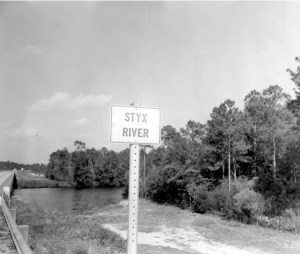
I didn’t like staying inside the house. So, during an evening when I said I was swinging by the library–which was the gospel truth of the matter–my 1954 Chevy and I were likely to be a hundred of miles away from home, usually following sandy roads through national forest lands and visiting places with multiple meanings in their names like the River Styx, Tate’s Hell Swamp, and Florida Garden of Eden.

A family friend wrote a popular book called The Other Florida about the state’s panhandle and I was determined to explore all of it. I thought I was simply getting away from it all. Little did I know I was inadvertently gathering facts and impressions about a series of conjure woman books I would one day write some fifty years in the future.

Of course, fiction and fact blur together. Such is my imagination. Is it a lie or is it fiction? When I write fiction, I always blur the lines between truth and myth, impressions and reality, and night and day. That’s who I am, and it grew out of the need I felt as a child to be secretive and to keep people from knowing who I was or where I was, and so it evolved into a writing style in the genres of magical realism, contemporary fantasy, and paranormal. Yes, I know, the who business might be an early sign of dementia.

This is clip art and not a drawing of anybody I knew. That’s my story and I’m sticking to it.

All this comes to mind because I’m working on a short story about a man who’s put in a rest home because his kids convince a judge he’s too eccentric to be left alone in his home where he’ll probably spend all the money they want to inherit on frivolous stuff. Not that I think my family would do that. But if they did, I’m sure they’d tell the judge that I think I was raised by alligators or that I snuck a hooker into the church basement.

Writers not only have to worry that their search history on their computer might one day be snagged by the FBI in an attempt to prove they did some hideous thing when, in fact, they were doing research for a book, but they (the writers) also have to worry about being put in a home when people figure out that the stories and novels they publish sound oddly similar to the lies they told their parents when they were kids.

My imagination has always ruled my thinking. It has taken precedence over logic and so-called verifiable facts. I justify my lies by pointing out that quantum mechanics tells us that what can happen, does happen. With that in mind, it’s impossible to tell a lie. Plus, if I appeared to be telling a lie–in “real life” or a memoir–I was simply working on the rough draft for a short story, novel, or alibi.

I suspect that most of my life actually happened. But as I grow older, I’m not sure how or where it happened. Papa Gator seems so real

Malcolm


Amazon Giveaway Ends in Three Days

I’m running a giveaway on Amazon for my three-novels-in-one Kindle book called Florida Folk Magic Stories. The e-book edition includes Conjure Woman’s Cat, Eulalie and Washerwoman, and Lena.

Click on the graphic to enter.

The giveaway, which has three Kindle copies available, ends on October 30th.

For reasons I don’t understand, Amazon has made their giveaways less user-friendly. First, they got rid of the sweepstakes option which awarded all the prizes at the end of the giveaway (which the author controlled). Next, they hard-coded the lucky number to something way too high for small-press authors. The author used to be able to control this, e.g., saying that every 10th entrant or every 20th entrant won a copy. Now, Amazon has set that lucky number at 400. That’s sad because the giveaway will probably expire before I can award all the available copies.

But, as they say, if you don’t enter, you can’t win. And, it costs nothing to enter.

Oh, and if you’re a GoodReads member, I’m hosting a giveaway there for one paperback copy of Lena. It will start at 12:00am PT on Monday, October 29 and finish at 11:59pm PT on Saturday, November 10.

–Malcolm

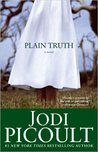
Review: ‘Plain Truth’ by Jodi Picoult

Plain TruthPlain Truth by Jodi Picoult
My rating: 3 of 5 stars

While I enjoyed the book’s themes, especially the placement of a big city lawyer into an Amish household to supervise the bail agreement of a teenage girl charged with murdering her own baby, the ending did not wash with me.

SPOILERS AHEAD

The book begins with Katie, who has hidden her pregnancy from her family and everyone else, giving birth in the middle of the night in the dairy barn on the farm where she lives. After giving birth, she falls asleep. When she wakes up, the baby is gone. She says “thank you,” as though God turned the events in the barn into a dream by whisking the baby away.

When the baby is found hidden beneath some hay, the paramedics are called, and soon after them the police. Katie denies that she was pregnant, but is tripped up by the fact that she is hemorrhaging badly and is rushed to the hospital where it’s discovered that her condition is one that can occur after giving birth.

She is a likely suspect because she hid the pregnancy, either because she never believed it to be real and/or because having a baby out of wedlock is a much more serious religious issue within the Amish community than elsewhere.

Ellie, the attorney manages to arrange bail, but the stipulation is that Katie must be supervised. So Ellie moves into the family farm where she learns what an Amish household is all about. The family is wary, of course, but friendships develop, especially when Ellie pitches in with cooking, cleaning, gardening, and other chores.

It was noted in the comments after the book’s conclusion that no Amish person is likely to read the book, much less use the Internet to post a review. However, the family’s farm life appears to be to have been realistically covered by the author. So, too, the conversations with Katie as both the lawyer and a psychiatrist talk to her in the weeks prior to the trial about the pregnancy and the fact that she has no memory of what happened in the barn.

As sketchy memories begin to appear, her attorney wants to use an insanity defense and argue that Katie was in a dissociative state, the supposition being that she had completely blocked out any memory of what happened after the baby was born. Katie refuses. Needless to say, this presents substantial problems for defending her at the trial.

The outcome of the trial seems a bit unrealistic but within the reality of the book, it’s believable enough to be satisfying to readers. What does not wash with me is that after the trial is over, in fact, while Ellie is packing her suitcase to leave Katie’s home, Katies’s mother comes into the room and shows Ellie the shears used to cut the baby’s cord. The ending is foreshadowed by the slick use of the word “she” at the beginning of the novel rather than a character’s name as the baby’s cord is cut and then tied off with twine in the barn. We learn that Katie’s mother Sarah cut the cord and hid the baby and the shears.

She has reasons for doing it, tied in part of undergoing miscarriages herself and losing another daughter in an ice skating accident. What seems out of character is that any mother, especially an Amish mother, would remain silent and allow her daughter to go through the stress and agony of a murder charge and the emotional trial. Of course, had Sarah confessed at the outset, we would either have no story to tell–or, perhaps a very different story with less drama to it.

I have given the book three stars even though I feel the ending is a disaster for the plot’s resolution and for readers because up until Sarah comes into the room and tells Ellie what happened, the story is compelling, the characters are well developed, and the writing is sound.

–Malcolm

The Kindle edition of my novel “Lena” is on sale on Amazon for 99 cents throughout the weekend.

View all my reviews

Review: ‘Hope in the Shadows of War’ by Thomas Paul Reilly

When injured Vietnam War veteran Timothy O’Rourke returns home in 1973, an open wound accompanies him. Today, we might call it PTSD or survivor’s guilt. When his helicopter was shot down and then attacked by the Viet Cong on the ground, he was able to save one of the men with him–but not both. The prospective roles of fate, destiny, fairness, and second-guessing oneself plague him as surely as a virus

Vietnam War veteran Thomas Paul Reilly saw the war for himself and subsequently applied that knowledge and his degrees in psychology as an author (Value-Added Selling) and public speaker focusing on the importance of hope, attitude, and value. He effectively uses this background to create a realistic, yet troubled protagonist in this novel which will be released on Veterans Day.

In the chronicles of war and returning veterans, Timothy’s issues aren’t unique, but in an era where veterans’ issues were not well understood, he believes he is alone in trying to heal his psychological wounds. He’s attending college, works multiple jobs, drives a falling-apart old car, has a steady girlfriend named Cheryl, and remains one step ahead of bankruptcy. Friends and family either can’t or won’t help him when he’s confronted with unexpected expenses such as replacing the ancient furnace in his mother’s house where he is staying. Cheryl has money to lend, but he refuses to accept it.

Co-workers at a Christmas tree lot where he’s working to earn extra money tell him that college and dreams aren’t for “guys like us” and that he needs to quit college and get a real job. In almost every area of his life, he is without hope. Among other things, he’s driving away Cheryl, who unconditionally loves him, by constantly telling her he’s not good enough for her.

Reilly has created a character who epitomizes veterans who have reason to believe fate and their country are conspiring against them. Broke and in ill health (emotional or physical), they end up living on the streets as one of society’s festering wounds that seems impossible to heal. A co-worker, Hoffen, at the Christmas tree lot casually talks to Tim about hope, perseverance, and attitude. The man speaks like a sage down from the mountaintop, but will his advice be enough to convince Tim that the open wound he brought home from Vietnam will never heal until he lets it heal?

If Tim were in therapy, his analyst might ask him if he wants the wound to heal. His memory of the helicopter crash–which is well written and rings true–replays over and over as though he either wanted to be rescued from the wounds it caused or return to the scene and die along with the buddy he couldn’t save. Tim is a character who is easy to admire for his dilligent attempt to save his dream against great odds. He is less easy to like because his overly hopeless attitude, as demonstrated in his thoughts and his conversations with Cheryl and others, comes close to whining, justified though it may be.

The book would be stronger if the plot focussed on the major highs and lows of the story and left out the step-by-step “transcripts” of minor–or recurring–thoughts and actions. The inspiring ending would be stronger if readers felt that, other than his stubbornness, Tim had played a more active role in making it happen.

Reading Hope in the Shadows of War should be a cathartic experience for struggling veterans and those who want to understand veterans’ issues and motivations. This is the story’s strength. So is the message of hope from Hoffen and others. Readers will probably take that message with them after they finish the novel.

Malcolm


Review: ‘The Store’ by Patterson and DiLallo

The StoreThe Store by James Patterson
My rating: 2 of 5 stars

The story idea is compelling and, what with people talking about privacy issues in an Internet world these days, the plot is also timely. Others here have already said they didn’t care for the writing. Definitely, not anywhere near the best of James Patterson branded novels.

The glaring trouble with the book is the ending. It’s a trick. The ending is based on the fact that certain things earlier in the novel aren’t what they seemed to be. The trouble is, when the ending occurs, the main character turns out to have known the whole time that those things weren’t what they seemed to be. The flaw here is that we are inside the main character’s head throughout the book and know what he’s thinking. There is no way a real person wouldn’t have thought about the on-going trickery at some point. The ending is only a surprise because the authors don’t allow the main character to think about something that he couldn’t help but think about. This is a very large point-of-view error.

In the Amazon/GoodReads review above, I don’t include a spoiler about what happened. In fairness to those who might enjoy this novel in spite of the trick, I’ll leave out the spoilers here as well.

Most publishers’ editors would have told the authors to fix the ending. Maybe they can’t say that to Patterson. However, it’s very jarring and unfair to the reader to conceal the main character’s thoughts about important matters from the readers unless the character is established as unreliable, suffering from amnesia, or hypnotized. None of these options were present in The Store.

The main character Jacob Brandeis participates throughout the story in a planned subterfuge but never once thinks about the fact that he–and others–are role playing. No real person would be capable of doing this. Outside of experimental fiction, no fictional character could help but think about what he’s doing while he’s doing it. With proper finesse and foreshadowing, an author might get around the problem of concealing the third person point-of-view character’s thoughts from the readers.

That was not done here, so we ended up feeling cheated–because we were.

Malcolm

View all my reviews

When the muses outdo themselves: Favorite passages from books

Sometimes sentence or paragraph in a novel stops me in my tracks because it’s perfect, perfectly beautiful, dangerously apt, and it flows from word to word like birds or gods singing. Here are a few of my favorites:

  1. The Prince of Tides by Pat Conroy: It was growing dark on this long southern evening, and suddenly, at the exact point her finger had indicated, the moon lifted a forehead of stunning gold above the horizon, lifted straight out of filigreed, light-intoxicated clouds that lay on the skyline in attendant veils. Behind us, the sun was setting in a simultaneous congruent withdrawal and the river turned to flame in a quiet duel of gold….The new gold of moon astonishing and ascendant, he depleted gold of sunset extinguishing itself in the long westward slide, it was the old dance of days in the Carolina marshes, the breathtaking death of days before the eyes of children, until the sun vanished, its final signature a ribbon of bullion strung across the tops of water oaks.
  2. Sunset Song in the Scots Quair trilogy by Lewis Grassic GibbonSo that was Chris and her reading and schooling, two Chrisses there were that fought for her heart and tormented her. You hated the land and the coarse speak of the folk and learning was brave and fine one day and the next you’d waken with the peewits crying across the hills, deep and deep, crying in the heart of you and the smell of the earth in your face, almost you’d cry for that, the beauty of it and the sweetness of the Scottish land and skies. You saw their faces in firelight, father’s and mother’s and the neighbours’, before the lamps lit up, tired and kind, faces dear and close to you, you wanted the words they’d known and used, forgotten in the far-off youngness of their lives, Scots words to tell to your heart, how they wrung it and held it, the toil of their days and unendingly their fight. And the next minute that passed from you, you were English, back to the English words so sharp and clean and true–for a while, for a while, till they slid so smooth from your throat you knew they could never say anything that was worth the saying at all.
  3. The Night Circus by Erin MorgensternSomeone needs to tell those tales. When the battles are fought and won and lost, when the pirates find their treasures and the dragons eat their foes for breakfast with a nice cup of Lapsang souchong, someone needs to tell their bits of overlapping narrative. There’s magic in that. It’s in the listener, and for each and every ear it will be different, and it will affect them in ways they can never predict. From the mundane to the profound. You may tell a tale that takes up residence in someone’s soul, becomes their blood and self and purpose. That tale will move them and drive them and who knows what they might do because of it, because of your words. That is your role, your gift. Your sister may be able to see the future, but you yourself can shape it, boy. Do not forget that… there are many kinds of magic, after all.
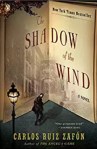
  4. The Shadow of the Wind by Carlos Ruiz ZafónEvery book, every volume you see here, has a soul. The soul of the person who wrote it and of those who read it and lived and dreamed with it. Every time a book changes hands, every time someone runs his eyes down its pages, its spirit grows and strengthens. And also this: Once, in my father’s bookshop, I heard a regular customer say that few things leave a deeper mark on a reader than the first book that finds its way into his heart. Those first images, the echo of words we think we have left behind, accompany us throughout our lives and sculpt a palace in our memory to which, sooner or later—no matter how many books we read, how many worlds we discover, or how much we learn or forget—we will return.
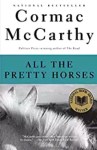
  5. All the Pretty Horses by Cormac McCarthy: They heard somewhere in that tenantless night a bell that tolled and ceased where no bell was and they rode out on the round dais of the earth which alone was dark and no light to it and which carried their figures and bore them up into the swarming stars so that they rode not under but among them and they rode at once jaunty and circumspect, like thieves newly loosed in that dark electric, like young thieves in a glowing orchard, loosely jacketed against the cold and ten thousand worlds for the choosing.

You probably have some favorite lines as well, lines you might even copy on to scraps of paper to be hidden away in your wallet or purse for those moment when you need to prove again to yourself that there is still hope for the world.

Malcolm

That Elusive Writer’s Platform

Big name writers have writing platforms called the big name writer’s platform.

When James Patterson comes out with a new book, you know who he is and what kinds of stories he tells, so he doesn’t need to go on blog tours or work in a hardware store to stay solvent.

If your name is Joe Doaks, are 43 years old, and live in your parents’ basement where you play video games and hack into the dark web, you only have a writer’s platform if you write a tell-all book about the dark web, especially one that the FBI tries to get banned. Otherwise, you can send the best novel in the universe to a big New York publisher and they probably won’t take it on because you don’t have a platform. That is, nobody has heard of you and you aren’t maintaining a business of some kind that will draw readers to your books.

Most of us who write self-published or small-press books need a platform. Nonfiction is easier than fiction, because our books can be an outgrowth of a strong, nonfiction website that gets thousands of hits a month. That is, if you maintain a popular website in which you provide the real stories behind major crimes, your novel will be seen as part of this and will probably sell well.

If you’re on WordPress, Twitter, Facebook, Instagram, Flickr, and Pinterest, and have lots of followers and comments, you’re better off than those who have no online presence unless you have a high-profile teaching position or other offline work that has made you widely known to many people.

Many of us imagine our writer’s platform looks like this:

When, in reality, it looks like this:


But then, for example, after hearing a lot of positive comments on, say, Facebook about a new novel we’re about to release, we realize after it’s been released that very few people on our friend’s list actually bought a copy, and that of the small number who did, few (if any) of them posted an Amazon review.

There have been–and still are–a variety of authors’ networking sites. My experience with these is that most authors are there to sell their own books rather than to buy the books of other unknown authors. While “networking” on the authors’ sites, those people are buying James Patterson, Donna Tart, and John Grisham novels rather than fiction nobody’s ever heard of.

Many small-print and self-published authors depend on Amazon. Some books–mostly nonfiction, it seems–have made a lot of money there. Most fiction by unknown authors doesn’t sell well there because most people never see it and those who do would rather buy books from known authors. While Amazon helps self-published and small-press authors to some extent, it’s still a business that makes more off James Patterson than Joe Nobody.

As others before me have said, those of us who don’t have platforms that get the attention of Oprah’s Book Club or a New York Times reviewers basically have to be content to write in the shadows and earn our money from other jobs. Over time, we may be able so build platforms that attract more prospective readers. My last three novels, for example, were about hoodoo. If I were a hoodoo practitioner (I’m not), then my hoodoo site would be a natural place to promote my book. The same can be true for any other field where you have credentials and a following. Those who have come to your site for facts, are likely to enjoy fiction based on those facts.

You can also build your platform by submitting short stories to literary magazines, including those who only pay in contributor’s copies. The credit line at the end of the story that says something like “Bob Smith is the author of the Andromeda Series of fantasy novels” is a good way to spread your name around to prospective readers. Needless to say, magazine credits, including any where your short story or poem won a contest, give your website something to mention.

I remain skeptical of the paid-for-reviews from the well-known sites who provide these because the reviews are expensive and when published, you cannot be certain those reviews won’t be segregated into a “self-published reviews” category. Labeling them like that pretty much negates the value of the review. Also, if you look at the statistics about the probable sales of a self-published book, the cost of that paid-for-review may wipe out all your profits. So far, I haven’t been willing to roll the dice on reviews or book-of-the-year contests that cost a lot of money and/or advertise the awards are for indie books.

Unfortunately, blogger reviews seem to be of limited help because those blogs don’t attract a lot of attention when compared to the value to a review on a mainstream, traditional newspaper or site. A review from “Bob’s Blog” isn’t really something that’s going to lure a lot of readers away from your mainstream competition. This doesn’t mean you shouldn’t solicit such reviews, only that you recognize going in that they aren’t the New York Times or The Christian Science Monitor.

You can, to some extent, widen your platform by engaging with readers and writers on sites like Facebook. It’s easy to log on to Facebook and upload the same old stuff every week: notices about your books, shared pictures of animals, jokes, and an occasional political rant. It takes more time to go to the sites of those on your friends list an actually say something there rather than simply clicking LIKE. The same is true of the bogs you read where you can click LIKE and also read a comment. When you find books and viewpoints you like, you are building your platform by leaving comments so that the writers/bloggers start recognizing your name.

If you’re on Pinterest, you can post links to your own blogs and the sites you like about subject matter that may interest others. You can also PIN some of the links other people share that fit into the various niche areas that fit your interests and your novels. The thing here is: engage with the users about things that interest them.

Many authors think their novels require and “all about me” approach to promotion and interaction on blogs and social networks. Really, they’re an “all about you” kind of promotion. Talking about why you wrote those books is not nearly as important as showing prospective readers what’s in it for them to read those books.  Your platform needs to be an invitation rather than a memoir about you and how hard it was to write your novel.

Malcolm


The truth of the tale

“Literature is where I go to explore the highest and lowest places in human society and in the human spirit, where I hope to find not absolute truth but the truth of the tale, of the imagination, and of the heart.” – Salman Rushdie

When I was a child, my grandfather told me my mother walked in her sleep when she was a child. He put a stop to this by scattering peanut shells outside her bedroom door.

My mother remembered the peanut shells only because she had heard the story. All she knew for sure was that she hadn’t sleepwalked since she was a child, reasoning that she simply grew out of it.

Were there ever any shells on the floor?

Within the story, the shells were real. In reality, they may not have been real. It doesn’t matter. The peanut shells exist simply because the story was told, and re-told, and told again. Many of our “realities” seem to originate in this way.

The storyteller knows this. In his bad of tricks, he has an infinite supply of once-upon-a times, ready made like rare medications, dangerous drugs, curses, and miracles to unleash upon your life when you’re ready for his cure to what ails you.

As Gordon Lightfoot sang in “Minstrel of the Dawn,” released in 1970, “And if you meet him you must be the victim of his minstrelsy.” We are our stories, true or not, and they sustain us for better and/or for worse.

Most people I know asked their parents and grandparents to tell them stories and to be read a story before bedtime. These stories morphed into dreams and ways of seeing the world.

These days, people try to kill the storyteller by claiming to be offended. All they have to do is stop listening or stop reading if the story isn’t to their liking. There’s not much opportunity for growth in that approach, but we can approach truths that way. After all, ignorance is the last bastion against the slings and arrows of outrageous fortune.

One day, we might wake up when we step on a peanut shell we didn’t believe was there.

Malcolm

Malcolm R. Campbell is the author of contemporary fantasy and magical realism novels, including the upcoming novel “Lena” schedule for release August 1 from Thomas-Jacob Publishing.


Magical Realism – an example

Readers of my novels Conjure Woman’s Cat and Eulalie and Washerwoman know those stories are magical realism. This afternoon, I’ve been looking for examples of magical realism to post here to dispel the misguided notion that magical realism is a subset of fantasy (as Amazon, among others categorize it). I couldn’t find what I wanted, partly because showing you enough to illustrate my point here that the magic in magical realism is just as real as the realism, would have forced me to show you passages long enough to be considered copyright infringement.

So, even though I guess it’s shameless promotion, I’ll show you a passage from my Kindle novel Mountain Song. The passage first appeared in print in a complex novel called Garden of Heaven self-published in 2010. My previous publisher suggested I make it easier for readers to attempt by splitting it into three novels. I was never happy with the resulting books published in 2013.

The problem was basically that the publisher wanted me to edit and re-configure the books as fantasy. I said they weren’t fantasy, they were magical realism. The publisher’s response to that was dismissive, that I was full of myself and thought my work was good enough to be considered “literary fiction” because that’s what magic realism was: a fru-fru synonym for fantasy.  We had many heated arguments about this, all of which I lost since I was under contract. I had to complete the trilogy. When it didn’t sell, the publisher and I agreed to pull it from the market.

The following excerpt is part of the main character’s vision quest on a mountain at the edge of the plains. While he’s standing on the mountain top, an eagle (Píta) picks him up and throws him down onto the plains where a black horse (Sikimí) appears with ideas of his own.

Excerpt

Píta dropped him like a frail aspen leaf upon a flat rock in the center of the prairie. A shroud of rain obscured the mountains and moved east. He stood, confused, favoring his left foot. When he saw Eagle suspended midway between the unnatural yellow sky and the unnatural yellow earth, he heard a faint call, high-pitched and strung tight across the chasm between clouds and prairie, then suddenly brilliant, enveloping and histaminic. What he heard in this wide lonely place was the clear, unmistakable voice of his grandmother, raised to the heavens in laughter on that long-ago day when Jayee shouted “holy shit” at a cow in the road in the great mountain’s shadow.

If he could walk west, if he could walk west to the highway, following the laugh his grandmother laughed when the world intruded, (laughter is sanity’s last defense, she told him so often) the laugh he heard now like a true beacon due west and ten years back, the laugh for which she was rightfully proud, her great opus written for flute crying, coyote yapping, bulls rutting, if he could follow this laugh west, then to the highway, then south to the crossroads store and the phone on the far side of the storm, great cauldron of probabilities and worlds, then he would survive this, all of this, this, this. He took stock of himself and laughed. The burnished steel puddle at his feet flung back a tiny caricature of a man, half drawn, beneath the immenseness of all else. He was cold. He smelled bad, too, reminiscent of dog shit and goat piss. If this was shock, then he would make the most of it. In the stinging spray of the first rain drops, he leapt forward, laughing, onto his left foot, and it felt good, damn good.

With each step, he pulled strength out of the soil. He began to run, and in spite of his heavy climbing boots, he felt light and fine. This was effortless; he was in his prime. He danced around the edge of a dry gully; he was smiling and thinking he had it in him to run past the telephone at the crossroads store, past Babb and St. Mary, of course, that would be easy, and then over the continental divide at Marias Pass, after which it would be downhill all the way home to Alder Street and the buff-colored house with the white picket fence.

And then it was the horse.

Sikimí burst out of the rain. He was a terror, a daemon, that one, pulling storms. David’s strength rushed back into the stony earth like water from a flushed toilet. Those eyes—deep sweet rage—rose and fell, rose and fell, in ecstasy, in pain, synchronized with breath and muscled strides. There was no cover. He flung off his shirt, focused his tumbling thoughts with the pure tones of vowels, climbed naked bedrock between forks of a creek, felt a clean tension in his hands and forearms, felt Earth’s heat climb his legs, forced breath and a strident growl from his burning throat, and exploded into silver fire in the shape of a man.

The horse came on, without pause.

“Aiá, Kyáiopokà, Stookatsis.” Eagle streamed out of the pale overcast east of the rain and dropped the lariat vine into David’s waiting hands.

He made a large loop, wrapped the loose end around a knob of rock like a climber’s belay, and let gravity take his weight down into the pain of his left ankle. This was good. This was his new anchor. Sikimí was twenty yards away when the storm swept around from the north and swallowed the prairie whole. All sounds were rain, and grey.

Then, screams, hooves pawing scree, Sikimí’s head shooting up out of boiling shadows, striking into the pain of his broken ankle like a snake and sliding away into the depths, except for the eyes which hung for great moments like molten saucers of gold on a black table. David dropped to his knees, the vine in front of him puny and limp on the stone. Before he could think, or spit rain and curses, those eyes rose up like the birth of fire and Sikimí’s breath seared his face.

When all was lost, he jumped forward with the Stookatsis noose in his hands, fell into the center of an ocean of rain, and grabbed Sikimí’s neck. The mane blew into his mouth. He gagged on seaweed. Salt scraped his eyes blind. His hands pulled a raw cry from the horse’s throat. For just moments, the vine around the rock restrained the thrashing beast and David was able to swing up onto his back. Then hell hit with no mercy.

Sikimí spun, twisted, tore the air, shook the prairie with his rage, slid through rocks and mud into the creek, transforming the rising torrent into high foam. David coiled the flapping loose end of the vine around his right hand and arm and clawed the mane with his left. His thighs and calves ached against the horse’s flanks. In the rain and the dark, those eyes spawned lighting, followed by belched thunder across the rank grass. Those teeth were into his legs again and again, until he jammed his heavy climbing boots against the side of the horse’s head. He was breaking Sikimí’s jaw, shattering the huge mandible into elemental powder, screaming forbidden words with each kick, again and again, until he saw what he had done, and slumped down against the hot neck and whispered, “There boy, there boy, you goddamn son of a bitch.”

Thwarted, Sikimí ran. He ran and the rain cut into David’s face like old knives. He ran and the contour lines rose and fell in a grey blur beneath his feet. He ran and David felt an uncommon exhilaration. Irreverent of the land, he ran west into the deeper storm where rain and cloud coalesced into a palpable sea. The dulled colors of a spilt rainbow, elongated like taffy pulled to the breaking point, swirled past on a cold tide. Shimmering schools of light darted and feinted in great unisons between the shadows of hill and dale.

When Black Horse ran, he ran with long, graceful strides and the passion of lovers. When Black Horse ran with long, graceful strides and the passion of lovers, his movements created a dance choreographed to the music of drums deep in the earth. David heard the music between his legs as uncommon heat and released his grip on Sikimí’s neck. He heard shrill notes and dissonant chords burn upward along his spine like fire on a short fuse and he released the noose and saw it float away into the blue grass. Now then, he was pain personified. Now then, in the overwhelming face of it all, he, David Ward, was dancer and dance; now then, he was a woman straining in tears and blood to give birth, he was a dark haired child straining in sunshine to pull his playground swing above the tree tops; now then, he was a man in his prime breathing hard beneath weights; now then, he was Eagle traversing the hyacinthine blue where air and sight are pure; now then, he was Black Horse leaping the western horizon; now then, when he could see and he could feel, there appeared in his path dreams, first as curtains of light, then with depth and breadth and movement where Sikimí tore them apart in dance.

(Copyright (c) 2010 by Malcolm R. Campbell)

If this were fantasy, it wouldn’t be happening in the very real world of Montana. If this were figurative, I would say, “it was as if the eagle dropped him on the plains” and “it was as though the black horse leapt out of the rain.” I don’t say such things because the scene is just as real as the mountain trails I use in the novel.

Malcolm

My new magical realism novel, “Lena,” will be release August 1 by Thomas-Jacob Publishing, a company that knows the difference between fantasy and magical realism.