FEDS Announce Fix to Rising Seas Problem

Washington, D. C., April 27, 2019, Star-Gazer News Service – The U. S. Secretary of Ocean Waters and Rain (OWAR) announced here today that he has directed NASA and NOAA to partner in a “bold new program” to fix the problem of rising sea levels.

“While scientific theories approved by the federal government have yet to prove beyond a reasonable doubt why sea levels around the world are rising,” said OWAR chief Greg Gumo, “we know how to fix the problem whether it’s being caused by spurious global warming theories or the documented impact of more humans and animals peeing in the ocean.”

Gumo said that the idea dawned on him a few days ago when he was looking for extra space in the garage for his patent medicine collection. Departmental wordsmiths translated his musings into a new whitepaper called “All the Space We Need is Right Over our Heads.”

Regulations call for NOAA to transport 55-gallon drums of water–taken only from areas where the ocean is the highest–to Cape Canaveral where NASA will re-purpose Saturn V rockets and blast the extra seawater into deep space. The salt would be filtered out and sold to sea salt companies for use at fine restaurants.

According to OWAR scientists, most of the Earth’s excess sea water will be sent to to Mars, the moon, and other dry celestial objects that can benefit from the introduction of life-giving water.

The U.S. Government Accountability Office (U.S. GAO) suggests that the ALL THE SPACE WE NEED (ATSWN) program will be funded by a new toilet flush tax.

GAO spokesmen Jake Yourin said, “It hasn’t escaped our notice that sea level rise is a function of increasing populations, in short, the rise of the household and industrial wastewater. In the near future, those who pee will be those who pay.”

Number crunchers from several think tanks speculate that people can save money by drinking fewer liquids and flushing less. Meanwhile, drones and satellite imagery will ensure that people don’t start pissing in the woods

Gumo told reporters he expects both houses of Congress to fast-track and approve the enabling legislation since “nobody wants water getting into the basements of coastal hotels and condos even though those structures put pee in the ocean faster than some no-tell motel in Iowa.”

Story filed by Jock Stewart, Special Investigative Reporter.


Environment: ship of fools or delusional idiots

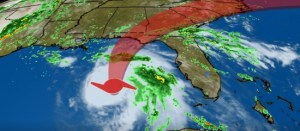
Hurricane Michael is aimed at the place where I grew up. Almost everyone from Florida has seen storms before, but the odd thing is, each time a new storm arrives I see lists of things people should do to get ready and be safe. People should know these things already as surely as they know to look both ways before crossing the street and not taking a bath with a plugged-in toaster.

If my family lived in Tallahassee now, we probably wouldn’t leave. However, we would leave if we lived in Carrabelle, St. Marks, and other coastal communities in the storm’s path. Every year, there are hurricane deniers who say they’re ready to ride out the storm as though they are bigger than the storm. We saw what happened to those people when hurricane Florence struck: they needed to be rescued and that put first-responders’ lives at risk.
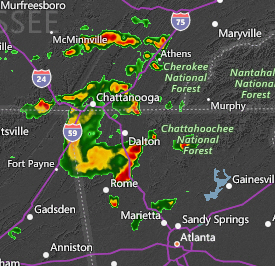
I have no idea whether the timing, routes, and ferocity of Florence and Matthew have anything to do with global warming. But, inasmuch as those storms are arriving at the same time as we’re hearing another set of global warming warnings, they remind me of the fact that many people have denied the importance of the environment for years and they seem to be treating warnings about rising seas, droughts, fires, and other effects the same way they treat hurricane warnings.

Years ago, we began hearing the term “spaceship earth.” We were told that in spite of Earth’s apparent resilience to poisons, plastics, rainforest clearing, fracking, and other forms of pollution and environmental damage, that our planet was–in many ways–a spaceship traveling through space with limited resources and a failing infrastructure. Multiple environmental groups have been complaining about the damage ever since I was in grade school, and probably before that.

I was naïve in the 1960s when I joined the Sierra Club because I actually thought people were smart enough to take those warnings seriously. Now I think that spaceship earth is either a ship of fools or is carrying passengers who are delusional idiots. Apparently, restricting one’s actions to help the environment is so inconvenient that allowing Earth to fail is worth it. Most people think it will happen years after they’re gone. So they don’t worry about it. That foolish idiocy keeps them from seeing it’s happening now.

For those who love dystopian fiction, watch the news. We are living it. There’s no need to make it up. And to ramp up our feelings of danger, the current Presidential administration has appointed kamikaze pilots to every single post that can impact spaceship earth for better or worse. So far, they are choosing “worse.” We can shake our fists at the storm and say we’re going to ride it out.

Good luck with that.

Malcolm


A Frank Conversation With Mother Nature About the Rain

Me: Baby Cakes, I want to talk about the rain. There’s been so much of it.

Mother Nature: Frank, what the hell are you saying? Malcolm is the only man on the planet allowed to call me “Baby Cakes.”

Me: My name isn’t “Frank.” I’m speaking frankly.

MN: I thought only Frank could speak frankly just as I’m the only one who can speak mother naturedly.

Me: English is a strange language.

More rain today

MN: Look, Toots–I hope it’s okay to call you “Toots” for old time’s sake–global warming is tangling up the planet’s cycles of heat and cold, rain and sun, and Coke vs. Pepsi.

Me: The rain, though, is keeping me from mowing the yard. Soon, the grass will be so high I’ll tear up the mower trying to cut it.

MN: Your writer friend Smoky wants you to get sheep to handle the grass cutting duties.

Me: Sheep, quite frankly, are just too sheepish.

MN: That sounds like something a guy named Frank would say.

Me: The thing is, sheep are more expensive than a lawn mower.

MN: That’s probably true. Nonetheless, I’m working hard to get the planet under control, and that’s not easy to do when–too put it frankly–so many people don’t mind p_ssing in their own pools and s_itting where they eat.

Me: Well said, Baby Cakes.

MN: What time do you get off work?

Me: I’m married. We can no longer meet behind the barn like we did when I was in college.

MN: Barns have changed since then, what with the hay being made a mess with pesticides and GMO tinkering. Maybe you can do something about that. Next time you update your blog, say something about the clowns who think climate change doesn’t exist, that fast food is really food, and that mayo should be slathered all over a hamburger.

Me: If I say something about climate change, will you give me a sunny afternoon and evening so I can mow the yard?

MN: Toots, I’m working on it. If only you weren’t married: we could make beautiful weather together.

Me: Aw, shucks, Baby Cakes, you’re making me cry.

MN: Me, too, and my tears are what you call rain.

Me: Oops.

–Malcolm

Malcolm R. Campbell’s new short story is now live in Kindle, Kobo and iTunes.


Climate Change: Impacts on Coastal Resources

from the EPA:

Impacts on Coastal Resources

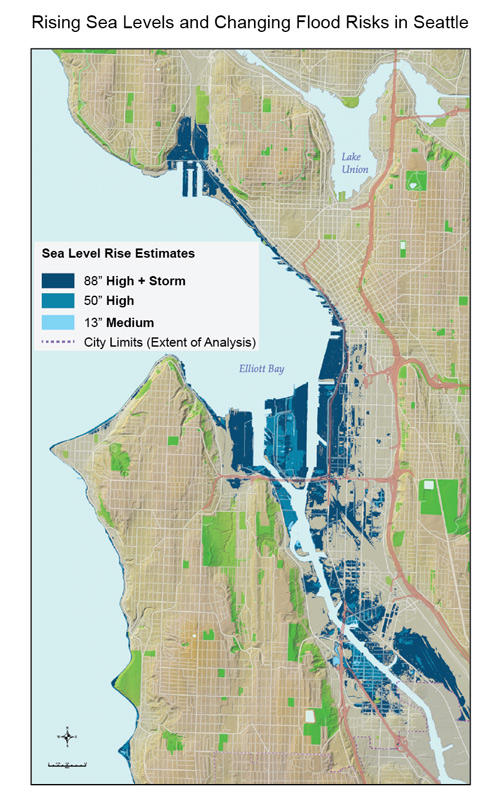
Climate change is damaging the Northwest coastline. Projections indicate an increase of 1 to 4 feet of global sea level rise by the end of the century, which may have implications for the 140,000 acres of the region that lie within 3.3 feet of high tide.[2] Sea level rise and storm surge pose a risk to people, infrastructure, and ecosystems, especially in low lying areas, which include Puget Sound. Warming waters and ocean acidification threaten economically important marine species and coastal ecosystems.[2]Map of Seattle showing areas projected to fall below sea level during high tide by end of the century. The high (50 inches) and medium (13 inches) estimates are within current projections. The highest level (88 inches) includes the effect of storm surge.Many areas of Seattle are projected to fall below sea level during high tide by the end of the century. Shaded blue areas depict three levels of sea level rise, assuming no adaptation. The high (50 inches) and medium (13 inches) estimates are within the range of current projections, while the highest level (88 inches) includes the effect of storm surge. Source: USGCRP 2014[6]

Flooding, seawater inundation, and erosion are expected to threaten coastal infrastructure, including properties, highways, railways, wastewater treatment plants, stormwater outfalls, and ferry terminals. Coastal wetlands, tidal flats, and beaches are likely to erode or be lost as a result of seawater inundation, which heightens the vulnerability of coastal infrastructure to coastal storms.

Some coastal habitats may disappear if organisms are unable to migrate inland because of topography or human infrastructure. This is expected to affect shorebirds and small forage fish, among other species. Warmer waters in regional estuaries, including Puget Sound, may contribute to an increase in harmful algal blooms, which could result in beach closures and declines in recreational shellfish harvests. Ocean acidification is also expected to negatively impact important economic species, including oysters and Pacific salmon.

For more information on climate change impacts on coastal resources, please visit the Coastal Resources page.

At present, this information can be found on the EPA site here. In the future, the work of our scientists is purportedly going to be reviewed by politicians before it can be released.

–Malcolm

Poll: Most Americans See Population Growth as Threat to Wildlife, Climate

from the Center for Biological Diversity:

biologicalMIAMI— A new poll finds a majority of Americans believe the world’s growing human population is driving wildlife species toward extinction and is making climate change worse. Respondents also said addressing the human population — which topped 7 billion in 2011 — is an important environmental issue and that society has a “moral obligation” to address wildlife extinctions related to population growth.

The national poll of 657 registered voters was commissioned by the Center for Biological Diversity. It was conducted by Public Policy Polling on Feb. 22, 23 and 24. The poll has a margin of error of +-3.85 percent.

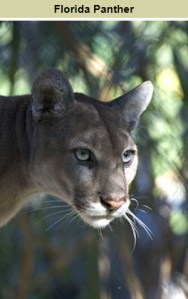
floridapanther“It’s now more clear than ever that Americans are concerned about the toll that human population growth is having on wildlife and our planet,” said Jerry Karnas, population campaign director at the Center. “Population is clearly a driving factor in so many of our environmental issues today, whether it’s sprawling development crowding out Florida panthers and sea turtles, loss of wild habitat for San Joaquin kit foxes in California or the climate crisis pushing polar bears ice seals toward extinction. It’s heartening to see that most Americans understand these connections and don’t want to see them ignored.”

“Although it’s an issue that doesn’t get talked about that much, this poll shows population is an emerging environmental issue that Americans recognize, especially when it comes to protecting wildlife from extinction,” said Jim Williams, of Public Policy Polling.

Among the poll’s results released today:

  • 64 percent said that, with the human population expected to hit 10 billion by 2050, wildlife will be adversely affected.
  • 61 percent said they are already concerned about the rate that wildlife are disappearing.
  • 60 percent said they “strongly agreed” or “somewhat agreed” that human population growth is driving animal species to extinction.
  • 60 percent said our society has a “moral responsibility” to address wildlife extinctions in the face of a growing population.
  • 59 percent said they “strongly agreed” or “somewhat agreed” that addressing the effects of human population growth is “an important environmental issue.”
  • 57 percent believe human population growth is “significantly impacting the disappearance of wildlife.”
  • 57 percent said they “strongly agreed” or “somewhat agreed” that population growth is making climate change worse.
  • 54 percent said stabilizing population growth will help protect the environment.

kitfoxThe Center for Biological Diversity launched its human population campaign in 2009 to highlight the connection between the world’s rapidly growing population and the effect it has on endangered species, wildlife habitat, the climate and overall environmental health. As part of the campaign, the Center has given away nearly 500,000 Endangered Species Condoms intended as a way to get people talking about this critical issue.

The Center advocates for a number of ways to address population, including universal access and adequate funding for family planning services, empowerment of women, sustainable development, a reduction in the consumption of natural resources and personal decisions that lessen the impacts on wildlife and the environment.

“If we’re going to address some of the biggest environmental problems we face, population has to be part of the conversation,” Karnas said. “These poll numbers show Americans are ready to start talking about population and dealing with impacts.”

To download a copy of the poll go to http://www.biologicaldiversity.org/population_poll.

Background

Government scientists have highlighted population as key environmental issue in recent months.

coloradoIn a decision to protect 66 coral species under the Endangered Species Act, the National Marine Fisheries Service said population and consumption of natural sources was “the common root or driver” of ocean acidification and other threats corals face.

The Department of the Interior recently released a report on the future of the Colorado River, concluding that, in 50 years, the river that supplies water to 40 million people may be unable to meet the demands of a burgeoning human population.

The U.S. Forest Service issued a report with another grim prediction: that 36 million acres of the nation’s forests will be lost to houses, strip malls and roads by 2050. That’s an area 16 times larger than Yellowstone National Park.

You May Also Like: Mare Cromwell’s Messages from Mother, a guest post on Smoky Talks

Malcolm