Got book lovers? Here are three Christmas ideas

If you still have some holiday shopping to do, here are a few of my favorites this year that might make for some very nice gifts:

goatsong “Goatsong” by Patricia Damery, il piccolo editions Fisher King Press (November 1, 2012), ISBN-13: 978-1926715766 – A wise view of the world through the eyes of a child, homeless women, a goats.

  • From my review: When you read Goatsong, you are breathing in fresh air off the Pacific ocean, smelling the sweet scent of the bay laurel, and cooling your tired feet in sacred streams flowing through old redwoods in the company of wise women who, without agenda, may well change you as they changed the ten-year-old Sophie in those old family stories about the town of Huckleberry on the Russian River.

sunlightshadow“In Sunlight and Shadow” by Mark Helprin, Houghton Mifflin Harcourt (October 2, 2012), 978-0547819235 – A combat veteran whose business is threatened by the mob falls in love with a young woman from a rich and influential family. Readers will discover a poetic view of New York  City played off  against the Mafia’s protection racket and the protagonist’s combat experiences as a behind-enemy-lines pathfinder.

  • From my review: Mark Helprin recalls post World War II New York City throughout In Sunlight and in Shadow with the accuracy and atmosphere of A Winter’s Tale (1983) and his protagonist’s combat experiences with the chilling combat detail of A Soldier of the Great War (1991).

vacancy“The Casual Vacancy” by J. K. Rowling, Little, Brown and Company (September 27, 2012), ISBN-13: 9780316228534 – Rowling steps away from teenagers and contemporary fantasy with a story about the people and politics of a small English town.

  • From my review: Winesburg, Spoon River, Grover’s Corners and Peyton Place reside so powerfully in the consciousness of readers as accurately rendered representations of small town life that their people, town squares, relationships and secrets are forever in our memory almost crossing the boundary from fiction into reality. The English village of Pagford in J. K. Rowling’s The Casual Vacancy belongs on this list.

Malcolm

Malcolm R. Campbell is the author of contemporary fantasy novels, including “Sarabande.”

Contemporary fantasy for your Kindle.

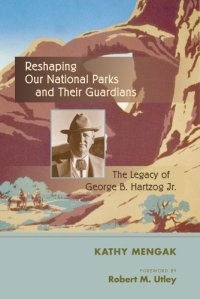
Briefly Noted: ‘Reshaping Our National Parks and Their Guardians’ by Kathy Mengak

Reshaping Our National Parks and Their Guardians: The Legacy of George B. Hartzog Jr., by Kathy Mengak, with a foreword by Robert M. Utley, University of New Mexico Press (April 2012), 336 pp

When Glacier Park’s Centennial Program Committee received the George and Helen Hartzog Volunteer Group Award for promoting the park’s 2010 centennial, many visitors were unfamiliar with the man who led the National Park Service between 1964 and 1972 or with the award established in 1998 (and subsequently supported via a fund created by his wife) to honor those donating time to help the parks.

Published earlier this year, Kathy Mengak’s Reshaping our National Parks and Their Guardians ably tells the story of the highly successful NPS director who added 72 new parks to the system during a contentious political era in American history. In his book review in the Autumn 2012 issue of “Montana The Magazine of Western History,” Craig Rigdon writes that while the author’s “fondness for Hartzog is evident…she provides a fairly balanced review of his career.”

Originating with Mengak’s dissertation at Clemson University, the book draws heavily on twelve years of interviews conducted with Hartzog and other key officials. Hartzog died in 2008.

Kurt Repanshek (National Parks Travler) writes that Hartzog “was a cigar-chewing, Scotch-loving, Stetson-wearing, lover of fishing, hard-charging director who often knew exactly what he wanted and found a way to get it. One way or another.” His review of the book is posted here.

From the Publisher

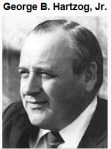
Wikipedia Photo

This biography of the seventh director of the National Park Service brings to life one of the most colorful, powerful, and politically astute people to hold this position. George B. Hartzog Jr. served during an exciting and volatile era in American history. Appointed in 1964 by Secretary of the Interior Stewart Udall, he benefited from a rare combination of circumstances that favored his vision, which was congenial with both President Lyndon Johnson’s “Great Society” and Udall’s robust environmentalism.
 
Hartzog led the largest expansion of the National Park System in history and developed social programs that gave the Service new complexion. During his nine-year tenure, the system grew by seventy-two units totaling 2.7 million acres including not just national parks, but historical and archaeological monuments and sites, recreation areas, seashores, riverways, memorials, and cultural units celebrating minority experiences in America. In addition, Hartzog sought to make national parks relevant and responsive to the nation’s changing needs.

I like Rigdon’s comment that while most people remember the National Park Service’s first two directors, Stephen Mather and Horace Albright, Reshaping Our National Parks and Their Guardians demonstrates that “some of the most critical years in the agency’s history took place during George B. Hartzog’s tenure as director.”

–Malcolm

Malcolm R. Campbell is the author of “Bears; Where They Fought: Life in Glacier Park’s Swiftcurrent Valley” and two contemporary fantasy adventures set in the park, “Sarabande” and “The Sun Singer.”

All three books, from Vanilla Heart Publishing, are available on Kindle. “Sarabande” and “The Sun Singer” are also available in trade paperback.

Briefly Noted: ‘Voices of the Elders’ by Shelly Bryant

Shelly Bryant (Cyborg Chimera, Under the Ash) is a prolific poet whose work never fails to inspire readers with pointed and poignant images that rise from the earth on the wings of spare words. Her new collection Voices of the Elders from Sam’s Dot Publishing is startling in the risks taken, the variety of its forms and references and the scope of its vision.

The fifty-five poems in this 59-page volume, many of which have appeared in “Aoife’s Kiss,” “Scifaikuest,” “Sloth Jockey” and other publications, are grouped into four sections—seduction, obstruction, destruction and abduction.

Jason Gantenberg aptly describes Bryant’s scope in these groupings in the book’s introduction: “What I’ve always loved about Shelly’s writing is the breadth of genres and periods in which she embeds her thoughts. There are few writers who will quite so fearlessly juxtapose classical Anglo-Saxon fantasies about fairies and dragons with ruminations on supernovae, historical fiction with futurism, cynical politics with whimsy.”

In “Oort” Bryant writes of “a failed planet” that’s “denuded of destiny,” followed by “Styx” an “eternal river” with an “ever-changing flow,” followed by “Bargain Hunter” about a young man in a store who makes a five-dollar purchase out of books for “aficionados with loads of cash.” The poem ends with these lines:

producing pleasure
properly pirated porn
just like the real thing

“Keep it in the Family,” begins:

familiarity
and its child
contempt
creep into familiar lines

And “Voice of the Elder” ends:

the elder dryad
to the swirling storm
raises his dying howl

I will return to “Memories Shared, Standing on Your Balcony,” the writer’s block in “Project,” “Men of Renown” with their Achilles heels and the other fresh-faced words in Voices of the Elders many times, for while they speak to me of today’s world in today’s language, they are, I think, penned by an old and very wise soul.

–Malcolm

Books: Magic Between the Covers

“A well-composed book is a magic carpet on which we are wafted to a world that we cannot enter in any other way.” – Caroline Gordon

My parents orchestrated Christmas Eve and the following morning with skill, making it a time of magic and expectation even though the gifts beneath the gifts beneath the tree were saturated with love rather than money. More often that not, one or more of the carefully wrapped packages beneath the spruce tree contained a book.

More often than not, each book was inscribed with my name, the date, and the name of the person who found the book and thought I might like the story. Pirates, space ships, wild animals and detectives waited between the covers for me to turn the page and enter an alternate universe. I didn’t see stories as alternate universes at the time, but now when I think of books, I smile at the concept of being in two places at one time.

There I was following the Hardy Boys in their latest attempt to help their police detective father crack a dangerous case AND there I was sitting in a comfortable chair in the living room next to a lamp. According to reports, I often didn’t respond when my parents called me to dinner when I was more there than here within the pages of a book like The Twisted Claw.

Portals, Portkeys and Magic Carpets

Caroline Gordon saw books as magic carpets. Ever fascinated with portals, I see books as doorways to faraway lands like the famous wardrobe in C. S. Lewis Chronicles of Narnia. In today’s Harry Potter series terms, readers might well see a book as a portkey that whisks them away the minute they touch it.

While looking at the Amazon page for Mark Helprin’s upcoming novel In Sun Light and Shadow, I found the novel’s stunning 489-word prologue included there as part of the book’s description. The constraints of fair use don’t allow me to cut and paste the entire prologue into this blog as a shining example of an author’s invitation to his readers asking them to step through the door, touch the portkey or settle themselves onto a flying carpet. But, here’s a taste. . .

An Invitation

Helprin’s prologue begins with the line: If you were a spirit, and could fly and alight as you wished, and time did not bind you, and patience and love were all you knew, then you might rise to enter an open window high above the park, in the New York of almost a lifetime ago, early in November of 1947.

The prologue goes on to describe the view from that window, and then the room itself: full bookshelves, the Manet seascape above the fireplace, a telephone, a desk drawer containing a loaded pistol, and a “bracelet waiting for a wrist.” Then the prologue concludes with: And if you were a spirit, and time did not bind you, and patience and love were all you knew, then there you would wait for someone to return, and the story to unfold.

Even though I was, from the viewpoint of my three cats who were hovering around the den door waiting to be fed, sitting here at my desk, I had in fact stepped through a portal to an apartment in New York 65 years ago. I tell you this: I wasn’t ready to return when Katy, our large calico, rubbed against my leg with a no-nonsense purr because I was thoroughly enchanted by the magic between the covers.

Even though a small percentage of the books I read each year come into my hands as gifts, I approach every book with an interesting premise and a cover splashed with promises as a gift. Years ago, I watched a TV western called “Have Gun, Will Travel.” Today, I gravitate more toward Have Book, Will Travel. Each book is an invitation to adventure, lives hanging in the balance, twisted claws lurking in the dark, castles set high above green valleys, and frightened travelers walking down roads in sunlight and in shadow.

Books cast spells and carry us away and while we are gone, we are changed, writ larger by the experiences now living within our consciousness, and ready to see the word of here with the visions we had while we were there.

Malcolm

Travel to mountains and magic for $4.99. It’s cheaper than Amtrak and Delta Airlines.

If you ask me what I’m reading, you’re on your own recognizance

A writer friend of mine once told me she looks at my book reviews here as prospective To Be Read books for her Kindle. “You have never steered me wrong, Malcolm,” she said. Perhaps he fingers were crossed behind her back.

Take a look at my current reading shelf. It should be a warning. I say that because I am probably the only person in the known universe who has these three books on his shelf at one time. Or at any time. My reading tastes are both wide-ranging and eccentric. (Not always because, hey, I can enjoy a good Nora Roberts or John Grisham novel like anyone else.)

People sometimes note that most of my reviews on GoodReads and Amazon end up with four or five stars and suggest that I’m just trying to be nice. No, I’m doing that because I usually only review books I like a lot—well, unless I read something that really ticks me off.

However, five stars from me doesn’t mean the book will get give stars from you.This was proven conclusively several years ago when I gave  Dow Mossman’s novel The Stones of Summer a glowing review. People told me I was crazy. Possibly so even though I was one of 30 people who felt that way.

Consider the Source

So, when I tell you what I’m reading, you need to consider the source (me) and remember that even though I often read mainstream bestsellers, I probably read them for the wrong reasons. The other books on my shelf are going to have a very strong flavor of magical realism, speculative fiction, fantasy, folktales, literary fiction, and stuff that—for the want of a better words—is just plain weird.

Now, my writer friend hasn’t told me directly that I inadvertently steered her wrong on a book last year, that one being The Tiger’s Wife by Téa Obreht,  but I noticed she gave it three stars on GoodReads. Sigh. After The Night Circus, that was my favorite novel of the year. I think both of these novels are Pulitzer Prize level novels, though I doubt either one was nominated (or seriously considered) since the rules say the novels must be truly American stories and neither of these books were.

Your Own Recognizance

As it turns out, this post is a disclaimer, meaning that I am often drawn to stories that mesh one way or another into my sense of wonder and my world view of real life and fiction. Before spending your money on anything on my To Be Read shelf, you better get a second opinion.

What’s on your shelf these days?

Malcolm

BOOKS: Are we raising the cute baby alligator that will ultimately eat us alive?

Small juvenile crocodilians are deceptive – they seem easy enough to handle, and persuasive dealer talk can easily convince people to part with their cash. But do not be fooled. As they grow larger, crocodilians rapidly become stronger and more boisterous. After only a year, many people can no longer handle their animals and it is very common to see 1 to 2 year old animals being given away or illegally released into the wild. Larger crocodilians are, without a doubt, extremely dangerous animals. – crocodilian.com

“The evidence is, in fact, absolutely conclusive that the Standard Oil Company charges altogether excessive prices where it meets no competition, and particularly where there is little likelihood of competitors entering the field, and that, on the other hand, where competition is active, it frequently cuts prices to a point which leaves even the Standard little or no profit, and which more often leaves no profit to the competitor, whose costs are ordinarily somewhat higher.” – Eliot Jones. The Trust Problem in the United States 1922

Human beings are strange animals in that they rush hell-bent-for-leather to participate in their own demise.

When I was a kid, one of the first things I learned about people and their money is that the most powerful bragging rights come from getting something cheaper than your neighbor got it. Woe be unto the guy at the neighborhood barbecue who paid five cents more for a sparkplug or a hundred dollars more for a new car than the guy flipping chickens on the grill.

When economic times are tough, saving a nickel on a sparkplug or a c-note on a car makes logical sense. People are trying to scrape by everywhere they can. In fact, scraping by has almost trumped bragging rights over buying something cheaper than our neighbor bought it for.

Looking Down the Road

In Florida where I grew up, a lot of folks thought it was cute to buy baby alligators. How cute. Certainly more exciting than a puppy, cat, or a goldfish in a bowl. If one kid got one, his friends all wanted one. It was all the rage, rather like bragging that you were the first person to drive to the edge of town and shop at the new big box store. (When I was a kid, one of the first things I observed about people is that they feel powerful when doing things are all the rage and that they feel sheepish when they’re not doing them.)

Baby alligators grow up and when they do, their not as cute as they once were. So it is, that on a dark and stormy night, the alligator is wrestled out to the nearest lake or swamp before it figures out, “hey, I can eat the family.” In the wild, it may go off and live a beautiful life or it may lurk around the fringes of the neighborhood where it hunts for pets and small children.

Remembering Ida Tarbell

One of the first term papers I ever wrote when I got into one of those classes where we were taught how to find sources and use lots of footnotes was about Ida Tarbell and her 1904 book The History of the Standard Oil Company. When Standard put up a new gas station in town, they offered low prices until all the other gas stations went out of business trying to compete with them. Ultimately, the company was broken up even though its remnants, including Exxon in the U.S. and Esso in Canada are doing quite well.

Bragging rights about cheap products followed by the need to scrape by have both been powerful incentives for helping build the businesses that ultimately got big enough to eat us alive. Perhaps Standard Oil is too far away into the past to be a good case in point. Okay, think Walmart and every other big box store that showed up in your home town and ultimately killed all the local businesses.

Statistics show that more dollars leave a community when people shop at big box stores than when they shop at the locally owned shops in what’s left of the down town. Few people care because, truth be told, they feel really sheepish admitting that they paid 15 cents more for a gallon of paint at Bob’s Hardware than their neighbor paid for the same paint at Home Depot. And goodness knows, who wants to admit they paid 10 cents more for a pound of hamburger meat at Jenkin’s IGA than they would have paid at Walmart?

Amazon Used to Be Cut, but It’s Still All the Rage

Baby alligators grow up and become angerous. While Amazon has grown up, most people don’t view it as dangerous in spite of the all the charges that surfaced over the Christmas holidays about predatory practices, removing the middle man, wanting to be the only publisher in town, and offering “democratic, be-your-own-publisher” deals to authors who claim “New York Publishers” are a vicious monopoly that won’t let them in the door.

But Amazon is selling books at low prices. Isn’t that all the justification we need for helping the cute little bookselling company make its way in a cruel world where everyone wants to scrape by—if not brag about getting great books cheaper than the bricks-and-mortar and other online booksellers are offering them for.

Well, as The New York Times noted in a yesterday’s feature story about whether Barnes & Noble can survive, Amazon is now worth $88 billion. It’s almost big enough to eat us alive. When Powell’s books is gone and when Barnes & Noble is gone, will we still be able to brag about lower prices when Amazon is the only bookseller/publisher/distributor in the country?

I wonder. And as I wonder, I think about all the people who rushed out to buy gasoline at the Standard Oil Station because it was cheaper than the gasoline over at Bill’s Friendly Service Station. When Bill’s folded up, there was hell to pay, but (what with bragging rights over low prices) the handbasket ride toward monopoly was a heady experience. Bob’s Hardware is gone, too, as is Jenkin’s IGA.  In fact, pretty much the entire center of town stands empty.

According to that article in The New York Times, we’ve lost 20% of our independent bookstores in the United States since 2002.  Sure, the economy has been bad and now e-books are all the rage. When people want paperbacks, there are bricks and mortar and online alternatives to Amazon. When people want e-books, Amazon isn’t the only game in town. But now, by default, they run to Amazon.

Will Amazon eat us all alive one day? I wonder. At $88 billion in assets, I guess it can eat whoever and whatever it wants. But maybe it won’t. Maybe everything will be okay as long as we keep our pets and small children inside the house reading the books purchased from the full-grown set of jaws on the edge of the neighborhood.

Malcolm

“Book Bits” provides daily information for writers and readers

Writers like keeping up with contests, tips and techniques, publishers and magazines where they can submit their stories and articles, and advice on how to market their work once it’s published.

Readers like keeping up with their favorite writers, upcoming books in the genres they read the most, and information about authors’ future book signings and other appearances.

Book Bits brings you the links to this kind of information six days a week.  Quite simply, Book Bits is a blog in which every post is a list of links covering the latest reviews, books and author features, contests,  marketing and social networking advice, “writer’s how to” posts, and essays and features about authors, books and publishing.

Book Bits Titles

Book Bits is numbered from the first issue onward toward infinity. The higher the number, the more recent the post.  The titles are designed to attract attention, so they include the names of authors/events most likely to lure people into the post. For example, the title for this morning’s post looked like this:

Book Bits #117 – Hedy Lamarr, Roberto Bolaño, Elmore Leonard and more writing news

So now you know I’ve made 117 posts. This one included a review of Roberto Bolaño’s latest novel, a biography about Hedy Lamarr, and an article about author Elmore Leonard who, says “why not,” when asked why (at age 86) he’s still writing.

This morning’s Book Bits had 24 links.  In addition to those attention-getting names in the title, the other offerings featured a link to a blog hop where you might win a Kindle, a story about the return of the Lit Fest to Haiti, and the names and novels of the ten finalists in Georgia’s Townsend Prize for Fiction.

Naturally, some posts will bore you. My top picks on those days will be authors you’ve never heard of or genres you never read. I try to include a variety, though, in hopes that every time you stop by, you’ll find at least one link you want to click on.

Some posts will take over you’re entire day because, heck, you’ll want to click on every feature, news story and review. The reviews will tempt you to read books. The contest announcements will tempt you to write books, or maybe short stories or poems.

This morning, you might have followed the link to this review:

  • Review: Grave Mercy by Robin LaFevers – “With characters that will inspire the imagination, a plot that nods to history while defying accuracy, and a love story that promises more in the second book, this is sure to attract feminist readers and romantics alike.” – Booklist

Or the link to this advice:

  • Lists: 10 Ways to Get Paid for Online Writing, with Lior Levin – “Selling words for dollars is easy, if you are aware of two things: -How to put down the words together. -How to sell your piece in the right market.”

I invite you to surf over to Book Bits, read a few posts and see what you think. That’s sort of like kicking the tires on the car you just might want to buy. Unlike the car, Book Bits is free.

Sure, you’ll see some banners at the ends of the post with links to my author’s site and my novels. Maybe those banners will tempt you. If not, have fun. Goodness knows, I have a lot of fun every day finding the news and rev iews for each post. I tell me wife I’m working, but I think she suspects I’m just surfing the net for the heck of it.

Coming in tomorrow’s Book Bits, a link for a wonderful piece of satire that pokes good-natured fun at the Antiques Road Show (imagine people bringing in crime evidence rather than antiques) and some pithy advice for authors planning to self publish their books. Oh, and reviews, too. There are always reviews.

Malcolm

P.S. When the “Book Bits” title is short enough for me to squeeze in an extra word, I add the #bookbits hashtag to help people find the posts on Twitter. Now, here’s an example of a book banner:

contemporary fantasy for your Kindle

Commentary: ‘The Help’ by Kathryn Stockett

Kathryn Stockett’s bestselling novel The Help focuses on a secret project (fictional) in Jackson, Mississippi (real)  in the early 1960s put together by an idealistic white girl named Skeeter and a group of black maids led by the stable Aibileen and the sassy Minny. Other primary characters include Skeeter’s young peer group for whom the maids work, Hilly and Elizabeth and Celia.

In those days, there were lines one did not cross when it came to the acceptable and unacceptable interactions between white employers and their black (this term wasn’t in general use in those days) domestic help. Skeeter, who is somewhat naive and hopeful about the future, crosses those lines. She takes risks and so do Aibileen and Minny. They fictionalize their names and call their town Niceville. If they are caught sharing stories with each other (much less writing them down), they might be beaten or killed. And then there’s the matter of trust, the trust the maids must put in a white woman who’s not acting like the other white women do.

I liked the book.

The Book Has Already Been Thoroughly Reviewed

Yet, there are already 4,523 Amazon reader reviews of The Help, and numerous articles and reviews of both the movie and the novel in the press. It’s unlikely that I have anything new to add to the discussion at this late date. In general, the book has been well received by readers and reviewers. Its controversial nature has brought out the usual kinds of dissatisfaction about miscellaneous errors of fact, the realism or lack of realism of some of Stockett’s characters’ viewpoints and actions, whether or not Jackson as characterized in the book approximates Jackson as it was almost 50 years ago. Some of the critics have forgotten that The Help is a work of fiction and not an anthropologist’s treatise about Southern race relations and domestic help of the 1960s.

On top of the controversy is, perhaps, one issue: denial. Because the picture of black and white relationships painted in The Help isn’t pretty and because it depicts bigoted (though usually nothing like the overtly nasty Hilly Holbrook in the novel) whites hiring generally accommodating blacks in a complex mix of discrimination and trust, most people want to hide this picture under the rug. Understandably, nobody wants to focus on it, much less applaud it. My view is that pretending that it didn’t happen doesn’t really help us move forward as a homogenized people.

In addition to being a well-told story, The Help brings to light what those of us living in the South saw day to day, but seldom hear talked about. As Stockett portrays in her book, whites did not see blacks as their equals, yet they trusted them as integral members of the household to cook, clean and look after the children. My family moved to the South when I was six years old, to a town I’ll call Nicetown, that was much smaller than Jackson but that featured some people who acted like most of the characters in Stockett’s novel. Very few people acted like Skeeter, or, if they did so, they kept it quiet. The closest person to Skeeter in the book was my mother who was fairly outspoken (as was my father) against segregation.

1960s Nicetown Fact of Life

Maids in our white neighborhood were a fact of life. They came on the city bus which let them out in front of our house, and from there they fanned out to nearby streets where they worked. My best friend’s family had a maid who was, while the parents were gone, the surrogate parent figure in the house. She was more stern than the parents, but also much loved as long as no lines were crossed. She did not eat with the family, ride in the front seat of their car, go to their church, or talk with them friend-to-friend.

Like Skeeter’s Niceville, my Nicetown provided separate schools for blacks and whites, separate swimming pools and restaurants and neighborhoods, restrooms labeled men, white and colored, and drinking fountains labeled white and colored. There were separate churches, too, until our minister said our church was open to everyone; those who didn’t like it left and started another church. Like them or not, the lines were hard to cross because “separate but equal” made certain that interaction was minimized. Stockett gets this right in her book.

My grandparents had a maid who kept their house spotless even though she was older than they were. She treated us, my brothers and I, as the surrogate grandparent when she was left in charge of the house. Like my best friend’s maid, she was friendly and talkative until one started to cross a line and act like we were black or she was white. It wasn’t done, and if you tried to do it, the maids grew quiet and their employers talked about how we’d get in trouble—the same kind of trouble Skeeter risks in the novel—if we didn’t act with proper decorum.

The picture Stockett paints in her novel is a picture I saw, though naturally (as a boy growing up) I wasn’t privy to either the adult conversations of the maids or to the discussions of the Skeeter Phelans or those few in my neighborhood what most resembled The Help’s pretentious Hilly Holbrook, more moderate Elizabeth Leefolt, or the redneck Celia Foote. While I can say that I saw Minny, Aibileen, Elizabeth, and Hilly in my neighborhood, I don’t see these characters in The Help either as stereotypes or as representatives of everyone else in 1960s Jackson.

Dialect, Southern Accents and Anger

Some have criticized Stockett for her use of black dialect. Her fictional maids speak the same way the real maids in my neighborhood in Nicetown spoke. Stockett’s use of this dialect in the book is not only accurate but works as an excellent means of showing the otherness with which whites saw their black help as well as how the black help felt about themselves. Language is a part of one’s culture, not the stereotyping put down of a white author writing about black characters.

I do think Stockett should have included the Southern accents of her white characters as well. She said, I believe, in an interview that she never thought of her own family when she was growing up in Jackson as having an accent. When I moved into the South, most of those I met thought I was the one with the accent. Perhaps Stockett saw it this way, and grew up believing that the Southern accent, while meanly ridiculed by people from other parts of the country was, in fact, Standard Speech. The book would, I think, have been a truer painting if Skeeter, Hilly, Elizabeth and Celia also spoke in their own dialect.

I also would have liked seeing a little more anger expressed by the maids when they talked amongst themselves, though maybe not even in Skeeter’s presence. In reality, of course, anything approaching anger would have been a difficult passion to hold onto in those days because feeling anger led people to say and do potentially dangerous things. The emotions tended to have calluses over them, for self preservation and perhaps sanity. Even so, readers will leave The Help knowing how the help feels about whites in general and their employers in particular.

These are my impressions, then, of The Help, rambling as they may be. Stockett has done a difficult piece of writing, trying to accurately portray another time and place to an audience who will for the most part judge everything in the book by today’s norms. Stockett is a bit like Skeeter, hopeful and undaunted by the likely criticism. There’s a lot to admire in The Help, and part of what I like about it is that it makes the painting of how we were out from under the rug so that we can no longer deny it.

Malcolm

Malcolm R. Campbell is the author of four novels, including the recently released contemporary fantasy Sarbande. He grew up in Florida and currently lives in northeast Georgia.

Dark territory: when the novel is done, the muse stops talking

In Garden of Heaven: an Odyssey, my protagonist David Ward is convinced that some of the people we meet on rainy city sidewalks and between the dry-as-dust shelves in ancient libraries began their lives as fictional characters. Whether they first strayed through a writer’s thoughts as a random notion, stalked him along the boundaries of his waking world in twilight dreams, or arrived at the very moment the pen first kissed the paper with their name, such individuals are called into life because an empty space must be filled.

David claims he wrote a novel about a woman who meets his protagonist at an old transfer house where the city’s streetcar lines come together, allowing people to transfer from one city car to another or from a south side local to a north side interurban. It’s impossible to know whether Ward dreamt up a character whose depth and outlook were the very same as the depth and outlook of the soul mate he was seeking or whether his muse was moonlighting as a matchmaker.

At a time when David was lost, the fictional character appeared in his life as a living, breathing woman, and while she was in the process of saving his life, he asked how she happened to meet him by happenstance on a warm, Indian summer afternoon. She said he called her when he wrote what he wrote about the transfer house. Clearly, he needed her too much for her to live out her existence on a printed page. She is, in David’s mind, a very real woman who is filling a very real empty space.

He’s fair certain the gods tampered with the workings of the temporal world on the day when she had her first independent thought. He’s convinced of her reality, and I believe him.

As an author of fantasy novels, I can’t claim what my characters claim. I will not try to convince you that David Ward stepped out of Garden of Heaven: an Odyssey, and became real, much less that a character in one of my character’s stories became real. Speculation along such lines leads to lunacy or into the “many worlds interpretation” of quantum mechanics that suggests that things that can happen, do happen.

Sarabande has entered dark territory

My protagonist in Sarabande was, for the many months I was actively at work on the novel, a very strong presence in my thoughts. She had a story to tell. Like a living and breathing person, it took her awhile to trust me enough to share the most personal events and feelings that had, for so many years, lurked powerfully in her thoughts. Figuratively speaking, I followed her on her journey from Montana to Illinois and back as a silent scribe. I could not intervene because my powers as an author do not allow me to tamper with the workings of my stories.

Now, the novel has been written and published and I feel rather lost because, fictional though she is, Sarabande’s voice—as interpreted by my muse—has been a voice constantly speaking. She needed me to hear her and disseminate her story to those who love fantasy worlds that hover close enough to our world that they rattle the windows as well as our thoughts while we’re reading a story.

When Sarabande was published, Sarabande stopped talking. There was nothing else for her to say. My muse became quiet as well. At the end of the novel, Sarabande understood many things. I understood them, too. Then she stepped into a well-lighted mountain cabin with two friends and closed the door. They have much to discuss, but I am no longer hearing Sarabande’s voice. I have no idea what is being said and done on the other side of that door. In the railroad business, “dark territory” refers to sections of the line where there’s no communication between a train and the outside world. That’s an apt description for Sarabande’s current whereabouts.

Many authors feel a bit lost when the finish writing a short story or a novel. The intense focus on the story for many months or many years is rather hard to replace with the chores of a normal day. The missing story-in-progress leaves an empty space. I can understand why a reader or a writer might speculate about his characters finding the wherewithal to transition from the world of fantasy into the world of reality as we currently understand it.

What’s Next?

Yet, Sarabande ended at a natural place. Tempting as it may be to write past that ending, I think my words would not ring true.
A friend of mine asked, “What next?” I really don’t know. Perhaps I’ll write about stone masons in 16th century France or mountain climbers on the summit of Mt. Everest. Perhaps Sarabande will ask my muse to ask me to write another story about her life in the universe next door. She’s independent of me now and, in that regard, just as real in my memory as the people I’ve met on rainy city sidewalks and between the dry-as-dust shelves in ancient libraries. I can no longer tell you what she’s thinking.

I don’t know what’s next. No doubt, there are a lot of probable fictional characters out there with stories to tell. Hopefully, there are dreamers amongst them who need a scribe who loves mixing fantasy and reality in the same glass. When one of them is ready to talk, my muse knows my phone number and we can talk about what’s supposed to follow the words “once upon a time.”

Coming September 6

Author Smoky Trudeau Zeidel (On the Choptank Shores – A Love Story) will be here with a guest post offering a bit of advice for unpublished authors called “Knock it Off.”

Malcolm

$4.99 on Kindle

Briefly Noted: ‘Border to Border: Historic Quilts and Quiltmakers of Montana’

The quilts featured in this richly illustrated, carefully researched book chronicle 150 years of Montana history. They tell stories about struggles for women’s suffrage, the Great depression, two world wars and Montana’s statehood. You’ll see detailed information about individual quilts and those who made them.

Published by the Montana Historical Society Press last year, Border to Border is available in both hard cover and paperback.

Excerpt from the Book

This lovely Goose in the Pond quilt was possibly the oldest one found by the Montana Historic Quilt Project, and it offered a bit
of a mystery to the documenters. The owners knew the quilt had traveled to Montana with Maxine Otis’s parents, who came to homestead near Hobson in 1916;  ther details about the quilt were sparse. Initially this quilt was thought to be made between 1830 and 1850, but these dates conflicted with family tradition that the quilt had been made in 1812. Upon closer inspection, the documenters discovered that the fabric was older than they originally thought, some of it dating to the late 1700s. A second look at the quilt also revealed a date and name buried in the quilting: 1811, Robert McInnis. Soon, additional hints about the quilt popped out of the fabric. An ink inscription appeared stamped in a corner block with the name Sarah H. Jones and the town Erie, Pennsylvania. Robert McInnis’s name was also inked into the quilt elsewhere, although by now the “c” and “I” in his name had started to fade. Whatever the bond Robert McInnis and Sarah Jones shared, the quilt was clearly a treasured possession. As reliable permanent ink was not available until the 1830s, the ink inscription was probably added after the quilt was made to leave a lasting record of those connected to it.

For more information about Montana quilts, see also the Montana Historic Quilt Project index. According to the site, “The Quilt Index” is a growing research and reference tool designed to provide unprecedented access to information and images about quilts held in private and public hands.”

–Malcolm

New fantasy adventure coming soon