Listen, writers, this is gospel or my name’s not John Doe

A Facebook friend of mine claims that every story you want to write is sitting “out there” in limbo or maybe Topeka waiting for you to discover it, copy it into a DOCX file, and send it off to HarperCollins for $1000000000000000.

Does that sound crazy or what?

actorsFar be it from me to dispute it because the gospel truth is stranger than fiction. Working writers use meditation, dreams, magic, quantum entanglements and whiskey to meet with their characters once a month and talk about stories. Think of these people as, not beta readers, but beta writers.

Every one of them has ideas. Like actors, they all want to direct. These meetings are like casting calls (when you have a new story to write), brainstorming sessions (when one of them wants to run an idea of the flagpole) or encounter groups (when the sock puppets get out of control).

It’s completely safe because weapons are checked at the front door and watched over by a guy who looks like Dirty Harry. If you get too close to the guns, he says, “Well, you gotta ask yourself, do you feel lucky punk?”

theoaksI meet with my characters at a seafood joint called The Oaks in Panacea, Florida. The real Oaks has been closed for years, but with powerful meditation techniques and/or a shot of Scotch, the place returns out of the Ochlockonee River mist with the same reality that Brigadoon appeared to Tommy Albright and Jeff Douglas in the Scottish Highlands.

Since Eulalie (Conjure Woman’s Cat) is the best cook, she fixes fried mullet, hush puppies and slaw for the crowd while we shoot the breeze over old times, swap recipes for cathead biscuits and saw mill gravy, and stay away from the guy guarding the weapons.

Last night, Eulalie asked how her next story was coming along and I had to tell her it was running behind schedule. Emily (Emily’s Stories) said I promised her she could look for ghosts at the old Perkins Opera House in Monticello, Florida. “I know where it’s hiding,” she said.

nogunsRuby (The Seeker) wanted to know why she didn’t didn’t have a part in Snakebit. “Anne and I are like family,” she reminded me. “Who the hell do I have to sleep with to get another story?”

Laurence Adams (The Sun Singer) showed up even though his story doesn’t take place in Florida and said, “If you had finished writing another story set in Glacier National Park, it would be selling like hot cakes this summer during the hotel’s 100th anniversary. Please tell me you people aren’t eating mullet. High class Floridians don’t even eat mullet.”

You can see why we check our weapons at the door.

Okay, here’s what you do.

  1. meditationChoose a real place for your meeting. Make sure the owners (if any) don’t know about the meeting.
  2. If you know the names of your characters or prospective characters, write them on a piece of paper in blood (hopefully not yours) and bury it (the paper) in a deserted graveyard while nobody’s watching. If you are looking for fresh ideas, include words like “Chainsaw Killer,” “Honest Lawyer,” and “Sexy Vixen.”
  3. Steal somebody’s meditation techniques off the Internet and suddenly feel like your eyes are getting tired, that your brainwaves are entering the alpha state, and that you can “see” your meeting hall filling up with wonderful people and probably a feel wannabees. (Don’t over-do the meditation and go into a stupor.)
  4. Check all weapons.
  5. After finishing your favorite foods and beverages, ask your current and prospective characters if they believe stuff like “every story you want to write is sitting ‘out there’ in limbo or maybe Topeka waiting for you to discover it, copy it into a DOCX file, and send it off to HarperCollins for $1000000000000000.”
  6. When they say, “Does that sound crazy or what?” tell them you’re ready to hear some better ideas. Listen carefully with an open mind and an open heart. (This means not saying, “Hey, dirtbag, what kind of bozo idea is that.”)
  7. tonightshowNow, listen, writers, this is gospel or my name’s not John Doe: When you come out of your meditation (assuming you come out of it), you will have the best darned ideas for the best darned stories in the best of all possible worlds.
  8. This is important: Don’t discuss your new idea with anyone specially friends and family for they’ll share it with everyone and before you know it, some clown from Chicago or Miami will be sitting in a chair on the “Tonight Show” telling the world about YOUR BOOK. Well, it would have been your book if hadn’t blabbed the storyline to people who can’t keep a secret.
  9. Write the thing. Then give Jimmy Fallon a call. I know, I know, he’s no David Letterman or Johnny Carson, but he’s probably good for couple hundred grand in sales.
There you go.

–Malcolm

KIndle cover 200x300(1)99centsMalcolm R. Campbell is the author of the Jim Crow era novella, “Conjure Woman’s Cat,” which is on sale on Kindle today (July 18th) for only 99 cents. Eulalie claims she gets a 50% cut of the action or else.


What might have been; what might still be

“Everyone who gives up a serious childhood dream — of becoming an artist, a doctor, an engineer, an athlete — lives the rest of their life with a sense of loss, with nagging what ifs.”

– Glenn Kurtz in “Practicing: A Musician’s Return to Music,” quoted in “The Pleasure of Practicing: A Musician’s Assuring Account of Creative Homecoming and Overcoming Impostor Syndrome” by Maria Popova

writergraphicIf I were to give up writing, I would, to borrow an idea from Kurtz, feel the loss more strongly than the greatest lovers I have lost.

Childhood dreams of becoming something–a poet, a novelist, a playwright–often nurtured by well-meaning parents who tell their sons and daughters they have what it takes to be great, often fade as interlocking realities about earning a living with creative writing as part of the equation.

Even before Amazon and e-books and free books and cheap books turned publishing upside down, few writers stepped out of college with a manuscript in their briefcases that was ready to become a critical and/or a commercial success on Broadway, in Hollywood or in a major publisher’s newly released book list.

Life as they say, got in the way. And it still does.

It’s easy to find oneself suddenly middle aged with a drawer filled with rejection slips for manuscripts actually submitted and another drawer filled with manuscripts that stalled somewhere between once upon a time and happily ever after.

How easy it is to stop trying, perhaps to ponder on dark and stormy nights what might have been if one hadn’t gotten married too soon, if the baby hadn’t forced one to take a second job, if aged parents hadn’t needed time-consuming care, if somebody somewhere had provided an ounce more of encouragement and support and/or a way for the amateur to get his or her foot inside the golden door to professional status.

It’s also easy to wonder what kind of youthful vanity or arrogance led one to believe s/he would be one of the appallingly small percentage of writers who earns all or a substantial percentage of his/her yearly income as a poet, novelist or playwright/screenwriter.

The dream seemed so right, how could it be wrong?

Quitting the dream makes sense because, with the list of failures in mind between then and now, it has injured a lot of people: spouses and lovers led from hope to hope and from pillar to post while the writer promised year after year that “this” was “the” book, while schedules and expenses and work spaces were arranged to accommodate the writer’s holy mission, while books and manuscripts turned the house into a warehouse of faded paper and faded hopes.

It’s hard to quit and easy to quit. It’s hard because, like the lottery player who thinks this week’s number will win the jackpot, the writer thinks “this time my work in progress will find an agent and then a publisher who believes in it.”

It’s easy to quit because writing, after a long while, becomes not only an expensive and time-consuming hobby, but a rather sad thing like the habits of inventors who think they’re on the verge of creating  something the world needs or aging models who think “I still have it” or various other delusions that verge (at best) on hobbies and avocations when the stars and planets align.

When you quit, you stop growing and you feel the way you felt when the person you wanted to marry somehow slipped away. When you quit, you stop growing because you’re not practicing the craft your childhood or young adult self said it loved, said was a mission, said was like breathing, said was more important than sex, said was a life’s purpose, said was destiny.

If you’re lucky, so you don’t quit because practicing your craft is who you are and you realize when you’re not writing, you’re somebody you don’t recognize in the mirror.

Maybe Hollywood and Random House will never call, though you still dream that they might, and you understand that as some people like creating lists of all the birds they’ve spotted or the places they’ve been or the languages they’ve learnt, that you’re writing because it’s you and you love it and you cannot abide the death of part of yourself if you didn’t keep typing one word after another.

Loving it is where we need to be for those of us who aren’t Hillary Mantel and Stephen King or Nora Roberts, and so we keep writing for what might still be, the satisfaction of reading what we’ve written whether anyone else reads what we’ve written and finds any satisfaction from it, much less pays for the opportunity.

Perhaps we will one day be discovered. Meanwhile, we’re continually discovering ourselves through the words we put on the page.

–Malcolm

thesailorcoverMalcolm R. Campbell is the author of “Emily’s Stories” and “The Sailor.”

When you write, are you happy?

“I believe that half the trouble in the world comes from people asking ‘What have I achieved?’ rather than ‘What have I enjoyed?’ I’ve been writing about a subject I love as long as I can remember — horses and the people associated with them, anyplace, anywhere, anytime. I couldn’t be happier knowing that young people are reading my books. But even more important to me is that I’ve enjoyed so much the writing of them.”   – Walter Farley (author of The Black Stallion)

writerAt book signings, I see long lines of readers waiting for one widely known author or another to arrive, and this is good, of course, because the people love books and want to meet the bestselling authors they usually only see on TV. Of course, I’m there, too, in the same line waiting for my 30 seconds with the author where s/he is signing books so quickly, it seems like his or her tired hand will need a lot of Aspercreme at the end of the evening.

To many people, an author is the name on the book, the name they trust for the kind of reading they like, somebody who shows up on a talk show or who’s interviewed by Kirkus or Publishers Weekly. If you’re not a writer, you probably don’t think about what your favorite authors are like while they’re writing. I often wonder if those thinking about becoming authors are skewed off the road to reality by seeing authors as celebrities showing up with a lot of fanfare at a bookstore or a studio.

A favorite line of mine out of an old writing book went something like this: Most people don’t want to write, they want to have written. They’re looking only at what comes when the book is done; that’s only the tip of the iceberg in most authors’ lives. Most of the time, they’re alone with a pencil, pen, typewriter or computer. They’re wearing jeans and a tee shirt and look like they haven’t gotten enough sleep for years. It’s hard work, writing, and I think that people who imagine seeing their books on the bestseller lists don’t always think about exactly what they’ll have to do to make that happen.

Is the work fun?

booksartSince most of a author’s life is spent researching and writing, enjoying this part of the process seems to me to be an important prerequisite to considering poetry, short stories, novels and plays as part of one’s career. The writer at work, should be the picture of bliss and contentment. Okay, there’s frustration and profanity, too, and on the bad days, an extra glass of Scotch. But most of the time, authors who like being authors are happy while they’re writing.

In fact, writing is like drugs. Once an author finishes a book, s/he will variously be tired, excited, joyful, elated and (sometimes) relieved. But soon, s/he will have to be writing again because nothing else compares with it. Perhaps it’s a meaningful addiction or perhaps it’s a variation of the kind of high a runner often feels or a tennis player or a musician. Doing the work is the author’s focal point.

So, my two cents for today is to suggest that if the writing itself doesn’t make a person happy, perhaps they’re in the wrong career. At her sarcastic best, Dorothy Parker once said, “If you have any young friends who aspire to become writers, the second greatest favor you can do them is to present them with copies of The Elements of Style. The first greatest, of course, is to shoot them now, while they’re happy.”

It’s not an easy life and, when it comes down to it, most people really don’t like writing all that much, Reading, yes, but writing: forget it. They’re thinking about going on a talk show and having dinner with Jo Rowling, but not about the work.

If the work isn’t making a person happy, then it seems pointless to me to be writing fiction with big dreams but no sense of the day to day way most of one’s time will be spent. On the other hand, if it makes you happy, your friends and family make consider you a lost cause since–quite clearly–your addiction to your art is almost more important than anything else.

–Malcolm

Malcolm R. Campbell is the author of Emily’s Stories, The Seeker, Jock Stewart and the Missing See of Fire and other books that were a real hoot to write.

MCampbellEmilysStoriesRevised

Melinda Clayton views her latest protagonist as ‘wholly broken’

ClaytonphotoToday’s guest is author Melinda Clayton (“The Cedar Hollow Series”). Her new novel, a stunning tale about a family in the midst of self-destruction Blessed Are the Wholly Broken, was released October 16.  Clayton, who has published numerous articles and short stories in print and online magazines, is a licensed psychotherapist in the states of Florida and Colorado. She holds an Ed.D. in Special Education Administration. She recently founded Thomas-Jacob Publishing described as a “unique family-owned publishing company.”

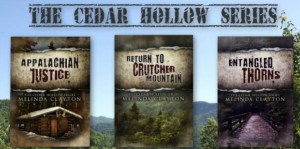
Clayton previously visited Malcolm’s Round Table in July of 2012 when her novel Entangled Thorns was released as the third book in “The Cedar Hollow Series.”

Malcolm: Welcome back! In your new novel Blessed Are the Wholly Broken, you move away from the Appalachian Mountain families in “The Cedar Hollow Series” to Phillip and Anna Lewinsky, a modern-day urban couple, living in Memphis. As an author, how difficult was it to shift away from the prospective “comfort zone” of an on-going series with known characters and established settings to a new environment featuring students graduating from college who are ready for careers and family life?

cedarhollowcoverMelinda: Thanks for having me back, Malcolm. It was difficult, but I also felt it was time. There may be other Cedar Hollow stories, but the story of Phillip and Anna Lewinsky had been rattling around in my head for some time. I had also wanted to write a story set in the area of Tennessee in which I grew up, so that was fun. It was also fun to revisit the University of Memphis on Memphis’ rainiest day of 1989. I remember that day well. I was really tired of the rain, of being cold, and of getting soaked on my walks to both class and work.

Malcolm: At the beginning of the book, you quote a line from “In Place of a Curse,” a signature poem by John Ciardi: “They who are wholly broken, and they in whom mercy is understanding, I shall embrace at once and lead to pillows in heaven.” In addition to suggesting a unique title for your novel, how does this sentiment set the stage for the story to come?

Melinda: I think of Phillip as being “wholly broken.” This is a man who in his early twenties felt he had everything he needed to be happy. In his words, “I felt like the luckiest guy in the world. First job, first apartment, first girlfriend, best friend. What more could I have possibly wanted?” But by his mid-forties, when we first meet him in the Prologue, he feels he has nothing at all. “Life imprisonment or death; that is the question. And while the outcome matters immensely to the other players in this drama of my life, it matters not at all to me. I am dead either way.”

I wanted to explore that dynamic, the path one might travel that could lead from euphoria to despair, from hopeful to hopeless.

Malcolm: Asking a therapist why s/he writes about characters with deeply rooted psychological problems probably makes as much sense as asking a composer why s/he writes about characters who are struggling with a symphony. Yet, as I think about both “The Cedar Hollow Series” and Blessed Are the Wholly Broken, I can’t help but see the books’ characters as almost being—as we say in the South—“too broke to fix.” In addition to the page-turning read we all look for, do you think these novels will also help provide closure for readers who know people who seem wholly broken and/or who often feel they might be wholly broken?

BAWB 200 x 300Melinda: Wow, I might have to think about that for a minute! I think the “broken” characters in the Cedar Hollow Series have within them some spark of hope, enough, at least, to compel them to continue moving forward. One reviewer remarked that she loved it that those books all ended on a hopeful note, a type of new beginning for the characters. If there’s a message to those books, it might be something along the lines of each cloud having a silver lining, or there being a light at the end of the tunnel. Never give up; this too shall pass, etc.

I think Blessed Are the Wholly Broken is different in that within the first page, we know Phillip Lewinsky has been found guilty of the murder of his wife. One of the beta-readers called me midway through reading and said, “But he’s going to get out, right?” She found him to be a sympathetic, likable character and wanted a happy ending for him. I suppose a philosophical argument could be made that in a paradoxical sort of way, he was happy with the ending and he did find the closure he was looking for, but the writing of Wholly Broken was more about an examination of the unraveling of a life than it was about reaching closure.

Malcolm:  How do prospective wholly broken people/characters impact the therapist/novelist?

Melinda: In some ways, the impact is the same for both the therapist and the novelist, in that I’ve always been fascinated by trying to discover what makes us all tick. Behavioral theory would say we don’t engage in a behavior unless we’re getting something out of that behavior. Maybe we’re being positively reinforced in some way, or maybe we’re trying to avoid something uncomfortable. That’s overly simplistic, but I think for the most part, it’s true.

As a therapist, part of finding the solution lies in finding the why of the behavior. Once a person recognizes and understands the purpose behind their behavior, they can choose whether or not they want to change it.

As a novelist, it’s fun to work to tie together a character’s motivations, choices, and decisions with their ultimate outcome.

Malcolm: After readers learn on the first page of Blessed Are the Wholly Broken that a crime has been committed, the novel moves about quickly from one time to another and from one place to another rather like a “whodunit.” I felt like I was reading a detective story. How did you approach your research for this, especially that involving medical, police, prison and courtroom procedures?

The dorms at Memphis State University (now U of M) where Phillip and Anna meet.

Melinda: This novel, by far, required more research than all three of my previous novels put together. I spent time both talking with and emailing medical and legal experts as well as making several phone calls to the Lauderdale County Jail to make sure I accurately portrayed not only procedures, but physical components of the building.

I sent hardcopies of the chapters dealing with medical issues to an expert in the field of microbiology, and chapters dealing with legal and courtroom procedures to the founder of a law firm in New York.

I wanted the book to be as true to the regions as possible, so I also researched weather patterns in that area during that time to make sure if it was raining in the novel, it really had rained on that particular day. I pulled up calendars from that time to make sure if court was held on a specific day in the novel, it would have really been held on that day in Ripley, Tennessee.

I think I probably spent more time on research than I did on writing. Everyone was incredibly helpful; if there are mistakes, they’re completely my own.

Malcolm: While Blessed Are the Wholly Broken was still a work in progress, you formed your own publishing company. How did the becoming a publisher change your perspective about what it takes to prepare and format manuscripts, and to publish and market a book? How did it change your viewpoint as a writer? Did becoming a publisher change your writing habits or approach or were you able to keep your publisher’s hat in the closet until the manuscript was done?

TJpublishingMelinda: Becoming a publisher in the middle of the writing process taught me that publishing is a lot of work! In some ways it stifled me as a writer because as I typed, I couldn’t help thinking, “Ugh, once I get done with this manuscript, I have to reformat it three different ways….”  On the flip side, I loved having the ability to review and proof the finalized manuscripts before hitting “publish.” It was nice to have one last chance to check for any typos or formatting errors before going “live.”

Malcolm: Best of luck with Thomas-Jacob Publishing and Blessed Are the Wholly Broken. Where can prospective readers find you your novels on the Internet?

Melinda: Thanks, Malcolm!  And thanks for the wonderful interview.

All of my books can be found through major retailers such as Amazon and Barnes & Noble. They’re also available through Smashwords, Apple, Sony, and Kobo.

The groundhog day approach to the web site

websiteintroThere are says when I wake up and think, I’ve seen all this before.

A lot of those days involve the web site.

I see many authors’ web sites I like. The bad news is, if I’ve heard about the author, that means they’re well known enough to just possibly not really need a web site. The best of these sites have a charming yet professional bio, a display of book covers and blurbs, and a list of reviews and events.

That is to say, these sites take a minimal approach because, really, most readers will only find the site after they’re reading the author’s books.

My web site goes through stages. During stage one, it’s rather minimal because the sites of the most successful authors out there tend to set the stage for what a successful author’s web sit looks like.

Visitors arrive, take one look, and think, “this is a successful author.”

On the other hand, debut and other lesser known authors can’t get people to start reading their books if they take a minimal approach. Let’s say your name is J. K. Rowling and you wrote Harry Potter. If so, people will find your site because they’re using “Rowling” and “Harry Potter” as search terms.

If your name is Zeke Boswell and you wrote a book called The Bird Bath Blues, you can be sure of one thing. Nobody is using “Zeke Boswell” and “The Bird Bath Blues” as search terms. And, because they’re not, there’s a tendency to keep adding more and more stuff to the site with an ever-expanding list of key words until your site stats show people are actually visiting the site and staying long enough to read the stuff you put there.

Of course, as you add stuff, you remember adding stuff before. The web site is turning into the 1993 movie “Groundhog Day.” You realize that you started out with a spartan, professional web site at least a dozen times before and that over time you get adding this and adding that until it finally became a maze of pages, plots, links, pictures, and goodness knows what else.

There was so much goodness knows what else on it that has become a yard sale or a sleazy flea market.

So, you get ticked off and throw away 99% of the site and embarked on yet another fresh start.

You knew from watching Bill Murray going through the same day over and over, that the whole shebang was going to keep happening until you learned something very important.

Until then, the web site is going to look wonderful, but have no visitors and sell no books. That’s when the tinkering begins. Or, you can keep it like it is when you have it the way you like it and hope for the best. Easier said than done.

Now, if I can just resist the urge to tinker with the site for a while, maybe I can break the cycle.

Malcolm

A coming-of-age adventure for your Kindle

Author Melinda Clayton returns to Appalachia for her new novel

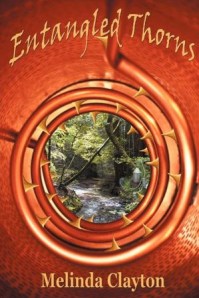
I’m pleased to welcome author Melinda Clayton (Appalachian Justice and Return to Crutcher Mountain) to the Round Table today to talk about her new novel Entangled Thorns. Once again, Clayton heads back to Appalachia for a compelling story about hard times and hard memories. Entangled Thorns, which tells the story of Beth Sloan and the “infamous Pritchett family of Cedar Hollow, West Virginia,” was released by Vanilla Heart Publishing June 27, 2012.

Malcolm: Like Appalachian Justice and Return to Crutcher Mountain, your new novel Entangled Thorns has an Appalachian setting. What draws a Florida author away from the orange groves and sunny beaches into the hills of West Virginia for her storytelling?

Melinda:  My mother’s family is from West Virginia, around the Charleston area.  My grandfather was retired from the mines.  Both of my maternal grandparents passed away when I was a teen, but up until that time we visited every summer.  I loved everything about it:  the people, the mountains, the wildlife.  My mother was born in a tiny place called Big Ugly Holler, which served as the inspiration for Cedar Hollow.  It doesn’t exist now, but we once hiked into the mountains to see what was left of it.  There was no road; by that time, there wasn’t even a trail.  When we finally reached our destination all that remained of Big Ugly Holler were a few foundations and chimneys covered in vines.

Malcolm: In Entangled Thorns, your protagonist Beth Sloan has been running from and/or repressing her troubled childhood until circumstances force her to confront it. Your protagonists in Appalachian Justice and Return to Crutcher Mountain were also wounded as children. Does this overarching theme of your work come out of your experience as a psychotherapist or the kinds of stories you’re drawn to on the nightly news?

Melinda:  I love this question, and the answer is, “both.”  I read a book when I was very young – I’d give anything to remember the title of it – but it was about a social worker who worked with troubled kids.  Ever since then I knew I wanted to work with troubled children and families in some capacity.  I’ve also always been drawn to true crime stories, as morbid as that might seem.  There is something about the workings of the human mind that absolutely fascinates me, particularly when it goes off-kilter in some way.

Malcolm: You recently completed a Ed.D. in Special Education Administration program which required a dissertation. How did you manage to jump back and forth between academic writing with its reliance on sources and a formal style to fiction with its emphasis on people, adventure and an accessible style?

Melinda:  That was a little challenging at times.  The act of writing fiction was a great stress reliever, but I had to work to keep the informal language (contractions, slang, etc.) from entering my academic writing.  It was tempting at times to put in something like, “This research will show that there ain’t no correlation…” for the pure fun of seeing my committees’ reaction.

Malcolm: How does the doctoral work fit into your professional goals?

Melinda:  My ultimate goal is to teach at a college level.  My doctorate sort of combined two fields of study, since my M.S. is in Community Agency Counseling, and my doctorate is in Special Education Administration.  I’d love to contribute to the field by demonstrating how the two fields often go hand-in-hand and should support each other and work together, instead of arguing over funding streams and services as so often happens.

Malcolm: For the general public, Appalachia conjures up such themes as isolated, subsistence living, hard-working and persevering people, coal mining and other environmental excesses, and pure, raw music unlike that from any other part of the country. How do your characters and plots mesh with or run counterpoint to these stereotypes? Does the lure of Appalachia for your storytelling ever translate into other areas, say, in tempting you to move there as a teacher or psychotherapist?

Melinda:  It’s a delicate line to walk.  I know from my own family that the manner in which Appalachia is often portrayed can be a sore point.  At the same time, I want the story to reflect what is, in some areas, true to life.  I relied heavily on not only my research, but also my own memories as well as my mother’s experiences.

I also know from my experiences that the poverty associated with Appalachia exists elsewhere.  There’s no need to travel to Appalachia to encounter it.  In the late 1980s, when I was fresh out of college with a B.A. in social work, my first job was as the coordinator of case management services for a rural mental health center in Tennessee.  My case workers and I were responsible for a three county area, working with the most impoverished of families. Many of our clients were without electricity or running water.  Many also lived in the most basic of housing structures, without floors or internal walls.  I think it’s difficult to believe there are still families living in such poverty in the U.S., but there are.

Malcolm: Thomas Wolfe brought the phrase “You Can’t Go Home Again” into general use. “Going home” can be awkward, embarrassing or frightening on so many levels even for those of us who had relatively normal childhoods. But your characters had strong reasons for avoiding home, yet all of them find that they must go home again. Does this theme grow out of the psychologist’s seemingly favorite “well me about your childhood” question or is it more that home is the only place where the issues of home can be fixed?

Melinda:  Again I have to smile, because it’s both.  My writing of home is a very transparent attempt to create the home I miss.  Until I was about twelve, we lived in my father’s hometown in TN surrounded by aunts, uncles, cousins, and grandparents.  We had fried chicken at Mawmaw’s house every Sunday after church, then spread blankets on the lawn under the pecan tree and visited well into the evening.  A rough couple of years ended all that.  One aunt died tragically in a car accident, another divorced, my grandparents lost their home to a fire, and my family moved away.  I’m sure it wasn’t as idyllic as I remember, but it’s pulled at me ever since.

But I also think it’s necessary to revisit the places that have scarred us, either symbolically (often for safety’s sake only symbolically) or physically.  We have to face our issues before we can resolve them.  Burying them doesn’t work; we have to excise them, examine them, and then choose to heal and move on.

Malcolm: Thank you, Melinda.

Where to Find Melinda on the Internet

Blogs on Xanga and WordPress

Facebook

Twitter

Amazon Author’s Page

If you’re not a reader, for Pete’s sake, stop trying to be a writer

When I taught college-level journalism, I was convinced that some of my reporting and feature writing students never read newspapers.

Other than wondering what the hell they were doing in my classroom, it was clear to me that those who didn’t read the news would probably never learn how to write it. News and feature stories have a noticeable organization and style.

Long-time journalists can hear the cadence of a “properly written” news story inside their heads. Stands to reason, then, that reading—in this case, the news—will help you learn the fundamentals of reporting much faster in a classroom and on the job than being clueless about it.

Aspiring poets and novelists who don’t read poems and novels

Author and editor C. Hope Clark (“Lowcountry Bribe”) wrote in a February 28th post at read.learn.write that in her consulting and speaking work, she finds a lot of aspiring writers who seldom read:

The world abounds with writers. Everyone wants his name, photo and title on a bookstore shelf, as a minimum on Amazon. But amazingly enough, most of them are not voracious readers. They are spitting out words, but taking few in. It’s like using a shotgun instead of a high-powered rifle. The result isn’t very refined, the results less satisfactory.

Some years ago, when desktop publishing programs made it easier to create newsletters, brochures, and posters on a PC screen, a lot of big corporations cut the writers from their staffs because—the bean counters seasoned—anyone could use the software and create something that looked like a newsletter, brochure or poster. Who needed actual writers? The results were a mess, and since the bean counters never read anything anyway, they didn’t know the results were a mess.

The Internet is (perhaps) today’s desktop publishing

The Internet has not only reduced our attention spans, it’s given all of us the power to create materials that look like e-zines, blogs, books, magazine articles and poems. No experience necessary. Simply log on and create.  Clark says that “The slogan ‘reading is fundamental’ is remarkably accurate. Somewhere along the line, however, between elementary school and college, reading falls by the wayside. Teaching to tests, however, and not enticing children to fall in love with words, has stolen their ability to perform later in life.”

As a writer, I’m biased: I think all of us need to learn how to read and then not let the skill get away from us. And, we’re talking novels, essays, commentaries, features and criticism here, not just the back of the cereal box or the “Trending Now” links on the Yahoo screen. Having worked in corporate America, I can testify to the fact that a lot of stuff got screwed up because the people reading the reports and white papers and trade magazine article weren’t really getting it. They skimmed and/or couldn’t follow a logical argument in print.

What do I have to do to become a writer?

The Internet, and that includes a few well-known print-on-demand book publishers, gives the impression the answer is nothing. Just put one word after another until you reach the required word count for a short story or a book, format it, and you’re done. And when nobody reads it, the first thing you’ll hear from “the writer” is the accusation that there’s a conspiracy out there. Amazon, BIG PUBLISHING, the government, the search engines, the service providers and the reviewers had nothing better to do that get together in a bar and decide to stomp down some a book that otherwise would have won the Booker, Nobel, and Pulitzer prizes.

The speculation about “What the hell happened to my book?” seldom includes any need to learn the art and craft of writing first. And this goes back to something very fundamental: Reading. That’s where becoming a writer starts, and it never stops.

Malcolm

Authors who connect with readers

“Funny how people are. Known for books that can make people pass out from nausea, Chuck Palahniuk in person is a gracious, sweet guy who really connected with the crowd at our event last Tuesday. He spent two to three minutes with each person who was getting a book signed, asking them questions and posing for pictures.” — Tom at RiverRun Bookstore in Portsmouth, NH

Don’t you wish it were always like this?

Not passing out from nausea while reading a novel, but meeting an author at a book signing who is genuinely glad you’re there.

After all, you’re giving up an afternoon or an evening. Perhaps it took you 30-40 minutes to get to the store and it will take you another 30-40 minutes to drive home.

Maybe you planned to buy the book anyway or maybe you heard something during the reading that caught your interest and you fished out a credit card and bought the book on an act of faith. At this point, I think you deserve more than an assembly-line book signing experience. We’ve all been to these and we’ve seen them on TV.

Sure, if 1000 people are lined up and the end of the line is five blocks away, the author–or, the store, at least–can’t afford a five minute chat per person. But how about a smile, a handshake, and a few questions about you? That shows an author is glad you’re there as contrasted with those who take you, your book reading experience, and your credit card for granted.

Good show, Chuck Palahniuk and RiverRun Bookstore.

Read the book, then visit Glacier and discover the magic again.

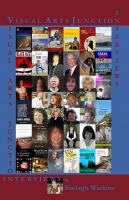
Author Interviews from Visual Arts Junction

Shelagh Watkins, author of Mr. Planemaker’s Flying Machine, has compiled and published a book of author interviews conducted during the past year at Visual Arts Junction. The authors discuss their styles and influences as well as recent works, excerpts of which are included.
This Mandinam Press book can be viewed or downloaded free in multiple formats at Smashwords or purchased as a paperback via Lulu.

It was a pleasure being included in this volume with authors Pat Bertram, D. K. Christi, Caryn Gottlieb FitzGerald, Jean Holloway and others. Watkins’ hope is that “the interviews will entertain and inspire readers to find out more about the authors and their books.”

As 2009 winds down, I would like to thank those who have found adventure and magic in The Sun Singer, humor in Jock Sterwart and the Missing Sea of Fire, and yarns and tall tales in A View Inside Glacier National Park: 100 Years, 100 Stories. Best wishes for an exciting 2010 which, I hope, will include an infinite stack of books on your desk and nightstand.

Malcolm

You’re not an author, you’re my mom

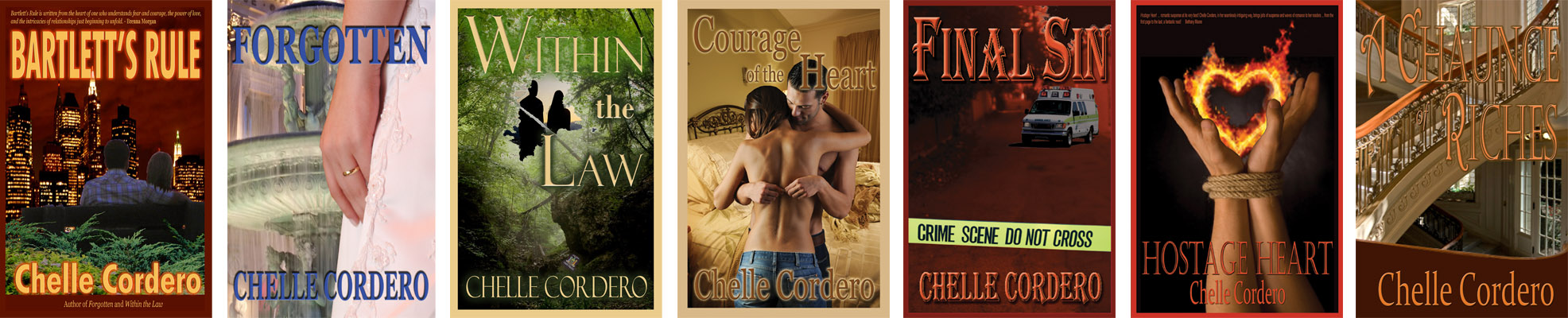
Today’s guest article is by Chelle Cordero, author of “Bartlett’s Rule,” “Forgotten,” “Within the Law,” “Courage of the Heart,” “Final Sin,” “Hostage Heart,” and “A Chaunce of Riches.” It’s a pleasure to welcome a prolific author from Vanilla Heart Publishing with a humorous take on the writing life.

You’re not an author, you’re my mom

by

Chelle Cordero

Working as a writer is a hectic and often surreal lifestyle. You live by the power of words, both real and fictional, and you accept the responsibility of those words, the emotions they evoke and the lessons they convey. Although I’ve never participated in NaNoWriMo (a challenge to write a 50,000-word novel in 30 days) I can well understand the thrill of accomplishment. Every time I finish an article, a new novel, or edit a writing project, I am thrilled with the same sense of accomplishment.

It’s an amazing feeling to see your name on the cover of a book or see your byline in a national publication. As awesome as it feels to see your name, it is incredible to realize that people are actually reading your words. I’ve had an editor or two (for my non-fiction work) pass along letters they’ve received citing my articles and commenting that they found the information useful; that’s a wonderful feeling. Even more exciting is seeing a site like Amazon taking pre-orders of novels that haven’t yet been released (the ranking system shows that pre-orders have been placed) – people are actually buying books because I’ve written them and they are getting them as soon as they are available.

I’m still me. I am a wife, mother, community volunteer, housewife, sister, aunt, and friend as well as being a writer. I walk in the mall and I’m not hounded by fans because most people don’t recognize me as an author. Every so often I do get someone noticing my author pic on the back of a book and realizing it’s me or an email to me as a writer asking for advice on writing. My friends and acquaintances do call me if they see my name in the paper or the time I did a spot on a local news channel (as a participant in Operation E-Book Drop).

I often read and re-read my own articles and books and sit there thinking “I really wrote that?” Most times I like what I’ve read, perhaps that is just egotism? I guess I am in that in-between stage where I know that I am just an ordinary everyday person and yet craving the acknowledgment of what I’ve accomplished to date. I yearn for fan mail (please! chellecordero@gmail.com) and yet I felt embarrassed the first time someone brought a book up to me at a signing and asked me to autograph it – and I didn’t even know the person!

There is a feeling that is difficult to put into words, even for a writer, which overwhelms you in a crowd where everyone is speaking about their jobs. Then they turn to you…

I’ve often had a thoughtful acquaintance turn to me and ask “So how is your book doing?” and I respond “Which one?” and they’re shocked. Or it’s even funnier when someone I’ve known for years suddenly realizes that I’m a writer – “You wrote a book?” There is no way of comparing my “desk job” with that of my son-in-law’s title as “Infrastructure Analyst” or to my kids’ EMS careers (she’s a paramedic and he’s an EMT).

I try to surround myself with other writer and editorial friends – we understand each other. Whether I connect with these friends on Facebook or in-person at my local RWA chapter, I feel “normal” because of the association. Most of the authors signed with my publisher, Vanilla Heart Publishing, are supportive and friendly, we have a tight group. My writer friends know when to call me on it when I make excuses and also know how to bolster my fragile ego when I need plaudits.

Then while I am feeling particularly talented and good about myself I over hear my daughter chatting with a friend and listing some of her favorite authors. I attempt a “guilt trip” –“What? My name isn’t included?” The answer I get is “You’re not an author, you’re my mom.”

…I chuckle and still feel pretty good.

Chelle Cordero, Author

Chelle Cordero Website

Chelle at Vanilla Heart Publishing