Do you remember the ‘concordance’ Amazon used to provide for notable books

Amazon used to include a so-called concordance that listed words, phrases, and other information deconstructed out of a novel on the book’s sales page. What were Dan Brown’s favorite words? What were Tom Clancy’s favorite phrases?

When I saw those concordances, my first thought was that they sounded very close to author Italo Calvino’s parody of literary deconstruction in his novel If on a winter’s night a traveler. The gist of the parody was that one would be able to enjoy an entire novel by simply reading lists or words and phrases along with other tips uncovered through computer analysis.

As we have seen, computers have been used to read texts to validate whether those texts are within an author’s style or were written by somebody else. I can see the value in that far beyond the anti-plagiarism software used by some universities.  That is, what’s the likelihood that a newly discovered book was written by a great master?

I read Calvino’s book long before Amazon was a gleam in anyone’s eye. So, when I first saw those Amazon concordances, I immediately thought of the parody in the novel. We’re almost there, I thought. We can almost read the concordance and get the same amount of enjoyment out of the book we would have found had we bothered to spend many hours reading it. Maybe this is why Amazon removed the feature: it reduced sales.

This all came to mind this morning when I read “From ‘alibi’ to ‘mauve’: what famous writers’ most used words say about them”  in The Guardian. We learn here that Bradbury’s favorite word was “cinnamon,” that Rowling likes the phase “dead of night,” that Dan Brown uses “full circle,” and that Nabokov used the word “mauve” forty four times.

Now we know what the novel really means.

Computers will tell us amazing things. I don’t really want to know them unless I’m writing satire. (I once proposed using the Amazon concordance to The Da Vinci Code to write bestseller novels with the right stuff in them to get big reviews, loads of money, and movie deals.) I will confess that when I find myself using a word or a pet phrase too many times in a story, that I do a search for the suspected word or phrase to see how often it appears. If I don’t like what I see, I get rid of it.

I don’t think I want to know how often Nabokov used the word “mauve,” much less what a computer or an expert in literary analysis thinks that fact means. I don’t even care if James Patterson uses 160 cliches per 100,000 words or consider it a plot spoiler to hear that Donna Tartt uses “too good to be true” more than somebody in an ivory tower deems appropriate.

When computers and their deconstructionist slaves finish with a novel, the story, I think, gets lost in the shuffle rather like learning that you love your spouse due to sequences of binary reactions in your brain rather than  the fact they listen to what you say and care about you and support even your worst faults.

The Amazon concordance had its amusing feature, telling us the number of words the books gave us per dollar and per ounce. The value of that can’t possibly be underestimated.

Too much information, and to what end?

Malcolm


Is having your book ‘out there’ enough for you?

This article (Only 40 Self-Published Authors are a Success, says Amazon) has prompted some people, including me, to ask why Amazon defines financial “success” as having sold a million e-books over the last five years. Self-published writers tend to price their books between $3 and $5, and often at only $0.99. They can earn up to 70% of the retail price. In my view, one can sell a lot fewer than a million copies and still be earning a decent income.

amazonlogoAt the same time, the article has prompted others to say that just having their books “out there” is all they need to feel successful. They feel that if they do a great job of writing a story, have a great editor and a wonderful cover artist/designer, they are fine with the results of their avocation. Far be it from me to criticize that view. One might have similar feelings about creating music, making art, sewing quilts and other creative arts and crafts.

I am grateful for each reader, for every honest reviewer, for having a wonderful publisher and editor, and for all of those who’ve interviewed me, talked about my books, and otherwise been supportive. All of that is a viable form of success.

If you sense that a “however” is coming, you’re right.

However

Even the IRS considers that if we never show a net profit as a writer, we aren’t really a business. Writing books isn’t a free undertaking. One has to buy reference books, a computer, an Internet connection, office supplies, travel to locations where the novel is set, and (if self published) pay for your editor and cover designer. If these costs exceed the amount of money from royalties and direct sales, then one is running at a loss. Whether one calls his or her writing a business or an avocation, those costs can reduce the happy feeling one gets for having his or her books in print and getting some good reviews.

The people who run stores will seldom hear about self-published books.

I grew up in another era, long before e-books and Kindle Direct Publishing, so I believe writing (fiction, especially) is always a long-shot proposition. One can never expect to earn a John Grisham or a J. K. Rowling income, or even enough to write full time. Most writers can’t survive on writing income alone and, as more and more readers expect 99 cent or free books, it’s getting harder and harder for most writers to cover costs, much less see real profits. So, my “however” is that if one wants to have a successful writing career, that “success” has to at least provide enough income to cover expenses.

Creative people are somehow expected to take pleasure in the work they do even if they are bankrupt. I suppose you can say that writing passion exceeds having a viable business, or that we feel at our best when we’re creating what we create. However, while I don’t need to sell a million e-books to feel successful, I do need not to be running in the red. I don’t think that’s too much to ask in order to feel successful in a career where–some have said–winning the Powerball is a better bet.

So, having my books “out there” is not enough. It’s wonderful, but if “out there” is all there is, it’s not paying the bills. Worse yet, it’s costing writers money and taking them away from their families.

If you’re a reader and/or a writer, do you think it’s possible to feel successful as a writer–or any other creative artist–if you’re expenses are higher than your sales?

See alsoFalling book prices could force authors to abandon their keyboards – The article notes Amazon’s penchant for running at a loss with low prices and low payouts to writers.

–Malcolm

What might have been; what might still be

“Everyone who gives up a serious childhood dream — of becoming an artist, a doctor, an engineer, an athlete — lives the rest of their life with a sense of loss, with nagging what ifs.”

– Glenn Kurtz in “Practicing: A Musician’s Return to Music,” quoted in “The Pleasure of Practicing: A Musician’s Assuring Account of Creative Homecoming and Overcoming Impostor Syndrome” by Maria Popova

writergraphicIf I were to give up writing, I would, to borrow an idea from Kurtz, feel the loss more strongly than the greatest lovers I have lost.

Childhood dreams of becoming something–a poet, a novelist, a playwright–often nurtured by well-meaning parents who tell their sons and daughters they have what it takes to be great, often fade as interlocking realities about earning a living with creative writing as part of the equation.

Even before Amazon and e-books and free books and cheap books turned publishing upside down, few writers stepped out of college with a manuscript in their briefcases that was ready to become a critical and/or a commercial success on Broadway, in Hollywood or in a major publisher’s newly released book list.

Life as they say, got in the way. And it still does.

It’s easy to find oneself suddenly middle aged with a drawer filled with rejection slips for manuscripts actually submitted and another drawer filled with manuscripts that stalled somewhere between once upon a time and happily ever after.

How easy it is to stop trying, perhaps to ponder on dark and stormy nights what might have been if one hadn’t gotten married too soon, if the baby hadn’t forced one to take a second job, if aged parents hadn’t needed time-consuming care, if somebody somewhere had provided an ounce more of encouragement and support and/or a way for the amateur to get his or her foot inside the golden door to professional status.

It’s also easy to wonder what kind of youthful vanity or arrogance led one to believe s/he would be one of the appallingly small percentage of writers who earns all or a substantial percentage of his/her yearly income as a poet, novelist or playwright/screenwriter.

The dream seemed so right, how could it be wrong?

Quitting the dream makes sense because, with the list of failures in mind between then and now, it has injured a lot of people: spouses and lovers led from hope to hope and from pillar to post while the writer promised year after year that “this” was “the” book, while schedules and expenses and work spaces were arranged to accommodate the writer’s holy mission, while books and manuscripts turned the house into a warehouse of faded paper and faded hopes.

It’s hard to quit and easy to quit. It’s hard because, like the lottery player who thinks this week’s number will win the jackpot, the writer thinks “this time my work in progress will find an agent and then a publisher who believes in it.”

It’s easy to quit because writing, after a long while, becomes not only an expensive and time-consuming hobby, but a rather sad thing like the habits of inventors who think they’re on the verge of creating  something the world needs or aging models who think “I still have it” or various other delusions that verge (at best) on hobbies and avocations when the stars and planets align.

When you quit, you stop growing and you feel the way you felt when the person you wanted to marry somehow slipped away. When you quit, you stop growing because you’re not practicing the craft your childhood or young adult self said it loved, said was a mission, said was like breathing, said was more important than sex, said was a life’s purpose, said was destiny.

If you’re lucky, so you don’t quit because practicing your craft is who you are and you realize when you’re not writing, you’re somebody you don’t recognize in the mirror.

Maybe Hollywood and Random House will never call, though you still dream that they might, and you understand that as some people like creating lists of all the birds they’ve spotted or the places they’ve been or the languages they’ve learnt, that you’re writing because it’s you and you love it and you cannot abide the death of part of yourself if you didn’t keep typing one word after another.

Loving it is where we need to be for those of us who aren’t Hillary Mantel and Stephen King or Nora Roberts, and so we keep writing for what might still be, the satisfaction of reading what we’ve written whether anyone else reads what we’ve written and finds any satisfaction from it, much less pays for the opportunity.

Perhaps we will one day be discovered. Meanwhile, we’re continually discovering ourselves through the words we put on the page.

–Malcolm

thesailorcoverMalcolm R. Campbell is the author of “Emily’s Stories” and “The Sailor.”

When it comes to books, why aren’t we buying locally?

“Several studies have shown that when you buy from an independent, locally owned business, rather than a nationally owned businesses, significantly more of your money is used to make purchases from other local businesses, service providers and farms — continuing to strengthen the economic base of the community.” – Sustainable Connections

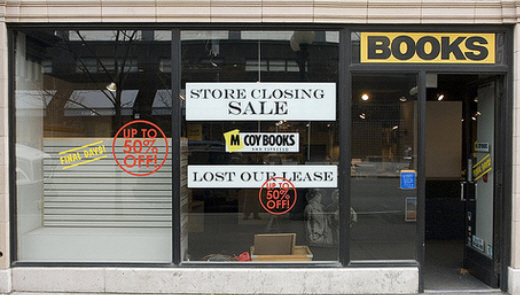
An online friend of mine is being forced to close her bookstore. One of the unfortunate aspects of this is the disappearance of a venue for local authors.

e-readerlinkBookstores, of course, are struggling as e-books grab a larger share of the readership. Some stores have tried to counter this by installing Espresso Book Machines that will print any POD book within a few minutes. For the store, this isn’t cheap. Other stores are teaming up with providers to offer e-books.

Several years ago, the New Yorker Magazine published a cartoon showing a downtown merchant taking the delivery of books from Amazon even though there was a bookstore right next door.

Why has it come to this? Why has it become easier to order from Amazon and wait a day or two for the book to arrive rather than driving 15 minutes to the nearest store?

Some people don’t have time to drive to the bookstore, and they argue that it takes less time to order an Amazon book that will arrive on their doorstep than it does to drive. Perhaps so. Other readers say that Amazon offers bigger discounts and–when the orders are large enough–free shipping.

Perhaps we’ve become so isolated from our friends, neighbors and local business people that we see no reason to support them by buying local. Are we so in love with celebrity authors that every book we buy has to be a mega-bestseller rather than a lesser-known book written by somebody who

Click on graphic to learn mor3e
Click on graphic to learn more

lives near us who’s placed that book on consignment at the bookstore down town?

Seriously, is Amazon really cheaper? The book itself might be, especially in those states where Amazon isn’t paying sales taxes. Buying local supports local schools, public works, related businesses, and provides jobs. It helps the economy. Buying from Amazon, hurts the local economy because it gives nothing back to it.

Newspapers have long known the proverb: Nearest, dearest. That is, people tend to care about local news, especially when if impacts them in some way. I wish we were applying this proverb to local businesses and local authors, giving them our support before helping Amazon and faraway authors first.

We can use the IndieBound store finder to find bookstores near us. Maybe we’ll be driving past one on the way to see a movie, buy groceries or stop at the hardware store. Why not stop for a few minutes and see what they have to offer?

Malcolm

SOF2014lowresMalcolm R. Campbell is the author of the mystery/comedy “Jock Stewart and the Missing Sea of Fire.” In Commerce Georgia, you’ll find my paperback books at the Bookstand of Northeast Georgia.

Georgia Bookstores Selling E-Readers

Georgia
A Cappella Books Atlanta, GA
A Novel Experience Zebulon, GA
Avid Bookshop Athens, GA
Bound to Be Read Books Atlanta, GA
Charis Books and More Atlanta, GA
Eagle Eye Bookshop Decatur, GA
Horton’s Books & Gifts Carrollton, GA
Read It Again Books Suwanee, GA
The Bookshelf, LLC Thomasville, GA

Dear Reader: If you buy books like widgets, I don’t want you

“We get on social media, we try different kinds of events, we create interesting displays, we sell the hell out of the books we love, but none of that reaches the boardrooms where the big decisions are made. If I could get one wish from the ghost of Sylvia Beach, it’s that she, or someone who cares about the inherent value of books, gets a seat in those boardrooms to advocate for readers not consumers, for books as a pillar of culture not as a unit of sales, and for bookstores as community centers not retail outlets and merchandise showrooms.” – Josh Cook of Porter Square Books, Cambridge, Mass

We hear stories from time to time about artists, jewelers, furniture makers and other stubborn souls who, after perfecting the art and the craft of their work for nearly a lifetime, refuse to sell their work to customers whom they believe won’t appreciate the work for its inherent beauty and artistry or who try to prostitute themselves, the art and the artists by acquiring the perfect bentwood rocker, diamond ring or sonnet at a rock bottom price.

Amazon, the Internet and parents who rear children to believe they (the children) are the center of the universe are conspiring like planets in trine to create a book buying atmosphere in which many (but thankfully, not all) prospective readers feel entitled to free, or almost-free books. This attitude is strengthened by the unfortunate, but popular, mindset that anyone selling or making anything is corrupt, cheating at taxes, and trying to rip off customers one way or the other. Therefore, like every other false right people are claiming to have these days, cheap books have become a component of the public’s feelings of entitlement and a way to get back at those who are purportedly stealing us blind.

If you listen to Amazon and to those who believe Amazon has done more for authors and readers than anyone since Gutenberg, then you are hearing that an e-book is just a file.  That means that neither the publisher nor the author is paying printers to print it, nor warehouses to store it.  Those who buy books as units or widgets or just files, see no value in the product other than the momentary gratification of reading them. They not only do not see the inherent artistry in the storytelling, nor the expenses an author incurs in creating that file which might include: (a) a year or two of full-time work, (2) hiring at editor, (3) paying for cover art, (4) travel and other research, (5) promotional efforts including mailing off free review copies, maintaining a website, traveling to book signings, purchasing bookmarks and fliers.

Some authors who have become household names by selling their books through large publishers, can take their fame—as well as their talents—off into the self-publishing world and earn a living selling books for a dollar or two on Amazon. They will lead you to believe that any author or publisher who asks you to pay, say, $5.00 for an e-book is ripping you off because (after all) the book is just a file.

According to the Census Bureau, the current poverty income level in the United States is $8,959. Looking at this simplistically, if I take a year to write an 80,000 word novel, I would have to sell at least 8,959 copies of that book on Amazon at the $1 price to break even at the poverty level. If I had any expenses in creating the book, I’d be under the poverty level.

In spite of the success stories we read about from time to time, most self-published books sell less than a hundred copies. Small-press authors are lucky if they sell 1,500 copies. In both cases, the authors are under the poverty level.

My great hope is that my readers will be happy with my books and will feel that a near-lifetime of art and craft has gone into them. I’m just an everyday, journeyman writer, so I do not feel like a “Hemingway in the making” or a “not-yet-discovered” Pat Conroy or John Grisham. Nonetheless, I do work very hard to tell exciting stories, with three-dimensional characters, pitch-perfect descriptions and themes that provide food for thought. Yet, and I tell you this without vanity or guile, if you want to purchase any of my novels at rock-bottom prices to you and to others like you, don’t bother.

If you think my e-book is just a file rather than the words and the work within the file, I don’t want you buying any of my books because, while we might have to agree to disagree about this, I don’t think you will appreciate them for their value as art/craft/culture. And, if you are earning an income above the poverty level, my strong belief is that if you want me to live below the poverty level selling my books with a rock-bottom, Amazon-style price, then you’re not the kind of person who will appreciate me as an author.

Based on the comments I’ve received on this blog, either directly, or when I post the links on Twitter or Facebook, I know that my regular visitors agree with the Josh Cook quotation I used to set the stage for this essay. I’m not talking to you because that would be rather like preaching to the choir. I’m talking to the people who will find this post via search engines with search words like “rock bottom prices” and “Amazon.” If you are one of those people and if you came here hoping I can “get it for you wholesale” or give it away for nothing, then I don’t want you.

For everyone else out there who respects books for their stories, words fail me in telling you how much I appreciate you.

Malcolm

Rowling’s Amazon Experience

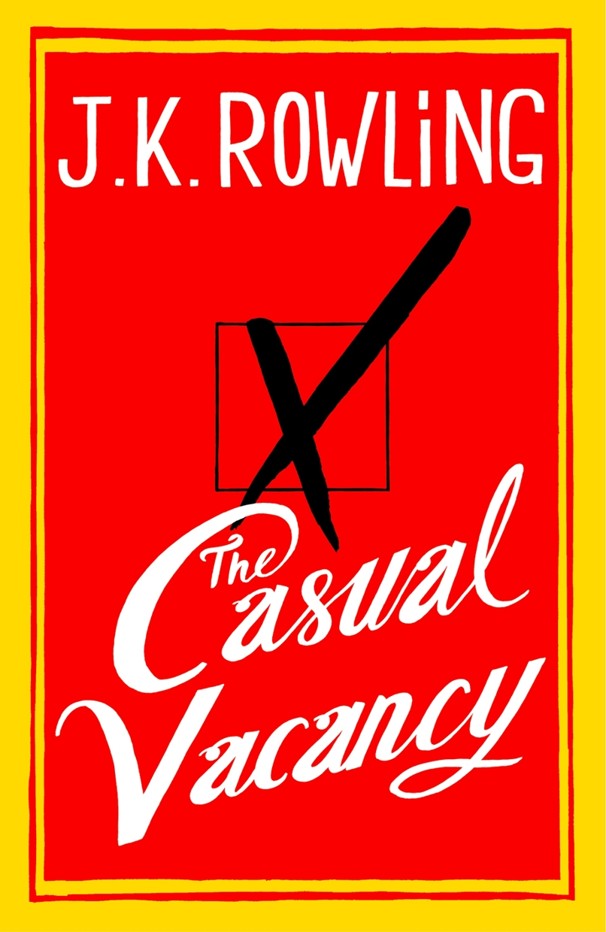
As the week winds down, and I sit here with a glass of dark red wine contemplating J. K. Rowling’s negative reviews on Amazon, I have come to the conclusion that the wrong people bought  The Casual Vacancy and then got mad about it. By the “wrong people,” I mean people who are reading literary fiction who normally stick to commercial fiction and people reading about troubled everyday characters who normally read fast-paced, high-energy page-turners.

As of this moment, The Casual Vacancy has 193 one-star reviews and 125 five star reviews. Who would have thought during the heady days of Harry Potter and midnight book sale parties that a Rowling book would fair so badly in the public eye?

Those who don’t like the book claim it’s dull, that nothing happens, that the people are gloomy low life trash, that they weren’t entertained because there wasn’t any humor in it, that the author’s normal charm was missing, that the characters were petty and had disgusting behavior, and that the story was filled with general dullness and lackluster material.

I don’t agree. Since I’m only 250 pages into the 500-page novel, I can’t write a review yet. So far, the book is a gem that I think may well be viewed as an important novel about small-town life in England long after the Harry Potter series has faded from the public consciousness. I say this even though, as a writer of contemporary fantasy, I’m a fan of the Harry Potter series.

I don’t want to spend the time doing this, but I suspect that some of the reviewers who claimed that the characters in The Casual Vacancy were trashy and disgusting, probably gave five stars to Stieg Larsson’s The Girl With the Dragon Tattoo whose characters were far more violent and disgusting. Why? Most of those reading Larsson’s riveting Millennium Trilogy want a rush of crime, sex and fast-turning pages rather than a book filled with characters who are rather like the Harry Potter’s Dursley family on a very bad day.

If somebody forced me to read the genres and styles I usually avoid, quite possibly I would want revenge. If I had just smoked or drank the wrong stuff, I might take out my frustrations on the authors of some very fine books that just don’t happen to be my cup of tea. But that would be unfair, rather like criticizing a sushi chef for preparing a meal for a person who hates fish.

The book reviewing world feels out of sync to me when people proudly claim they “reviewed” The Casual Vacancy based on the synopsis alone or trashed it in public after reading only a hundred pages then believe what they left on Amazon is a review. No, it was a non-review. Perhaps the wine has loosened my tongue, but I really want to tell such people to shut the hell up.

I’m enjoying the book. It has its own magic and its own truth.

Malcolm

BOOKS: Are we raising the cute baby alligator that will ultimately eat us alive?

Small juvenile crocodilians are deceptive – they seem easy enough to handle, and persuasive dealer talk can easily convince people to part with their cash. But do not be fooled. As they grow larger, crocodilians rapidly become stronger and more boisterous. After only a year, many people can no longer handle their animals and it is very common to see 1 to 2 year old animals being given away or illegally released into the wild. Larger crocodilians are, without a doubt, extremely dangerous animals. – crocodilian.com

“The evidence is, in fact, absolutely conclusive that the Standard Oil Company charges altogether excessive prices where it meets no competition, and particularly where there is little likelihood of competitors entering the field, and that, on the other hand, where competition is active, it frequently cuts prices to a point which leaves even the Standard little or no profit, and which more often leaves no profit to the competitor, whose costs are ordinarily somewhat higher.” – Eliot Jones. The Trust Problem in the United States 1922

Human beings are strange animals in that they rush hell-bent-for-leather to participate in their own demise.
When I was a kid, one of the first things I learned about people and their money is that the most powerful bragging rights come from getting something cheaper than your neighbor got it. Woe be unto the guy at the neighborhood barbecue who paid five cents more for a sparkplug or a hundred dollars more for a new car than the guy flipping chickens on the grill.

When economic times are tough, saving a nickel on a sparkplug or a c-note on a car makes logical sense. People are trying to scrape by everywhere they can. In fact, scraping by has almost trumped bragging rights over buying something cheaper than our neighbor bought it for.

Looking Down the Road

In Florida where I grew up, a lot of folks thought it was cute to buy baby alligators. How cute. Certainly more exciting than a puppy, cat, or a goldfish in a bowl. If one kid got one, his friends all wanted one. It was all the rage, rather like bragging that you were the first person to drive to the edge of town and shop at the new big box store. (When I was a kid, one of the first things I observed about people is that they feel powerful when doing things are all the rage and that they feel sheepish when they’re not doing them.)

Baby alligators grow up and when they do, their not as cute as they once were. So it is, that on a dark and stormy night, the alligator is wrestled out to the nearest lake or swamp before it figures out, “hey, I can eat the family.” In the wild, it may go off and live a beautiful life or it may lurk around the fringes of the neighborhood where it hunts for pets and small children.

Remembering Ida Tarbell

One of the first term papers I ever wrote when I got into one of those classes where we were taught how to find sources and use lots of footnotes was about Ida Tarbell and her 1904 book The History of the Standard Oil Company. When Standard put up a new gas station in town, they offered low prices until all the other gas stations went out of business trying to compete with them. Ultimately, the company was broken up even though its remnants, including Exxon in the U.S. and Esso in Canada are doing quite well.

Bragging rights about cheap products followed by the need to scrape by have both been powerful incentives for helping build the businesses that ultimately got big enough to eat us alive. Perhaps Standard Oil is too far away into the past to be a good case in point. Okay, think Walmart and every other big box store that showed up in your home town and ultimately killed all the local businesses.

Statistics show that more dollars leave a community when people shop at big box stores than when they shop at the locally owned shops in what’s left of the down town. Few people care because, truth be told, they feel really sheepish admitting that they paid 15 cents more for a gallon of paint at Bob’s Hardware than their neighbor paid for the same paint at Home Depot. And goodness knows, who wants to admit they paid 10 cents more for a pound of hamburger meat at Jenkin’s IGA than they would have paid at Walmart?

Amazon Used to Be Cut, but It’s Still All the Rage

Baby alligators grow up and become angerous. While Amazon has grown up, most people don’t view it as dangerous in spite of the all the charges that surfaced over the Christmas holidays about predatory practices, removing the middle man, wanting to be the only publisher in town, and offering “democratic, be-your-own-publisher” deals to authors who claim “New York Publishers” are a vicious monopoly that won’t let them in the door.

But Amazon is selling books at low prices. Isn’t that all the justification we need for helping the cute little bookselling company make its way in a cruel world where everyone wants to scrape by—if not brag about getting great books cheaper than the bricks-and-mortar and other online booksellers are offering them for.

Well, as The New York Times noted in a yesterday’s feature story about whether Barnes & Noble can survive, Amazon is now worth $88 billion. It’s almost big enough to eat us alive. When Powell’s books is gone and when Barnes & Noble is gone, will we still be able to brag about lower prices when Amazon is the only bookseller/publisher/distributor in the country?

I wonder. And as I wonder, I think about all the people who rushed out to buy gasoline at the Standard Oil Station because it was cheaper than the gasoline over at Bill’s Friendly Service Station. When Bill’s folded up, there was hell to pay, but (what with bragging rights over low prices) the handbasket ride toward monopoly was a heady experience. Bob’s Hardware is gone, too, as is Jenkin’s IGA.  In fact, pretty much the entire center of town stands empty.

According to that article in The New York Times, we’ve lost 20% of our independent bookstores in the United States since 2002.  Sure, the economy has been bad and now e-books are all the rage. When people want paperbacks, there are bricks and mortar and online alternatives to Amazon. When people want e-books, Amazon isn’t the only game in town. But now, by default, they run to Amazon.

Will Amazon eat us all alive one day? I wonder. At $88 billion in assets, I guess it can eat whoever and whatever it wants. But maybe it won’t. Maybe everything will be okay as long as we keep our pets and small children inside the house reading the books purchased from the full-grown set of jaws on the edge of the neighborhood.

Malcolm