‘When We Flew Away’ by Alice Hoffman

I’ve read all, or mostly all, of Allice Hoffman’s novels. I like the subjects she tackles, her research, and her approach. This novel will increase readers’ understanding of a long-ago girl, an iconic name to most people. I read her diary ages ago, though I saw the Millie Perkins movie in 1959 first.

From the Publisher

“Bestselling author Alice Hoffman delivers a stunning novel about one of contemporary history’s most acclaimed figures, exploring the little-known details of Anne Frank’s life before she went into hiding.

“Anne Frank’s The Diary of a Young Girl has captivated and inspired readers for decades. Published posthumously by her bereaved father, Anne’s journal, written while she and her family were in hiding during World War II, has become one of the central texts of the Jewish experience during the Holocaust, as well as a work of literary genius.

“With the Nazi occupation of the Netherlands, the Frank family’s life is turned inside out, blow by blow, restriction by restriction. Prejudice, loss, and terror run rampant, and Anne is forced to bear witness as ordinary people become monsters, and children and families are caught up in the inescapable tide of violence.

“In the midst of impossible danger, Anne, audacious and creative and fearless, discovers who she truly is. With a wisdom far beyond her years, she will become a writer who will go on to change the world as we know it.

“Critically acclaimed author Alice Hoffman weaves a lyrical and heart-wrenching story of the way the world closes in on the Frank family from the moment the Nazis invade the Netherlands until they are forced into hiding, bringing Anne to bold, vivid life.

“Based on extensive research and published in cooperation with the Anne Frank House in Amsterdam, When We Flew Away is an extraordinary and moving tour de force.

“Perfect for Alice Hoffman fans and readers of every age.

“‘Adding new poignance to a story whose ending we already knew, Alice Hoffman has deftly recreated the child Anne Frank with all her wit, mischief, and uncertainties. This fictionalized account of the increasingly desperate years that preceded the famous diary breaks readers’ hearts one more time. But it reminds us of how important it is to remember and honor all that was lost.'” — Lois Lowry, Newbery Award-winning author of Number the Stars

“’We can highly recommend Alice Hoffman’s novel of Anne Frank’s life, set in the dramatic and terrible circumstances of those first war years. We hope it will persuade young readers that contributing to a better world is both necessary and possible.’” –Ronald Leopold, Executive Director, Anne Frank House
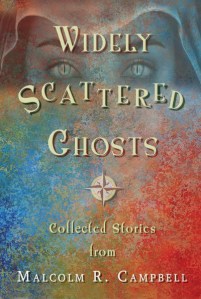
Malcolm

Malcolm R. Campbell is the author of contemporary fantasy novels and short stories, including “Widely Scattered Ghosts.”

‘The Invisible Hour’ by Alice Hoffman

Quite likely, most readers know Alice Hoffman through her “Practical Magic” series as well as The Dove Keepers. There’s such a variety in her work, that one might wonder if there are multiple Alice Hoffmans out there crafting her thirty novels. If so, her latest book The Invisible Hour, released on August 15th, which may or may not come from yet “another” Hoffman is a tempting treat.

From the Publisher

“From the beloved New York Times bestselling author of The Marriage of Opposites and the Practical Magic series comes an enchanting novel about love, heartbreak, self-discovery, and the enduring magic of books.

“One brilliant June day when Mia Jacob can no longer see a way to survive, the power of words saves her. The Scarlet Letter was written almost two hundred years earlier, but it seems to tell the story of Mia’s mother, Ivy, and their life inside the Community—an oppressive cult in western Massachusetts where contact with the outside world is forbidden, and books are considered evil. But how could this be? How could Nathaniel Hawthorne have so perfectly captured the pain and loss that Mia carries inside her?

“Through a journey of heartbreak, love, and time, Mia must abandon the rules she was raised with at the Community. As she does, she realizes that reading can transport you to other worlds or bring them to you, and that readers and writers affect one another in mysterious ways. She learns that time is more fluid than she can imagine, and that love is stronger than any chains that bind you.

“As a girl Mia fell in love with a book. Now as a young woman she falls in love with a brilliant writer as she makes her way back in time. But what if Nathaniel Hawthorne never wrote The Scarlet Letter? And what if Mia Jacob never found it on the day she planned to die?

“Nathaniel Hawthorne wrote: “A single dream is more powerful than a thousand realities.”

“This is the story of one woman’s dream. For a little while it came true.”

Reviews

Kirkus says that it’s “Not one of Hoffman’s best, but it may spark a desire to reread Hawthorne.” The Washington Post writes, “Alice Hoffman’s ‘The Invisible Hour’ is the latest fervent tribute to the power of literature and libraries.” The New York Journal of Books says, “With a truly imaginative structure, Alice Hoffman delves into what has become her trademark theme of magic. The Invisible Hour asks a grand ‘What if?’ Not so much the question posed on the book’s jacket: What if Mia Jacob never found the library or The Scarlet Letter by Nathaniel Hawthorne? The larger question the novel contemplates is whether a young woman can escape so deeply into a book, and fall so deeply in love with its author that she time travels to 1837 to be with him? “

Even though the reviews are a bit mixed, Hoffman fans care what they think, not what the critics think. Having read most of her work, that’s my approach to The Invisible Hour.

–Malcolm


‘Books may well be the only true magic’ ― Alice Hoffman

If you read and re-read Alice Hoffman’s novels (possibly with an initial focus on the “practical magic” series that concludes with The Book of Magic from 2021), you might slowly come to believe that books are the only true magic.

Some might suggest the magic is within the author and that in ways nobody can know, s/he transmits that magic to the page. Perhaps, but I doubt it. I believe the magic arises in the act of writing and the author only discovers its truth while reading through the manuscript.

One of my favorite Hoffman quotes comes from Practical Magic when Aunt Francis says, “My darling girl, when are you going to realize that being normal is not necessarily a virtue? It rather denotes a lack of courage.”

If one is normal, then s/he doesn’t consider magic at all, and should magic come up in a conversation, s/he will attack it as a scam. I’ve believed this since high school which, no doubt, accounts for the fact that my teachers considered me a troublemaker. I’m not sure “normal” shows a lack of courage so much as a lack of imagination and/or a simultaneous lack of the kind of curiosity it takes to “test the waters” when new ideas come to mind.

Perhaps the basis for a healthy aversion to consensus normality is an open mind. Having a closed mind seems to begin in high school where the goal of many students was “fitting in.” That was the way one became popular or even acknowledged.  In The Rules of Magic, we read that ““Other people’s judgments were meaningless unless you allowed them to mean something.” In school, it seems, we became addicted to allowing those judgements to mean everything.

I suppose this herd mentality is built into us. It’s not easy breaking free, though the right books will certainly help (Hoffman, perhaps?).

Malcolm

Malcolm R. Campbell is the author of the Florida Folk Magic Series, a 1950s-era story in which the good guys battle the KKK. Save money with the four-novels-in-one Kindle edition.

Christmas is for restocking books

Adults are hard to buy for unless they all live in the same house like the Waltons. When we’re living far flung around the country, we seldom know what people might want, and should we guess wrong and send something without checking, they’ll probably already have it or they won’t like it.

I know better than to put F-Type Jaguar on my list or even a new Jeep, so I try to be reasonable when I compile my wish list. If anyone wants to send me an F-Type Jag, they’ll have to pay the insurance costs. Allstate is fine, by the way

The grandchildren are easy to buy for because their mother knows what they like/want/need, creates a big list, and shares it. We split the list up with others in the family so there are no duplicates. Occasionally, we’ve teamed up to give gifts that are too expensive for one of us. This only happens when “the big present” costs $10000000 and none of us wants to mortgage our house to buy it.

But, the adults can do nothing for each other without a list. For better or worse, the older I get, the less “stuff” I want. If I need it, I’ve already bought it. So, that leaves books. I give the list to my wife, she picks something and gives the rest of the list to my brother and his wife. 

I try to avoid placing books on the list before they come out in paperback except for those times when the hardcover is cheaper than the paperback (presumably when the publisher had too many hardcover copies printed and needs to get rid of them.) You’ll notice that there are no Kindle books on the list. As I tell Kindle lovers, I read off the screen all day and don’t want to read off the screen when I’m propped up in bed enjoying a novel. I maintain that Kindle books are (a) not real books, and (b) don’t counteract the eyestrain of the day.

But, I digress. (At my age, I’m allowed to digress. In fact, most people expect it of me because they don’t think “old people” can remember what they’re talking about.)

I’ve read most of Shaara’s books and like them a lot. When this book about Pearl Harbor first came out, an early reviewer on Amazon said Shaara’s research on To Wake a Giant was sloppy. Fortunately, another reader reviewer proved that the first reviewer was incorrect. Thank goodness! Shaara tells readers in most of his books that he’s a novelist rather than a historian. Yet, he takes special care to be accurate. Authors are not supposed to take on reviewers, but I hoped he would correct the Amazon reviewers who offered up fake history to prove he didn’t know what he was talking about.

Without a doubt, I’ve read most of Allende’s novels that were published in English. A Long Petal of the Sea looks good, so it’s number two on my Christmas list. I hesitate to say this, but I think she’ll have a hard time duplicating the magic, wonder, and power of her earlier novels, mainly The House of the Spirits (1982), Of Love and Shadows (1985), and Eva Luna (1987). I certainly don’t want to discount what she’s written since the 1980s even if I keep getting stuck on liking those novels the best.

John Hart writes tough, detailed novels such as The Hush. While I’m looking forward to The Unwilling, a book Hart held back a year due to the pandemic, it’s still in pre-order status. So, I opted for Down River for my list. You’ll notice I only have books from major publishers here.

There’s a reason for that. Small press authors such as myself have no way of getting noticed except by people who follow them on sites like Facebook. It goes without saying, I suppose that I can’t read books I’ve never heard of. 

There are a lot of Alice Hoffman books on my shelves, including The Dove Keepers and the practical magic series. So, why not add another? The World That We Knew takes us back to World War II and the atrocities of the Nazi regime.

If all of these books show up beneath the tree, I’ll be all set until the new John Hart book comes out. Sure, I’ll probably add a few grocery store books by James Patterson and “Tom Clancy,” but I don’t want the family to know I read that stuff.

Malcolm

Malcolm R. Campbell is the author of “Fate’s Arrows,” a novel set in 1954 when the KKK was in power and the protagonist, Pollyanna (who is more dangerous than her name suggests), decides it’s time for the Klan to go.

Briefly Noted: ‘The World That We Knew’ by Alice Hoffman

I reviewed The Dovekeepers which was extraordinary. The World That We Knew is also extraordinary, but it’s well beyond my poor powers to review.

It’s a breath of fresh air at a time when for reasons I cannot comprehend anti-Semitism is rearing its polluted self around the world along with the equally bankrupt white supremacists. And then, my generation was born in the shadow of World War II and that’s had a life-long effect on us.
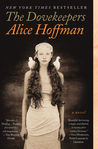
Among other things, the sins of the world–from Nazi Germany to the U.S. and other countries who wouldn’t accept Jewish refugees–are still strongly on my mind. So, this novel stops the world of today and takes me back into the horrors suffered by the Jews in Germany, France and elsewhere. Hoffman’s novel is tantamount to an immersion in a history we cannot bear.

So, I’m too biased about the subject matter to speak objectively about The World That We Knew.  I think it is perfect, complete (as is typical of Hoffman in The Dovekeepers) with a blend of brutal facts, magical realism, and characters we care too much about before they are gone. There was love here, too, in spite of the atrocities surrounding the characters.

Perhaps that love was enough, a brief flash of divine light above misbegotten times, places, and unspeakble crimes.

Malcolm

Review: ‘The Dovekeepers’ by Alice Hoffman

The DovekeepersThe Dovekeepers by Alice Hoffman
My rating: 5 of 5 stars

“Masada The last bastion of the Jewish freedom fighters against the Roman army symbolizes the end of the Kingdom of Judah at the end of the Second Temple period and its violent destruction. On the mountaintop there are remains of magnificent palaces from the reign of King Herod and silent committees for the Roman siege and the bitter end. The mountain that became a symbol.” – Masada National Park Website

Our knowledge of the siege of Masada by the Roman legion comes to us primarily from the chronicle written by Josephus, a Jewish rebel leader who was captured by Rome in an earlier battle, became a Roman Citizen, and was commissioned to write about the Jewish-Roman war. Josephus’ account, which some consider problematic and likely to have a Roman bias, has been enhanced by conservation, restoration, geographical, and archaeological work that’s ongoing at the site in modern-day Israel.

Alice Hoffman’s imagined and heavily researched retelling of those final days at Masada through the eyes of four strong and complex women characters, Aziza, Yael, Revka, and Shirah, breathes new life into our understanding of what has been called the Giant Revolt as well as the freedom fighters’ culture, daily lives and spiritual beliefs. These four women are Masada’s dovekeepers, looking after massive dovecotes where the birds are fed and cared for, the eggs gathered for food, and the excrement taken to enrich the mountain’s gardens and fields.

The storyline follows these women–who to varying degrees follow the outlawed practices of witchcraft–as they travel to the mountain, become part of the daily life and commerce of the community there, and as the Roman Legion approaches and begins its siege, how they coped with the developing reality of a Roman victory.

These four women, as well as many other players in the story, are deeply developed by Hoffman to the extent that we know their inner-most thoughts and dreams and the secrets of their souls. Hoffman’s penchant for magic plays a strong role here. Since the outcome of the novel cannot go against history, the magic will not defeat the Romans. But it will play a role in the characters’ lives.

Magical realism ties the book together in many respects because magic cannot be separated from the four women’s view of the world or their daily practices. Also, like modern-day traditional witchcraft and conjure, magic cannot be easily separated from the place where it lives. The result for the reader is an immersion into Masada. What we know after reading the novel may not be wholly factual (thought Hoffman defers to Josephus’ account), but it is definitely true.

The truth of the matter is that we come away from this wondrous book, having read a compelling story and with a greater understanding of what it might have been like to be trapped within that mountain fortress nearly 2000 years ago. Some critics say The Dovekeepers is Hoffman’s masterpiece. That’s an understatement. You must read it when you’re ready to read it, for it’s not an easy story. It will probably change you. Some day–but not today–I will forgive Alice Hoffman for plunging me into the horrors and triumphs of that faraway world.

–Malcolm

Malcolm R. Campbell is the author of two Florida folk magic novels, “Conjure Woman’s Cat” and “Eulalie and Washerwoman.” Learn more on his website.

View all my reviews