Teachers who are suddenly assigned to teach a course they’ve never taught before, often say that they use the course’s text book to stay just ahead of their students.
Writers often do the same thing. Let’s say my character hitches a ride and is let out next to a Florida swamp when the driver comes to a fork in the road and that’s the end of the ride. What does the character see? I don’t know. Well, I partly know because I grew up around Florida swamps. But that’s been a while. So, I get out a couple of my flora and sauna books about Florida and learn that the character can see. That includes things he can’t see that might hurt him.
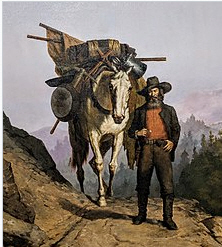
So, I’m like the teacher, except in each case, I’m writing my way through locations and incidents that are new to me. In my novel in progress, a major character is at a livery stable, one owners by his two partners in a pack train operation. While I’ve ridden a fair amount, I’ve never run a pack train, much less had to know anything about the pack horse’s harness, how to load up, and what to expect a;pmh the trail.
 Pack trains are still used in National Parks and other wilderness areas. However, tracking down working packers seemed like it would be more time consuming than reading books and following up with Google searches to fill in the gaps. So, now you know why there’s a book pictured here.
This book, like the earlier clasic by packer Joe Black, Horses, Hitches, and Rocky Trails: The Original Guide to Packing, Camping, and Getting Along with the Wilderness, has all the detail a neophyte needs to stay ahead of his characters. If the whole novel centered on a packtrain, I would interview people who run them after eading the books.
Both books are written by people who know horses, know tack, have plenty of packing experience, and can draw highly detailed and accurate illustrations. In reading these, I decided to change from mules to horses in the book since the books focus on horses and I’m more comforable staying within the authors’ specialties rather than trying to apply them to mules. Either one works in the novel.
Unlike people taking courses or receiving technical instruction in order to do a specific job, an author isn’t researching the subject in order to go out and do it. S/he just needs to be able to create an accurate representation of the work. Needless to say, this approach wouldn’t work if I were training student pilots and I’d never flown a plane. But for fiction writing, it works fine. And, like a reporter, I always try to find multiple sources. So, I can’t claim to be able to picket break a horse, but I can say I know (and my character knows) why you’d want to do it for horses on your pack train.
Research is always the aspect of the muse what stays with me throughout the writing to make sure I.m not writing without a figurative paracute.
–Malcolm
Malcolm R. Campbell
 Publisher: Thomas-Jacob Publishing
Experience the audio edition!
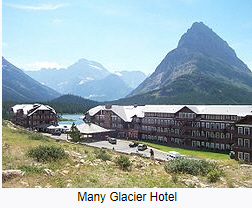 The national parks are suffering a similar death, one in which most people consider humans to be the most invasive species with the once pristine preserve. Years ago, Glacier National Park was considered the most threatened park in the NPS system, primarily from air and water polution that arose outside its borders. Now the new threat comes from within as the NPS continues to resist putting a cap on the number of visitors allowed each year.



 Mary Clearman Blew grew up on a small cattle ranch in Montana, on the site of her great-grandfather’s 1882 homestead. Her memoir “All But the Waltz: Essays on a Montana Family,” won a Pacific Northwest Booksellers Award, as did her short story collection, “Runaway.” –
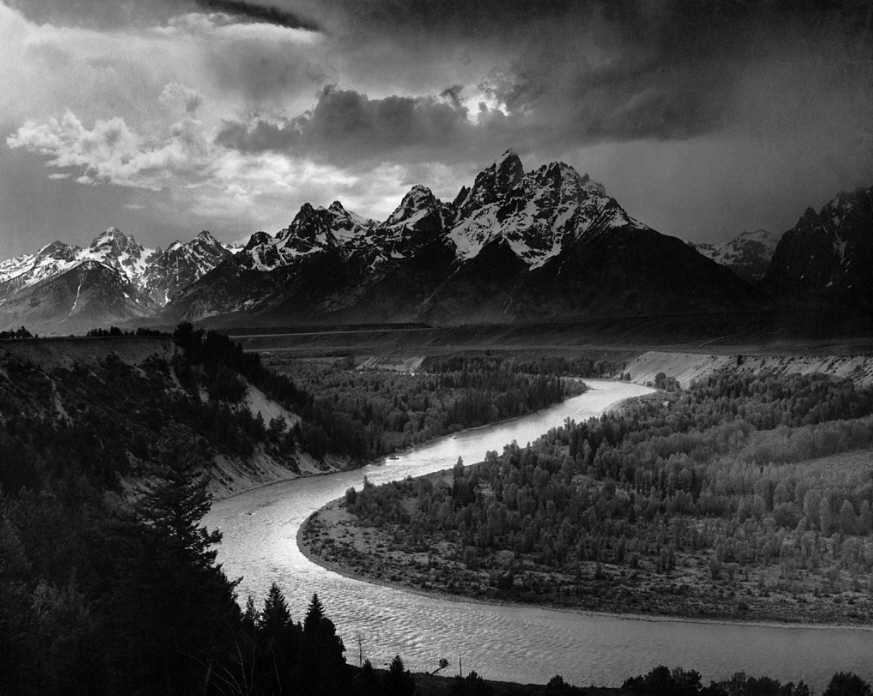
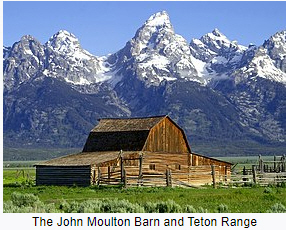 These days they’re usually in color and often show The John Moulton Barn. I see this view almost weekly on Facebook. If I hadn’t seen various sections of the Snake River when I was young, I’d be tempted to ask: “Is there another side to these mountains and, if so, why don’t we ever see it?”
 Sometimes evil spirits, haints, and things that go bump in the night write my columns while I’m sleeping or passed out. No luck, so I showered, shaved, drank two cups of Maxwell House Coffee, and walked to the bad part of the neighborhood which, actually, is right next door. I cut through the unmowed backyards so the “patriots” wouldn’t see me and knocked on the man’s back door.
 If Chef Gordon Ramsay asked me as a contestant on “Hell’s Kitchen” or “MasterChef” to prepare my signature dish, I’d prepare a medium-well steak, with a baked potato wrapped in tin foil. If you watch either of these shows, you know (a) that Ramsay expects all steaks to be medium rare (i.e. raw), and (b) doesn’t believe in the concept of an entre with sides but one cohesive dish.
 If you present an entre on “Chopped” with separate side dishes, the judges say, the flavors are here, but it’s not a cohesive dish.
 Malcolm's Round Table