
Let’s learn Gàidhlig this week
 Since the gods have blessed me with a Scots ancestry, I know without looking it up that “Gàidhlig” is Scots Gaelic. While I read and generally understand spoken Scots (a completely separate and distinct language from English or Gàidhlig), I’m in bad shape then it comes to Gàidhlig, so I must warn you that achievieving luency won’t be a peace of cake even if you have all of Gaelic singer Julie Fowlis’ recordings.
As you can tell by the graphic, I didn’t throw a dart at the calendar to pick when all of you will start learning Gàidhlig.
Benefits of learning Gàidhlig
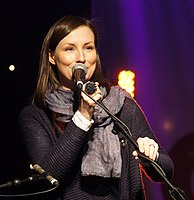 You can listen to Julie Fowlis’ songs without having to read the “liner-notes” translation.
- When you visit Scotland, especially the Outer Hebrides, and hear people shouting, you’ll be able to tell whether or not they’re swearing at you. If you hear, “Gorach Pios De Cac,” you should leave.
- You and your significant other can whisper sweet nothings to each other here in the States without other people listening in. For example, you can say “Feumaidh sinn rùm fhaighinn” and those next to you in the Walmart checkout line won’t have a clue–not that they do anyhow–unless you’re acting like you need to get a room.
- You’ll be supporting the efforts of those who are trying to keep Gàidhlig from becoming extinct. Only 1.1% of Scots speak it while 30% speak Scots.
- You’ll be doing your part to make the world a better place. As the World Gaelic Week site suggests, Remember that you download the official Seachdain na Gàidhlig Resources here or access Gaelic language resources here.
- You’ll know how true Highlanders really speak as opposed to the Scots that many novelists have them speaking. (For shame.)
- And, you’ll know my feelings about you, dear reader:
Tha thu am measg cuid de na leughadairean as fheàrr air aghaidh na Talmhainn agus bu chòir dhut duais fhaighinn airson mo bhlog a leughadh.
Scene Setting in Novels – Part II
In yesterday’s post, I mentioned that “scene setting” remains a popular technique for beginning a story or a novel. According to Janice Hardy, “The opening scene is the first glimpse readers get of the novel. It’s an audition for their time, and provides the critical elements and details they’ll need to understand the story, protagonist, and setting. Some novels open with the story, but others open with a prologue or glimpse of something outside the main characters and time frame.”
The overarching metaphore in my short story “Moonlight and Ghosts” is moonlight, so moonlight was my focus in the story’s opening: “The light of the harvest moon was brilliant all over the Florida Panhandle. It released the shadows from Tallahassee’s hills, found the sandy roads and sawtooth palmetto sheltering blackwater rivers flowing through pine forests and swamps toward the gulf and, farther westward along the barrier islands, that far-reaching light favored the foam on the waves following the incoming tide. Neither lack of diligence nor resolve caused that September 1985 moon to remain blind to the grounds of the old hospital between the rust-stained walls and the barbed wire fence, for the trash trees and wild azalea were unrestrained, swings and slides stood dour and suffocated in the thicket-choked playground, humus and the detritus of long-neglect filled the cracked therapy wading pool, and fallen gutters, and shingles and broken window panes covered the deeply buried dead that had been left behind.” [Copyright © 2019 Malcolm R. Campbell]
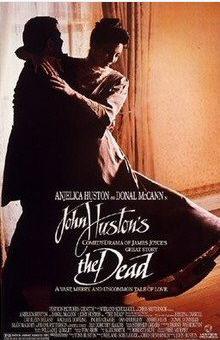 One way to add depth to a scene setting opening is through a reference to a scene in a novel, short story, or film. In my case, my opening lines were inspired by the closing lines of the James Joyce novella-length short story “The Dead” which appeared in his 1914 Dubliners collection that focussed on middle class life. I didn’t mention the link in my story, because mentioning it didn’t really fit, and because what I was thinking about was Joyce’s use of a snow metaphore in a story about the dead (which is how my character saw the existence of forgotten people in mental instutions). Here’s Joyce’s closing to “The Dead”:
“Snow was general all over Ireland. It was falling on every part of the dark central plain, on the treeless hills, falling softly upon the Bog of Allen and, farther westward, softly falling into the dark mutinous Shannon waves. It was falling, too, upon every part of the lonely churchyard on the hill where Michael Furey lay buried. It lay thickly drifted on the crooked crosses and headstones, on the spears of the little gate, on the barren thorns. His soul swooned slowly as he heard the snow falling faintly through the universe and faintly falling, like the descent of their last end, upon all the living and the dead.”
Those who recognized the structure of my opening, would understand–as they read the story–my allusion to Joyce’s story and snow metaphor. Those who didn’t recognize it really didn’t lose anything except another piece of information.
My indirect reference to “The Dead” was in no way an attempt to elevate my story to the level attained by Joyce’s story that T. S. Eliot said was “one of the greatest short stories ever written.” You can read Joyce’s story here. John Huston adapted the short story for the screen in his 1987 film starring his daughter Anjelica Huston. The closing lines of Joyce’s story made a very effective voice-over in the film.
I agree with Shmoop’s contention that those lines are among the most famous in 20th century literature. Sparknotes states that “The snowfall itself, like death, is indifferent; it falls on everyone dead and alive, regardless of class and nationality. In this way, death is also the great unifier between past and present, suggesting a broader connection to ‘the wisdom of the ages.'”
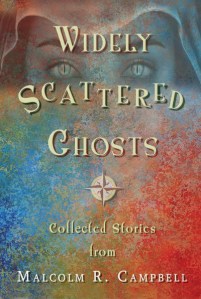
I view light, moonlight or other light, the same way: it’s a force that is open to everyone, ghosts or otherwise, though I don’t think the light is indifferent. These thoughts inspired by “The Dead” were on my mind as I wrote “Moonlight and Ghosts,” the opening story in Widely Scattered Ghosts.
Novel and short story openings: scene-setting
“An establishing shot in filmmaking and television production sets up, or establishes, the context for a scene by showing the relationship between its important figures and objects. It is generally a long or extreme-long shot at the beginning of a scene indicating where, and sometimes when, the remainder of the scene takes place.” – Wikipedia
In a novel or a short story, such a beginning is often called “scene setting.” It’s still a popular way to begin a novel or story even though films and TV shows don’t use establishing shots as much as they once did, opting for a quicker move into the story line rather than focusing on location or tone.
Some of the more widely known establishing shots in feature films occur in “Citizen Kane,” “Manhattan,” “The Exorcist,” and “Lawrence of Arabia.” In novels, Moby Dick and A Tale of Two Cities are often cited for their opening scenes. Here’s the scene from “The Exorcist”:

(I read the novel and saw the movie and thought this opening as very effective.)
Sometimes an opening scene in a story or novel or the establishing shot in a film also refers (directly or indirectly) to a scene or setting or style in an earlier movie or book when the tone or location of both works is similar. I apologize for the shameless promotion here, but I used this technique with the scene setting opening of my short story “Moonlight and Ghosts” which appears in the collection Widely Scattered Ghosts.
Here’s my “establishing shot” style opening to that story:
“The light of the harvest moon was brilliant all over the Florida Panhandle. It released the shadows from Tallahassee’s hills, found the sandy roads and sawtooth palmetto sheltering blackwater rivers flowing through pine forests and swamps toward the gulf and, farther westward along the barrier islands, that far-reaching light favored the foam on the waves following the incoming tide. Neither lack of diligence nor resolve caused that September 1985 moon to remain blind to the grounds of the old hospital between the rust-stained walls and the barbed wire fence, for the trash trees and wild azalea were unrestrained, swings and slides stood dour and suffocated in the thicket-choked playground, humus and the detritus of long-neglect filled the cracked therapy wading pool, and fallen gutters, and shingles and broken window panes covered the deeply buried dead that had been left behind.” [Copyright © 2019 by Malcolm R. Campbell]
- The story takes place on a moonlit night in an abandoned mental hospital where there are real and figurative ghosts.
- Before closing, the level of care at this hospital declined to the extent that patients there could be considered, figuratively speaking, dead.
- This story also sets the tone for the short story collection in that both the moonlight and the ghosts are widely scattered.
This opening is closely modelled after the tone and syntax of a famous passage in a famous short story. Since I don’t mention that story or its author in the text, the opening has to work for those who don’t know the connection between this opening and the famous passage. The same would be true if I’d quoted a dramatic or a comedic line from a movie or book: those who know where the line came from, get “something extra” while those who don’t know can still enjoy and understand the line.
In the case of my opening here, those who know what it’s based on will find a deeper level of meaning while those who don’t know will still grok the tone of the first paragraph.
Okay, I’m not going to tell you the short story I used as a model except to say it was written by my favorite author and is a bit old, so it’s probably not read very often these days outside of college Lit courses. If you know what story I used, tell me in the comments. If you don’t know, I’ll tell you in tomorrow’s post.
Erin go bragh, or else
If you know what’s good for you, you’re celebrating St. Patrick’s day and saying Erin go bragh (yes that’s the correct saying) which means “Ireland to the end of time.”
 According to the all-knowing and quasi divine Internet, that phrase was first heard during the “Irish Rebellion of 1798 when a group of Irish rebels staged an uprising to protest British rule.” It didn’t work out. Nonetheless, as you know, I’ll always side with anyone trying to break free of British rule, so I can be counted on to raise a glass or two of Knappogue Castle 12 Year Single Malt to celebrate the man who converted the Irish to Christrianity. Seriously, why did he do that? Their old-time Celtic beliefs were just fine.
Okay, we won’t worry about the details except to say that today we support the Irish with or without the saint or the U.K.
P.S. Sorry, Ireland, but I wore my green shirt yesterday. Oops.
Fiction That Goes Beyond the Ukraine Headlines | Kirkus Reviews
As much time as I spend reading newspaper and magazine stories about the Russian invasion of Ukraine, not to mention Instagram posts and Twitter threads, I still find myself wanting to read Ukrainian fiction, to learn more about the country on its own terms.
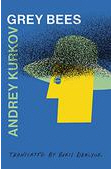 There isn’t a huge amount available in English, but if you can wait until March 29, Deep Vellum will be publishing Andrey Kurkov’s Grey Bees, written in 2018, in a new translation by Boris Dralyuk. Set in the “Grey Zone,” the no-man’s-land between Ukrainian soldiers and pro-Russian separatists in the Donbas region, it tells the story of beekeeper Sergey Sergeyich, who finds himself one of the last two inhabitants of his forsaken village. Our review says, “Kurkov transforms the abstractions of geopolitics into an intensely human account of compassion and persistence.”
Source: Fiction That Goes Beyond the Ukraine Headlines | Kirkus Reviews
We can learn a lot about a country through its fiction, essays, and poetry; I appreciate the articles I’ve seen lately that focus on materials written by Ukrainians and/or about Ukrainians. If you read the article, you’ll find several other reading suggestions.
Meanwhile, in an article from Publishers Weekly, comes this news: “Ukrainian publishers are turning to Polish and Lithuanian partners to print and distribute books for the more than three million Ukrainian refugees that have fled the war in their country. Ranok, Urbino, and VSL, among the most prominent Ukrainian houses, and have already begun printing in Poland, while the Ukrainian Book institute is working with smaller Ukrainian houses to collect print-ready files to send to printers abroad.”
You’ll find some audiobooks to listen to from this article in the Seattle Times: “Dive beneath the surface of the Ukraine-Russia War with these 6 audiobooks”
As David Wright says in the lead, “As all eyes turn to Ukraine, audiobook listeners can dive beneath the roiling surface of each day’s news to better understand the history, culture and experiences of Ukrainians and Ukrainian Americans.”
–Malcolm
За Україну (for Ukraine)
Я читав, що американці не воювали б так, як ви воювали, якби на нас напали, як на вас.
Ви надихаєте нас і соромите нас, тому що ми не втручалися. Ми надіслали зброю та припаси, і ми чули, що вони були корисними. Якщо наша відправка допомогла, то ми можемо спати вночі.
 Ми погано спимо. Образи з щоденних новин про смерть і руйнування в Україні переслідують наші мрії. Деякі з нас мріють, що ми бачимо жах на власні очі, тому що саме так ми повинні бачити його – а не на телебаченні, як ніби ваша боротьба – це фільм.
Можливо, ваша сміливість одного дня надихне нас знайти власну мужність, щоб врятувати себе, якщо до цього трапиться, і врятувати інших, які просять нашої допомоги. Сьогодні ми відпочиваємо в цілості й здоров’ї в наших домівках, далеко від звуків бомб, танків, ракет та останніх слів загиблих. Завтра, можливо, ми схаменуємося і відповімо на ваш дзвінок.
Поки не настане завтрашній день, ви перебуваєте в наших думках і на нашій совісті. Мені шкода, що ми не робимо більше, коли наші боги говорять нам, що ми повинні робити більше.
Ми любимо вас більше, ніж дозволяє наша влада.
Translation:
I have read that Americans would not fight as you have fought if we were attacked as you were attacked.
You inspire us and you shame us because we did not intervene. We sent weapons and supplies, and we hear that those were helpful. If our shipment helped, then we can sleep at night.
We are not sleeping well. Images from the daily news of death and destruction in Ukraine haunt our dreams. Some of us dream we are seeing the horror first hand because that is how we should be seeing it–not on television as though your struggles are a movie.
Perhaps your courage will one day inspire us to find our own courage to save ourselves if it should come to that, and to save others who ask for our help. Today we rest safe and sound in our homes that are far away from the sounds of bombs and tanks and missiles and the last words of the dead. Tomorrow, perhaps, we will come to our senses and answer your call.
Until that tomorrow arrives, you reside heavily within our thoughts and upon our consciences. I am sorry we are not doing more when our gods are telling us we should be doing more.
We love you more than our government will allow.
All that nasty stuff that happened to you makes good story material
 Ne Obliviscaris (forget not) is the motto of the Clan Campbell. And I don’t. When I was in an encounter group, it came out that I rememebered the nasty stuff and wasn’t very forgiving about it.
“Why do you hold on to it?” asked the leader.
“Because sooner or later I’ll write about it,” I said.
Not in terms of revenge, naming names, and teaching people a lesson. No, it just happens to be potent story material, and since it has a huge impact on me, I could put it in a short story or novel and when Idid, the angst came across as real and true.
I don’t care much of “tell all” memoirs that hurt other people. I’m more interested in what I felt when I was, for example, betrayed, because now I can accuratelly write about a character who was betrayed.
I’m not sure this is psychologically healthy. Probably not. But if you’re stuck being unable to forgive and forget, you can write some mighty strong fiction. You have, so to speak, a deep well of nastiness at your disposal that can become a part of your characters.
In general, I’m not a team player. That means I’ve had run-ins with people who are team players but were getting screwed by those whom were most loyal to. I didn’t understand selling out to the devil and they didn’t understand not pitching in. Such encounters sit in mental files waiting for the day when I’ll have a character who sold out to some blind authority figure and I’ll suddenly realize I’m writing what I know.
I’ve always thought that an author’s experiences made for some of their best work because they were telling stories that they lived through. Your “dark side” is a powerful ally when writing.
Sure, it might lead you do drinking too much, but that’s the price we pay for coming up with page-turner stories.
My protagonist, Jock Stewart, doesn’t like authority figures. Gosh, I wonder where I got the information to write about that.
That long line of refugees
When Ernest Hemingway’s dispatches from the Greco-Turkish war of 1922 began appearing in a Toronto newspaper, readers discovered a new style of war reporting that read, in some ways, like a novel, telling a story that put readers in the story.
When I read these dispatches during my journalism school days, I was most taken by his description of an endless line of refugees: “Minarets stuck up in the rain out of Andrianople across the mud flats. The carts were jammed for thirty miles along the Karagatch road. Water buffalo and cattle were hauling carts through the mud. No end and no beginning. Just carts with everything they owned. The old men and women, soaked through, walking along, keeping the cattle moving. The Maritza river was running yellow almost up to the bridge. It rained all through the evacuation.”
But what impacted me most strongly, was that in a dispatch sent several weeks later, he wrote: “No matter how long it takes this letter to get to Toronto, as you read this in the Star you may be sure that the same ghastly, shambling procession of people being driven from their homes is filing in unbroken line along the muddy road to Macedonia. A quarter of a million people take a long time to move.”
The power was not only the writing, but the fact that in between reports while the world went about its everyday business, this line of people was still on the road.
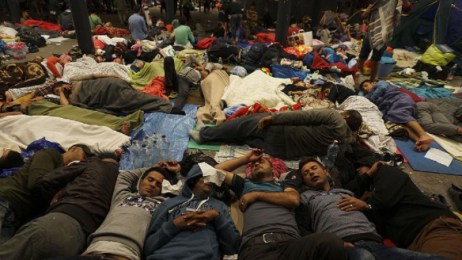
I think of these reports now as I watch or read reports of the long lines of refugees fleeing Ukraine, fleeing from a man who claims his army doesn’t target civilains, and that all the time when I’m not reading the news, those refugees–like the endless line of people from the Greco-Turkish war–have been on the road, cold and hungry while I was having dinner, being shalled while I was sleeping, walking endlesss steps while I was watching television.
The power of the scenes on TV and Internet news sites comes partly from the horrors described. It also comes from the fact that while we come and go, the tragedy in Ukraine is a 24/7 nightmare. While I’m sitting here typing this post and drinking a glass of red wine, another man is walking toward Poland carrying his dying child, one of many in an unending line of other such men and other such children.
Putin thinks he’s shooting fish in a barrel
While the war’s not going the way Putin thought it would, which the world salutes with praise of the Ukrainian people and President Zelenskyy, the end seems sadly predestined.
 And the world watches without doing anything to stop the carnage. If Russia weren’t a nuclear power whose mad leader hadn’t threatened to rain ICBMs down on any country that intervened militarily, would anyone have sent in troops backed by air strikes?
I assume so. Logically, nobody wants a nuclear war in response to knocking out Russian tanks, artillary, and planes with conventional weapons. To risk that, seems immoral.
But watching Ukraine being destroyed also seems immoral. I suppose most of us check the news in hopes that Ukraine has somehow prevailed only to find out that, say, a hospital has been destroyed and that–slowed down or not–the Russian advance is continuing.
So, we’re immoral no matter what we do. Not that that makes Putin anything other than a war criminal. But how do we sleep at night?
I don’t think we can.
I suppose the President has asked: (1) Can we kill/capture Putin with a black ops team? (2) Do we know where all of Russian’s missles are and, if so, can we take them out?
If he asked these questions, the answers were probably not to Biden’s liking. So, of course we did nothing. According to the latest poll I saw, most Americans agree with this. As far as I can tell, Europeans also agree with confining our efforts to diplomacy.
So far, I think we’re worrying more about rising gasoline prices than the number of Ukrainians killed daily by the Russians. Some speculate that if Russian isn’t stopped in Ukraine, it will move on to Moldova and Poland. This makes me wonder if doing nothing is really the best option.
What do you think?
–Malcolm
 Malcolm's Round Table