The ubiquitous fascination of the Knights Templar

“As late as the medieval era and beyond, social groups claiming to hold secret wisdom– such as the Gnostics, the Cathars or the Knights Templar, sought to establish their pedigree by linking themselves explicitly to the deep wisdom held by the ancient mystery religions; and scholars have demonstrated, in fact, that such linkages do exist.

“Fast forward to modern times. With the Enlightenment, a more secular, scientific, and overtly political outlook permeated Western society, and these elements were reflected in the secret societies that arose at the time, such as the Freemasons and the Carbonari.” – Paul Witcover

In the years after the crusaders captured Jerusalem in 1099 many Christians wanted to visit sites in the Holy Land free from interference by robbers and others in Muslim-controlled areas. Out of this need grew the Knights Templar, an organization of religious knights that ultimately became so large and wealthy, that its existence and prospective control of holy artifacts became a huge threat to Rome by the 1300s.

From time to time somebody writes a new novel or nonfiction book and the Knights appear on the bestseller lists and our fascination with the power and magic and treasure they might have controlled is reborn. Public interest was especially strong when Dan Brown’s The Da Vinci Code was released in 2006. Currently, there is speculation amongst the treasure hunters on the History Channel’s “The Curse of Oak Island” series that the Canadian island might contain the lost treasure of the Templars.
A lot of people tend to see the Templars, the Freemasons, the Illuminati, the Rosicrucians, and other mystery-school-styled groups (If they exist at all) as wholly evil and secretly in control of the world or as groups interested in the mystical side of the Christian religion and its predecessors. So much fiction (some with a lot of farfetched straying from the facts) and nonfiction about these organizations has been written that it’s often hard to sort out the real from the absurd. The “mysteries” refer to the Eleusinian Mysteries, the Dionysian Mysteries, and the Orphic Mysteries.

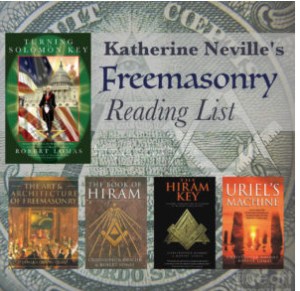
The author Katherine Neville, who was writing Dan-Brown-style novels before Dan Brown was writing them has a nice list of secret society references on her website that help separate the wheat from the chaff when it comes to the Templars, the Masons, and other groups. If you’re trying to find a starting point in Templar lore–after exhausting Wikipedia–may I suggest her list of references?

I’ve read many of the books on the list and yes, they are fascinating.

For information about the Knights Templar as they exist today in the United States, see the Grand Encampment of Knights Templar of the USA website.

My grandfather was a member of this organization and as such the commander of the Illinois Commandery where I spent many hours as a child.

–Malcolm

Excerpt: ‘Haints in the Woods’

Haints in the Woods

A Short Story by Malcolm R. Campbell ©2019

SO, MY CONJURE woman was fit to be tied.

“Sweet kitty, I’ve been married four hours and my groom’s done run off. Lena, I don’t reckon Willie needs all afternoon to fetch a quart of Borden’s Milk for flapjacks from the Mercantile. By now, he’s met a dark dusty butt down in Estiffanulga for a few hours of jelly and juice.”

She spat a long stream of tobacco juice into the dead cookfire’s frying pan with no flapjacks in it to emphasize her point of view. Then she went back to sipping her homemade moonshine and singing Sister Rosetta Tharpe songs. Folks always said her voice was just as pure now as it was a half-century ago when she sang at the jook.

Nobody pays much attention to a black cat’s opinion, but to my way of thinking, lonesome has its limits. Like a broken record, Eulalie got stuck on “The Lonesome Road,” belting it out as truly mournful as she could over and over, lingering long on the word “weary.”

Praise the good Lord, as the deacon would say, for Pollyanna chose that moment to drive her grey Ford truck through the busted section of the wrought iron fence into the backyard. She wore her favorite green capri pants, black blouse, black sling-back sandals, and a wide smile that showed off her new black lipstick and matching nail polish.

“Young people,” whispered Eulalie.

Pollyanna came up to the porch with an Alligator Supreme orange crate chuck full of who knows what covered over in butcher paper.

“Did you see a soused sinner riding his hinny back home?” asked Eulalie.

“Why, is one missing?”

“I was just telling Lena that I think Willie’s sharing jelly and juice with some dusty butt miles away from where he’s supposed to be.”

Pollyanna set down the orange crate. “I don’t even know what that means.”

“Sex and booze with a ho,” Eulalie said.

“Holy shit.”

Pollyanna slumped down into the sagging couch with a fading smile. When Eulalie handed her the Mason jar of shine, she wasn’t shy about drinking her fill.

“I ain’t really po’ moufin’ my brand-new husband,” said Eulalie. “I’m hopin’ he is a soused sinner today.”

“I know I’m repeating myself, but holy shit.”

“Beats bein’ among the dead. I threw the bones an hour ago, and they said he’s with the dead.”

Then Lena went lookin’ for him on a spirit journey, and she saw nothin’ but ace-of-spades blackness. As you white folks sometimes say, we’re on tenterhooks.”

“I can drive to the Mercantile and ask Lane if Willie’s been there,” said Pollyanna.

Eulalie smiled. “Thanks for offerin’, but we already know he came and went there and that he ain’t jawbonin’ with Lane, Rudy, or Jessamyn. Best thing you can do now is distract me with whatever you got hid in that crate.”

“I drove over to Sears Roebuck in Tallahassee and got you what I would have got you if you’d taken time for a bridal shower.”

“Kid stuff, those showers.”

Pollyanna pulled aside the butcher paper and fetched out a pale green nightgown like a magician pulling a rabbit out of a hat.

Eulalie looked like she’d seen a ghost.

“Chile, Willie can ’bout see through that.”

Pollyanna leaned into Eulalie so they were eye to eye. “That’s the point, ain’t it?”

“If I put this on, I’m either turnin’ the lights out or he’s wearin’ a grocery sack over his head.”

She looked at the tag and actually giggled loud enough to embarrass even me because she was acting young enough for a bridal shower. “Charmode Aravel with Rayon: this ain’t no fancied-up flour sack.”

“Next,” said Pollyanna, “we have a tube of Cashmere Bouquet red lipstick.”

Eulalie puckered up her mouth like she was sucking on lemons and sipped on her moonshine before she said anything.

“I ain’t painted up my face since I sang the blues at the jook. I always wore red and kept my hair unruly because the hotter I looked the bluer the blues painted up the walls and the hearts of the men who were half-listenin’ while they drank cheap beer and played dangerous cards.”

“I bet you were one classy chassis,” said Pollyanna.

“Thank you. Here, take a sip.”

Eulalie opened the tube of lipstick and made a mark on the back of her hand. “It still don’t clash with dark brown sugar. Even so, lips like cherries might scare the hell out of Willie, assumin’ that no-good man ever gets hisself back home.”

“I have an idea,” said Pollyanna.

“What’s that?”

“Grab another swig first and promise not to hit me.”

“I promise. You know, this is my best batch of shine in ages. Okay, I’m ready.”

“Rather than painting your mouth. Draw an arrow on your tummy pointing downward so Willie will know where to go if he gets lost.”

You can read the rest of this short story, my story “The Smokey Hollow Blues,” and the work of my colleagues at Thomas-Jacob Publishing for free in The Things We Write Anthology by clicking on the cover graphic above.

A few things

Those of you who’ve read this blog for a while, know that I think the Supreme Court made a horrid decision in overturning Roe v Wade and further that that decision was fueled by party politics and religious beliefs rather than a serious and objective analysis of the laws and Constitution.
This decision will unleash a firestorm of tyranny tantamount to the subjugation of women to the point that they will become second-class citizens in more ways than they already are. If the Justices had considered the entire scope of problems that can and will stem from their decision, they could have easily modified Roe within the scope of women’s liberty rights and equality rights and in a way that would block the following:

  • Contraception methods that can be construed as harming a real or imagined fetus will be banned, including the morning-after pill, if the law states that life begins at conception even though science cannot pinpoint when that moment is until long after the fact.
  • Pregnancies will be registered and tracked to ensure that if they aren’t carried full term to a viable birth, women will face prosecution for miscarriages, or activities that could have harmed the fetus.
  • Doctors will be supplied with a list of medications and procedures that might remotely jeopardize a fetus and will be admonished under the threat of sanctions to withhold these from pregnant or potentially pregnant women.
  • The birth rate will go down as more and more women balk at the government oversite into their lives and medical care.
  • Suicides and illegal abortions will rise when women have no alternative, due to the law, to carrying pregnancies caused by rape and incest to term and further allowing, by law,  the rapists’ parental rights.
  • Freedom of speech will be curtailed on subjects related to the above because those speaking out will be considered to be advocating ways around these draconian results.
  • Needless to say, the poor will suffer the greatest injustice because they will not be able to afford to travel to alternative jurisdictions, especially if pregnant women are prohibited from traveling either because such travel might harm a fetus and/or end up in a state allowing abortions.

Some of these things have already happened.

–Malcolm

P.S. This will be my last post about this subject because people whom I love and respect are on the other side of the debate. I cannot in good conscience oppose them in public forums.

I’m pleased when a Google book search leads me to an independent bookstore

When I’m doing online research and see a footnote for a relevant book, I tend to first search for that title on Google because I’m lazy. It takes fewer keystrokes to do that than to go to Amazon or B&N and search for the title there. I often find the book at an independent bookstore that provides online ordering.

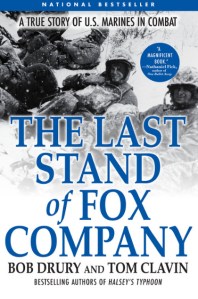
Yesterday, I was looking for this book because I refer to the battle multiple times in my novel in progress. General McArthur, wanting the glory of saying his troops pissed in and/or drank out of the Yalu River between North Korea and China, sent his troops north, ignoring the intel that his marines were marching into a trap near the Chosin Reservoir.
His marines were badly outnumbered, especially Fox Company which was guarding a strategic pass. The battle of Fox company is one of the most heroic in marine corps history in a war most of us have forgotten.

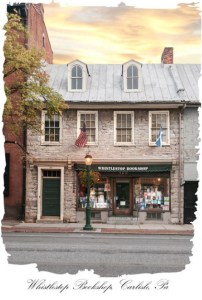
So a Google search on the title leads me to a copy available at the Whistlestop Bookshop an independent bookseller in Carlisle, Pennsylvania.  With a few keystrokes, I ordered the book, pleased to be buying it from somebody other than Amazon. Good, I had the book on order without buying it from that near-monopoly that offers everything from A to Z.

Looking at the ABOUT US page, I know that if I lived in Carlisle. I would go to that store:

Whistlestop Bookshop opened in Gettysburg in August 1985 at 11 West Railroad St, right across from the Lincoln Diner.  A quick two-and-a-half years later, in January 1988, we opened a second store in Carlisle at 152 West High Street, next door to Back Door Cafe and the Bosler Memorial Library. 

Eventually, both stores moved to larger quarters.  Whistlestop Gettysburg moved to 104 Carlisle Street.  We closed it at the end of July 2004, after 19 years. 

But, I don’t live there. No problem. They have an online presence I can use when looking for books in addition to Powell’s, IndieBound, and Bookshop.org. I see no reason to automatically head to Amazon because there are alternatives. A lot of people I know gripe about Amazon, but when they want a book, that’s where they go. I don’t quite understand that, especially when there’s a bookstore in the town where they live where they can BUY LOCAL.

Within a few days, I’ll be reading about “frozen Chosin,” as the marines called it.

Malcolm

Happy Birthday, USA

Dear USA,

You were conceived and safely delivered into the world 246 years ago with the highest of hopes that a republic had been born that would last for eternity, as Franklin said if we can keep it.  You were nearly lost between 1861 and 1865 when 620,000 men died trying to keep you together and tear you apart.

Since then, you have given hope to many and taken away hope from others because every hatred and misstep you ever took remains in our collective psyche to haunt us and divide us and cause the meanspirited amongst us to keep trying to tear us apart. Some say you are in the middle of a “cold civil war,” the heat of which is seen in our cities at night.

Many of us think you are on the cusp of losing your way and that we’ll fall into limbo if the disparate voices aren’t willing to pull back a little from their most extreme beliefs and find a common ground.  We need that common ground for, as Lincoln said, “A house divided against itself cannot stand.” At present, your people are very much divided.

Quite likely, I’m naïve and still believe you will long endure. I still believe there’s a chance for you, even now.

Malcolm

Labor Day Weekend means RAIN

  • Happy 4th of July Weekend. If you live near me–and I feel safer knowing you probably don’t–then you’re having rain with more to come. After some of the news we’ve been seeing, I should probably say, “Rain, well that figures.” 
  • Note to those of you in Scotland, Northern Ireland, and Wales. It’s past time for y’all to declare independence from England, the U.K, the empire, or whatever it is these days. Don’t wait.
  • Author Keith Willis, a long-time friend of mine, will soon be releasing the next book in his swashbuckling, dragon-filled Knights of Kilbourne fantasy series. Stolen Knight, the 4th in the series, will be out soon. Keith and I met when I was an instructor and he was a student at Berry College in Rome, Georgia. He was better at being a student than I was at being an instructor. My excuse is that I got the job a few days before the first class and had to move down to Georgia from Minnesota in my half-broken town Jeep. No time to prepare for the kinds of courses I wanted to teach.
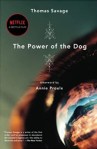
  • A few days ago, I wrote a post about author Thomas Savage.  At least one reader has commented on the autobiography’s high price. That, unfortunately, is the way of things for University Press books. I don’t understand the thinking unlesss it comes from ther expectation that the book will be sold to other colleges and univerities with plenty of money. I meant to suggest a book you might start with if you’re new to Savage. A good place to start, I think, is with The Power of the Dog which Jane Campion made into a film by the same name in 2021.
  • For those of you who keep wanting to make stuff like chickpea salad, I should remind you that I don’t consider that kind of thing to be food, especially for a holiday weekend. It reminds me of the kind of stuff the cooks make on the TV show “Chopped.” Look at those judges for the show and ask them if they think the chefs who compete on the show are really cooking normal food. Hmm, I don’t think the judges are that blurry in “real life.”

  • Speaking of food, I’m preparing Kraft Mac & Cheese of supper. I’m glad the company has finally updated their packaging to display the product as we refer to it. If they’d asked me, I would have suggested they add the words “comfort food” somewhere on the box. 
Malcolm

W. P. Kinsella’s magical realism in ‘Shoeless Joe’ and ‘The Iowa Baseball Confederacy’

If you watched Ken Burns’ 1994 documentary “Baseball,” perhaps you felt the magic in the sport. PBS called the film, “An American epic overflowing with heroes and hopefuls, scoundrels and screwballs.” If you sense this magic at the ball field or even while watching a game on TV, perhaps you can understand why Canadian author W. P. Kinsella (1935-2016) used magical realism in Shoeless Joe, The Iowa Baseball Confederacy, and his later novel Butterfly Winter.
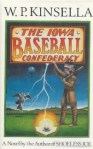
If you watched the feature film based on Shoeless Joe, “Field of Dreams,” or the movie version of “The Natural,” you might ask how anyone could write sincerely about baseball without magical realism. Shoeless Joe Jackson (1887-1951) was (and is) considered one of baseball best players with the third highest batting average in the major leagues. Even now, many dispute the claim he was involved in the 1919 “Black Sox scandal” in which White Sox players (including Jackson) were blamed for trying to throw the World Series against the Cincinnati Reds. Jackson–whose participation is doubted–was banned from baseball. In some ways, the book and film redeem him even though MLB never would.

The spirit of the magic is aptly summed up in the New York Times review of Shoeless Joe that includes the following excerpt that appeared after a character was discovered to have been lying about his baseball experience: “I imagine Eddie Scissons has decided, ‘If I can’t have what I want most in life, then I’ll pretend I had it in the past, and talk about it and live it and relive it until it is real and solid and I can hold it to my heart like a precious child. Once I’ve experienced it so completely, no one can ever take it away from me.'”
This is the way of sports. When actuality doesn’t meet our needs, dreams suffice.

Wikipedia says,” The Iowa Baseball Confederacy (1986) another book blending fantasy and magical realism, recounts an epic baseball game a minor league team played against the 1908 World Champion Chicago Cubs” and Butterfly Winter as “The story of Julio and Esteban Pimental, twins whose divine destiny for baseball begins with games of catch in the womb, the novel marks a return to form, combining his long-held passions of baseball and magical realism.”
Great reading if you’re a baseball fan or even if you aren’t. Eitherway, you’ll suspect that magic exists by the time you get done reading the books.

Malcolm

Malcolm R. Campbell is the author of magical realism novels and short stories from Thomas-Jacob Publishing.

Looking for traditional western fiction and nonfiction: check the yearly Spur awards

Western fiction and nonfiction, as I’m using them here, mean traditional books set in the American West, though “Spur Awards” is probably a good tip-off to that. The awards, which are announced in March by the Western Writers of America often include books that a more varied than the old shoot-em-up stereotype of earlier western novels.

You can find the winners on the organization’s website here, though a software glitch is keeping the lists of winners prior to 2022 from displaying.

According to the website, “Western Writers of America annually honors writers for distinguished writing about the American West with the Spur Awards. Since 1953 the Spur Awards have been considered one of the most prestigious awards in American literature. Spurs are given for the best western historical novel, best western traditional novel, best western contemporary novel, best short story, best short nonfiction. Also, best contemporary nonfiction, best biography, best history, best juvenile fiction and nonfiction, best drama, best documentary, and best first novel as well as best first nonfiction book.”
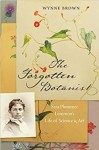

I’m especially interested in The Forgotten Botanist: Sara Plummer Lemmon’s Life of Science and Art by Wynne Brown which won a Spur for best biography this year. Books such as this are interesting for multiple reasons, one of them being they are great when an author is doing research. Even the titles of the winners and finalists can suggest new subjects for the curious author.

I’m also interested in Defending the Arctic Refuge: A Photographer, an Indigenous Nation, and a Fight for Environmental Justice by Finis Dunaway. The publisher’s description is more than enough to but this book on my TBR list: “Tucked away in the northeastern corner of Alaska is one of the most contested landscapes in all of North America: the Arctic National Wildlife Refuge. Considered sacred by Indigenous peoples in Alaska and Canada and treasured by environmentalists, the refuge provides life-sustaining habitat for caribou, polar bears, migratory birds, and other species. For decades, though, the fossil fuel industry and powerful politicians have sought to turn this unique ecosystem into an oil field. Defending the Arctic Refuge tells the improbable story of how the people fought back. At the center of the story is the unlikely figure of Lenny Kohm (1939–2014), a former jazz drummer and aspiring photographer who passionately committed himself to Arctic Refuge activism.”

If you like traditional trapper, rancher, U.S. marshal, and other works, there’s a lot here to like, including Ridgeline, Dark Sky: A Joe Pickett Novel, and Cheyenne Summer: The Battle of Beecher Island: A History. 

Good stuff, if you know where to look.

Malcolm

The nostalgia of Haynes Guides to Yellowstone

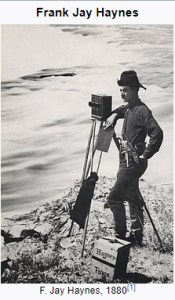
“Frank Jay Haynes (October 28, 1853 – March 10, 1921), known as F. Jay or the Professor to almost all who knew him, was a professional photographer, publisher, and entrepreneur from Minnesota who played a major role in documenting through photographs the settlement and early history of the great Northwest. He became both the official photographer of the Northern Pacific Railway and of Yellowstone National Park as well as operating early transportation concessions in the park. His photographs were widely published in articles, journals, books and turned into stereographs, and postcards in the late 19th and early 20th century.” – Wikipedia

According to Yellowstone Forever, “In 1884, Haynes opened a photography store and studio at Mammoth Hot Springs. This would be the first of numerous such photo shops to be erected throughout the park. Haynes was, for all intents and purposes, the official photographer of Yellowstone National Park for years to come. His dedication to the park and to photography was carried on by his son, Jack Ellis Haynes. Millions of photographs, postcards, guidebooks, and souvenirs later, the Haynes family came to have a great impact in bringing Yellowstone to the world.”

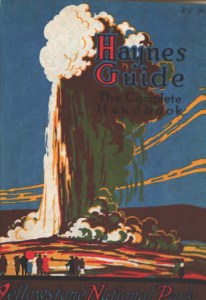
His prolific output included a yearly Haynes Guide to Yellowstone that, with the later management of his son Jack, was published up until 1966. The heavily illustrated guides included maps, points of interest, and park rules and regulations. You can find a downloadable PDF of the 1916 guide here. These guides come up for sale at online booksellers and eBay from time to time. Many of Haynes’ early popular color photographs were hand-tinted. He also found success with his stereo camera and the resulting stereographs as well as a bulky camera that produced images on 20″ x 24″ glass plate negatives that showed a great deal of detail.

The preface of the 1916 edition shows that Haynes had an extensive vision of what the guides should accomplish: “The purpose of this book is to guide the tourist on his tour of Yellowstone National Park and to make his visit pleasant and interesting. To this end, it names, describes, and pictures all the points of interest in the park and presents in concise and readable form the scientific and historical information necessary to a clear understanding of the various phenomena.”

Haynes served as the official photographer for Yellowstone National Park as well as the Northern Pacific Railway. The railroad, which served the park, had a fair amount of interest in promoting Yellowstone just as the Great Northern Railway was instrumental in the development and promotion of Montana’s Glacier National Park.

Because of his enthusiasm and enormous photographic output, Haynes was well-positioned to provide the stuff of which the park guides were based. Jeff Malcolmson, in “A Photographic Journey to Wonderland” (Montana The Magazine of Western History, Summer 2022) writes that Haynes’ “First journey into Yellowstone would define the trajectory of his career as perhaps the most prominent early photographer of the park.”

In his cutline for the portrait of Haynes, Malcomson says, “Note that he is armed with a revolver and a knife, ready to do battle with any wildlife” Personally, I don’t think either would be very effective against a charging grizzly. I’d rather have bear spray (not pepper spray).

When I was in Yellowstone in 1965, I wish I’d been aware of the guides. I would have purchased a copy of the penultimate edition even if it would be some years before I discovered what a treasure I had.

Malcolm

New Title: ‘Savage West: The Life and Fiction of Thomas Savage’

“Thomas Savage (April 25, 1915 – July 25, 2003) was an American author of novels published between 1944 and 1988. He is best known for his Western novels, which drew on early experiences in the American West. – Wikipedia”

For the popularity and success of his unique western novels and the awards he received, Thomas Savage (The Power of the Dog and others) is more obscure than he should be. O. Alan Weltzien hopes to change that with his 257-page biography published by the University of Nevada Press in January.

The book is available in hardcover, paperback, and e-book.

From the Publisher

Thomas Savage (1915-2003) was one of the intermountain West’s best novelists. His thirteen novels received high critical praise, yet he remained largely unknown by readers. Although Savage spent much of his later life in the Northeast, his formative years were spent in southwestern Montana, where the mountain West and his ranching family formed the setting for much of his work.

O. Alan Weltzien’s insightful and detailed literary biography chronicles the life and work of this neglected but deeply talented novelist. Savage, a closeted gay family man, was both an outsider and an insider, navigating an intense conflict between his sexual identity and the claustrophobic social restraints of the rural West.

Unlike many other Western writers, Savage avoided the formula westerns –so popular in his time– and offered instead a realistic, often subversive version of the region. His novels tell a hard, harsh story about dysfunctional families, loneliness, and stifling provincialism in the small towns and ranches of the northern Rockies, and his minority interpretation of the West provides a unique vision and caustic counternarrative contrary to the triumphant settler-colonialism themes that have shaped most Western literature.

Savage West seeks to claim Thomas Savage’s well-deserved position in American literature and to reintroduce twenty-first-century readers to a major Montana writer.

From the Introduction

“In her Publishers Weekly interview with Savage (July 15, 1988), Francesca Coltrera called Savage ‘a balladeer, almost, of the American scene.’ If so, Savage’s ballads, like many of his best known, sing sad stories, but it’s more than that. Particularly in the eight novels set in southwestern Montana and Idaho’s Lemhi River Valley, Savage wields an acidic brush, one that goes against the gain of triumphal stories of white pioneers and their prospering or floundering descendants. Savage prefers anti-heroic, acerbic flavors. His stylistic wit and play, especially his essayistic interludes, expose grim realities and lonely spaces.”

Malcolm