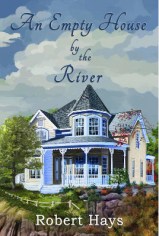
 Coming soon from Robert Hays and Thomas-Jacob Publishing, An Empty House by the River: “Lacy, who sees beauty wherever she looks and expects others to be as good as she is, can no longer count on her big brother to protect her from an abusive husband, and the family learns a hard truth: No one is immune to the quirks of fate, be they blessings or tragedies, and the river takes more than it gives.” Hays is also the author of A Shallow River of Mercy.
- I have a good case of the flu or the flue (not sure which) that isn’t being made better by the daily rain storms.
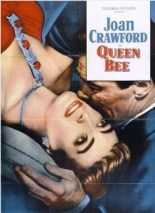 Best I can tell, this typical Joan Crawford film that we watched last night didn’t improve my health either. Where are all the happy movies when you need them, stuff like The Exorcist or Juliet of the Spirits or Cape Fear?
- Plus, the cats chose last night to squabble over which of them got to lie where in the bed. Chances are good that if you’re waked up at 4 a.m. with those kinds of shenanigans, you’re not going to get a good night’s sleep. And I didn’t! Got up at 6 a.m., had two sausage biscuits, and fell asleep on the couch for two hours. When I woke up, one of the cats was lying on top of me.
 We watch a few programs on HGTV. (Don’t quote me on this.) Everyone wants an open concept floorplan these days, you know, where the main floor’s about the size of a gymnasium that’s bigger than our house–including the yard. People want stuff to “flow.” Those who do the family’s cooking want to be able to see what their children and/or guests are doing while they (the cooks) are burning stuff in the oven. Ten years from now, homeowners will be hiring contractors to add a few walls and a little privacy. I guess if you can afford a house that costs $2 million, you can waste that money however you want.
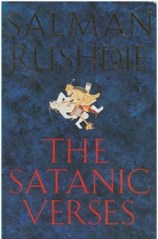 I read The Satanic Verses as soon as I could get my hands on a copy. I thought it was a hoot. The book’s in the news again after the cowardly attack on Rushdie. A lot of commentators say it’s dangerous. Is it? I don’t think so even if it offends some people. But if it is dangerous, that’s good because people need to be shaken up enough to question why they believe what they believe and why they’re angry when others don’t agree with them.
Has anyone tried this new age experiment?
S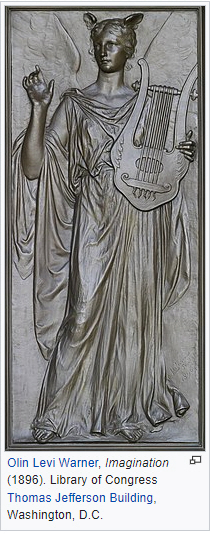 ystems of new age and/or old wisdom often include exercises designed to enhance one’s imagination, “see” things at a distance and determine diseases and other problems others may be suffering.
These experiments always represent a practical application of the day’s lesson inasmuch as true understanding and mastery require more than reading about a technique or method.
I’ve seen a lot of these experiments over the years and have enjoyed both the successes and failures of following the recipes. However, I balked at one of them, one in a book I read in junior high school with a title I no longer remember. I started out several times and always stopped, not because I thought it wouldn’t work, but because I thought it would. I’ve never had the courage to go back to it.
Basically, you’re supposed to sit in a chair in a room at one end of your house, calm yourself, and then get up and walk to the other end of your house, turn around, and go back to the chair.
Next, you imagine doing that, thinking of everything–doors, shelves, furniture–you see en route. Pretend to walk from one end of the house to the other and return to the chair.
Then do it physically. Then do it in your imagination. If you do this long enough, you will supposedly return to the chair and find yourself already sitting there.
It’s a good experiment, I think, but I never could face the possibility that it might work. Something just bothered me about that. What about you? Have you seen this experiment? If so, have you tried it.
I’ll be curious to hear your results.
‘The Templar Revelation’ by Picknett and Prince
 I’m re-reading this book because, like a mountain, it was there. (Amazon’s page listing reminds me that I bought it in 2004, seven years after it was released.) “There” in this case means that the book was sitting on my bookshelf in plain view when I put my feet up on my desk and wondered what to read next after finishing the Travis McGee thriller. McGee and the Knights Templar have very little in common, so my reading trend of late has more to do with having nothing new in the house than it does with a consistent, well-managed approach to reading.
Unlike MacDonald’s The Dreadful Lemon Sky, this book promises “The secret code of Leonardo de Vinci Revealed” and that I will learn about the “Secret guardians of the true identity of Christ.” Good Lord, I’m thinking, there appear to be conspiracy theories higher than Mt. Everest when it comes to that old-time religion. A lot of people were wondering about that old-time religion when this book came out since Holy Blood, Holy Grail (1982) found a diverse audience and Dan Brown’s The Da Vinci Code was about to hit the fan in 2003.
I thrive off this kind of stuff, not because I pay much attention to the daily conspiracy theories coming out of Washington, but because–to my ministers’ displeasue–I’ve always had a lot of questions about the politics behind the Bible’s selection of books and about the “stuff” that seems to be missing from Sunday school class and vacation Bible school. In those days, I was seen as disruptive. Now, other than an occasional post on this blog, I don’t say much about religion. As Salman Rushie found out, saying things about religion isn’t safe.
Religion, it seems to be, has created one hell of a mess throughout the world when you consider wars found over it, people burnt at the stake because of it, and books banned from libraries because the town’s rulers believe stuff that doesn’t fit their kids’ available fiction. So, I’m not about to put a sign in my yard that says Mary Magdalene was Jesus’s wife. I think she was, but in our neighborhood, it’s much safer to put up a “John 3.16” sign than anything more inflammatory. Years ago, the signs would have said “Impeach Earl Warren.”
I’m enjoying re-reading The Templar Revelation because it contains the kind of subject matter that it’s not safe to talk about. No, I don’t believe it lock, stock, and barrel, but I like being free to consider the evidence in the privacy of my home since I’m not really free to say it on Facebook or in a letter to the editor of my daily newspaper. Freedom of speech and freedom of religion seem to be controlled by the crazy people with basements full of guns.
Travis McGee, 48 years after the release date
 If you were reading light-weight thrillers between 1964 and 1985, you might have had John D. MacDonald’s Travis McGee novels on your nightstand. He wrote 21 of them, each with a color in its title. I wasn’t reading about Travis McGee 48 years ago because I preferred the novels MacDonald wrote before McGee came along in his old houseboat called the Busted Flush (won in a poker game). The series is similar in depth to the late Stuart Woods’ Stone Barrington novels, though Barrington and McGee are very different personalities.
Nonetheless, McGee novels–told in the first person–had a lot of healthy snark, and many great turns of phrase that would work as the narrator’s voice-over in a noir movie. My favorite MacDonald novel was, in fact, used as the basis for my favorite neo-noir movie. His 1957 novel The Executioners was the basis for “Cape Fear” (1962). (Forget the 1991 remake that was more violent and less true to the novel.)
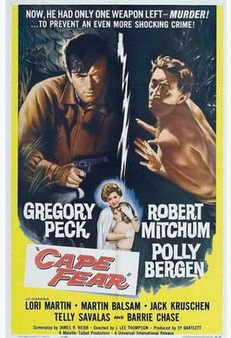 I’m among those who believe MacDonald turned out better stuff before he created Travis McGee even though he was probably better known for his Florida-based salvage consultant tho recovered lost property for a fee. In many ways, McGee is similar to Robert Galbraith’s Cormoran Strike character who uses old-fashioned detective methods rather than computers to solve crimes Both Strike and McGee interview people and follow up leads.
I suppose my taste leans too much toward noir books and movies that I stayed away from the McGee series until my brother Barry and his wife Mary visited us several days ago and he lent me a copy of The Dreadful Lemon Sky. Since I’m out of factory-fresh news novels, I decided to read it. I feel like a time machine has taken me back 48 years because the novel is anchored in the time in which it was written and–other than Strike–doesn’t fit into the detective genre as we find it today.
If you like told thriller novels, the colorful McGee series titles might be an interesting change of pace. Yet, I have a feeling that reading this one is an anomaly in the space-time continuum and that I won’t be heading out to Amazon to buy any more of them when I reach the end. Nonetheless, it’s held my attention.
BRUTAL ATTACK ON SALMAN RUSHDIE
Pen America – FOR IMMEDIATE RELEASE
 “PEN America is reeling from shock and horror at word of a brutal, premeditated attack on our former President and stalwart ally, Salman Rushdie, who was reportedly stabbed multiple times while on stage speaking at the Chautauqua Institute in upstate New York. We can think of no comparable incident of a public violent attack on a literary writer on American soil. Just hours before the attack, on Friday morning, Salman had emailed me to help with placements for Ukrainian writers in need of safe refuge from the grave perils they face. Salman Rushdie has been targeted for his words for decades but has never flinched nor faltered. He has devoted tireless energy to assisting others who are vulnerable and menaced. While we do not know the origins or motives of this attack, all those around the world who have met words with violence or called for the same are culpable for legitimizing this assault on a writer while he was engaged in his essential work of connecting to readers. Our thoughts and passions now lie with our dauntless Salman, wishing him a full and speedy recovery. We hope and believe fervently that his essential voice cannot and will not be silenced.”
–
The most recent report I saw was that he was in surgery. A suspect is in custody.
Stephen King’s ‘Revival’ – the usual nasty King stuff in a padded-out novel
Nope, the book doesn’t cut it even though the concept is interesting and the story has many of the usual really bad things happening in it.
From the Publisher
 The new minister came to Harlow, Maine, when Jamie Morton was a boy doing battle with his toy army men on the front lawn. The young Reverend Charles Jacobs and his beautiful wife brought new life to the local church and captivated their congregation. But with Jamie, he shares a secret obsession—a draw so powerful, it would have profound consequences five decades after the shattering tragedy that turned the preacher against God, and long after his final, scathing sermon. Now Jamie, a nomadic rock guitarist hooked on heroin, meets Charles Jacobs again. And when their bond becomes a pact beyond even the Devil’s devising, Jamie discovers that the word revival has many meanings….
The problem with the plot comes from the span of time covered by the novel and that something has to fill up all those years until the BIG ENDING finally arrives.
Charles Jacobs is interested in a force he calls “secret electricity.” It works in the carny world for doing magic tricks and, according to Jacobs, it appears to cure people. Curing people finally becomes the focus of his business while in his spare time he plummets deeper and deeper into the sources and uses of this strange force.
The trouble is, there are side effects that are often not always apparent–at first. Some are transitory. Some are long-lasting and can ruin and/or end lives. Jamie Morton becomes just as obsessed with these side effects ad Jacobs is with his electricity experiments. Here’s where the padding in the story occurs. Jamie and another friend spent hours tracking down the people Jacobs has supposedly cured as well as the subset who finally went nuts.
While the is a fair amount of shock value to the kinds of side effects that occur, reading these pages is about like reading the phone book. Most of the people listed aren’t characters in the novel, so we have no buy-in when their names appear. This is all very tedious and without much of a point except, I guess, filling space.
Jacobs mentions the amusement park called Joyland which was a wonderful Stephen King novel. It’s almost a travesty seeing that name in this disappointing book.
So long, David McCullough, and thanks for all the books
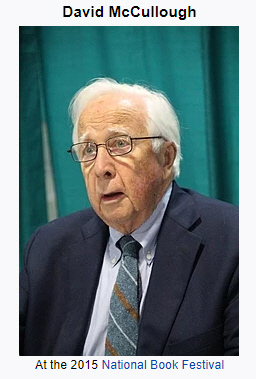 “David McCullough, a towering force in American literature and biography, winner of the President’s Medal of Freedom, two Pulitzer Prizes and two National Book Awards, died on August 7. He was 89 years old.
“He died of natural causes at home in Hingham, the family confirmed, where he had lived for the past few years, with all five children by his side.
“Mr. McCullough devoted his writing life to telling the American story, beginning with his first book about the Johnstown Flood, published in 1968, and continuing to chronicle events, politicians and structures that made up the American experience. He followed up his debut with a book about building the Brooklyn Bridge, then headed to the creation of the Panama Canal (his first National Book Award). A book about Teddy Roosevelt followed (his second National Book Award) and then books on Harry S. Truman and John Adams, both of which won the Pulitzer Prize.” – Bill Eville in The Vineyard Gazette
In his story, Eville notes that everything McCullough wrote began on a 1940 Royal Typewriter that he bought second-hand in 1965 for $25. It works fine after all those words. In a 2011 interview, McCullough said that sometimes he thought that Royal was writing the books.
The subhead in the New York Times story said, “His research — on Adams, Truman and so much more — was deep, his writing was lively, and his narrator’s voice in documentary films was familiar to millions.”
The books found large audiences and spent weeks on the bestseller lists in part because readers who seldom read history read what McCullough and/or that old Royal typewriter wrote. My wife and I have most of his books, not because they look good on our shelves, but because we like them and respect his approach.
 It’s hard to pick a favorite, but my long-time fascination with Teddy Roosevelt prompts me to say I like Mornings on Horseback, the 1981 biography of Roosevelt, the best. Kirkus began its review, “The biographer of the Brooklyn Bridge and the Panama Canal has written a marvelous book, now, about the making of an exceptional being—and nothing that has appeared before, including Edmund Morris’ recent The Rise of Theodore Roosevelt, diminishes its interest or freshness or emotional force.”
The New York Times wrote, “Mr. McCullough tells his busy, interlocking story without ever losing track of his hero. Always at the center of things is T.R., evolving from a shrill semi-invalid into the robust warrior who would become the dominant figure of turn-of-the-century America. But though he writes with a novelist’s skill, Mr. McCullough never resorts to the novelist’s license to invent, never draws a conclusion not backed by hard facts. The result brings us as close as anyone will ever get to understanding the unique alchemy of the Roosevelt family – and its power to help and hinder Theodore in his rise.”
McCullough’s books on the Johnstown flood, the Brooklyn Bridge, Presidents Truman and Adams, and 1776 (among others) drew similar praise. McCullough’s narrations include the 2003 film “Seabiscuit” and multiple films by Ken Burns including “The Civil War” (1990).
I think it’s fair to say that McCullough’s words will be with us forever, if not longer.
I still feel bad about the pirate ship
J, L, and I went out to the farm with Mr. H every Saturday. Mostly, we goofed off, though we did help put in a lot of fresh barbed wire fencing and did other chores as needed. J, L. and I were probably in junior high school, and the farm and its cattle and its deep woods with the branch (creek) filled with water moccasins and copperheads was about as far as Shangri La was from those boring classrooms as we could get in those days when there wasn’t time to spend the weekend sailing in Apalachee Bay.
 J and I often carried .22 rifles when we were hiking down by the branch because, in addition to the copperheads, there were dangerous beer cans down in those woods that could kill a guy in a New York minute. We lived down by the branch, J and I, because we both had bedrooms filled with fresh and saltwater aquariums that constantly needed new residents.
L, who was several years younger than us on the day in question had gotten a plastic pirate ship for Christmas and apparently had allowed it to set sail upstream from where J and I were catching crayfish. Out of nowhere comes this ship, orange and brown and riding fine in the swift-flowing water.
Something just snapped because J and I filled it full of lead from our trusty .22 rifles and it sank to the bottom of the branch next to a stump where a copperhead was swatching the action. To this day, I don’t know why we did it. Bored, perhaps. Target practice, maybe. A good laugh, to be sure.
At the end of the day, L asked if anyone had seen his pirate ship. Nobody had. J and I volunteered to help look for it the following weekend. L was so grateful we both felt like shit. Even now, I still feel bad about that toy ship. Only the copperhead knows where it is today.
Sunday’s Mixed Stuff
 I like everything John Hart has written except this debut novel. It has everything in it but the kitchen sink and the main character is an unsympathetic sad sack. I’m glad he got this approach out of his system before he started writing novels where the nasty stuff is within limits and the protagonists are the kind of people readers can get behind.
- We’ve had a lot of rain in North Georgia lately including a nasty thunderstorm after midnight two days ago that killed the power and scared the cats into piling into our bed.
 I liked The Seekers a lot for their pure, sweet voices. So I felt sad seeing this news: “Judith Durham, singer of the Australian pop band The Seekers, has died at age 79. According to Universal Music Australia, Durham’s cause of death was chronic lung disease.” Wikipedia notes that the group had Top 10 hits in the 1960s with “I’ll Never Find Another You”, “A World of Our Own”, “Morningtown Ride”, “Someday, One Day” (written by Paul Simon), “Georgy Girl” (the title song of the film of the same name) and “The Carnival Is Over” by Tom Springfield, the last being an adaptation of the Russian folk song “Stenka Razin”.
- As a writer and a reader, I wonder why so many authors speak of train whistles in their novels when whistles on trains have been gone for years. Other than tourist steam engines, American diesel-electric locomotives all have horns.
 This book of short stories has been more interesting than I expected. I bought it for the English translation of Hayashi Fumiko’s (1903-1951″ autobiographical story “The Accordion and the Fish Town” which I mention in my novel in progress. But, I’ve found more to like in this selection of works that show how the Japanese short story has developed over time. The book was released in 1997. While the novel has been king in the West, the Japanese focused on shorter works.
- Two days ago, Lesa was trying to catch up on the yard mowing, ploughing through grass that was almost too high for the mower due to daily rain showers. She stopped mowing at dusk when she ran over a hidden yellow jacket nest and got stung twice. Ouch. We seem to have more of our share of yellow jackets and wasps in this neighborhood, and that includes white Anglo-Saxon Protestants.

 Long-time friend Keith Willis has released the latest novel (#4) in his Knights of Kilbourne Series, Stolen Knight. If you love snappy writing, hijinks, and dragons, this fantasy/romance should be on your nightstand. Or, as Willis says on his website when he introduces the series, “If you like swashbuckling adventure served up with a helping of romance and a dollop of humor (and topped with a dragon) then these books are for you.”
Beholding the Wonder of the World
“Move from seeing to beholding: To see a situation is to catch the facts of the matter. To behold it is to witness the story. If you dwell entirely with statistics and data, you will be a burnt match within months. Move from just seeing the world to beholding the world. Seeing is assessment and analysis; beholding is wonder and curiosity.” – by Martin Shaw in Emergence Magazine
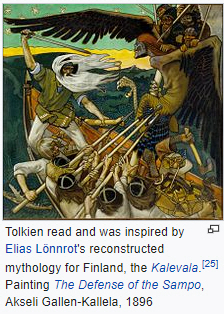 We have to see, of course, though from my author’s perspective seeing is a small part of observing and being a true part of the world. If this idea interests you, I invite you to click on the link above and read Shaw’s perceptive essay “Navigating the Mysteries.”
When we create ourselves and the world we inhabit, it’s as Shaw says, we build with wonder and curiosity once we’ve learned to “behold.”
This is how an author creates a good story to tell. And, it’s what discerning readers want to find in a great novel. Why not create our lives and view the world as a great novel as well?
Years ago, “Rosicrucian Digest Magazine” had a one-page feature called “Worlds of Wonder.” My short essays about the natural world appeared in that section three times. I chose the out-of-doors for my essays because that’s where I see the greatest mysteries. They are there ready for us to behold rather than to catalogue into graphs and spreadsheets that arise out of simply seeing what’s before our physical eyes and our scientific instruments.
Those who base their approach to life on seeing and nothing else will be like the millipede that froze in place when asked which of his feet he moved first. If you behold the world and your place in it, that kind of question is laughable–or perhaps sad.
Shaw suggests that rather than listening to the uncertainty of most of the voices around us, we open up ourselves to the mystery. “The correct response to uncertainty,” he says, “is mythmaking. It always was. Not punditry, allegory, or mandate, but mythmaking. The creation of stories. We are tuned to do so, right down to our bones.” The mythic painting in the drawing is, for those who behold, more informative than a photograph.
His essay is the best account I’ve seen lately about how writers work and how we as people should work. All other approaches are an illusion and create more uncertainty.
 Malcolm R. Campbell’s contemporary fantasy novel set in Glacier National Park is based in part on a very old myth where he wound the truth of the story he needed to tell. Pictured here is the audio edition.
 Malcolm's Round Table