 Since reading is personal and visceral and very subjective, I cannot say what drew me to Cormac McCarthy’s novels year after year. I liked his plots, his mix of minimalism and lyrical passages, the closeness of the land in his work, his ear for authentic dialogue, and a writing approach that dragged readers kicking and screaming into some of the most beautiful and the most violent tales they ever experienced.
As quoted in Wikipedia, In 2003, literary critic Harold Bloom named McCarthy as one of the four major living American novelists, alongside Don DeLillo, Thomas Pynchon, and Philip Roth. His 1994 book The Western Canon had listed Child of God, Suttree, and Blood Meridian among the works of contemporary literature he predicted would endure and become ‘‘canonical’“. Bloom reserved his highest praise for Blood Meridian, which he called ‘the greatest single book since Faulkner’s As I Lay Dying’“, and though he held less esteem for McCarthy’s other novels he said that ‘to have written even one book so authentically strong and allusive, and capable of the perpetual reverberation that Blood Meridian possesses more than justifies him. … He has attained genius with that book.'”
Oddly enough, his Pulitzer Prize Winning novel The Road is probably my least favorite, though I like journey stories in general. In many ways, I think it got the Pulitzer for the same reason actors sometimes win Academy Awards: the powers that be realize the recipient should have gotten the award for an early book/movie and hand out the honor as a last-ditch chance to even things up. I would have picked Blood Meridian over The Road, but I wasn’t consulted. <g>
There are quite a few McCarthy retrospectives and homages online today. It’s nice to see them because there are times when I think he’s “underread” by people who prefer lesser stuff and don’t think of him when new titles are announced.
I liked the subhead in the story in The Atlantic: “The worlds depicted in his novels are not built for mortal humans like you and me.” CNN said, “Despite accolades, McCarthy remained relatively obscure for much of his career; as recently as 1992, 27 years after his first book was published, the New York Times Book Review said he “may be the best unknown novelist in America.”
Typical of his work are these quotes:
“You never know what worse luck your bad luck has saved you from.”
“War was always here. Before man was, war waited for him. The ultimate trade awaiting its ultimate practitioner.”
“Your heart’s desire is to be told some mystery. The mystery is that there is no mystery.”
“A man’s at odds to know his mind cause his mind is aught he has to know it with. He can know his heart, but he dont want to. Rightly so. Best not to look in there. It aint the heart of a creature that is bound in the way that God has set for it. You can find meanness in the least of creatures, but when God made man the devil was at his elbow. A creature that can do anything. Make a machine. And a machine to make the machine. And evil that can run itself a thousand years, no need to tend it.”
“That night he dreamt of horses in a field on a high plain where the spring rains had brought up the grass and the wildflowers out of the ground and the flowers ran all blue and yellow far as the eye could see and in the dream he was among the horses running and in the dream he himself could run with the horses and they coursed the young mares and fillies over the plain where their rich bay and their rich chestnut colors shone in the sun and the young colts ran with their dams and trampled down the flowers in a haze of pollen that hung in the sun like powdered gold and they ran he and the horses out along the high mesas where the ground resounded under their running hooves and they flowed and changed and ran and their manes and tails blew off of them like spume and there was nothing else at all in that high world and they moved all of them in a resonance that was like a music among them and they were none of them afraid neither horse nor colt nor mare and they ran in that resonance which is the world itself and which cannot be spoken but only praised.”
McCarthy always gave us a story and left us with divine PTSD.
–Malcolm
 (NEW YORK) – PEN America, the Foundation for Individual Rights and Expression (FIRE), the National Coalition Against Censorship (NCAC), and the Student Press Law Center (SPLC) on Monday jointly filed an
  We’ve always had cats. When a new cat comes into the house, it’s a matter of time before every cat has a resume of new tricks. Mostly bad.

 If you have a dog, and especially if you chopped off part of your finger into the goulash, you may find this article from McSweeney’s helpful:
  My doctor told me a few days ago that I may have a bleeding ulcer and requested a stool sample. I’m planning to send him this IKEA Marius Stool-Black even though there will probably be some assembly required. If I had a dog, he would probably would have told me to drink two glasses of
 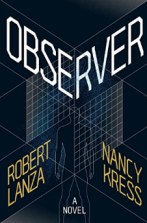 I think the authors of the novel
  I have a question. Some years ago, men were bashed for seeking pictures of naked women, a “hobby” that was considered wrong for a dozen reasons. Now, women are creating those pictures (and walking around hardly wearing a stitch of clothing) and posting them online. Is this the new freedom or have they made objects of themselves just like those nasty men always wanted? E.g.:
  William Blake (28 November 1757 – 12 August 1827) was scarcely known during his lifetime, was considered mad by those who were aware of him, sold very few copies of his work, and was buried in a mass grave with borrowed money. Now that he can no longer profit from his works, he’s considered favorably as a poet and engraver.
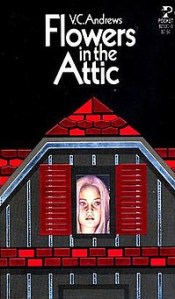 Of course, I read it. After all, there was a war on, I was addicted to Southern Gothic by running with a bad crowd and was working for an employer who tapped my phone (not because I read the book, though I’m not sure about that).
![The Complete Works of Rabindranath Tagore (Digital Fire Super Combos Book 7) by [Rabindranath Tagore, Digital Fire]](https://m.media-amazon.com/images/I/41ESB1-rXFL.jpg) Rabindranath Tagore playwright, composer, philosopher, social reformer, and painter. He reshaped Bengali literature and music as well as Indian art with Contextual Modernism in the late 19th and early 20th centuries. Author of the “profoundly sensitive, fresh and beautiful” poetry of Gitanjali, he became in 1913 the first non-European and the first lyricist to win the Nobel Prize in Literature. Tagore’s poetic songs were viewed as spiritual and mercurial; however, his “elegant prose and magical poetry” remain largely unknown outside Bengal. – Wikipedia
Rabindranath Tagore playwright, composer, philosopher, social reformer, and painter. He reshaped Bengali literature and music as well as Indian art with Contextual Modernism in the late 19th and early 20th centuries. Author of the “profoundly sensitive, fresh and beautiful” poetry of Gitanjali, he became in 1913 the first non-European and the first lyricist to win the Nobel Prize in Literature. Tagore’s poetic songs were viewed as spiritual and mercurial; however, his “elegant prose and magical poetry” remain largely unknown outside Bengal. – Wikipedia
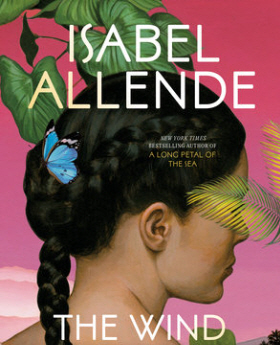
 “Telling a story that is rooted so deeply in political events can be a difficult balancing act; an author walks a fine line between writing immersive fiction and explaining historical and social context. “The Wind Knows My Name” contains little of the magic that defined Allende’s earlier novels. Instead, she turns her focus to the brutal details of government-sponsored violence and asks her reader to look closely at the devastation. Allende draws a straight line from Nazi Germany to modern-day atrocities — not because the specifics are the same, but because the damage is.”
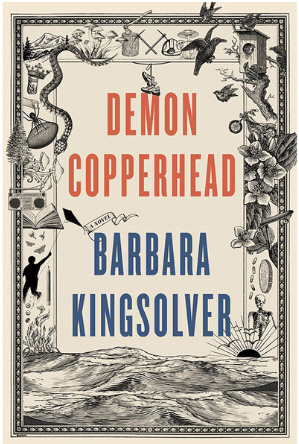 As I read Demon Copperhead by Barbara Kingsolver, I’m happy to say this novel is a dream. And yet, it’s hard for me not to think of Holden Caufield with quotes like these: “The wonder is that you could start life with nothing, end with nothing, and lose so much in between.” “People love to believe in danger, as long as it’s you in harm’s way, and them saying bless your heart.”“Sunday school stories are just another type of superhero comic. Counting on Jesus to save the day is no more real than sending up the Batman signal.”
  As I work on my novel-in-progress, I notice once again that finding a year-by-year timeline for whatever you want to know seems impossible. I can find overviews. I can find out how things work today. But finding out what happened exactly in any given year is a hell of a lot of trouble. Right now, I’m wondering what the standard morphine dosage was in 1955. I guess I’m going to just throw a dart at the morphine history and hope for the best when it comes to oral usage or injection. It’s been around for a long time.
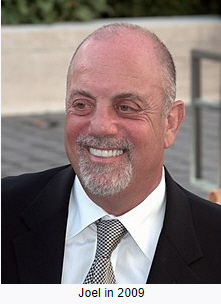 My wife and I have most of Billy Joel’s recordings. However, since I don’t live in or near New York City, I didn’t realize how long Joel has been at Madison Square Garden. I read in today’s Guardian that, “Billy Joel will conclude his monthly residency at Madison Square Garden in July 2024, with his 150th-lifetime performance at the venue. ‘It’s hard to believe we’ve been able to do this for 10 years,’ Joel said at a news conference on Thursday. ‘I’m now 74. I’ll be 75 next year. It seems like a nice number.'” Heck, I’m older than Joel. Maybe I should start cutting back on all my books and blogs.
 For the home viewer, we want the writers’ strike to end so that we can keep watching the stuff we watch. According to Variety, “The Directors Guild of America
 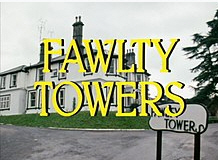 Every time I make Waldorf salad, I think of the Fawlty Towers episode in which Basil is asked by a guest for Waldorf Salad but has no clue what it is. I grew up in a family that had this quite often, so I never understood why Basil didn’t know–other than the fact he’s English and those folks aren’t known for edible cooking.
 Malcolm's Round Table