Keep Notes at All Times. You Never Know When You’ll Need Them

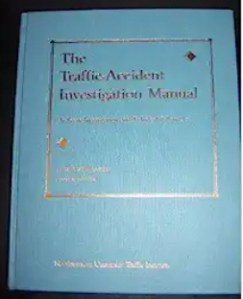
When I worked as a course developer at the Northwestern University Center for Public Safety (then called The Traffic Institute) in the 1970s, I had no idea anything I did there would ever be relevant to a future novel. The center’s focus is police management and also accident investigation. While I worked more closely with the police management and supervision courses, I also wrote exams and handouts for the accident investigation curriculum.

The center’s courses were based in large measure on the work of J. Stannard Baker whom I consider the father of modern accident investigation. If the name sounds familiar it’s because his father was Ray Stannard Baker (aka David Grayson), a Pulitzer Prize-winning muckraking journalist in the late 1800s. While I had studied the muckrakers in college, I never asked Mr. Baker about his family because I was sure he was tired of questions about them.

I was rather in awe of him and his accomplishments in accident investigation, one of which was detailing a way to tell whether a car’s headlights were on or off at the time of an accident. I found him to be a low-key individual who was easy for a young course developer to work with. He treated me as an equal, a status I didn’t think I really deserved.

I remember the courses and, in fact, have a copy of one of his books that will very much help me write competent accident investigation scenes in my novel in progress.

I didn’t include an accident investigation in the novel because I worked with Mr. Baker, but because it was central to the story’s plot. Old memories and old employment just happened to be a research gift.

–Malcolm

Malcolm R. Campbell is the author of contemporary fantasy, paranormal, and magical realism short stories and novels.
This and That for Sunday June 25

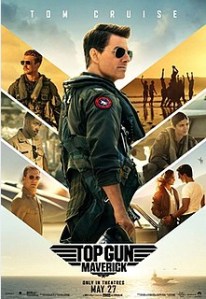
  • Some say this movie was better than the original. Possibly so, for it provided a lot of action, an imposible mission, and an over-the-top look at sort of real navial aviation. While it didn’t make me miss my days aboard an aircraft carrier, I’ll give it five stars and call it a “hoot,” and kudos to Tom Cruise for his acting. The movie was filmed on the U.S.S. Abraham Lincoln and the navy earned a pack of doughfor sequences involving F/A-18 fighters. Without providing a real spoiler, I can mention there was an F-14 in the movie; the one used was in a museum since the navy doesn’t have any and borrowing from Iran seemed like a catastrophee waiting to happen.
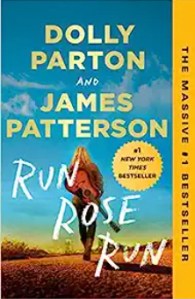
  • I like the series of Cross novels by James Patterson, but took a detour to read the novel he co-authored with Dolly Parton, Run Rose Run. The book reads well and is a special treat for those who want to know how a potential country singer breaks into the business, especially one with bad guys chasing her.
  • For those of you keeping score, I have chili simering in the Dutch over for tonight’s supper. 
  • Here’s an interesting article from Literary Hub: “Against the Cynicism Cycle: Why TV Could Do with Less Moral Grayness.” Noah Ciubotaru writes, “We’ve celebrated moral grayness, deemed it to be indicative of clever writing, a sign of art’s ability to twist and stump our moral intuitions. But maybe our praise has been misplaced; maybe grayness has become an empty affectation, doing nothing for us, and asking nothing of us but to drift through unfeeling stories.” I tend to agree with him.
  • I think I mentioned a couple of weeks ago that my GP said my symptons indicated a prospective bleeding ulcer and that he was referring me to a specialist. So far, no word from a specialist. I remember the old days whe one’s GP treated the whole shebang rather than sending you off to somebody with higher fees.
  • I read the Velveteen Rabbit years ago. So I was drawn to this story:  “More Than A Children’s Story: The Velveteen Rabbit At 100.”   No, I did not read it on the day it came out. I’m not that old. Lisa Rowe Fraustino writes, “Margery Williams was born in London on July 22, 1881, and died September 4, 1944, in New York City. Though she published twenty-seven books, including five translations of works from French and Norwegian, and though she won the John Newbery Honor Medal for her novel Winterbound (1936) in 1937, she is primarily known today as the author of The Velveteen Rabbit.”
–Malcolm

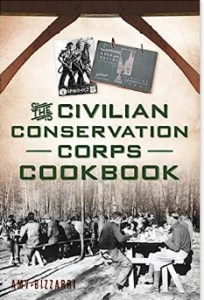
‘The Civilian Conservation Corps Cookbook,’ by Amy Bizzarri

One bonus of learning what the CCC fed its volunteers is, as Arcadia Publishing notes, this book released in May “features over 80 historic recipes adapted for today’s home kitchen.” The Texas Highways Magazine review notes that those recipes include pineapple fritters, snowflake potatoes, sloppy joes, and wacky cake. What’s not to like?

From the Publisher

“The Civilian Conservation Corps was a voluntary government work relief program that offered nearly 3 million unemployed, unmarried men the job of restoring and conserving America’s public lands, forests, and parks. The wages weren’t the only draw–the program also threw in three square meals a day served in the camp mess hall. The Civilian Conservation Corps Cookbook features the recipes that sustained not only the CCC during the Great Depression but also our grandparents and great-grandparents. Budget-friendly, with ingredients that can easily be found–if not in your very own pantry then at your local grocer–these recipes reflect the ‘make do’ attitude of Depression-era home cooks.”

About the Author

“Amy Bizzarri has written four books focused on Chicago history, but her experiences don’t stop there. She’s a teacher, tour guide, and certified wine expert. When she’s not exploring her beloved Chicago by bicycle, you’ll find her hiking the trails of a state or national park. Oh, yes, she’s a mermaid, too, having trained with the celebrated sirens at Florida’s Weeki Wachee Springs.”
I visited Weeki Wachee as a kid. I have a feeling that was before her time. <g>

–Malcolm

Malcolm R. Campbell is the author of contemporary fantasy, magical realism, and paranormal books and short stories.

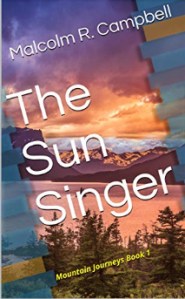
Set in Glacier National Park, the novel follows the “hero’s journey” motif as outlined by Joseph Campbell in “The Hero With the Thousand Faces.”

I really don’t want to clean up nice

There’s a scene in the Dolly Parton/James Patterson novel Run Rose Run when an emerging singer with a raw and powerful voice is being styled into clothes, makeup, and a hairdo prior to a publicity shot. When she sees the result, she leaves the room for a few minutes only to return wearing  her comfortable clothes, minimal makeup, and her hair simply brushed out into its natural way of being. The stylists are shocked. She doesn’t care. Even though she looked like a diva, looking like a diva wasn’t for her. It didn’t feel right. That meant it was all wrong.

At this point in her introduction to Nashville and the country music business, AnnieLee Keyes is still learning “how things are done.” However, she’s defiant in a lot of ways and wants her voice and her songs to carry a career in which she can ignore how things are done.

I can identify with that because, as an author, I’ve always felt my words should be what people care about, not the clothes I’m wearing. I like blue jeans and tee-shirts with a denim or a flannel “jacket” depending on the weather. If it still ran, I’d drive up to any gathering in my old Jeep Universal or possibly an ancient 3.2-liter Jaguar Sedan. The cars would never be washed or waxed and I’d look like I hadn’t either.

In the old days, Sunday afternoons were the times when people dropped by each other’s houses unannounced, and that meant that my two brothers and I had to wear church clothes until supper. What a drag. Did anyone really think that was how we dressed day to day? In fact, I kept asking why I had to wear church clothes to go to church. That’s how things are done, I was told.

The only way to live, I always thought, was to ignore “how things were done” I always liked the song “My Way” because what other way was there? But, as many have learnt, that way is a rough way to go. The thing is, cleaning up nice feels like selling out–like how I look and how I act is just being a marionette controlled by the strings of tradition.

One has to be true to himself/herself, I think, and that means not dressing up like somebody you are not just because the wedding planner or the funeral director is claustrophobically traditional.

Good luck to you, AnnieLee Keyes.

–Malcolm

Malcolm R. Campbell is the author of the Florida Folk Magic Series which can be purchased at a savings in this four-in-one Kindle set. Folk magic means hoodoo. And hoodoo means having a weapon for fighting the KKK in 1950s Florida.

What Makes a Novel Stand Out on Submission? Susan DeFreitas on Jane Friedman’s Blog

It has to have a sense of meaning.

“Meaning is subjective, of course. But even so, there are story elements that intersect directly with issues that we as human beings tend to find important, moving, and compelling: Moral questions, and the way they stir strong emotion. Characterization, and what it reveals about human nature. The way the story reflects the truths of our own reality—and the sense that this story actually has something to say.”

Source: What Makes a Novel Stand Out on Submission? | Jane Friedman

If a story doesn’t have more going for it than an interesting tale to tell, action-packed thought it may be, it falls flat when all is said and done. DeFreitas focuses on four major areas:

Addresses moral issues
Reflects on the truth of reality
Has complex characters
Has something to say

There may be other considerations, but an author’s consideration and implementation of each of these brings his/her story into a higher, and more interesting realm of writing than the garden-variety novel.

In terms of something so say, for example, DeFreitas writes, “What I mean is that the story is conscious of the way it uses themes to make a complex point, whether that has something to do with the importance of gritty realism over pie-in-the-sky idealism (Elizabeth Gilbert’s The Signature of All Things), the impossibility of living as a queer woman under conservative gender norms (Megan Giddings’s The Women Could Fly), or the ways that secrets corrupt us from within (Donna Tartt’s The Goldfinch).”

Needless to say (almost) is that something to say must be a solid part of the story rather than pasted into the work as an afterthought. What the story “says” has to be inseparable from the plot, theme, and characters like the air they breathe.

–Malcolm

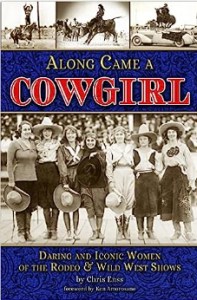
‘Along Came a Cowgirl’ by Chris Enss

Prolific Western author Chris Enss released this book last September via Montana’s Farcountry Press. She has been writing about women of the old west for over 20 years. She’s the author of forty published books and the recipient of multiple awards for her work.

From the Publisher

Enss

In Along Came a Cowgirl: Daring and Iconic Women of the Rodeos and Wild West Shows, New York Times best-selling author Chris Enss introduces readers to the world of the early rodeo – and to the stories of the women whose names resounded in rodeo arenas across the nation in the early twentieth century. These cowgirls dared to break society’s traditional roles in the male-dominated rodeo and trick-riding world. Some of the iconic cowgirls included in the book are Prairie Rose Henderson, Fox Hastings, Lucille Mulhall, and Ruth Roach. With the desire to entertain crowds and armed with grit and determination, these talented bronc riders, trick ropers, and steer wrestlers were able to saddle up and follow their dreams. Along Came a Cowgirl includes a foreword by Cowgirl magazine editor and publisher Ken Amorosano.”

Farcountry Press

“For more than 40 years, Farcountry Press has been a leader in regional publishing, specializing in stunning photography books, fun educational books for children, adventure guidebooks, and thought-provoking history titles. Farcountry’s award-winning books celebrate our nation’s cities, states, and national parks, and explore our shared heritage.

“Farcountry publishes more than 50 books annually; the backlist has grown to more than 300 titles.”

I follow Farcountry Press because I like Montana and other western states’ history. I’m never disappointed.

–Malcolm

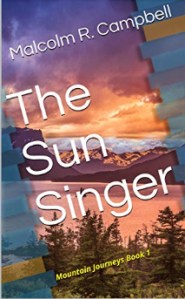
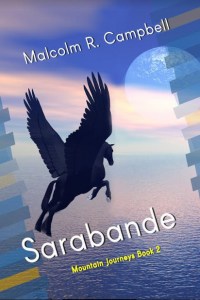
Malcolm R. Campbell’s two contemporary fantasies, “The Sun Singer” and “Sarabande” are set in Montana where he is a long-time member of the Montana Historical Society.

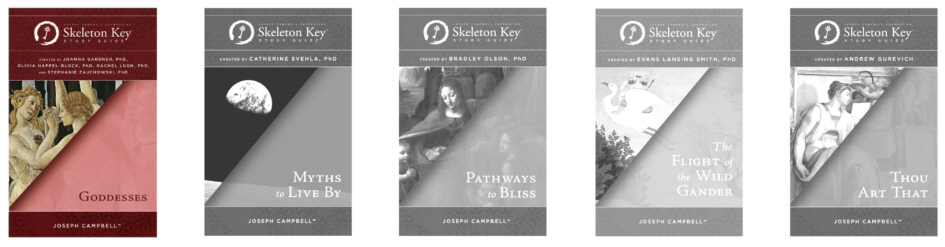
Joseph Campbell Study Guides

“We are excited to announce the launch of a new series of study guides for books by Joseph Campbell. Written by a team of today’s experts in myth, these guides help readers experience and apply Campbell’s visionary ideas. The first book in the series, Goddesses: A Skeleton Key Study Guide is available now.” – Joseph Campbell Foundation

Some years ago, Campbell had a series of televised conversations with Bill Moyers about comparative mythology that brought his ideas to a large audience. I’m happy to see this study guide project and hope it will facilitate a deeper understanding of Campbell’s work.

Amazon Listing Description

“In this Skeleton Key Study Guide to Joseph Campbell’s Goddesses: Mysteries of the Feminine Divine, you’ll find summaries of Campbell’s views about many different goddesses, as well as quotes, reading suggestions, discussion topics, and prompts for essays and creative projects.”

If you’re a fan of Campbell’s work, you can find a lot to explore on the Joseph Campbell Foundation website. Otherwise, these guides will help you with the basics.

–Malcolm

Malcolm R. Campbell followed Joseph Campbell’s “Hero’s Journey” motif in writing the contemporary fantasy novels, “The Sun Singer” and its sequel “Sarabande.” The basis for the hero’s journey comes from Campbell’s “The Hero With a Thousand Faces.”

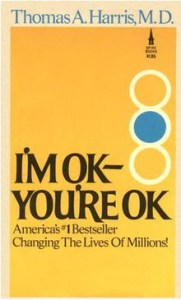
Remembering ‘I’m OK – You’re OK’

Eric Berne (Games People Play) and Thomas A. Harris (I’m OK – You’re OK) were both popular for their books that were widely considered “self-help” books that focused on the theories of transactional analysis (TA) and script theory. While the value of TA was debated by experts who, like Berne, were trained psychoanalysts, I found the concept to be very workable in industry courses in supervision and management in the 1970s.

The concepts were easy to understand and helped explain why “messed up” (to use that technical term again) interactions between supervisors and subordinates led to trouble. Script theory and games were outside the parameters of the courses we wrote, so Harris’ book suited our needs best because it worked so well showing how a  “crossed transaction” could occur and tangle up relationships in the workplace.

I have no idea whether or not clinical psychologists used any of these theories in private practice or not. In my work for the Illinois Department of Mental Health, we used–and were successful with– behavioral conditioning. Many of our patients were developmentally disabled and often nonverbal, so the concepts of TA would have been impossible to apply in most cases.

There’s a lot of nostalgia looking back on TA, Games, and Scripts because they were part of my work at two organizations where those in the courses provided positive feedback about the concepts. Personally, I think Harris’ book would still provide help to many individuals today who find they’re constantly getting into arguments with family and friends over issues arising out of their communication with each other.

–Malcolm

Weird stuff in the in-basket

If you have an e-mail account, chances are weird stuff shows up in your in-basket unless you paid somebody $10000000 to install blockers from multiple companies to make sure weird stuff doesn’t get delivered.

  1. One scam is an e-mail from somebody you’ve never heard that has the word “confirmation” in the header. I never open these because I know it’s somebody trolling for customers by making me think I already ordered something from them.
  2. Then there’s the header that says “Did we do something wrong?” These come from companies I may or may not have ordered from, but haven’t bought anything recently. Half of them come from people I’ve never heard of. These also go in the trash.
  3. Then there are the astrologers and Tarot readers who send me messages like, “I’ve been thinking about you lately because the universe has a message for you. See my free reading to see what it is.” I click on some of these things out of curiosity. The readings generally tell me I’m all-powerful, have high energy levels, and am destined to do great things. All I have to do is pay $29 a month to learn how to unlock my potential. Occasionally, I respond by asking, “If I’m all-powerful, wouldn’t my power show me what to do?” They say that most people just need a little help like jump-starting a car. Ah, so that’s how it works. It’s time to select the “unsubscribe” option.
  4. Malcolm, we heard from girls on the street that the little blue pill is no longer doing its job to fix your ED problem. I don’t respond to these because I don’t consort with “girls on the street” and I I did, I’d have to get my wife’s permission. That’s not happening. If I did respond, I’d say, “Sister Fortune already sold me I’m all-powerful, so that means that I don’t have an ED problem.”
  5. Malcolm, according to our records you’re trying to make a go of it by being a writer. If what doesn’t work, we’d like to enroll you in our fast-track grave digger’s course. Lots of people are kicking the bucket these days, and you can earn good money getting rid of the bodies. Free shovels to the first 100 people who ask about our program. I respond, “The object in the picture is not a shovel. If you think it is, you can’t help me.” I don’t hear back from them after that.
  6. Dear Mr. Campbell, did you write the article entitled “Telling the Difference Between a Spade and a Shovel”?  Seriously, I get a lot of inquiries like this because I’m a writer. Most of these are legit,  but not as much fun as those e-mails that are scams.

–Malcolm

Malcolm R. Campbell is the author of satire, magical realism, paranormal, and contemporary fantasy novels and short stories.

Remembering ‘Elizabeth R’ today

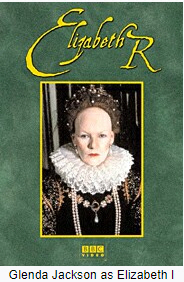
Of all her work, I most liked Glenda Jackson’s  (9 May 1936 – 15 June 2023) portrayal of Queen Elizabeth I in the 1971 BBC TV docudrama more than any of the others in that role.  Helen Mirren is a favorite of mine, and she did a good job, but I like Jackson’s work better. Jackson is probably best remembered for “Women in Love” and “A Touch of Class.” We can only guess what else she might have done as an actress had she not been gone almost three decades during her political career.

Since I’m of Scots ancestry, I take a dim view of the English Monarchy, and so “Elizabeth R” impacts me because I not only liked the acting but have always disliked Elizabeth I. My feelings about her are fueled in large measure due to her illegal imprisonment and execution of Mary Queen of Scots. Like a modern soldier or political figure, Mary’s first duty was to escape (as I see it), so punishing her for plots (the Ridolfi and Babington plots), against Elizabeth as crimes instead of acts of war was unconscionable.

As you can tell, my bias in favor of Mary over Elizabeth is very strong. That’s why I remember the TV series. Watching it, I could have spat nails. Much later in history, don’t even get me started about the “troubles” in Northern Ireland.

“Elizabeth R” was the catalyst for multiple debates between my wife and me. She took English history in college and was very knowledgeable about the monarchs and issues. She could never quite understand my dislike of Elizabeth I for being as strong as it is, almost as though Elizabeth I were still on the throne causing more problems in Scotland, Ireland, and elsewhere. Few historically controversial people stir up stronger emotions in me than English monarchs, especially those constantly fighting Scotland.

I’ll miss Glenda Jackson, of course, as a politically astute MP and a very talented actress even though her figurative journey to the years between 1558 and 1603 will always be first in my memory of her.

Malcolm

Click on my name to find my contemporary fantasy, magical realism, and paranormal books and stories. None of them are set in Scotland, though perhaps they should be.