Potpourri, &c., for July 9, 2023

If you live in north Georgia, you already know more rain is coming. If you don’t, then it doesn’t matter. More time to read while the grass slowly grows too tall for the riding mower to cut.

  • I’m enjoying Diana Gabaldon’s Go Tell the Bees That I am gone. It’s 888 pages long in trade paperback, not counting the endnotes. I’ve often wondered if Diana or her publisher have considered including a synopsis of the series at the beginning of each novel to orient people who haven’t read prior books. If you started reading Bees without any knowledge of all the earlier books, you’d be completely lost.
  • I don’t know who or what ticked off a skunk late last night, but getting the smell out of the house took a lot of Febreze. I was hoping our indoor/outdoor cat hadn’t “done anything bad” to the skunk and left it on the front porch. The smell’s gone now, so with luck, the skunk is freshening up one of our neighbor’s yards.
  • We have been watching the TV series “1883.” It’s well-written but a bit gritty. Here’s Wikipedia’s synopsis of the overall plot: “The story is chronologically the first of several prequels to Sheridan’s Yellowstone and details how the Duttons came to own the land that would become the Yellowstone Ranch. It is the second installment produced in the Yellowstone franchise. The series consists of ten episodes and concluded on February 27, 2022.” It’s something to watch until”The Crown” resumes later this month.
  • How many of you have seen  “Indiana Jones and the Dial of Destiny”? The reviews have been lukewarm even though the trailer looks good. We’ll probably watch it out of nostalgia regardless of what the critics have to about it. As Wikipedia reports, “Owen Gleiberman of Variety described the film as a ‘dutifully eager but ultimately rather joyless piece of nostalgic hokum minus the thrill… Though it has its quota of ‘relentless’ action, it rarely tries to match (let alone top) the ingeniously staged kinetic bravura of Raiders of the Lost Ark … time travel, in Indiana Jones and the Dial of Destiny, is really an unconscious metaphor, since it’s the movie that wants to go back in time, completing our love affair with the defining action-movie-star role of Harrison Ford. In the abstract, at least, it accomplishes that, right down to the emotional diagram of a touching finale, but only by reminding you that even if you re-stage the action ethos of the past, recapturing the thrill is much harder.'”
  • According to Variety, “‘Bones’ Creator on Potential Revival: ‘Every Once in a While, We Are All Nostalgic Enough to Think Maybe We Should Do It Again’” I hope this doesn’t happen because “they” may change some of the primary stars, and then the show just wouldn’t be the same. If it doesn’t get a reboot, I’m fine with that because the Kathy Reichs series is independent from the TV show.

Malcolm

Stories set in Scotland’s Highlands have been popular for years even though the characters don’t sound like Highlanders

Since my ancestry goes back to the Scottish Highlands, I usually notice how the characters’ language is portrayed in novels. Going back in time, Highlanders spoke Scots Gaelic (Gàidhlig). Or, they spoke Highland English. Sad to say, Gàidhlig has fewer and fewer native speakers every year, though I do hear of attempts to keep the language alive, one say being–as Wikipedia describes it–“Gaelic-medium education (G.M.E. or GMEScottish GaelicFoghlam tro Mheadhan na Gàidhlig, FTMG) is a form of education in Scotland that allows pupils to be taught primarily through the medium of Scottish Gaelic, with English being taught as the secondary language.”

The Scots that most Americans believe is Scots is lowland Scots or Lallans. So it is that novelists writing about the era of Scotland’s clans use words based on Lallans. To my ear, this is as absurd as representing all Americans by the English spoken in Georgia even though the characters in the novel live in, say–Maine. Think of your favorite novel set in one of the New England states with the characters speaking with a strong Southern Dialect.

That sounds wrong because it is wrong. That’s the reaction I have to American novelists featuring Highlander characters speaking lowland Scots. A little research would tell the author how absurd this is. What Highlanders spoke can be found quickly on Wikipedia: “Highland English (Scots: Hieland Inglis) is the variety of Scottish English spoken by many in the Scottish Highlands and the Hebrides. It is more strongly influenced by Gaelic than other forms of Scottish English.”

I suppose one can say that American authors are more accustomed to the words derived from Lallans or Broad Scots, so they believe using the words that Highlanders really spoke will sound wrong to their readers if they used Highland English.

A note at the beginning of the novel would clarify why the novel’s characters from the Highlands don’t sound like Robert Burns’ poetry.

Malcolm

Eddie Muller’s ‘Noir Bar: Cocktails Inspired by the World of Film Noir’

Eddie Muller  (Dark City: The Lost World of Film Noir) is, perhaps, the reigning noir expert and champion, and he’s now writing about the booze people drank in the shadows. Those of you who watch Turner Classic Movies know him as the host of “Noir Alley,” the network’s weekly presentation of noir films which, I’m happy to say, will probably continue now that Hollywood has rallied behind TCM (which the parent company was thinking about sending to the chopping block) as a valuable curator and presenter of classic cinema.

From the Publisher

Eddie Muller—host of TCM’s Noir Alley, one of the world’s leading authorities on film noir, and cocktail connoisseur—takes film buffs and drinks enthusiasts alike on a spirited tour through the “dark city” of film noir in this stylish book packed with equal parts great cocktail recipes and noir lore.
“Eddie Muller’s Noir Bar pairs carefully curated classic cocktails and modern noir-inspired libations with behind-the-scenes anecdotes and insights on 50 film noir favorites. Some of the cocktails are drawn directly from the films: If you’ve seen In a Lonely Place and wondered what’s in a “Horse’s Neck”—now you’ll know. If you’re watching Pickup on South Street you’ll find out what its director, Sam Fuller, actually drank off-screen. Didn’t know that Nightmare Alley’s Joan Blondell inspired a cocktail? It may become a new favorite. Meanwhile, Rita Hayworth is toasted with a “Sailor Beware,” an original concoction which, like the film that inspired it (The Lady From Shanghai), is unique, complex, and packs a wallop.

​”Featuring dozens of movie stills, poster art, behind-the-scenes imagery, and stunning cocktail photography, Noir Bar is both a stylish and exciting excursion through classic cinema’s most popular genre.”

Sample Recipe

CORPSE REVIVER NO. 2 INSPIRED BY 1946’S DECOY

“A Corpse Reviver is the obvious choice to accompany this film. There are many derivations of this cocktail, so-called because it was purported to be a foolproof hangover cure. My preference is the No. 2, popularized by Harry Craddock at the Savoy Hotel. The original called for Kina Lillet, which is no longer available. I use Cocchi Americano. If you want to be cheeky, substitute Blue Curaçao for the Cointreau and call it a Methylene Blue.

“NICK AND NORA GLASS, chilled

SHAKER, strained

1 ounce gin

¾ ounce Cointreau

¾ ounce Cocchi Americano

½ ounce lemon juice

Absinthe rinse (or Pernod)

Garnish lemon peel twist”

This is a tasty cocktail. I ordered one in an Alexandria Restaurant because I liked the name. It was very good! Go with the absinthe version if you can. If you like booze, dark movies, and dark drinks (as I do) this book’s for you.

–Malcolm

Malcolm R. Campbell normally drinks Scotch or red wine while writing. These cocktails are tempting, but setting up a bar with all the ingredients costs a lot of dough.

Committee to Protect Journalists recognizes distinguished media advocates

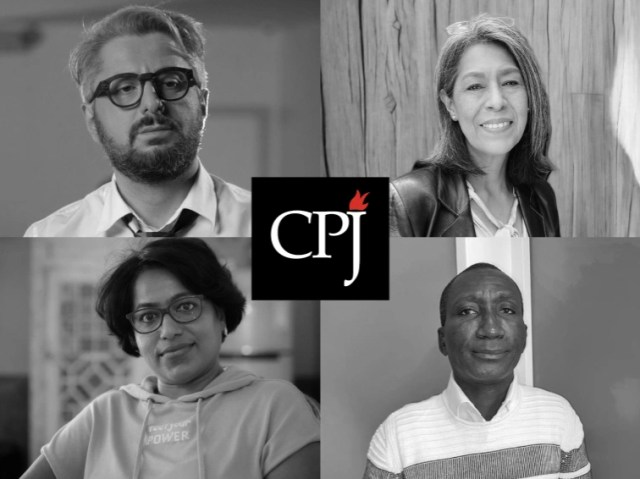
New York, June 29, 2023—The Committee to Protect Journalists will celebrate four extraordinary journalists from Georgia, India, Mexico, and Togo with its 2023 International Press Freedom Awards.

In the face of a stark decline in press freedom worldwide, this year’s awardees have continued to report the news amid government crackdowns, kidnapping, exile, and the rising criminalization of their work, championing the importance of independent reporting at this critical juncture.

“Attacks on the press are rising, yet journalists continue to step up and report on the vital issues that empower us all,” said CPJ President Jodie Ginsberg. “It is our honor to recognize this year’s awardees: formidable reporters working tirelessly to expose corruption, abuse, and wrongdoing despite considerable efforts to silence them.”

CPJ will also honor Alberto Ibargüen, president of the John S. and James L. Knight Foundation with the 2023 Gwen Ifill Press Freedom Award, an award presented annually by CPJ’s board of directors in recognition of an individual’s extraordinary and sustained commitment to press freedom.

CPJ’s 2023 awardees are:

Ferdinand Ayité (Togo):

Ayité leads L’Alternative, one of Togo’s top investigative outlets, known for its fearless coverage of alleged corruption and protests against the rule of President Faure Gnassingbé. Facing persistent legal harassment and threats, Ayité and L’Alternative editor-in-chief Isidore Kouwonou fled Togo in March 2023, days before they were sentenced to three years in prison on charges of insulting authorities and false news. Ayité is a member of the Organized Crime and Corruption Reporting Project and collaborated on the Panama Papers investigation in 2016, focusing on tax avoidance schemes by Indian companies based in Togo. His phone number also appeared on the Pegasus Project’s list of journalists allegedly selected for potential spyware surveillance.

Shahina K.K. (India):

A senior editor for Outlook magazine, Shahina is a veteran Indian journalist, covering gender, human rights, and marginalized communities. She was one of the country’s first journalists to be charged under a draconian anti-terror law weaponized against journalists in the country for over a decade. Shahina has continued her reporting, despite awaiting trial for a case opened in 2010, when local government officials sought to criminalize her reporting on a questionable police investigation. As of June 2023, Shahina is on bail pending trial, where she faces a maximum of three years in prison and a fine if convicted. A Muslim by birth, Shahina has been subjected to extensive harassment by Indian right-wing groups seeking to silence her reporting on religious minorities and vulnerable caste groups.

Nika Gvaramia (Georgia):

Gvaramia is the founder and director of independent broadcaster, Mtavari Arkhi (Main Channel), founded in 2019. Gvaramia, who has worked in journalism since 2012, previously held government positions and served on the legal team representing opposition leader and former President Mikheil Saakashvili. As a TV presenter, Gvaramia was known for exposing alleged government corruption and abuses. He served more than a year of a 3.5-year sentence for alleged abuse of office—charges that were widely denounced as politically motivated—before receiving a presidential pardon in June 2023. Gvaramia is the only journalist in Georgia to receive a prison sentence in retaliation for their work since CPJ started keeping records of jailed journalists in 1992.

María Teresa Montaño (Mexico):

Montaño is a prominent investigative reporter and founder and editor of The Observer, an investigative outlet. Her journalism features investigations of corruption, transparency, gender violence, and accountability. Her reporting has led to threats, surveillance, and harassment from state and local authorities. In 2021, in retaliation for her reporting, she was abducted by three men who held her at gunpoint and stole her files on a corruption investigation involving state officials. The kidnappers, whose identities are still unknown, threatened to kill her if she reported the crime. After leaving Mexico for a short period following her abduction, Montaño has since resumed reporting in the country, despite the increasingly dangerous environment for journalists.

Now in its 33rd year, CPJ’s annual International Press Freedom Awards and benefit dinner honor courageous journalists from around the world. The event, to be held on November 16, 2023, in New York City, will be chaired by Meredith Kopit Levien, president and CEO of The New York Times Company.

For more information on attending or sponsoring CPJ’s International Press Freedom Awards, please call Buckley Hall Events at (+1) 914-579-1000 or CPJ’s Development Office at (+1) 212- 300-9021, or email CPJIPFA@buckleyhallevents.com.

Anything can happen in the dark wood

“Fantasy is a different approach to reality, an alternative technique for apprehending and coping with existence. It is not antirational, but pararational; not realistic but surrealistic, a heightening of reality.  In Freud’s terminology, it employs primary, not secondary process thinking. It employs archetypes, which, as Jung warned us, are dangerous things. Fantasy is nearer to poetry, to mysticism, and to insanity than naturalistic fiction is. It is a wilderness, and those who go there should not feel too safe.”   – Ursula K. Le Guin

Worrying about safety holds us back from the truth about ourselves and the world. In fact, it’s a hindrance that, among other things, makes us fear walking into the dark wood.

We’re familiar with the Divine Comedy‘s lines, “In the middle of the journey of our life, I came to myself, in a dark wood, where the direct way was lost. It is a hard thing to speak of, how wild, harsh and impenetrable that wood was, so that thinking of it recreates the fear. It is scarcely less bitter than death: but, in order to tell of the good that I found there, I must tell of the other things I saw there.”

I suggest that this dark wood, like so-called “hell” itself, is not a place but a state of mind fed by the unconscious where, as Jung says, the shadow awaits us, that is to say everything we generally perceive as negative. Folklore and fantasy (among other things) lead us there, into this wilderness that comprises the parts of ourselves that we fear to meet.

We find clues in faerie tales, fantasy, and folklore and, as Le Guin notes, in archetypes that many of us see in the Tarot, the KabalisticTree of Life, and our dreams. To some extent, we fear the deeper, dark-wood part of ourselves because confronting it might change us, might lead to death or–worse yet–insanity. But confronting that dark wood might also lead to the wonderment of discovering the true power and knowledge from which we are built.

Helen Luke and others have shown us how to survive the dark wood–how to survive ourselves–with such wisdom as, “The true light never hides the darkness but is born out of the very center of it, transforming and redeeming. So to the darkness, we must return, each of us individually accepting his ignorance and loneliness, his sin and weakness, and, most difficult of all, consenting to wait in the dark and even to love the waiting”

Instead of fear of the dark wood, our stories urge us to confront it with excitement and a sense of adventure. This is one reason I like mythic literature, including folklore and fairie: it’s scary but positive.

–Malcolm

Malcolm R. Campbell is the author of contemporary fantasy, magical realism, and paranormal stories and novels all of which are set in the dark wood.

Sharon Heath (‘The Mysterious Composition of Tears’) at VROMAN’S in Pasadena August 27

Sharon Heath will be reading and signing The Mysterious Composition of Tears at Vroman’s Bookstore at 695 E Colorado Blvd, Pasadena, CA on August 27th.

Since Sharon and I are both published by Thomas-Jacob Publishing in Florida, I can’t write a review and tell you how great I think this novel is. But I can provide a description of what it’s about:

Heath

“After a series of climate calamities, physicist Fleur Robins takes off for deep space in a desperate attempt to save the species from extinction. During her mysteriously prolonged absence, the internet has crashed, fire and flood have devastated whole countries, and End of Times cults have proliferated. There have been some intriguingly hopeful changes, too-nanoparticle holograms have replaced electronic devices, young people are witnessing exquisitely colorful “Shimmers,” and the most gifted of them converse regularly with animals and trees.

“While Fleur’s distraught husband Adam leads their Caltech physics team in frantic efforts to pinpoint her whereabouts, and Fleur herself plots her return home, their teenaged children Callay and Wolf fall in love with surprising partners. But when the charming son of an End of Times pastor crosses Wolf’s path during a particularly vibrant Shimmer, events are set in motion that will upend everyone’s life and transform planet Earth itself.

“This latest installment of Sharon Heath’s saga of the quirky Nobelist Fleur is simultaneously a vision of what awaits us in a post-Covid world, a wild romp through quantum reality, and a deep sea dive into the dark and light vagaries of the human heart.”

I’ve gotta ask, who doesn’t enjoy a wild romp through quantum reality? The Mysterious Composition of Tears follows The History of My Body, Tizita, and Return of the Butterfly. You can learn more about these books on Sharon’s website.

–Malcolm

Malcolm R. Campbell, who is a quantum mechanic at all Exxon stations, writes contemporary fantasy, magical realism, and paranormal stories and novels in his spare time. That is to say, reality as we know it.

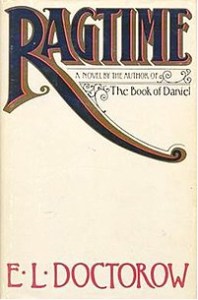
I hope people still read Doctorow’s novel ‘Ragtime’

“Edgar Lawrence Doctorow (January 6, 1931 – July 21, 2015) was an American novelist, editor, and professor, best known for his works of historical fiction.
“He wrote twelve novels, three volumes of short fiction and a stage drama, including the award-winning novels Ragtime (1975), Billy Bathgate (1989), and The March (2005). These, like many of his other works, placed fictional characters in recognizable historical contexts, with known historical figures, and often used different narrative styles. His stories were recognized for their originality and versatility, and Doctorow was praised for his audacity and imagination.”Wikipedia

Doctorow’s novels, especially Ragtime and The March rank high on my list of great storytelling and great writing. Those who aren’t among his fans dislike his mix of historical and fictional characters, calling it “audacity.” The movie version of Ragtime, Cagney’s last role after a twenty-year hiatus from films, is well worth seeing for the ambiance and the actors (many new) who had difficult parts to play. Among these was Howard E. Rollins, Jr. as Coalhouse Walker, Jr.  (“I read music so good, white folks think I’m fakin’ it.”)

Nesbit

As historical fiction, Ragtime captures the flavor of the world of ragtime that basically ran from the 1890s to the 1910s along with now-iconic events such as the murder of architect Stanford White in 1906 by Harry Thaw for White’s rape of fashion model Evelyn Nesbit  (and ultimately Thaw’s wife). Thaw was acquitted for the reason of insanity.

The primary story is about the character Coalhouse Walker a professional musician who plays ragtime music on the piano. As Wikipedia puts it, “Things go well until he is humiliated by a racist fire crew, led by Will Conklin, who vandalize his Model T Ford. He begins a pursuit of redress by legal action but discovers he cannot hope to win because of the inherent prejudice of the system. Sarah is killed in an attempt to aid him, and Coalhouse uses the money he was saving for their wedding to pay for an extravagant funeral.”

The mix of historical that figures into the sad story of Coalhouse Walker is one of the novel’s triumphs, I think, and may obscure (for some readers) what is fact and what is fiction. Some critics hate this sort of mix while I applaud it.

One comes away from both the novel and the movie with an appreciation for the times and the times’ abuses and systemic injustice.

–Malcolm

Okay, I’ve ordered the latest installment in Diana Gabaldon’s ‘Outlander Series’

Go Tell the Bees That I Am Gone was released in 2021 and now that the prices have come down, I can afford to order the book that (due to its length) costs more than my house when it’s new.

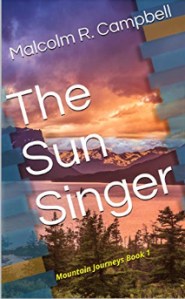
I “knew” Diana online on the old CompuServe Litforum when Outlander, the first book in the series, was released in 1991. She was very helpful to those of us who were early on in our writing careers. She wrote a blurb for my novel The Sun Singer, and my wife and I met her once when she was in Atlanta for a book signing. The series, of which “Bees” is the 9th book, has been airing on Starz. I watched a few of the early episodes but took issue with the production and didn’t stay with it. However, I did approve of the series’ use of Scots Gaelic.

On her website, Diana writes, “Where did the title for this book come from? Talking to your bees is a very old Celtic custom (known in other parts of Europe, too) that made it to the Appalachians. You always tell the bees when someone is born, dies, comes or goes—because if you don’t keep them informed, they’ll fly away.”

The first three books in the series came out fairly close together, so I hoped that would continue. Then the books got longer, took more time to write, and have been released slowly. So I debated whether I want to stay with the series inasmuch as each installment represents quite an investment in time. But, once I get into the story, I won’t leave it,

From the Publisher

War leaves nobody alone. Neither the past, the present, nor the future offers true safety, and the only refuge is what you can protect: your family, your friends, your home.
Jamie Fraser and Claire Randall were torn apart by the Jacobite Rising in 1746, and it took them twenty years of loss and heartbreak to find each other again. Now it’s 1779, and Claire and Jamie are finally reunited with their daughter, Brianna, her husband, Roger, and their children, and are rebuilding their home on Fraser’s Ridge—a fortress that may shelter them against the winds of war as well as weather.

But tensions in the Colonies are great: Battles rage from New York to Georgia and, even in the mountains of the backcountry, feelings run hot enough to boil Hell’s teakettle. Jamie knows that loyalties among his tenants are split and it won’t be long before the war is on his doorstep.

Brianna and Roger have their own worry: that the dangers that provoked their escape from the twentieth century might catch up to them. Sometimes they question whether risking the perils of the 1700s—among them disease, starvation, and an impending war—was indeed the safer choice for their family.

Not so far away, young William Ransom is coming to terms with the mysteries of his identity, his future, and the family he’s never known. His erstwhile father, Lord John Grey, has reconciliations to make and dangers to meet on his son’s behalf and on his own, and far to the north, Young Ian Murray fights his own battle between past and future, and the two women he’s loved.

Meanwhile, the Revolutionary War creeps ever closer to Fraser’s Ridge. Jamie sharpens his sword, while Claire whets her surgeon’s blade: It is a time for steel.

While I’m reading, I know I will feel it’s time well spent.

–Malcolm

“The Sun Singer is gloriously convoluted, with threads that turn on themselves and lyrical prose on which you can float down the mysterious, sun-shaded channels of this charmingly liquid story” – Diana Gabaldon

Changing our world without knowing it

“Beware of the stories you read or tell; subtly, at night, beneath the waters of consciousness, they are altering your world.” — Ben Okri
Ben Okri, who won the 1991 Booker Prize for this novel The Famished Road, is quoted often and in many places when it comes to words of wisdom about storytelling.

When we think of storytelling, whether from oral traditions of centuries past or the novels we peruse on Amazon, we tend to think of stories as tales intended to be read or otherwise passed along to others. What we overlook, out of habit, are the stories we tell ourselves.

Even things said over and over in jest/sarcasm such as “My feet our killing me.”  I suggest that if you say that or think that often enough, your feet will ultimately kill you because the idea has become part of our world view about yourself.

Those who teach meditation often ask us to get rid of the on-going interior monologue that runs like an endless podcast inside our heads. First, it’s uncensored and often negative in some way. Second, it fills our thoughts with dribble, shutting down our ability to hear the stories we need to hear. Third, that monlogue is a barrier to the songs of the universe, knowledge we might get through intuition or other communication with higher powers and totem animals.

And then I guess we might say that if the only person we’re listening to is that podcast from ourselves, we won’t hear much else. What a pity, in a world built on stories, thousands of voices are trying to get our attention.

–Malcolm

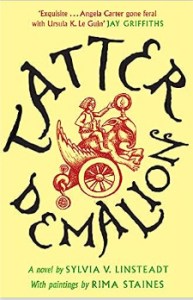
‘Tatterdemalion,’ by Sylvia Linsteadt

Oops, I meant to say something about this wonderful book when it came out two years ago. The book is well-written and beautifully illustrated by the widely-known faerie world artist Rima Staines.

From the Publisher

“In a ruined world, what survives are the stories we tell Poppy, who speaks the languages of wild things, travels east to the mountains with the wheeled and elephantine beast Lyoobov. He’s seeking answers to the mysteries of his birth, and the origins of the fallen world in which he lives. Up in the glacial peaks, among a strange, mountainous people, a Juniper Tree takes Poppy deep into her roots and shows him the true stories of the people who made his world, people he thought were only myths. Their tales span centuries, from three hundred years in the future all the way back to our present day. It is through this feral but redemptive folklore that Poppy begins to understand the story of his own past and his place in the present. Tatterdemalion is a stunning collaboration between writer Sylvia V. Linsteadt and artist Rima Staines, featuring the fourteen original paintings that inspired the narrative.”

From the Author’s Website

Sylvia Victor Linsteadt is an author, scholar of ancient history, and certified wildlife tracker. She studied Literary Arts at Brown University, graduating with Honors in 2011. 

“Her work—both fiction and non-fiction—is rooted in myth, ecology, feminism & bioregionalism, and is devoted to broadening our human stories to include the voices of the living land.”

“She is the author of the short story collection Our  Lady of the Dark Country, two novels for young readers, The Wild Folk (Nominated for the CILIP Carnegie Medal in 2019) and The Wild Folk Rising, and the post-apocalyptic folktale cycle Tatterdemalion with painter Rima Staines.”

To learn more about folklore/fae authors, artists, and illustrators, I recommend the blog Myth and Moor. While the blog has been on hiatus (but becoming active again), you will find faerie resources and authors in the right-hand column.

Malcolm

Malcolm R. Campbell is the author of the upside-down faerie tale, “Waking Plain.”