“Andy Borowitz (born January 4, 1958)is an American writer, comedian, satirist, and actor. Borowitz is a New York Times-bestselling author who won the first National Press Club award for humor. He is known for creating the NBC sitcom The Fresh Prince of Bel-Air and the satirical column The Borowitz Report.” – Wikipedia
The Borowitz Report was acquired by the New Yorker Magazine in 2012. Due to the prevalence of fake news claims throughout the country, the New Yorker added the tagline “not the news” in 2016. If you sign up for the newsletter, it arrives in your in-basket with funny satire that you’ll wish you had written.
You can also find Borowitz’s satire in book form such as The Borowitz Report: The Big Book of Shockers described by the publisher as “From the man The Wall Street Journal hailed as a “Swiftean satirist” comes the most shocking book ever written! The Borowitz Report: The Big Book of Shockers, by award-winning fake journalist Andy Borowitz, contains page after page of “news stories” too hot, too controversial, too — yes, shocking — for the mainstream press to handle. Sample the groundbreaking reporting from the news organization whose motto is “Give us thirty minutes — we’ll waste it.”
I look forward to the Borowitz report e-mails because they provide welcome smiles amidst the chaos of real news reporting.
–Malcolm
Malcolm R. Campbell’s political satire books are, sadly, out of print.
After writing about Whitehead’s Harlem Shuffle yesterday, I thought I might as well focus on its sequel, Crook Manifesto, which was released today by Doubleday. The book allows Whitehead to continue his focus on Harlem and treat his readers to the characters they got to know in Harlem Shuffle. The books are part of a planned trilogy. I like the Minneapolis Star-Tribune’s comment, “A masterwork of stylish noir and social satire … Whitehead’s larger project propels us forward, probing the whipsaw of race and the ouroboros of virtue and vice.”
From the Publisher
It’s 1971. Trash piles up on the streets, crime is at an all-time high, the city is careening towards bankruptcy, and a shooting war has broken out between the NYPD and the Black Liberation Army. Amidst this collective nervous breakdown furniture store owner and ex-fence Ray Carney tries to keep his head down and his business thriving. His days moving stolen goods around the city are over. It’s strictly the straight-and-narrow for him — until he needs Jackson 5 tickets for his daughter May and he decides to hit up his old police contact Munson, fixer extraordinaire. But Munson has his own favors to ask of Carney and staying out of the game gets a lot more complicated – and deadly.
1973. The counter-culture has created a new generation, the old ways are being overthrown, but there is one constant, Pepper, Carney’s endearingly violent partner in crime. It’s getting harder to put together a reliable crew for hijackings, heists, and assorted felonies, so Pepper takes on a side gig doing security on a Blaxploitation shoot in Harlem. He finds himself in a freaky world of Hollywood stars, up-and-coming comedians, and celebrity drug dealers, in addition to the usual cast of hustlers, mobsters, and hit men. These adversaries underestimate the seasoned crook – to their regret.
1976. Harlem is burning, block by block, while the whole country is gearing up for Bicentennial celebrations. Carney is trying to come up with a July 4th ad he can live with. (“Two Hundred Years of Getting Away with It!”), while his wife Elizabeth is campaigning for her childhood friend, the former assistant D.A and rising politician Alexander Oakes. When a fire severely injures one of Carney’s tenants, he enlists Pepper to look into who may be behind it. Our crooked duo have to battle their way through a crumbling metropolis run by the shady, the violent, and the utterly corrupted.
CROOK MANIFESTO is a darkly funny tale of a city under siege, but also a sneakily searching portrait of the meaning of family. Colson Whitehead’s kaleidoscopic portrait of Harlem is sure to stand as one of the all-time great evocations of a place and a time.
“Returning to the world of his novel ‘Harlem Shuffle,’ Colson Whitehead’s ‘Crook Manifesto’ is a dazzling treatise, a glorious and intricate anatomy of the heist, the con, and the slow game. There’s an element of crime here, certainly, but as in Whitehead’s previous books, the genre isn’t the point. Here he uses the crime novel as a lens to investigate the mechanics of a singular neighborhood at a particular tipping point in time. He has it right: the music, the energy, the painful calculus of loss. Structured into three time periods — 1971, 1973, and finally the year of America’s bicentennial celebration, 1976 — ‘Crook Manifesto’ gleefully detonates its satire upon this world while getting to the heart of the place and its people.”
“The twin triumphs of The Underground Railroad (2016) and The Nickel Boys (2019) may have led Whitehead’s fans to believe he would lean even harder on social justice themes in his next novel. But by now, it should be clear that this most eclectic of contemporary masters never repeats himself, and his new novel is as audacious, ingenious, and spellbinding as any of his previous period pieces.” – Kirkus Reviews
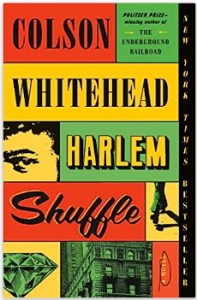
This book’s been out a while (August 9, 2022) and Whitehead’s most recent book Crook Manifesto will be released tomorrow, so it’s past time to say something about it. It’s good. Actually, it’s better than good. The New York Times calls it “A sizzling heist novel” and the San Francisco Chronicle says it’s “Fast-paced, keen-eyed and very funny.”
From the Publisher
“Ray Carney was only slightly bent when it came to being crooked…” To his customers and neighbors on 125th Street, Carney is an upstanding salesman of reasonably priced furniture, making a decent life for himself and his family. He and his wife Elizabeth are expecting their second child, and if her parents on Striver’s Row don’t approve of him or their cramped apartment across from the subway tracks, it’s still home.
“Few people know he descends from a line of uptown hoods and crooks, and that his façade of normalcy has more than a few cracks in it. Cracks that are getting bigger all the time.
“Cash is tight, especially with all those installment-plan sofas, so if his cousin Freddie occasionally drops off the odd ring or necklace, Ray doesn’t ask where it comes from. He knows a discreet jeweler downtown who doesn’t ask questions, either.
“Then Freddie falls in with a crew who plan to rob the Hotel Theresa—the “Waldorf of Harlem”—and volunteers Ray’s services as the fence. The heist doesn’t go as planned; they rarely do. Now Ray has a new clientele, one made up of shady cops, vicious local gangsters, two-bit pornographers, and other assorted Harlem lowlifes.
“Thus begins the internal tussle between Ray the striver and Ray the crook. As Ray navigates this double life, he begins to see who actually pulls the strings in Harlem. Can Ray avoid getting killed, save his cousin, and grab his share of the big score, all while maintaining his reputation as the go-to source for all your quality home furniture needs?
“Harlem Shuffle’s ingenious story plays out in a beautifully recreated New York City of the early 1960s. It’s a family saga masquerading as a crime novel, a hilarious morality play, a social novel about race and power, and ultimately a love letter to Harlem.”
The first time I had ulcers, the diagnosis, tests, and treatment were handled by a GP. This time, the GP (not the same doctor) turned the whole matter over to a specialist. So now I sit and wait for an August 24th appointment to arrive. This fits a news story I saw on TV that people are experiencing longer wait times getting an appointment with a specialist. Part of the problem is using GPs for intake into the system rather than as a place of treatment. My two cents.
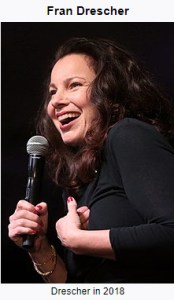
Now that performers have joined writers, Hollywood is being shut down. As usual, the studios are claiming that the strikers are only hurting themselves. According to Fran Drescher, president of SAG-AFTRA, “I cannot believe it, quite frankly, how far apart we are on so many things. How they plead poverty, that they’re losing money left and right when giving hundreds of millions of dollars to their CEOs. It is disgusting. Shame on them. They stand on the wrong side of history.” I support the strikers in this rare instance of the writers’ and actors’ unions striking at the same time.
According to USA Today, “Actress and singer Jane Birkin, who inspired fashion-forward Birkin bag, has died at 76.” Frankly, I’m tired of reading news stories about people who are more or less in my generation dying off. According to Wikipedia, “In 2001, Birkin was awarded the OBE. She was also awarded the French Ordre National du Mérite in 2004 and 2015. She won the “Best Actress” award at the 1985 Orleans Film Festival for Leave All Fair. The jury of the 1985 Venice Film Festival recognized Birkin’s performance in Dust as amongst the best of the year but decided not to award the best actress prize because all of the actresses they judged to have made the best performances were in films that won major awards. Dust won the Silver Lion prize. In 2018, she received the Japanese Order of the Rising Sun.”
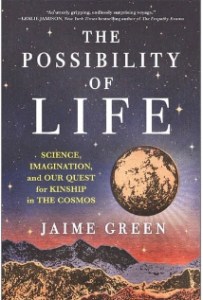
As TNR puts it in “The Tantalizing, Lonely Search for Alien Life” “Scientists disagree about what life on other planets even means. Would we know it when we saw it?” “A truly alien alien is so incomprehensible that stories about them just become stories about human beings,” Jaime Green writes in her new book, The Possibility of Life: Science, Imagination, and Our Quest for Kinship in the Universe.” Maybe our neighbors come from a universe far away. How would we know? Perhaps we think those aliens will look like the Klingons or the Vulcans from “Star Trek.” If so, they wouldn’t blend in very well, would they?
–Malcolm
Malcolm R. Campbell is the author of contemporary fantasy, paranormal, and magical realism short stories and novels. The four-book set shown here combines four Kindle novels into one volume at a savings to readers
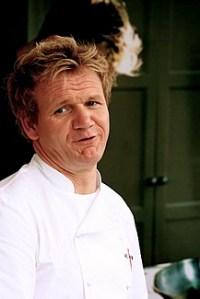
I’d probably get thrown off his cooking shows by shouting back at him about some figurative flaw he perceives in my cooking.
I do not think the default cooking time for steaks should be rare. Ramsay thinks it is. His guest chefs appearing as judges on shows like “Masterchef” also think rare is the only way to cook a steak. I can eat rare steak, but I don’t want to. Medium rare is my preferred choice.
On one show, a chef from the South was cooking grits. Ramsay berated her for using water instead of stock. If that had been me, I would have said, “You’re damn right I’m using water because I don’t want my grits to have a chicken or beef stock flavor.” I live in the South. I eat grits a lot. Chef Ramsay comes from the U. K. where few people know how to cook, so he can keep his grits ideas to himself.
Chef Ramsay hates dried herbs served raw. I love them. I prefer using herbs straight from our garden, and I admit that most of the herbs I use–whether fresh or dried–are cooked. And yet, I love raw dried herbs sprinkled on salads like salt and pepper. Once Ramsay hit the ceiling when a cook topped off a dish with a leaf the size of a bay leaf. Hell, I don’t even do that. What struck me as funny was his warning that nobody likes dried herbs sprinkled on top of food. Ha!
On one show, a pregnant woman ordered tuna and it arrived at her table raw. Ramsay went nuts, asking the chef how he could jeopardize a pregnant woman’s life by serving her raw fish. I would have agreed that the dish wasn’t what she expected, but would have added that pregnant women can eat sushi. So there was no health risk involved.
Ramsay and other Food Network Chefs frequently claim a dish needs more salt. They’re probably right most of the time. I’d be kicked off these shows with the retort that there are saltshakers on restaurant tables for those who want to use more salt than dieticians recommend.
I think my biggest complaint about many of the cooking shows is the chefs’ addiction to the blender. I have a blender. I can’t even remember the last time I used it. Chefs who are contestants on many shows think that a dish isn’t complete unless the primary item is placed on top of pureed something or other. Have these cooks been brainwashed? Why would anyone want a steak or pork chop served on top of pureed cauliflower? Or with a streak of pureed carrots filling up an empty part of the plate?
I’ll admit that I like rustic, earthy cooking. Even so, I think celebrity chefs often go too far out on the edge of nonsense.
–Malcolm
Malcolm R. Campbell is the author of magical realism novels set in the Florida Panhandle of the 1950s.
This digital magazine for supporters of the Film Noir Foundation (FNF) is a must for those who love noir films, actors, actresses, and directors. It comes out as a PDF file every four months for those supporting with a donation of $20 or more. A hard copy version is available for anyone on Amazon for $14.99 per issue. Back issues of the digital edition are available on the FNF website and are displayed with a full table of contents showing everything in the issue. Back issues are $5.99 each.
Foundation Mission Statement
“The Film Noir Foundation is a registered 501(c)(3) non-profit public benefit corporation created as an educational resource regarding the cultural, historical, and artistic significance of film noir as an international cinematic movement.
“It is our mission to find and preserve films in danger of being lost or irreparably damaged and to ensure that high-quality prints of these classic films remain in circulation for theatrical exhibition to future generations.
“That’s the high-toned legalese. Here are the facts: Even as the high-tech revolution lets us own vast film libraries on DVD, the risk grows greater all the time that 35mm prints of some films will fall into disuse and eventually disintegrate—especially lesser-known titles that have slipped through the cultural cracks, but are worthy of rediscovery.”
In addition to the magazine and a hosted presentation of noir films on Saturdays on Turner Classic Movies (TCM), the foundation has presented the Noir City film festival in Sa Francisco since 2003. According to the Foundation, the festival “immediately grew into the largest film noir-specific annual event in the United States, the centerpiece of the Film Noir Foundation’s public awareness campaign. Viewers are drawn every January from all over the world, eager to submerge themselves in an extravaganza of rare films, special guests, music, and literary tie-ins — a communal celebration of all things noir.” Shown here is the poster for this year’s festival. It certainly captures the ambiance of noir.
Noir films are on my mind today since my wife and I just watched the 1946 “murder-in-a-locked-room film called “The Verdict” starring Sydney Greenstreet and Peter Lorre in one of their nine film pairings. The film is dark and filled with shadows and a plot that leaves you guessing until the end. What’s not to like?
My response to that is when’s noxious patriarchy going to end, especially when thrust upon us by a division of a federal government?
You can read the CNN story here and The Guardian story here.
According to the court, ten seconds is too fleeting to be a crime. What fresh hell is this? A friend of mine who commented on my Facebook post about this story noted that a punch in the nose takes less than ten seconds. Perhaps a ten-second rape would be absolved by the state. Or a bullet that reaches its target faster than that.
According to One Billion Rising, “1 in 3 women across the planet will be beaten or raped during her lifetime. That’s ONE BILLION WOMEN AND GIRLS. Every February, we rise – in countries across the world – to show our local communities and the world what one billion looks like and shine a light on the rampant impunity and injustice that survivors most often face. We rise through dance to express joy and community and celebrate the fact that we have not been defeated by this violence. We rise to show we are determined to create a new kind of consciousness – one where violence will be resisted until it is unthinkable.”
When we let the “little crimes” get by as “okay,” we make the bigger crimes easier to ignore. And by ignoring those crimes–as the Italian court did–we further discount women and keep them forever living in a world where they’re considered second-class citizens.
Would the men on the Italian court be unconcerned if somebody groped their wives and daughters for “only” ten seconds? I think not.
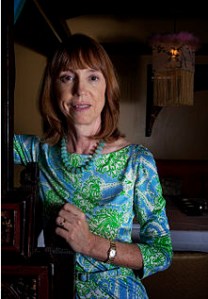
I read all the books released by a select group of authors, making release dates special occasions. Lady Tan’s Circle of Women was released on June 6th, making that an auspicious date, as were other dates going back to 1995’s On Gold Mountain, 1997’s Flower Net, 1999’s The Interior, and many others up to 2019’s The Island of Sea Women. Her mother, Carolyn See, was the author of ten books. You can learn more about Carolyn See here and explore Lisa See’s website here.
From the Publisher
The latest historical novel from New York Times bestselling author Lisa See, inspired by the true story of a woman physician from 15th-century China—perfect for fans of See’s classic Snow Flower and the Secret Fan and TheIsland of Sea Women.
According to Confucius, “an educated woman is a worthless woman,” but Tan Yunxian—born into an elite family, yet haunted by death, separations, and loneliness—is being raised by her grandparents to be of use. Her grandmother is one of only a handful of female doctors in China, and she teaches Yunxian the pillars of Chinese medicine, the Four Examinations—looking, listening, touching, and asking—something a man can never do with a female patient.
From a young age, Yunxian learns about women’s illnesses, many of which relate to childbearing, alongside a young midwife-in-training, Meiling. The two girls find fast friendship and a mutual purpose—despite the prohibition that a doctor should never touch blood while a midwife comes in frequent contact with it—and they vow to be forever friends, sharing in each other’s joys and struggles. No mud, no lotus, they tell themselves: from adversity beauty can bloom.
But when Yunxian is sent into an arranged marriage, her mother-in-law forbids her from seeing Meiling and from helping the women and girls in the household. Yunxian is to act like a proper wife—embroider bound-foot slippers, pluck instruments, recite poetry, give birth to sons, and stay forever within the walls of the family compound, the Garden of Fragrant Delights.
How might a woman like Yunxian break free of these traditions, go on to treat women and girls from every level of society, and lead a life of such importance that many of her remedies are still used five centuries later? How might the power of friendship support or complicate these efforts? Lady Tan’s Circle of Women is a captivating story of women helping other women. It is also a triumphant reimagining of the life of a woman who was remarkable in the Ming dynasty and would be considered remarkable today.
Tan Yunxian was a real historical figure who published a book about her career as a physician, but little is known about her personal life. See creates a rich story about a girl born into an aristocratic family. That accident of birth should have written her fate: limited education, bound feet, arranged marriage, childbirth, and a life spent entirely behind the walls of family compounds. She doesn’t escape all of those things, but after the early death of her mother, she’s raised by her paternal grandparents, who are both doctors, and given an unusually advanced education, including in the healing arts they practice. Yunxian’s life is constrained by rules governing her class and gender, and she is literally never alone—even when she sleeps, her maid sleeps at the foot of her bed. Her family’s wealthy extended household has an elaborate structure, and she learns early to negotiate the gradations among first wives, second wives, and concubines and to recognize that, like them, she is valued for beauty and fertility and little else.
Reading Lisa See’s novels is always an education mixed with a good story, and that means the auspicious dates when her books arrive are open doors to time well spent.
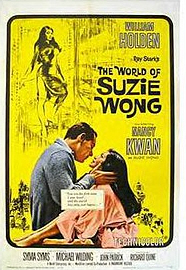
Even so, years after those days, few people know what to make of the 1960s, the era of flower children, anti-war protests, and distrust of “the establishment.” Nancy Kwan, who appeared in the public eye with the release of “The World of Suzie Wong” in 1960, was a welcome distraction to the forces wreaking havoc on the United States and its institutions.
We were jealous of the William Holden character in the movie and knew that if we knew Suzie Wong–a Hong Kong prostitute–we would propose as Holden’s character Robert Lomax did. Had that happened in “real life,” most of our friends would not have accepted anyone bringing home a Chinese wife any more than the Filipino and Vietnamese wives servicemen brought home with them even though Hollywood was hiring Asian actresses then.
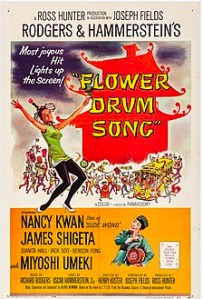
“Flower Drum Song ” (1961) definitely kept Nancy Kwan on our minds while we were advocating “Make Love Not War.” Wikipedia notes that “”Flower Drum Song became the first major Hollywood feature film to have a majority Asian-American cast in a contemporary Asian-American story. It would be the last film to do so for more than 30 years, until The Joy Luck Club (1993). In 2008, Flower Drum Song was selected for preservation in the United States National Film Registry by the Library of Congress as being “culturally, historically, or aesthetically significant”
The movie had a great cast though some of us only had eyes for Nancy. When I was in Hong Kong and Kowloon in the late 1960s, a family friend who lived there and spoke fluent Cantonese, gave me a great tour of all the sites and sounds, and even then, I wondered if Nancy Kwan might appear in a Wan Chai District alley and propose marriage. I wouldn’t have said “no” even if I had to take a crash course in Cantonese.
I’m happy that Nancy Kwan is still around, some years older than me, because her presence on this earth reminds me of Hong Kong, the war, Japan, the draft, and all the other good and bad things of those days when most of us lost our innocence and thought absolution would come through hopes we could never attain.
We saw her in movies and on TV shows into the new century and felt that even though she didn’t know us, she was a friendly face out of the past–and out of our dreams and fantasies as well. She’s still active in the Hollywood world and that’s a good thing for those of us who might still have a crush on her.
I really don’t like bringing groceries home from the store in plastic bags–except for Coke and large bottles of wine which fall through paper bags–and the cashiers have gotten used to this. Goodness knows I’m probably not their most eccentric customer.
Of course, there are environmental reasons not to use plastic. In addition to that, if you put a cart full of groceries in the trunk in plastic bags, you’ll have a mess by the time you get home. So, I put my groceries in the back seat. The paper sacks stand up nicely on the seat and the plastic bags with the sparkling water, 1.5-liter wine bottles, and 2-liter Coke bottles fit in a containable pile on the floor.
When the checkout people see me coming, they reach under the counter for the paper bags. I seldom have to ask. At Publix, the checkers want to take the groceries out to the car because I look old and feeble. I skip that service because they want to put the stuff in the trunk where it will all fall over and get confused when I say I want the food on the back seat. It’s simply better not to have to explain it.
I saw an old couple (older than me) come out of the store this morning with plastic bags. They opened the trunk and, as it turned out, there were cartons in there that kept the grocery bags contained. Smart move.
good
Many stores have reusable bags. Not too bad, though they don’t keep the groceries under control as well as paper. They tip over in the car no matter where I put them, spilling out everything. A genuine bad scene, as we used to say.
One thing about being old is this: people expect weird behavior, so I don’t get a lot of push-backs from clerks about why I want my groceries bagged up differently than 99% of their customers. Looking scary and eccentric has its benefits.
Plus, I’m pretty much deaf and know how to swear in Gàidhlig, as in “Falbh do dh’ifrinn airson a h-uile rud a tha fo chùram.”
–Malcolm
Malcolm R. Campbell’s novels are set in the Florida Panhandle when we didn’t have plastic bags but we had the KKK. My conjure woman can take care of them.
 “Andy Borowitz (born January 4, 1958)is an American writer, comedian, satirist, and actor. Borowitz is a New York Times-bestselling author who won the first National Press Club award for humor. He is known for creating the NBC sitcom The Fresh Prince of Bel-Air and the satirical column The Borowitz Report.” – Wikipedia
 You can also find Borowitz’s satire in book form such as The Borowitz Report: The Big Book of Shockers described by the publisher as “From the man The Wall Street Journal hailed as a “Swiftean satirist” comes the most shocking book ever written! The Borowitz Report: The Big Book of Shockers, by award-winning fake journalist Andy Borowitz, contains page after page of “news stories” too hot, too controversial, too — yes, shocking — for the mainstream press to handle. Sample the groundbreaking reporting from the news organization whose motto is “Give us thirty minutes — we’ll waste it.”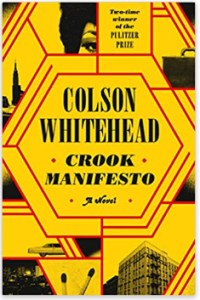
 “Arch Colson Chipp Whitehead (born November 6, 1969) is an American
  The first time I had ulcers, the diagnosis, tests, and treatment were handled by a GP. This time, the GP (not the same doctor) turned the whole matter over to a specialist. So now I sit and wait for an August 24th appointment to arrive. This fits a news story I saw on TV that people are experiencing longer wait times getting an appointment with a specialist. Part of the problem is using GPs for intake into the system rather than as a place of treatment. My two cents.
 Now that performers have joined writers, Hollywood is being shut down. As usual, the studios are claiming that the strikers are only hurting themselves. According to Fran Drescher, president of SAG-AFTRA, “I cannot believe it, quite frankly, how far apart we are on so many things. How they plead poverty, that they’re losing money left and right when giving hundreds of millions of dollars to their CEOs. It is disgusting. Shame on them. They stand on the wrong side of history.” I support the strikers in this rare instance of the writers’ and actors’ unions striking at the same time.
 According to
  As TNR puts it in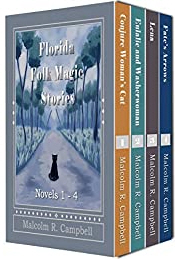
 I do not think the default cooking time for steaks should be rare. Ramsay thinks it is. His guest chefs appearing as judges on shows like “Masterchef” also think rare is the only way to cook a steak. I can eat rare steak, but I don’t want to. Medium rare is my preferred choice.
 Chef Ramsay hates dried herbs served raw. I love them. I prefer using herbs straight from our garden, and I admit that most of the herbs I use–whether fresh or dried–are cooked. And yet, I love raw dried herbs sprinkled on salads like salt and pepper. Once Ramsay hit the ceiling when a cook topped off a dish with a leaf the size of a bay leaf. Hell, I don’t even do that. What struck me as funny was his warning that nobody likes dried herbs sprinkled on top of food. Ha!

 “The Film Noir Foundation is a registered 501(c)(3) non-profit public benefit corporation created as an educational resource regarding the cultural, historical, and artistic significance of film noir as an international cinematic movement.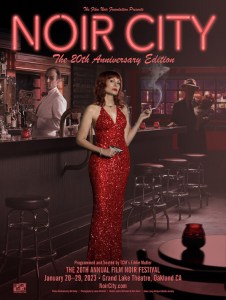
 Noir films are on my mind today since my wife and I just watched the 1946 “murder-in-a-locked-room film called “The Verdict” starring Sydney Greenstreet and Peter Lorre in one of their nine film pairings. The film is dark and filled with shadows and a plot that leaves you guessing until the end. What’s not to like?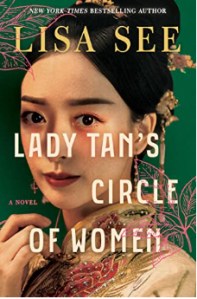
 Even so, years after those days, few people know what to make of the 1960s, the era of flower children, anti-war protests, and distrust of “the establishment.” Nancy Kwan, who appeared in the public eye with the release of “The World of Suzie Wong” in 1960, was a welcome distraction to the forces wreaking havoc on the United States and its institutions.
 “Flower Drum Song ” (1961) definitely kept Nancy Kwan on our minds while we were advocating “Make Love Not War.” Wikipedia notes that “”Flower Drum Song became the first major Hollywood feature film to have a majority Asian-American cast in a contemporary Asian-American story. It would be the last film to do so for more than 30 years, until The Joy Luck Club (1993). In 2008, Flower Drum Song was selected for preservation in the United States National Film Registry by the Library of Congress as being “culturally, historically, or aesthetically significant”
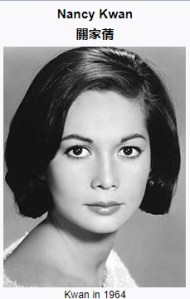 I’m happy that Nancy Kwan is still around, some years older than me, because her presence on this earth reminds me of Hong Kong, the war, Japan, the draft, and all the other good and bad things of those days when most of us lost our innocence and thought absolution would come through hopes we could never attain.


 Malcolm's Round Table