“Oppenheimer’s warnings were ignored—and ultimately, he was silenced. Like that rebellious Greek god Prometheus—who stole fire from Zeus and bestowed it upon humankind, Oppenheimer gave us atomic fire. But then, when he tried to control it, when he sought to make us aware of its terrible dangers, the powers-that-be, like Zeus, rose up in anger to punish him.” American Prometheus by Kai Bird and Martin J. Sherwin (2005)
Before the United States was done with Julius Robert Oppenheimer (April 22, 1904 – February 18, 1967), he was declared a security risk by the Eisenhower administration. You learn this on the first page of this definitive, Pulitzer-Prize-winning book about a mystic and theoretical physicist who was as complex as his Nobel-Prize-worthy work that was far flung from nuclear weapons.
From the Publisher
 American Prometheus is the first full-scale biography of J. Robert Oppenheimer, “father of the atomic bomb,” the brilliant, charismatic physicist who led the effort to capture the awesome fire of the sun for his country in time of war. Immediately after Hiroshima, he became the most famous scientist of his generation–one of the iconic figures of the twentieth century, the embodiment of modern man confronting the consequences of scientific progress.
He was the author of a radical proposal to place international controls over atomic materials–an idea that is still relevant today. He opposed the development of the hydrogen bomb and criticized the Air Force’s plans to fight an infinitely dangerous nuclear war. In the now almost-forgotten hysteria of the early 1950s, his ideas were anathema to powerful advocates of a massive nuclear buildup, and, in response, Atomic Energy Commission chairman Lewis Strauss, Superbomb advocate Edward Teller and FBI director J. Edgar Hoover worked behind the scenes to have a hearing board find that Oppenheimer could not be trusted with America’s nuclear secrets.
American Prometheus sets forth Oppenheimer’s life and times in revealing and unprecedented detail. Exhaustively researched, it is based on thousands of records and letters gathered from archives in America and abroad, on massive FBI files and on close to a hundred interviews with Oppenheimer’s friends, relatives and colleagues.
We follow him from his earliest education at the turn of the twentieth century at New York City’s Ethical Culture School, through personal crises at Harvard and Cambridge universities. Then to Germany, where he studied quantum physics with the world’s most accomplished theorists; and to Berkeley, California, where he established, during the 1930s, the leading American school of theoretical physics, and where he became deeply involved with social justice causes and their advocates, many of whom were communists. Then to Los Alamos, New Mexico, where he transformed a bleak mesa into the world’s most potent nuclear weapons laboratory–and where he himself was transformed. And finally, to the Institute for Advanced Study in Princeton, which he directed from 1947 to 1966.
American Prometheus is a rich evocation of America at midcentury, a new and compelling portrait of a brilliant, ambitious, complex and flawed man profoundly connected to its major events–the Depression, World War II and the Cold War. It is at once biography and history, and essential to our understanding of our recent past–and of our choices for the future.
From Kirkus Reviews
That Oppenheimer (1904–67) was a rare genius is beyond doubt; his colleagues at CalTech, Göttingen and Los Alamos were impressed to the point of being cowed by his intellect, and “Oppie” was far ahead of even his professors in the new world of quantum theory. He was a rare bird in other ways as well. A child of privilege whose very luggage excited discussion among his cash-strapped European colleagues, he identified early with left-wing causes and was reportedly better read in the classics of Marxism than most Communist theoreticians; and, though a leftist, he expressed enough fondness for the U.S. that those European colleagues sometimes thought him a chauvinist. Worldly in many ways, he was something of a naïf. In time, he shed some of his clumsiness and became the model of a committed intellectual, unusually generous in sharing credit with students and colleagues and able to wear his achievements lightly. (“I can make it clearer,” he once remarked of a thorny physics problem, “but I can’t make it simpler.”) The authors lucidly explain Oppenheimer’s many scientific accomplishments and the finer points of quantum mechanics. More, they examine his life in a political context, for, though one of the fathers of the atomic bomb, Oppenheimer warned against its proliferation and noted, as early as 1946, that our major cities were now susceptible to terrorist attack, the only defense being a screwdriver—to open “each and every crate or suitcase.” His prescience and conscience cost him dearly: Oppie was effectively blacklisted for more than a decade and rehabilitated only at the end of his too-short life.
A swiftly moving narrative full of morality tales and juicy gossip. One of the best scientific biographies to appear in recent years.
 If the Christopher Nolan feature film has captured your attention and interest in the father of the bomb and you want to know more, American Prometheus is a good starting point. As Wikipedia notes, “The film was released on the same day as Barbie, a fantasy comedy film directed by Greta Gerwig based on Mattel’s Barbie fashion dolls and media franchise, and distributed by Warner Bros. Due to the tonal and genre contrast between the two films, many social media users created memes about how the two films appealed to different audiences, and how they should be viewed as a double feature. The trend was dubbed ‘Barbenheimer’. In an interview with La Vanguardia, Cillian Murphy endorsed the phenomenon, saying ‘My advice would be for people to go see both, on the same day. If they are good films, then that’s cinema’s gain.'”
–Malcolm
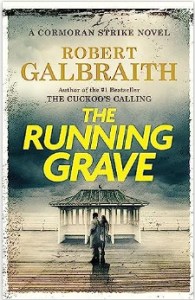 I’m happy to see the upcoming release of a new Robert Galbraith detective novel, the seventh in the series of which I’ve read all but one. The main character, Cormoran Strike, runs a detective agency that does its work without hacking into databases or traffic cams, but by old-fashioned boots on the ground, interviews, and stakeouts.
 Malcolm R. Campbell is the author of the Florida Folk Magic Series, available at a savings in this four-book Kindle volume.
 Two days ago, a
  Sara Bradley
 Traditionally, the vegetables are cut into large pieces. That is, the tomatoes are cut into wedges, and the cucumbers are peeled and cut into fat slices. The onions are sliced the way you would if you were putting them on a hamburger and cut in half. These are left large so people who don’t like raw onion can pick them out.
 Washington, D.C., July 26/2023, Star-Gazer News Service–President Biden, who admits he bought the first Barbie doll when it came out in 1959, told reporters that people “who suspect they’re losing their marbles will be returned to sanity to the greatest extent possible by interacting with a Barbie doll collection,” has viewed the new “Barbie” fantasy/comedy film thirteen times.
 The amended suit, led by the free expression organization PEN America, Penguin Random House and a diverse group of authors and parents of Escambia County students, seeks to ensure access to books on a wide range of topics with a wide range of viewpoints. The plaintiffs are represented by Ballard Spahr LLP and Protect Democracy, a non-partisan, pro-democracy group. Read the amended complaint, filed today,
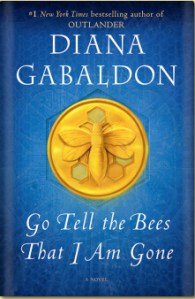 I’ve enjoyed Diana Gabaldon’s “Outlander” series and am just about done reading the latest installment Go Tell The Bees That I Am Gone. I’m enjoying the novel: it has the series’ typically interesting characters, historically accurate themes, and the kind of humor that develops when characters have been together throughout many books. Even so, I’m a bit disappointed in this novel that’s set in North Carolina as the revolutionary war begins. Basically, I think the book has too much backstory almost as though we haven’t read the rest of the series and need to be brought up to date on what’s happened to everyone since the initial novel was published in 1991. The current novel is number nine out of a planned ten books. We need more action in this one.
 When I first heard about the “Barbie” movie, I assumed it was going to be all fluff like the OLD (1965) “Beach Blanket Bingo” and the 1989-2001 TV series “Baywatch.” What a surprise, “Barbie” is not only doing well at the box office but has gotten some good reviews such as this one on NPR: “‘Barbie’ review:
 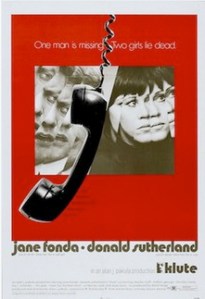 I’ve recorded the 1971 movie “Klute,” a neo-noir thriller that I saw in a theater when it was released, and liked everything about it. I like noir a lot and neo-noir almost as much. I don’t know whether my wife will watch this one with me because she still hasn’t forgiven Fonda for her travels to Vietnam during the war. I haven’t either, but I see the movie as separate from its star’s Oscar-winning performance. According to Wikipedia, “Klute was widely praised by critics for its screenplay and Fonda’s performance, though some criticized Pakula’s unconventional direction. On review aggregator
 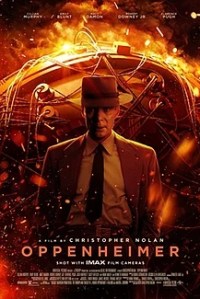 Are you planning to watch “Oppenheimer”? I’m thinking it’s one of those must-see films because it focuses on an important part of our history. Wikipedia writes that “The film was released on the same day as
  I have legal moonshine in the house and think it’s darned good. What amuses me is the fact that some of today’s legal distillers advertise that they’re using the same recipe they used when the family made moonshine illegally.
 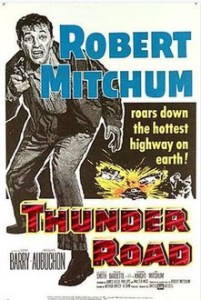 In movies like “Thunder Road,” I always support the moonshiners because I think messing with them is an example of government overreach that began with the Whiskey Rebellion of 1791 when the new federal government taxed booze to pay for the war. My question then, and now, always was how is it fair to tax one product rather than levying a tax on all projects? Not that I would like that any better.
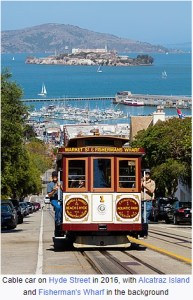 With the death of Tony Bennett who died today at 96 a small portion of the hearts of those of us who were born in the Bay Area also died because for us his signature song became our signature song and a haunting memory of where we came from and where many family members lived on for years after we left. We went back often during my pre-school years and then I want back later when I was in the Navy and had an apartment in the Mission District down a steep hill from my aunt’s apartment, the place where she lived when I was a child and the place where she still lived when I was stationed acrosss the Bay at the former Alameda Naval Air Station when my ship was in port.
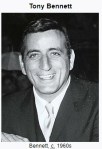 Tony Bennet first sang “I Left My Heart in San Franscisco” in 1961 at the Fairmont Hotel. Perhaps KABL, my favorite SF station was there. I was in Florida then and not a happy camper at being pulled away from California when my father’s job brought us to Tallahassee. In many ways, I never recovered from that that move because the Florida Panhandle, though beautiful in many ways that I learned to love, was just too alien for a kid who thought he’d grow up many miles due west.
 Malcolm's Round Table