 I was amused at the semantic chaos a character in a recent novel fell into while trying to explain the various pagan groups to an individual who (a) was a born-again Christian with Baptist-oriented beliefs, and (b) thought anything labelled “pagan” or “witchcraft” was pure and simple “devil worship.”
I blame both the Catholic Church and Hollywood for creating and sustaining the ignorant idea that pagans and/or witches and/or Wiccans and/or hoodoo practitioners all worship the devil. Many of those “charged” with worshipping the devil don’t believe in the devil. The devil is more or less a Christian notion.
I call my series of conjure novels “folk magic” which, in many ways, is like conventional witchcraft. The terms get muddled because many Wiccans call themselves witches while others mix up Voodoo and hoodoo.
Wicca, like Voodoo, is a religion. Hoodoo and conventional witchcraft are practices usually with a strong link to nature and spells drawn on what is observed in the natural world. Those who practice hoodoo, with its origins in Africa, are often very strong Christians and see no conlflict between the two belief systems.
I find it easy to write stories about conventional witchcraft and hoodoo because they seem to me to be very natural to those who notice the ways and means of the seasons and the natural world. Both allow the practioner to worship the gods and goddesses of their choice, Christian or otherwise.

The Wicca Academy website states that, “Wicca is a contemporary, nature-based, pagan religion. It refers to the entire system of practices and beliefs that comprise the modern pagan witchcraft spectrum. Although people often think that the terms Witchcraft and Wicca mean the same thing, that is not the case. All Wiccans are witches, but not all witches are Wiccans.”
The Green Man website states that “Drawing Witches into a cohesive identifiable group of any sort is truly like herding cats! And Traditional Witchcraft is no exception! So to cover my ass I think it best to state that all I can share is my own perspective based on my own practices, beliefs and understandings. These I have gleaned over more than 4 decades as a Traditional Witch and over two decades of leading a Coven and Tradition as well as teaching and presenting Trad Craft to the general public. All that said, there are many others with valid experiences and credentials who, coming from other Traditional foundations, would present Traditional Witchcraft in quite a different manner. As with all such explorations, look for multiple, diverse sources and find what speaks to you personally. That is in fact an approach that would be perfectly in accord with Traditional Witchcraft practices, as I present it. As Traditional Witchcraft is rooted in one’s personal senses or rather extra-sensory abilities, built upon one’s intuition, we call it “The Sight” aka “The Gifts”. Informed through direct communion with the many forms and expressions of Spirit, a Traditional Witch is then guided by their own sense of right and wrong employing what one might call one’s Ethical Compass. It is this personal and direct communion relationship a Traditional Witch has with Spirit that sets them as a Heretic: meaning outside of all forms of organized religion and circumventing any priesthood authority mediating Spirit or imposing a codified “One and True practice” or belief with regards all things related to Spirit. ”
In general, I like the practices better than the religions because I don’t really trust systems in which others tell me what I can do or what I must believe. Truth, I think, comes in following what we believe rather than what a hierarchy of leaders and rules say we must believe.
My two cents as a solitary.
–Malcolm
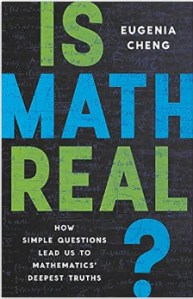
 “Where do we learn math: From rules in a textbook? From logic and deduction? Not really, according to mathematician Eugenia Cheng: we learn it from human curiosity—most importantly, from asking questions. This may come as a surprise to those who think that math is about finding the one right answer, or those who were told that the ‘dumb’ question they asked just proved they were bad at math. But Cheng shows why people who ask questions like “Why does 1 + 1 = 2?” are at the very heart of the search for mathematical truth.

 Was it a lapse in my education or a personality defect that brought me into the theater in 2001 to see the Ron Howard-directed film “A Beautiful Mind” with absolutely no idea who John Forbes Nash (June 13, 1928 – May 23, 2015) was, much less the focus of his work? I suspect my lack of knowledge of Nash came out of the rather thin coverage of subject matter in my university’s general education courses. Since I’d never heard of Nash, I didn’t notice the publication of Sylvia Nasar’s 1998 biography A Beautiful Mind on which the feature film was based. The biography is well written and yet, I missed it until after the film came out
 The movie made quite a splash and won many awards, at the Oscars and elsewhere. Some people didn’t like the way schizophrenia, from which Nash recovered. Others thought Nash’s wife Jennifer Connelly was miscast as Alicia Nash who, in reality, came from El Salvador and spoke with an accent. And then, as Wikipedia reports, “According to Nash, the film A Beautiful Mind inaccurately implied he was taking atypical antipsychotics. He attributed the depiction to the screenwriter who was worried about the film encouraging people with mental illness to stop taking their medication.”
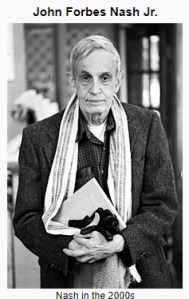 In the Oppenheimer biography American Prometheus, Oppenheimer is said to have a “forgiving instinct for the frailty of the human psyche, an awareness of the thin line between insanity and brilliance.” He worked with Nash and saw the issues behind the individual.
 (NEW YORK)—In response to a thread on Twitter (now known as “X”) from Elon Musk that suggests he may end the platform’s block button, PEN America’s Viktorya Vilk, director for Digital Safety and Free Expression, issued the comments below:
 In its story
  Cox and Forshaw will tell you it’s a quantum mechanics idea in their book, as the subtitle suggests. I agree with them.
 Or maybe French mathematician Émile Borel thought up the idea in 1943. Or maybe it was in Morgan in 1866
 SNAFU is people drinking all night in a bar while climate change is causing the seas to rise up to the doorstep. Hell, maybe “if it can happen, it will happen” is pure cynicism as we see our politicians arguing about how many angels can dance of the head of a pin while ignoring what’s really important.
 “Sean Carroll is always lucid and funny, gratifyingly readable, while still excavating depths. He advocates an acceptance of quantum mechanics at its most minimal, its most austere—appealing to the allure of the pristine. The consequence is an annihilation of our conventional notions of reality in favor of an utterly surreal world of Many-Worlds. Sean includes us in the battle between a simple reality versus a multitude of realities that feels barely on the periphery of human comprehension. He includes us in the ideas, the philosophy, and the foment of revolution. A fascinating and important book.”
 One thing I do know is that the person who promised her Bitcoin (whatever that is) dealings had been so successful along with winning a suitcase of lottery money, that she could finally send me “a car for people who thought they would ultimately know everything.” Sadly, the car never arrived and her phone number has been changed to some communal phone at Sing Sing in Ossining, New York. Here’s the photo she sent me before entering the slammer. If you have to ask what it is and/or how much it costs, it’s not the car for you.
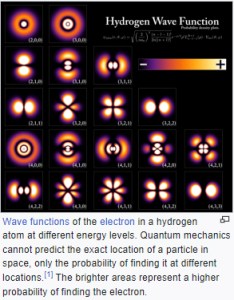 I strongly suspect that–due to my belief in the Many Worlds Interpretation of Quantum Physics–that many of us don’t live in the universe where were started out. But I can never quite catch the change happening. The only clue is today’s history classes that no longer teach things I remember happening. In today’s universe, perhaps they didn’t, or else we’ve sanitized it out of existence. The chart shown here seems self-evident, so I won’t waste time going back to the work of folks like Niels Bohr and Max Planck. I’ll note that I really like
  I’m certain about one thing. When you’re my age, you don’t know everything such as the speed and location of an electron. I strongly suspect that this is the new way of the world, one (e.g.) when even Senators and Congressmen/Women don’t simultaneously know the location of their asses and the nearest hole in the ground. This has caused a lot of polarization between the two major parties.
 Malcolm's Round Table