New Pat Conroy Center Fundraising Drive Underway

Those of us who are fans of the late Pat Conroy will have another reason to travel to the South Carolina Lowcountry. The noprofit Pat Conroy Center will soon open in Beaufort in support of local authors and the act of writing. A fundraising campaign is underway. You can learn more about it here.  According to the Associated Press, Barbra Streisand and John Grisham are among the honorary board members. The effort is being spearheaded by Conroy’s widow author Cassandra King.

Wikipedia photo
Wikipedia photo

Meanwhile, a nonfiction collection of articles, letters and essays called A Low Country Heart will be published this fall.

Currently in between new books, I’m re-reading The Lords of Discipline. Like many of Conroy’s books, it is–in addition to the plot–a lyrical prose poem about Charleston and South Carolina Lowcountry. For many, Conroy’s writing is too lyrical, though not as over the top as Thomas Wolfe who was an influence on Conroy. I appreciate the turns of phrase and the use of words. I will admit that I’m having to shift gears to get back to Conroy after finishing two Stephen King books.

Favorite Pat Conroy Passages

  • “My wound is geography. It is also my anchorage, my port of call.” – The Prince of Tides
  • “Do you think that Hemingway knew he was a writer at twenty years old? No, he did not. Or Fitzgerald, or Wolfe. This is a difficult concept to grasp. Hemingway didn’t know he was Ernest Hemingway when he was a young man. Faulkner didn’t know he was William Faulkner. But they had to take the first step. They had to call themselves writers. That is the first revolutionary act a writer has to make. It takes courage. But it’s necessary” – My Losing Season: A Memoir
  • Photo from official Conroy website.
    Photo from official Conroy website

    “There is such a thing as too much beauty in a woman and it is often a burden as crippling as homeliness and far more dangerous. It takes much luck and integrity to survive the gift of perfect beauty, and its impermanence is its most cunning betrayal.” ― The Prince of Tides

  • “Charleston has a landscape that encourages intimacy and partisanship. I have heard it said that an inoculation to the sights and smells of the Carolina lowcountry is an almost irreversible antidote to the charms of other landscapes, other alien geographies. You can be moved profoundly by other vistas, by other oceans, by soaring mountain ranges, but you can never be seduced. You can even forsake the lowcountry, renounce it for other climates, but you can never completely escape the sensuous, semitropical pull of Charleston and her marshes.” ― The Lords of Discipline
  • Behind us, the sun was setting in a simultaneous congruent withdrawal and the river turned to flame in a quiet duel of gold….The new gold of moon astonishing and ascendant, he depleted gold of sunset extinguishing itself in the long westward slide, it was the old dance of days in the Carolina marshes, the breathtaking death of days before the eyes of children, until the sun vanished, its final signature a ribbon of bullion strung across the tops of water oaks.” ― The Prince of Tides
  • “The tide was a poem that only time could create, and I watched it stream and brim and makes its steady dash homeward, to the ocean.” ― South of Broad

Word is, Conroy had submitted a portion of the novel he was working on when he died  in March. Naturally, the publisher is searching for notes, outlines and other materials to see whether the book can be finished. In many ways, I hope they can’t find what they need because having it finished by another author just wouldn’t be the same.

–Malcolm

Malcolm R. Campbell is the author of “Conjure Woman’s Cat” and other novels.

Now is the time for your tears

Stared at the person who killed for no reason
Who just happened to be feelin’ that way without warnin’
And he spoke through his cloak, most deep and distinguished
And handed out strongly, for penalty and repentance
William Zanzinger with a six-month sentence.

The judge in Bob Dylan’s “The Lonesome Death of Hattie Carroll”

Those of us who listened to Bob Dylan’s songs in the 1960s knew that Hattie Carroll was a real person who was killed by a man who was drunk and who said he had no memory of the crime. The song, typical Dylan, certainly expressed how many of us felt about the light sentence.

stanfordI can’t help but think of this song when I think of  the absurd, six month sentence handed down to Brock Turner for his rape of an unconscious woman in the Stanford University case. There is outrage over this: as there should be. Turner’s father has added to the outrage by calling the rape “20 minutes of action.” The victim, whose name I hope we never know, released a powerful statement that no words of mine can possibly enhance.

Updated 6/9: NBC news reported today that Turner will leave jail three months early due to good behavior.

At the end of Dylan’s song, he sings, “now is the time for your tears.” In terms of Brock Turner, we are past tears into outrage. The tears, though, are for the victim whose life will be forever changed no matter how she works past the terror, shame and scars. I don’t know where the judge’s brains were at when the sentence was concocted, but they appear to have been sitting in the same commode with the prevailing notion that rape is the fault of the victim rather than a brutal crime that’s the fault of the rapist.

This sentence was just as sexist as the Hattie Carroll sentence was racist.

–Malcolm

Announcing a new book of short stories and poems

collegeAvenueCoverCollege Avenue, released June 3 on Kindle, features three short stories and four poems. The title story “College Avenue” is set in 1965, a time long before cell phones gave women on dark streets a viable means of calling for help. In this story, Anne tries to communicate to her far-away boyfriend how an assault by another student took place and how it has changed her.

“Mr. Déjà vu Upsets the Apple Cart” is a fanciful story about a girl selling apples who thinks a conversation with a customer has happened before. “Storybook is about a long-ago society that used a meaningful event from a young man’s formative years as a basis for his adult name. As he stands in line waiting for his new name, our protagonist can’t think of a single memorable event from his childhood. And, in “Again and Again Throughout the Long Night,” a son must tell his Alzheimer’s-stricken father that his wife has died–and that’s problematic and hurts both the father and the son.

The poems in the middle of the book are a varied batch, my hope being that each reader will find one or two that s/he likes and then move on to the rest of the stories.

I hope you enjoy the collection.

–Malcolm


Bark Ranger to Protect Glacier’s Goats

from NPS Glacier National Park

Through a Pilot Program a Herding Dog Is Being Trained To Prevent Dangerous Human-Wildlife Interactions at Logan Pass

WEST GLACIER, MT –Glacier National Park, through NPS Centennial year funding from the Glacier National Park Conservancy, is implementing a pilot project to determine if a trained herding dog, “Gracie,” will help to reduce human-wildlife interactions at Logan Pass this summer.

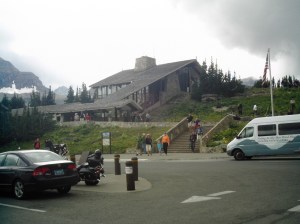
Logan Pass Visitor Center - M. R. Campbell photo
Logan Pass Visitor Center – M. R. Campbell photo

An increase in park visitation has led to an increase in human–wildlife interactions at Logan Pass in recent years. Visitor interactions with mountain goats and bighorn sheep can be dangerous for both people and wildlife. While no serious injuries have been reported at Logan Pass, habituated wildlife have caused serious injury and even death to visitors in other national parks and wild areas. Wildlife habituation can also lead to the death of the animal.

To date, park employees have used conventional hazing methods (arm-waving, shouting, use of sirens, shaking cans of rocks, and moving vehicles) to move goats and sheep out of the parking lot—but the animals tend to return within a short period of time. Because mountain goats and bighorn sheep have an innate fear of predators, however, it is expected that the adverse conditioning activities will encourage the wildlife to stay away for longer periods.

“This program represents a proactive method of wildlife management. The park is trying to provide for safe wildlife viewing by moving wildlife a safe distance from a known area of high visitor use,” said Mark Biel, the dog’s owner and Glacier National Park’s Natural Resources Program Manager. “Through the use of a wildlife shepherding dog and educational visitor contacts, we hope to prevent adverse human–wildlife interactions.”

A Dog Who Loves to Work

“Gracie” is a two-year-old female border collie. Biel describes Gracie as a “medium energy dog that loves to have a job to do.”

Gracie is currently being trained by the staff at the Wind River Bear Institute, in Florence, Montana, known primarily for training Karelian Bear dogs. Biel is being trained as her handler. He plans to conduct wildlife shepherding activities with Gracie at the Logan Pass parking lot and Visitor Center. She is expected to be on duty by mid-July.

Gracie will be trained not to make physical contact with wildlife. She will wear an orange vest or harness indicating that she is a wildlife service animal and will only be off-leash during the shepherding activity. Once wildlife have been moved a safe distance away from the designated area, the shepherding will stop and she will be leashed.

These activities will occur approximately 3–4 times a month, as needed. The shepherding will only occur if the wildlife shows no signs of stress from interaction with humans and vehicles. Shepherding will not occur if it is too hot, if there are other wildlife in the area, or if there is too much traffic and crowding in the parking lot.

The use of dogs to shepherd wildlife is a proven technique for safely and effectively moving wildlife away from areas of concentrated human use. In the 1990’s, Glacier National Park contracted with the Wind River Bear Institute to have trainers and their Karelian bear dogs help manage habituated roadside bears. The project was successful in keeping bears away from the road for the remainder of the visitor season. Waterton Lakes National Park, in Canada, contracts with a business that uses border collies to move habituated deer out of the Waterton townsite before the deer give birth. This has greatly reduced the number of dangerous deer–human encounters. Airports across the country use trained herding dogs to prevent wildlife–aircraft collisions by keeping birds and deer away from runways.

Biel and Gracie will act as wildlife ambassadors, making visitor contacts to remind people about staying a safe distance from all wildlife as well as explaining the dangers to both people and wildlife, of approaching, touching, and feeding habituated wildlife. The Bark Ranger team will also be available to talk to schools and other groups about wildlife management and concerns about habituated wildlife.

When you read a novel, do you identify with the protagonist?

I find it difficult to enjoy a novel if I don’t find some kind of connection or identification with the protagonist, even if that person has a dark side I don’t like or is otherwise very different than me.

If the protagonist is a man, I note ways we’re the same or that we’re faced similar questions or heartaches. If the protagonist is a woman, I note whether this is the kind of woman I would like to know, or have known, or perhaps simply respect.

How about you? Do you look for this connection? Do you feel a sense of admiration when the protagonist solves a problem, deals with an issue, gets past a bad habit, or discovers new meanings in life that are one way or the other similar to issues you’ve dealt with–or are still dealing with?

If so, I think we have a lot of company here, putting ourselves into the main characters’ shoes in one novel after another. Maybe we end up feeling inspired or less alone with the trials and tribulations that plague us. Maybe we feel better about ourselves when a main character makes the same kinds of mistake we’ve made or finds solutions to problems similar to those we’ve discovered.

As a writer, I hope to create characters that make readers feel this sense of identification. Partly, those feelings draw you into the story and keep you reading. And partly they might leave you with something more than a good read when you finish the book.

When I think of the novels that I’ve liked best over the years, I see there’s always something that drew me to the main character–for better or for worse. While reading, I was–in a sense–walking in his or her shoes.

Stories gives us many examples of others puzzling out the vicissitudes of life whether those people live in the distant past or the far-off future. The stories don’t become recipes so much as they become ideas, possibilities, or prospective ways to dealing with what we’re dealing with.

I love a novel than ends up seeming like it was sort of about my kinds of dreams and concerns. You might think of what you know about me and what you know about the main character in the novel I’m reading and see a night and day difference. But, as long as I keep reading, you can bet I’ve found some kind of a connection there.

–Malcolm


Remembering Bob (not his real name) and his thousand keys

Years ago during one of the new age tidal waves of enthusiasm for all things psychic, spiritual and otherworldly, I took a course in one of the disciplines of the day that promised to show me how to improve my psychic powers. The course did what it said it would do.

oldkeyWhile the course followed a set lesson plan everywhere in the country where it was taught, those of us in Bob’s course probably saw many phenomena and discussed many ideas that weren’t on the agenda elsewhere. Quite simply, the reason was Bob and his enthusiasm for everything that might tangentially be related to the course’s core ideas.

Bob had the kind of vision that would have made a university’s doctoral dissertation committee proud, for he was forever “surveying” the literature and finding new associations to ideas most people would have lost track of in the more obscure footnotes. The downside, however, was that if he were writing a new age doctoral dissertation, he would never finish it because the data about practices, techniques, theories and methods was, of course, open ended and could never be compiled into a definitive research paper.

Keys to Everything

chakraDuring late-night, after class discussions, Bob was forever saying “if we can just find the key, we will finally know how everything in the psychic world works.” This was, of course, what we wanted to hear. But, once again, there was a downside to this approach because it meant that every time Bob came across an ancient (yet newly discover) system/book/method, THAT was suddenly the key to the world–in his view. We went through phases on new keys and newer keys. Certain principles of Yoga became a key, followed by an in-depth study of Huna mysticism, and then some of the deep secrets being channeled by discarnate entities.

Bob’s enthusiasm led us to discover many new ideas (new to us, though often very ancient) and to consider that there are many approaches to new age techniques that, in fact, are more related to each other in substance than might initially be obvious. People talk about the same things with different words and/or enhance what they’re doing with rituals that make the object of their work appear alien when, in fact, it’s similar to something one already knows.

I don’t know if Bob ever found his master key because those of us who were the mainstay members in his courses moved away over time and lost track of each other. In some ways, Bob couldn’t stick with each new thing long enough to totally understand it or to see if it could be totally integrated into the techniques we were already practicing. Sadly, many of us started to become a little jaded about some of the new ideas Bob brought into the classroom because we knew it was a matter of time before they were proclaimed as the new key.

But what about last week’s key and the key from the week before that?

My thoughts in those days–and since–have probably traveled down many roads I never would have seen had it not been for Bob and his preoccupation with keys and the idea that something miraculous was always just around the corner. Then, as now, I believed that we create our own reality and that whatever we perceive as keys and miracles are our own creation. Bob didn’t believe that and we had many debates about whether or not he was creating clues (without consciously knowing it) and throwing them out onto the road ahead for him to find later.

While we never came to a common ground on this subject,  I’ve carried his scatter-shot enthusiasm with me for forty years because it keeps me young, open minded, and willing to look at alternative ideas. Perhaps we all need a Bob in our lives who can’t stick with anything long enough to fully know it but who serves as a catalysts for the rest of us.

Thanks for the ideas, Bob, and for showing me so many real or imagined doorways.

–Malcolm

Malcolm R. Campbell is the author of magical realism, fantasy, and paranormal short stories and novels that probably came to mind one way or another because years ago, Bob said, “I’ve found the key that unlocks the world.”

as usual, it only hurts when I laugh

Seriously, do we really need so much hospital paperwork? Every few minutes or so, somebody handed my a form to sign. What’s this one for? This one is your acknowledgement that you have seen all 5,000 forms so far.

redmondOkay, now what’s this one for? This one, which as you can see is being handed to you in the middle of your surgery, is your acknowledgement that the anesthesia is doing a damn good job so far.

You gotta laugh. But if you do, it hurts.

Praise the Lord for narcotics.

The surgery was scheduled for Monday morning. Since the anesthesia was high quality, late Monday afternoon I was able to sit in a chair and eat supper. The nurse threatened me with the news that if I couldn’t climb out of bed, I wasn’t going to eat.

Don’t make me laugh.

Then she told me that I would be walking down the hall three times a day. I only walked down the hall twice because things were going so well, they gave me some more paperwork and sent me home where I promptly took a pain pill and got into bed.

The surgery went very well. The cancerous tumor was removed from my left kidney without messing up the kidney, or anything else, for that matter. The scar is probably larger than the kidney, held together with bailing wire and duct tape. It’s no laughing matter, and I’ve signed paperwork that says I’m going to keep it that way.

I do appreciate all of you who asked me–actually, my wife and/or my Facebook page–how I’m doing. That depends when you ask. If you ask 23.5 minutes after the latest pain pill, I’m doing pretty good. If more time has gone by since the latest pain pill, I staying away from anything that might remotely be funny.

Now, I think it’s time for another nap. Fortunately, I don’t laugh while dreaming.

–Malcolm


Goodbye to Many Glacier Hotel

After working as a student at Glacier Park’s Many Glacier Hotel in the 1960s, I hoped I would end up living in the area and possibly being part of the workforce there over time. While that didn’t pan out, I thought, well, I’ll sell 100000000000000 copies of my novels including the two partly set in the hotel and will be able to fly out to Montana for a visit area year. While that didn’t pan out, I thought I’d go there occasionally and have my memories.

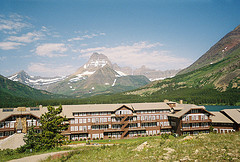
Many Glacier Hotel
Many Glacier Hotel

Now, as the National Park Service continues to refurbish the hotel, it has accomplished much in terms of infrastructure that will keep the 1915 hotel alive and well for many years to come. But, I’m not going back again and will let the Many Glacier Hotel of my memories suffice. Why?

I’m not going to rehash the issues here; I covered some of them in NPS to proceed with ill-advised restoration of Many Glacier Hotel Staircase. I believe this action and several less obvious changes are better classified as vandalism rather than preservation–or even restoration. I did not like the changes I saw the last time I was at the hotel. While many upgrades were necessary, changing the look and feel was not. Once the lobby and lake level spaces are gutted by the unfortunate rebuilding of a staircase (that has been gone longer than it was there), I don’t want to see the hotel again.

I have said my piece on this from the perspective of a person who wrote preservation grants and who worked in preservation at the municipal level. Nobody was listening to those of us who felt the changes violated the Interior Department’s own standards. Sentimentality won the day, and those of you who visit Many Glacier Hotel beginning in 2017 will see a new lobby/cafe/giftshop configuration. You might actually like it, and that’s fine because you didn’t grow up seeing it the way it’s been for over 50 years.

I applaud the NPS’ work–and those of many fundraisers–in support of stabilizing the hotel and in dealing with building code issues that are always problematic in older structures. But when the look and feel is altered, the historic nature of the structure is compromised. The hotel stands in (to my biased view) the most beautiful valley in a park that’s my favorite place on the planet. I hope many people will enjoy the Swiftcurrent Valley for years to come. I’ll enjoy it as I remember it as this blog discontinues any future mention of Glacier National Park.

As my father grew older, he stayed away from some places he recalled as childhood favorites because he liked them better as they were than as they became. Perhaps a lot of this are this way. The tide of change and so-called promise is as hard to stop as the incoming tide on a beach. So, sometimes it’s better not to go back to the old familiar places because nobody there knows your name any more and too much of what was familiar has been altered, sometimes in unforgivable ways.

I’m happy I saw the hotel several years ago before the worst of the changes arrived. Do you feel this way about some of the places in your past? Do you worry what you’ll find if you go back for a visit? Do you wonder if it’s best to stay away after friends who still live there tell you about the old buildings that were torn town for parking lots and the parks that were paved over for housing developments or the historic structures that were ruined by misguided efforts?

Or, perhaps these feelings only come to those who are starting to grow old.

–Malcolm

Malcolm R’ Campbell’s novels “The Sun Singer” and “Sarabande” are partly set in Many Glacier Hotel.


Authors Urge Customers and Colleagues not to Boycott NC Bookstores

From the ABA: When Sherman Alexie announced that he was cancelling an appearance at Malaprop’s Bookstore/Café in Asheville, many North Carolina booksellers expressed fear that an author boycott would have a chilling effect on free speech as well as inflict economic damage on booksellers who support LGBTQ rights. To address this fear, the American Booksellers Association has joined several groups in issuing a statement supporting free speech and urging authors and illustrators and their publishers not to boycott bookstores.

The following authors may evaluate attending conferences and festivals in North Carolina, but will still participate with libraries and bookstores;

openletter

A huggable kidney for my upcoming surgery

kidneySince I don’t know anything about huggable stuff, it never occurred to me there would be a huggable kidney out there “when urine love.” One of these showed up as a surprise package from my daughter, her husband and my granddaughters today to help me prepare for and get through next monday’s kidney surgery.

Much appreciated because it will come in handy whenever the pain meds start wearing off.

However, since I think the hospital might mix this up with one of my real kidneys, I’m saving this for home use only. Not sure that my calico cat will allow this in the bed, but we’ll see.

So far, my research has shown that real kidneys don’t have eyes, feet, and stuff, but we’ll let that slide.

This is going to come in handy.

–Malcolm