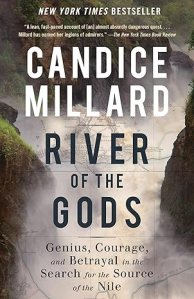
 One benefit of exchanging pen-pal-style emails with an old friend who reads as many books as I do is hearing about new books I might have overlooked. In the 1960s, we were hiking partners in the Rocky Mountains; neither of us suspected then that we’d be writing to each other this many years later. Her latest recommendation is River of Gods, and it’s a good one. It reminds me of my high school history classes that include a lot of material about explorers in Africa.
I definitely agree with the New York Times Book Review comment that “River of the Gods is a lean, fast-paced account of the almost absurdly dangerous quest by [Richard Burton and John Speke] to solve the geographic riddle of their era. . . Candice Millard has earned her legions of admirers. She is a graceful writer and a careful researcher, and she knows how to navigate a tangled tale.”
From the Publisher
“For millennia the location of the Nile River’s headwaters was shrouded in mystery. In the 19th century, there was a frenzy of interest in ancient Egypt. At the same time, European powers sent off waves of explorations intended to map the unknown corners of the globe – and extend their colonial empires.
“Richard Burton and John Hanning Speke were sent by the Royal Geographical Society to claim the prize for England. Burton spoke twenty-nine languages, and was a decorated soldier. He was also mercurial, subtle, and an iconoclastic atheist. Speke was a young aristocrat and Army officer determined to make his mark, passionate about hunting, Burton’s opposite in temperament and beliefs.
“From the start, the two men clashed. They would endure tremendous hardships, illness, and constant setbacks. Two years in, deep in the African interior, Burton became too sick to press on, but Speke did and claimed he found the source in a great lake that he christened Lake Victoria. When they returned to England, Speke rushed to take credit, disparaging Burton. Burton disputed his claim, and Speke launched another expedition to Africa to prove it. The two became venomous enemies, with the public siding with the more charismatic Burton, to Speke’s great envy. The day before they were to publicly debate, Speke shot himself.
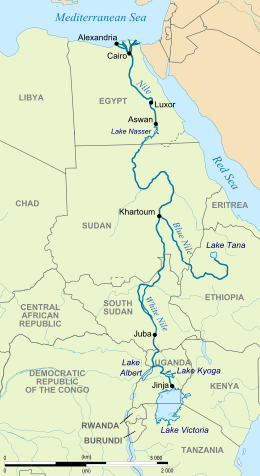 “Yet there was a third man on both expeditions, his name obscured by imperial annals, whose exploits were even more extraordinary. This was Sidi Mubarak Bombay, who was enslaved and shipped from his home village in East Africa to India. When the man who purchased him died, he made his way into the local Sultan’s army and eventually traveled back to Africa, where he used his resourcefulness, linguistic prowess, and raw courage to forge a living as a guide. Without Bombay and men like him, who led, carried, and protected the expedition, neither Englishman would have come close to the headwaters of the Nile, or perhaps even survived.
“In River of the Gods, Candice Millard has written another peerless story of courage and adventure, set against the backdrop of the race to exploit Africa by the colonial powers.”
Book Page Review
The Nile’s mythic reputation as the longest river in Africa, and arguably the world, once inspired generations of European explorers to seek its source—and exploit Africa’s vast resources in the process. Now, thanks to this richly detailed story well told by historian Candice Millard, a colorful and controversial chapter in world history resurfaces. In River of the Gods: Genius, Courage, and Betrayal in the Search for the Source of the Nile, 19th-century explorers’ egos loom godlike over expeditions, their abused local guides save lives and prompt discoveries, and the second largest continent on Earth finally gets mapped.
–Malcolm
 Malcolm R. Campbell is the author of the contemporary fantasy “The Sun Singer.”
 Both of my parents were high school student publications advisers and my dad was a college journalism dean and the author of journalism textbooks. So, I became a writer, a college journalism instructor, and an adviser for a college’s student newspaper. Like my father, I ultimately married one of my students. My father’s journalism school and my journalism program were both destroyed by politics, though our marriages endured.
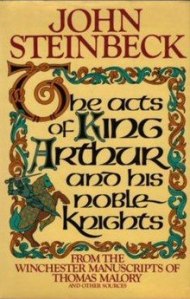 My long-time interest in King Arthur and the Grail romances began when I found John Steinbeck’s posthumously published The Acts of King Arthur and his Noble Knights on the shelf. After discovering that book, I went on to read everything I could find about King Arthur who, strange as it may seem, actually appears in the genealogy of the Clan Campbell family in Scotland.
 I’ve written often here about magic and ancient mysteries books, and without a doubt that interest began with James Allen’s 1903 book As a Man Thinketh. Over time, the beliefs in that book changed my life.
 My favorite poet St.-John Perse came into my consciousness when I found a 1944 book published in English and French called Éloges and Other Poems. I remember my college English teacher who threw me out of class for disagreeing with him about the value of journalism, telling me, talk to me after you know about poets like St.-John Perse. I showed him a copy of this book at the next meeting of the class. “This has been in my family since the year I was born. Any questions?” He wanted to buy the copy which I said belonged to my mother and was not for sale. Nonetheless, I was re-admitted to the class. I don’t deal well with know-it-all English teachers, especially those who say journalistic writing is bad writing.
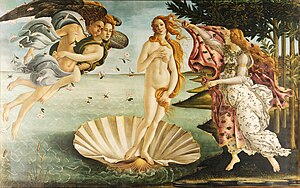 If you’re a woman, you’re probably thinking, “Of course you don’t, you subhuman ape.”
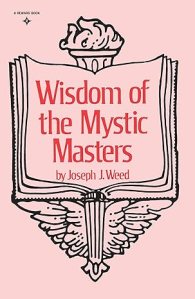 Once upon a time, when I was starting to take my curiosity about esoteric subjects seriously, I read Wisdom of the Mystic Masters and other books by Rosicrucian author Joseph Weed. As a Rosicrucian, Weed was no doubt aware of the fact that the road to mastery is a long road. So, in looking back on these books, I’m surprised at how they were so blatantly oversold (this reminds me of The Secret) in that they implied all you had to do was read a popular account of ancient lore and soon thereafter you would become all-powerful and quasi-divine. Like The Secret, these books came and went quickly because–while there was truth in them–it could not be learned and perfected during the halftime show of the football game that had taken over the living room’s TV set.
 If you look closely at what these hyped books offer, it’s very similar to what James Allen wrote years ago in his wonderful 1903 book As a Man Thinketh. My father had this book on the family’s shelves and I read it long before I’d ever heard of Weed. From the book of Proverbs. Chapter 23, it is written, “As a man thinketh in his heart, so is he.” In my view, this is all we need to know. No hype is needed.
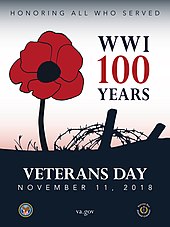 I hope most people take a moment or so to think about Veterans Day. I like this poster from 2018 because it brings back the ambiance of the time when the holiday was created as Armistice Day in 1938, before expanding into Veterans Day in 1954. I called it Armistice Day for years because that was its name when I was a kid. I know this is “flip,” but we kept saying “Armistice Day” and “Boulder Dam” instead of “Hoover Dam” for the same reason that many of us still refer to aluminum foil as “tin foil.” The name doesn’t matter as much as an acknowledgment that we owe a lot to those who came home.
 I’m re-reading for the second or third time Holy Blood, Holy Grail by Baigent, Leigh, and Lincoln because the subject matter is fascinating. I’ve lost track of all the Templar-related books I’ve read, not counting Dan Brown’s The Da Vinci Code.
 Re-reading this book brings back many memories of the research I did in the past into such subjects as the work of artist Nicolas Poussin (1594–1665), especially his two paintings labelled Et in Arcadia ego which are also mentioned in the books of the Francis Bacon Research Trust. Arcadia represents, is it said, heaven on earth and yet the coffin in the painting suggests the presence of a darker side. The prospective bloood line of Christ, notably in the French Merovingan dynasty and the Plantard family is also interesting.
 And yet, along with those people who’ve stopped watching the news because it’s too dire, I find it hard to cope with the information flowing into my world like a flood.

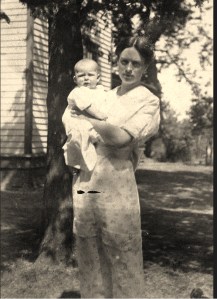 infant mother Katheryn in her arms. We can see the side of the house, a shade tree, and in the background, a steam tractor. I like Edyth’s no-nonsense expression.
 Every few weeks or so, I see an online article about one expert or another who states that climate change is a hundred times worse than s/he thought.
 Malcolm's Round Table