Counting words and pages as you write is a real ‘who needs it’

“Abandon the idea that you are ever going to finish. Lose track of the 400 pages and write just one page for each day, it helps. Then when it gets finished, you are always surprised.” – John Steinbeck

Who knows, maybe counting words and pages helps you when you write. National Novel Writing month emphasizes speed, and that helps some people. Personally, I don’t like worrying about speed, the number of words I write in a day, or a “count down” of sorts about the number of words I have left to write before the story or novel is done.

So naturally, I’m going to start this post with the quote from Steinbeck. If he were alive and well and writing in 2017, I suppose he’d say the same thing even though novels have gotten shorter and many authors are more prolific than the famous people we studied in high school and college literature classes.

Years ago when I was in high school, English teachers would give us classroom assignments in which we had to write an essay or a story with a minimum word count during the one-hour class period. Most students cared more about getting past that minimum word count more than they cared about style and substance. How do I know? We’d all write for a while with pencils on lined paper and then, suddenly, the silence would be broken by people using their pencils to count how many words they had so far. Tap tap tap tap tap, followed by a sigh or a groan if their work so far was well short of what they needed or a pleased smile if they had more than enough words down on the page.

Teachers always complained about this because the resulting work wasn’t cohesive. Sometimes it read well for a while, but then faltered when the student realized after lots of pencil tapping that s/he was twenty five words short of the minimum. So, more words were added, and they seldom fit because they were tacked on after the student thought s/he was done.

Novels can easily sound like that if we watch word counts too closely when we write. Sure, we know that novels are expected to be a certain length: maybe your genre needs 60,000 words or maybe it needs 100,000 words to fit what publishers expect. So, ultimately, you’ll need to know your word final word count. But you don’t need to know it every day. Well, of course you know it because–if you’re writing in Word, for example–the word count is displayed at the bottom of the screen.

Personally, I usually have a sense about a story from the beginning even though I never outline or know how it’s going to end when I start out. That sense is this: is the story long enough for a novel, novella, or short story? That way, I just tell the story and the number of words written at any given moment really doesn’t matter. Again (personally), I don’t like writing advice that suggests that I should complete a specific number of words/pages per day. I tend to write scenes from start to finish because that’s how I view the story. That might not work for you.

I guess I prefer the natural approach. When you’re sitting around a dinner table or at a bar swapping yarns, you just say what you need to say without worrying–half way through it–how long it is. You tell it until it’s done. Or maybe you tell the most important part of it until you’re done with that. You’d probably get tongue tied if somebody had a computer at the table counting your words, one with a gong or a buzzer on it if you used too many or didn’t use enough.

The tellers of tales have a sense, I think, about how long they can talk. If people ask for a story about the time you were on a sinking ship, you know you can talk longer than you might talk if you were telling a joke. And, unlike the writer alone at his/her computer, you can see the expressions on people’s faces and sense whether you’re losing them or keeping them interested. But mainly, you tell the story.

That seems to me to be more important than finishing the novel in a month or dutifully basing one’s writing schedule on completing 1,000 words every day. However, if you’ve been reading this blog for a while, you know that outlines, schedules, and deadlines bother me and that I think they are harmful to the story you’re writing. If they work for you, keep using them!

I want to concentrate on the story as it unfolds because that’s what works for me.

Malcolm



Reading separate books together

“Sometimes they would sit in the parlor together, both reading – in entirely separate worlds, to be sure, but joined somehow. When this happened, other people in the family couldn’t bring themselves to disturb them. All that could be heard in the parlor was the sound of pages, turning.” ― Alice HoffmanBlackbird House

People who read together in silence–except for the sound of pages turning–in the same room are usually comfortable together. I’m thinking of families and friends, not passengers on a plane or people in a waiting room at the train station.

Some say that when you use the technique of astral projection, you imagine yourself away to other worlds as a shaman does, leaving your body unattended. To some extent, this happens when we read. Books carry us away upon spells of words just  as surely as dreams carry us away while we’re sleeping.

During a family visit, we all sat in the living room reading our very disparate books. We weren’t there, yet we were there, linked both by our trust in leaving our bodies unattended and by our common, quiet activity. It’s a good feeling, almost as good as lovers who feel secure in silence while they sit on a park bench and day dream, holding hands or leaning against each other.
In the evening, the living room lamps create pools of light where each reader sits. Yet those pools overlap and we are all one within our shared light. I suppose we could each do this with laptop computers or phones for texting, but the books truly have more magic in them making for a deeper experience.

I hope you have also found this to be true.

–Malcolm

Mexico empty as entire population moves to SoCal

Sacramento, November 21, 2017, Star-Gazer News Service–California officials confessed early today that they were “thoroughly gobsmacked” (completamente sorprendido) when the entire population of Mexico moved into the state’s sanctuary cities for “a brand new life” (vida maravillosa).

Wikipedia graphic (Most people don’t realize California is a red state.)

“This is a form of CalExit that, frankly, wasn’t on our drawing boards,” said state planning director Frank Smith. “All we tried to do with our sanctuary cities initiatives was provide neighborhoods for the cheap labor our agribusiness companies need in order to survive.”

Mexican officials, who say they are no longer Mexican officials, said that the country chose a “free and reasonably lavish” California lifestyle over the stress of fighting poverty and drug lords south of the border.

“Some will criticize us for leaving our culture behind,” said a man who identified himself as Mr. Fox. “But that’s not true. We brought it with us, and that it includes real Mexican food (verdadera comida Mexicana) rather than the Taco Bell faux variety.”

While lettuce growers are applauding the fact that their workers will no longer have to fight border guards–and the proposed wall–on their morning commute, they admitted that most companies will shift their corporate headquarters to New Jersey to escape probable tax increases.

“Just think, we used to laugh about the once-famous government money grabs in Tax-a-chusetts,” said iceberg lettuce manager Jonas Wilkerson. “Now, the tax-and-spend experts have moved out here.”

Informed sources (personas informadas) believe many native Californians, who have been staying solvent by taking frequent trips to Las Vegas, will simply move to Nevada so reduce household expenses and state taxes.

“Hell (infierno),” one of the sources said, “just look at the state’s proposed pot taxes. They’re going to be so high that buying weed off the street will be cheaper than buying legal weed–and that’s just the tip of the iceberg.”

Wilkerson agrees. “I read in the newspaper several days ago that the legislature passed a law that allows the unemployed to form a union that gives members the right to not work along with the right to put up homes in other people’s yards without being arrested for trespassing.”

Smith said that he thought the Mexican population’s move occurred as soon as a district judge blocked the administration’s plan to cut off federal funds to sanctuary cities.

“I’m somewhat amused at the historic karma operating here as California returns to the days when Spanish was its official language,” Smith told reporters at an emergency press conference on the governor’s lawn, adding, “Este es un gran día para California.”

–Story by Jock Stewart, special investigative reporter


A bestselling author’s book piracy story

“A pirated copy isn’t ‘good advertising’ or ‘great word of mouth’ or ‘not really a lost sale.’”

via Contents of Maggie Stiefvater’s Brain

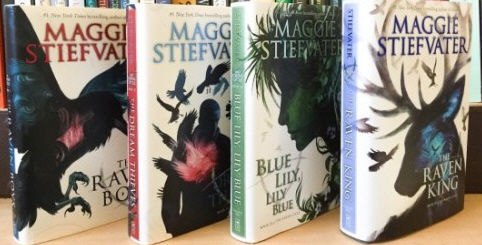
A lot of authors dismiss book piracy with blasé misconceptions like those Maggie Stiefvater quoted above. They’re wrong. Maggie Stefvater almost lost traction her Raven King series (a series I like, btw) because pirated copies were diluting sales to the extent that her publisher thought the public was losing interest.

As she says, authors generally expect the first book in a series to sell the best and for sales to go down in the follow-up books. But she tried a nifty way of proving that there was more to it than expected reader attrition.

This is a cautionary tale for authors, especially those who think piracy either doesn’t hurt you or that it might actually help you. Click on the link to see how she saved her series.

–Malcolm


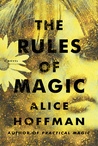
Review: Alice Hoffman’s ‘The Rules of Magic’

The Rules of MagicThe Rules of Magic by Alice Hoffman
My rating: 5 of 5 stars

“The Rules of Magic,” the prequel to Alice Hoffman’s 1995 bestseller “Practical Magic,” sparkles with the same wisdom and magical realism as the witching story of Sally and Gillian Owens did twenty two years ago. The characters, stories and writing style of this stunning prequel fit hand-in-glove with the characters, stories and writing style of “Practical Magic,” not an easy bit of conjuring for an author to face when going back to a story she told before she truly knew the magical rules when she first wrote about them.

This backstory about Sally and Gillian’s aunts Franny and Bridget (AKA “Jet”) focuses on a theme about life’s curses and blessings and what individuals wish to make of the fate and destiny they are given. Early on, Franny and Jet’s mother asks the sisters whether they’re opting for courage or caution in their unfolding lives. Their answers make for a cohesive story. Clearly, Alice Hoffman opted for courage when she traveled back to 1995 to continue the story of the Owens family.

The book contains wonderful surprises, making it much deeper than a family tree tacked on to the front of a famous novel many years later. The book offers its own multiple levels of depth and angst and joy while changing in positive ways the way many of us who read it will view the characters and themes of the original novel. (Emerging writers considering magical realism as a potential genre for their work will find both novels to be a demonstration of how an author can utilize magic and realism seamlessly in novels set in today’s world.”

While the ending of “The Rules of Magic” represents the best of all possible worlds for the two novels and their characters, turning the last page might be depressing for some readers. The reason is simply this: nobody wants the story to end because when it comes down to it, we need these characters, their joys and sorrows, and their magic in our lives.

View all my reviews

–Malcolm

Malcolm R. Campbell is the author of the magical realism novels “Conjure Woman’s Cat” and “Eulalie and Washerwoman.

Danged ol’ hairball blues

The night is dark ’cause there ain’t no moon,
Mama comes home, says we’ll be steppin’ in it soon,
‘Cause our three black cats are hackin’ up their doom,
Yes, just hackin’ up their doom
With the danged ol’ hairball blues.

Wikipedia Photo

Mama’s getting drunk while Daddy’s puttin’ on the dog,
Cause the whole family will the steppin’ in it soon,
Hairballs on the fireplace log, down in our shoes,
‘Cause they’re just hackin’ up their doom
With the danged ol’ hairball blues.

Cats don’t care where they throw them up
When  they’re hacking up their doom
‘Cause they’re hidin’ somewhere in the dark of the room
Even though Mama says we’ll be stepping in it soon
And the whole danged family will catch the hairball blues.

Ain’t no vaccine against hairballs or the blues
‘Cause we’re all gonna step in life in the dark of the moon.
Mama remembers even though Daddy forgets
That the cats bring joys and sorrows to life
In spite of the strife of the hairball blues.

A smattering of writing news

  • I’m slowly working on a new novel called Lena as a sequel to Conjure Woman’s Cat and Eulalie and Washerwoman. For reasons that might become apparent once it’s published, you’ll see why I’m moving so slowly on it. It begins like this: “So, Eulalie sang ‘Lady Luck Blues’ as she drove the 1949 clover green Studebaker pickup truck down that southbound road while creeks, wiregrass, longleaf pines, and sunny autumn afternoon savannahs slow-drag danced past the open windows and South Wind’s children teased her hair into sweet disorder. She was happy and heading for Willie Tate down in Carrabelle.” Unfortunately for Eulalie, the happiness isn’t going to last.
  • I rely on a lot of books and websites for source material about conjure. Unfortunately, Spiritual Information–featuring Voodoo Queen–will no longer have new posts. The author, who is older than I am, has become too ill  to continue, and wants to retire after she finishes healing. The good news is that her blog will remain online as a reference. There’s a handy index of topics on the left side of the screen. A quick glance at this list will show you how wonderful this blog has been for those who want to learn more about the oldest hoodoo traditions from days gone by.
  • My publisher Thomas-Jacob will be featuring Eulalie and Washerwoman, Redeeming Grace (Smoky Zeidel), A Shallow River of Mercy (Robert Hays) and The History of my Body (Sharon Heath) in Amazon promotions during December. Keep an eye on Amazon for some wonderful books and opportunities.  While Robert Hays’new book will be released on December first, it’s already available for pre-order.
  • I appreciate the support of those of you who also followed my other blog “The Sun Singer’s Travels.” In trying to simplify (whatever that means), I’ve closed that blog. It was my oldest, having started on Blogger many years ago, subsequently moving here to WordPress. I’ll try to keep you up to date on this blog as well as my website.
  • This has nothing to do with writing, but my friend and Thomas-Jacob colleague Smoky Zeidel, who lives in a southern California desert community, has been posting glorious pictures of her vegetable garden on Facebook. I’m jealous. My tomatoes, banana peppers and jalapenos finally bit the dust with our cooler temperatures. I still have some hardy oregano and parsley. If you’re taking notes, the oregano and parsley won’t be on the test.

–Malcolm

Mixed feelings about Veterans Day sales

Can we best honor our veterans by getting a price cut on a bottle of Viagra or a quart of fresh whitewash?

I have mixed feelings about this.

According to Newsweek, “Black Friday may be the most well-known day to find great sales, but Veterans Day also brings major discounts and promotions.”   The magazine’s feature article lists major stores and sales in case you can’t find them yourself.

While Memorial Day sales and hi-jinks are more out of line with the sacred quiet of the day that those who died deserve, I have often thought that veterans and their memories of moments nobody else dares imagine are the true casualties of war. As such, they deserve more respect than a trip to the store to get a sweet deal.

I’m a veteran and a conscientious objector, so I’ve seen the clouds of the war issue from both sides. Since my pacifism is based on my religious beliefs, it would be presumptuous of me to advocate pacifism for men and women with different religious beliefs.

I believe as mystic Ralph M. Lewis believes: “Peace manifests externally but begins internally–that is, in the thinking, idealism, and mental discipline of each individual. Peace must begin with the individual and work outward.”

Yet, I support our troops because they sacrifice their sanity and their lives to do what they believe is right on behalf of our country. I don’t support the politicians who lead the country into meaningless wars. But those who fight in those wars, have my admiration and gratitude.

I don’t propose that we spend Veterans Day in a church or with many hours of mediation in front of a candle in the sacred center of our homes. If that helps you, then it is good. It doesn’t help me. But looking for sales doesn’t help me either. In fact, I think it’s an insult to veterans. Nonetheless, I can’t fault anyone who loves a sale any more than I can fault a veteran for fighting a war that I think is a stain on the world’s psyche. Perhaps there are more gods out there than we can shake a stick at, so truth be told, there are numerous ways of seeing the issues that bring me mixed feelings on this day.

What I want to do on Veterans Day is this: the same thing I would do on any other day. That is to say, I appreciate the freedom and safety veterans have helped us achieve and maintain. So, I will fix dinner, read a book, work on my novels, watch some television, play with my cats, and remain in awe of a wife who loves me in spite of my faults. I don’t have any mixed feelings about that kind of holiday “celebration.”

–Malcolm


The Heart Shield Bible

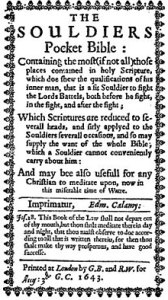
Hoodoo practitioners not only consider the Bible to be filled with stories of magic and powerful verses that can be used for spells, but note that from the Civil War through the Vietnam War (and possibly later) Heart Shield Bibles were popular amongst soldiers. These New Testament editions were small enough to fit in the breast pocket of a jacket or shirt and featured gold or gold-colored metal over steel that was said to be able to stop a .45 caliber bullet.

Among the manufacturers was the Protecto Bible Company of St. Louis. The covers of these bibles were often engraved with slogans such as “May this Keep You Safe from Harm” and “God’s Weapon.” They came in a 3-inch by 4.5-inch size and were 3/4-inch thick and sometimes included Psalms. Another edition contained prayers for Catholics.

Many people sent these to their loved ones easily since they often came in a ready-to-ship box.

During World War II, Bibles carried the inscription: “As Commander-in-Chief I take pleasure in commending the reading of the Bible to all who serve in the armed forces of the United States. Throughout the centuries men of many faiths and diverse origins have found in the Sacred Book words of wisdom, counsel, and inspiration. It is a foundation of strength and now, as always, an aid in attaining the highest aspirations of the human soul.” –Franklin D. Roosevelt
Interestingly enough, a fair number of these Bibles are currently being sold via eBay, sometimes called Shields of Faith. Did they really work? Stories from the front include statements from slightly injured men who claimed the Bibles stopped enemy rounds. Perhaps the distance traveled and angle of the incoming round made a difference.

However, there’s video on YouTube showing a man simulating a Heart Shield Bible with other materials and testing it with rounds of several calibers. All of them went through. On the other hand, since he used a phone book, those who are sold in the Heart Shield Bible will no doubt remind us that the books in the test were not Holy Writ. Here’s the video link.

The words alone, in Protestant and Catholic editions–like a pocket-sized edition a portion of the ancient Jewish mystical book The Zohar–might be enough, for they are often carried by believers who know little or nothing about the Heart Shield Bible or the hoodoo practice of carrying Bibles and selected Bible verses for general good luck and protection.

–Malcolm

This post originally appeared on “The Sun Singer’s Travels.”

Autumn Price List for My Kindle Books

Prices on the following books have been reduced in time for the vast amount of shopping you plan to do for the holidays.

  • Eulalie and Washerwoman (novel) – $2.99 – conjure, crime, and magic in Florida
  • The Sun Singer (novel) – $1.99 – contemporary fantasy in the Montana mountains
  • Mountain Song (novel) – $1.99 – realism with a splash of magic in the Montana mountains
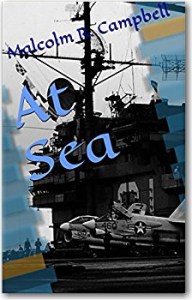
  • At Sea (novel) $1.99 – realism with a splash of magic on an aircraft carrier in the Vietnam War
  • “Waking Plain” (short story) $0.99 a very fractured fairy tale

Happy shopping!

–Malcolm

To learn more about my books, please visit my website.