Environment: ship of fools or delusional idiots

Hurricane Michael is aimed at the place where I grew up. Almost everyone from Florida has seen storms before, but the odd thing is, each time a new storm arrives I see lists of things people should do to get ready and be safe. People should know these things already as surely as they know to look both ways before crossing the street and not taking a bath with a plugged-in toaster.
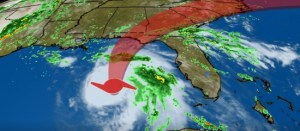
If my family lived in Tallahassee now, we probably wouldn’t leave. However, we would leave if we lived in Carrabelle, St. Marks, and other coastal communities in the storm’s path. Every year, there are hurricane deniers who say they’re ready to ride out the storm as though they are bigger than the storm. We saw what happened to those people when hurricane Florence struck: they needed to be rescued and that put first-responders’ lives at risk.

I have no idea whether the timing, routes, and ferocity of Florence and Matthew have anything to do with global warming. But, inasmuch as those storms are arriving at the same time as we’re hearing another set of global warming warnings, they remind me of the fact that many people have denied the importance of the environment for years and they seem to be treating warnings about rising seas, droughts, fires, and other effects the same way they treat hurricane warnings.

Years ago, we began hearing the term “spaceship earth.” We were told that in spite of Earth’s apparent resilience to poisons, plastics, rainforest clearing, fracking, and other forms of pollution and environmental damage, that our planet was–in many ways–a spaceship traveling through space with limited resources and a failing infrastructure. Multiple environmental groups have been complaining about the damage ever since I was in grade school, and probably before that.

I was naïve in the 1960s when I joined the Sierra Club because I actually thought people were smart enough to take those warnings seriously. Now I think that spaceship earth is either a ship of fools or is carrying passengers who are delusional idiots. Apparently, restricting one’s actions to help the environment is so inconvenient that allowing Earth to fail is worth it. Most people think it will happen years after they’re gone. So they don’t worry about it. That foolish idiocy keeps them from seeing it’s happening now.

For those who love dystopian fiction, watch the news. We are living it. There’s no need to make it up. And to ramp up our feelings of danger, the current Presidential administration has appointed kamikaze pilots to every single post that can impact spaceship earth for better or worse. So far, they are choosing “worse.” We can shake our fists at the storm and say we’re going to ride it out.

Good luck with that.

Malcolm


What are authors doing when they’re not writing?

Here’s your multiple guess response:

  1. Drinking
  2. Researching something that may or may not help with the next book
  3. Considering a job in the real estate business–or, basically anything other than writing
  4. Reading another author’s books as an excuse for not writing
  5. Studying potential marketing plans in hopes of competing with James Patterson and Catherine Coulter (haha)
  6. Spending more money on a new website that costs more than his or her books are likely to earn
  7. We’re always writing even if we’re not actually writing

I guess all of the above are true. Yesterday afternnoon, my wife and I went down to Duluth, Georgia to the Southeastern Railway Museum’s celebration of its move to a new site some twenty years ago. We had fun seeing a museum we hadn’t been do in a very long time. We moved away (twice) and volunteering there was no longer possible.

Funny thing is, we wandered into the museum because I was doing research on railways for a book. We got trapped. We became volunteers. We worked our butts off for about ten years there. It’s easy to become derailed when you’re doing research.

Yes, I did write the book.

But for quite a few years, the museum was a passion because both my wife and I loved history.

As you may have heard, everything a writer experiences might end up in the next book. (I usually change the names to protect the guilty.)  If you think one of the characters in one of my books, you’re right, it might be you. But here’s the thing: everything we see when we’re not sitting at a keyboard might become part of the next story. Figuratively speaking, we’re always writing.

We see our lives as a series of stories, Sometimes I write them down and they become novels. Like most authors, I don’t make any money doing that because very few authors in the U.S. actually make any money. But, we’re addicted to writing when we aren’t drinking.

–Malcolm

My latest novel is called “Lena” and takes place in north Florida when the KKK was still a real problem. 


What Will You Serve?

“Because, here’s the thing: If you’re the sort of person who reads articles on how to find your life’s purpose, what you’re ultimately looking for is meaning. And you don’t find meaning by defining what you want and then getting it. You find meaning by serving something higher than yourself. So the central question I would suggest asking yourself is: What will you serve? To what will you dedicate yourself?”

Source: What Will You Serve? | Theodora Goss

I saw this quote on Sophia’s Children:  “I know it is possible to create islands of sanity in the midst of disruptive seas. … And I have studied enough history to know that such leaders always arise when they are most needed. Now it’s our turn.” ~ Margaret Wheatley, Who Do We Choose to Be?

And then I found myself re-reading some of Theodora Goss’ older posts, including the one quoted above from a year ago, called “What Will You Serve?”

Like Goss, I planned to be a writer when I was very young. So, I always knew the answer to the question: What Will You Serve? Incorrectly, I thought that finding that answer was half the battle. For some people, it may be. But the road has been a rocky one. I’ve been fairly determined, though, so stay the course in spite of poor barriers writers face these days.

I can’t say that answer that question early in life is any better than answering it later in life. When we answer it later, perhaps we’ll discover we’re serving the destiny or the journey of our lives without pinning a name to it. Many of us have more optimism when we’re young, so I guess if we answer the question then, our hopes and dreams will have enough energy behind them to help us over the rough spots.

Perhaps you’ll enjoy Goss’ post and get a few ideas.

–Malcolm

P.S. My novel “Lena” is on sale on Amazon this weekend for 99¢. I’ll let you be adventurous and find the Kindle edition there without my shamelessly providing a link.


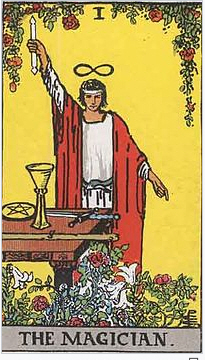
Today’s Tarot Reading: Everything’s going to hell in a handbasket

Wikipedia photo

I’ll confess, I didn’t do this reading myself. I went out to tarot.com which is kind of a fun site and checked to see what my three-card free reading would be. I learned that the world’s leadership has collapsed and that I should stay alert.

Okay, I can stay alert.

I’ve had decks of tarot cards in my desk since I was in high school. I enjoy the symbolism a lot. The 78 cards cover almost all of life’s situations. When the cards appear to fail, the problem is usually the person reading the cards.

Readers must always recognize that the future isn’t engraved in stone. The cards indicate what will happen based on current conditions. You’ll find the same thing to be true if you use the I Ching, the book of changes, to ask questions about current conditions or the so-called future.

I’ve gotten rusty using either oracle because I discovered a long time ago that I can see the situation better through meditation than on relying on either the Tarot cards or on the I Ching’s hexagrams. In either case, the probable future related to your question always comes from you. The cards and hexagrams are crutches, so to speak. Perhaps “guides” is a better world.

When I was in high school, the country was gripped by one of those recurring new age fads in which folks were reading cards and the I Ching and trying to become one with the universe. As I’ve gotten older, oracles have become less important to me because I realize that I am creating the future events that I will soon experience in everyday life.

While I think oracles can provide a lot of guidance, it’s been helpful to me to leave them behind for the most part. I feel confident that I am on the right path. So I don’t need to keep checking my Tarot deck or my copy of the I Ching to see if I’m right. At some point, constant checking translates into uncertainty and doubt, and once we’re preoccupied with those feelings, we are going to hell in a handbasket.

I find that I’m usually aware of signs, the cries of birds and the appearance of clouds and winds and blowing leaves. I see this as no different than an inner-city dweller being streetwise to possible dangers around the corner or a farmer being aware of changes that might affect the sowing of seeds or the harvesting of crops. Some would say I’m superstitious. Possibly so.

When we become attuned to our environment, whether it’s a mountain town or a big-city suburb, we certainly know better where it’s safe to walk and where it’s not safe to walk. Yes, the Tarot cards can tell me that. But my thoughts are faster.

The whole shebang–whether you call it “the future” or “the big picture” comes down to trusting oneself. Conjure women used to say that if you have to keep checking on how your latest spell is proceeding, you’re signifying doubt

In Frank Hebert’s novel Dune, we were told that fear is the mind killer. That resonated with me when I read it back in 1965. It still does. I also think doubt is a mind killer because it counteracts the positive thoughts we have about a specific project or the future in general.

Symbols tend to resonate with us. Some say that’s like hitting one tuning fork with a mallet and having a nearby tuning fork make the same sound. Art impacts us. Stories impact us. So do “chance” meetings with others or odd changes in the weather or the pictures we find on a Tarot card deck. All that is like computer input. Consciously or subconsciously those symbols alert us to probabilities and help us find our way through the ever-shifting maze of life.

–Malcolm

My novel “Lena” continues on sale for 99 cents through October 5th.


New Cover for ‘The Sun Singer’

I have updated the cover of The Sun Singer to make the style similar to the covers of Mountain Song and At Sea. The text is the same inside with the exception of the photo credit for the new cover and an update to my list of other novels.

The hero’s journey adventure story is contemporary fantasy.

Description:

Robert Adams is a normal teenager who raises tropical fish, makes money shoveling snow off his neighbors’ sidewalks, gets stuck washing the breakfast dishes, dreads trying to ask girls out on dates and enjoys listening to his grandfather’s tall tales about magic and the western mountains. Yet, Robert is cursed by a raw talent his parents refuse to talk to him about: his dreams show him what others cannot see.

When the family plans a vacation to the Montana high country of Glacier National Park, Grandfather Elliott tells Robert there’s more to the trip than his parents’ suspect. The mountains hide a hidden world where people the ailing old man no longer remembers need help and dangerous tasks remain unfinished. Thinking that he and his grandfather will visit that world together, Robert promises to help.

On the shore of a mountain lake, Robert steps alone through a doorway into a world at war where magic runs deeper than the glacier-fed rivers. Grandfather Elliott meant to return to this world before his health failed him and now Robert must resurrect a long-suppressed gift to fulfill his promises, uncover old secrets, undo the deeds of his grandfather’s foul betrayer, subdue brutal enemy soldiers in battle, and survive the trip home.

The heroine’s journey story sequel is Sarabande,

Malcolm

What Macbeth’s Witches Were Really Mixing Up

Wikipedia graphic

Fillet of a fenny snake, 
In the cauldron boil and bake; 
Eye of newt and toe of frog, 
Wool of bat and tongue of dog, 
Adder’s fork and blind-worm’s sting, 
Lizard’s leg and howlet’s wing, 
For a charm of powerful trouble, 
Like a hell-broth boil and bubble. 

Macbeth, Act 4, Scene 1

When you read Macbeth and hear the witches chanting about the eye of newt and tongue of dog, don’t worry. Most of those ingredients are the folk names of herbs, not critters’ body parts. Here are those added by the second witch.

  • Fenny Snake – Fenny refers to fens (swamps).
  • Eye of Newt – Seeds of Black or Brown Mustard (Brassica juncea), which–in hoodoo- are used to confuse enemies. They are often mixed with sulfur powder.
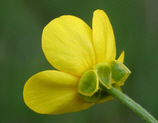
  • Buttercup: Steve Matson photo from Califlora

    Toe of Frog – Yellow Buttercup, including within the United States, the Western Buttercup (Ranunculus occidentalis Nutt), the seeds of which were ground up by Indians with other seeds for making a flour-like staple called pinole. The flowers themselves are considered poisonous.

  • Wool of Bat – Holly (Ilex aquifollium), meaning “holy,” used by Druids and other ancient Europeans. Holly symbolized male and female and Yule and is still considered in conjure as not only a blessing to the household and as protection for the home.
  • Tongue of Dog – Houndstongue (Cynoglossum officinale), also called dog’s tongue and gypsy flower. It was once considered a cure for madness and has been used by herbalists for a variety of ailments, including venereal disease and inflammations.
  • Dog-tooth Violet – Wikipedia photo.

    Adder’s Fork – Dog-Tooth Violet (Erythronium americanum) and related species. It’s also referred to as rattlesnake violet and serpent’s tongue. It’s not related to the violet. In conjure, it’s used to stop slander and gossip and those who are using it against you. It is placed on the doorsteps of enemies or when meddling inlaws are the problem, mixed with slippery elm into a body wash.

  • Blind Worm’s Sting – This is a lizard that looks like a worm. It’s sting is it’s bite. Perhaps they used the poison or tossed in the worm.
  • Lizard’s Leg – Ivy, genus (Hedera) and other creeping plants. Potentially, might include poison ivy and poison oak. Ivy is for binding things together as well as for ensnarring unwelcome desires (including drinking too much.) One can spend days trying to unravel the folklore and symbolism of ivy throughout the ages, including the use of the plant as a crown. Holly and ivy are among the evergreens used to decorate houses for Christmas and Yule as symbols of rebirth.
  • Howlet – That is to say, an owl.

–Malcolm

Florida Folk Magic Stories: Novels 1-4 by [Malcolm R. Campbell]Florida Folk Magic series of four conjure novels. Save money buying them together in this set.

Hope you enjoy the novels.

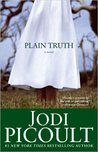
Review: ‘Plain Truth’ by Jodi Picoult

Plain TruthPlain Truth by Jodi Picoult
My rating: 3 of 5 stars

While I enjoyed the book’s themes, especially the placement of a big city lawyer into an Amish household to supervise the bail agreement of a teenage girl charged with murdering her own baby, the ending did not wash with me.

SPOILERS AHEAD

The book begins with Katie, who has hidden her pregnancy from her family and everyone else, giving birth in the middle of the night in the dairy barn on the farm where she lives. After giving birth, she falls asleep. When she wakes up, the baby is gone. She says “thank you,” as though God turned the events in the barn into a dream by whisking the baby away.

When the baby is found hidden beneath some hay, the paramedics are called, and soon after them the police. Katie denies that she was pregnant, but is tripped up by the fact that she is hemorrhaging badly and is rushed to the hospital where it’s discovered that her condition is one that can occur after giving birth.

She is a likely suspect because she hid the pregnancy, either because she never believed it to be real and/or because having a baby out of wedlock is a much more serious religious issue within the Amish community than elsewhere.

Ellie, the attorney manages to arrange bail, but the stipulation is that Katie must be supervised. So Ellie moves into the family farm where she learns what an Amish household is all about. The family is wary, of course, but friendships develop, especially when Ellie pitches in with cooking, cleaning, gardening, and other chores.

It was noted in the comments after the book’s conclusion that no Amish person is likely to read the book, much less use the Internet to post a review. However, the family’s farm life appears to be to have been realistically covered by the author. So, too, the conversations with Katie as both the lawyer and a psychiatrist talk to her in the weeks prior to the trial about the pregnancy and the fact that she has no memory of what happened in the barn.

As sketchy memories begin to appear, her attorney wants to use an insanity defense and argue that Katie was in a dissociative state, the supposition being that she had completely blocked out any memory of what happened after the baby was born. Katie refuses. Needless to say, this presents substantial problems for defending her at the trial.

The outcome of the trial seems a bit unrealistic but within the reality of the book, it’s believable enough to be satisfying to readers. What does not wash with me is that after the trial is over, in fact, while Ellie is packing her suitcase to leave Katie’s home, Katies’s mother comes into the room and shows Ellie the shears used to cut the baby’s cord. The ending is foreshadowed by the slick use of the word “she” at the beginning of the novel rather than a character’s name as the baby’s cord is cut and then tied off with twine in the barn. We learn that Katie’s mother Sarah cut the cord and hid the baby and the shears.

She has reasons for doing it, tied in part of undergoing miscarriages herself and losing another daughter in an ice skating accident. What seems out of character is that any mother, especially an Amish mother, would remain silent and allow her daughter to go through the stress and agony of a murder charge and the emotional trial. Of course, had Sarah confessed at the outset, we would either have no story to tell–or, perhaps a very different story with less drama to it.

I have given the book three stars even though I feel the ending is a disaster for the plot’s resolution and for readers because up until Sarah comes into the room and tells Ellie what happened, the story is compelling, the characters are well developed, and the writing is sound.

–Malcolm

The Kindle edition of my novel “Lena” is on sale on Amazon for 99 cents throughout the weekend.

View all my reviews

Magic: the ‘Catch-22’ of using it

Most magic is fairly easy if all you’re looking at is a set of directions. It can become more complex if it’s so-called high magic and requires a complex ritual. It can become challenging if multiple preparations are required, including herbs, candles, purifying oneself or one’s house, and other activities or ingredients that one may wish to hide from friends and family.

Regardless of the approach one takes, the one aspect that cannot be overlooked no matter how perfectly one follows the directions and prescriptions for an intended result is belief. Magic requires belief in order to function, or, as some might say, your beliefs create your reality. One point I emphasized in my three hoodoo novels is that when a conjure woman does a spell, she doesn’t look back–if she throws it into a stream or lake, for example–because looking back to check on the spell signifies doubt.

Those who don’t believe in magic think that the necessity of belief is “convenient” for those trying to convince you magic is real. That is, if you don’t believe, it won’t work. But how can you believe, if you’ve never seen it working?

I believe I’ve written here before that a lot of those who hoped The Secret and other books related to the “law of attraction” would change their lives for the better were disappointed with the results. Why? They didn’t seriously believe the process would work. Perhaps some of them wished for changes that seemed so logically impossible that even the enthusiasm they felt after reading a book like The Secret wasn’t strong enough to extinguish their doubt.

Most of us are “programmed” by society or our ever-hopeful (or partially cynical) belief systems that small changes are more likely to happen in our lives than huge changes. We believe it’s more likely that we’ll find a dollar bill on the street than win a Powerball lottery jackpot. This suggests how we should proceed with magic. Since small changes seem more logical to us, we can focus our magic on small changes. That is, rather than trying to use magic to become suddenly rich, we can use it to do better financially this month than last month. Instead of trying to heal ourselves or a loved one from a dread disease overnight, we can focus our intentions on feeling better than the day before.

We can accept this, so we’re less likely to doubt our first experimentations with magic. That’s what we build on. When those seem to work, we can focus on a result that’s slightly more challenging.

Of course, our overall belief system helps or hinders our magic. If we think that Murphy’s laws rule the universe, we will be less successful than if we are generally positive and tend to see the best in other people until proven wrong. Or, if we spend ten or fifteen minutes working on a spell intended to help a loved one feel better, but then spend the rest of the day worrying about them getting worse, we’re undoing our magic because our energy is more focused on something negative than something good.

When it comes down to it, magic is part of an individual’s approach to life. One has to be open to new experiences and systems of thought that are outside the everyday realm of logic to make magic work. If you want to make magic a part of your life, you need to make your life a part of magic; that is, begin with meditations and interpreting dreams and reading about those who’ve had transcendent experiences. No surgeon goes into an operating room thinking, “This procedure isn’t going to work.” S/he has many years of education and practice before stepping into that OR. Likewise, magic requires (usually) an equally time-consuming and diligent study of how the world works and how the self works before you can do what looks so easy in the Harry Potter books and movies.

Like any other discipline, magic and medication seem to work better when people learning about them are content with taking baby steps first. Nobody takes one piano lesson and then expects to play at Carnegie Hall the following week. Yes, if you truly believe, you can change your life in an instant. But we’re brought up in a science and technology world where logic is the prime mover of the universe, so large-scale belief on the first day one encounters magic is a hard row to hoe. Over time, and with patience and practice, we can prove to ourselves that magic works. We may never convince our friends, but then that’s not really important because seeing the universe in an alternative way is our path, lonely as it may be.

We can all conquer that “catch-22” about magic and belief if we devote time and effort and faith to our studies. It’s not an easy path, yet I think it’s a wonderful path.

–Malcolm

My hoodoo novel “Lena” is currently on sale on Amazon for 99₵.


Malcolm’s Audio Books

Our earliest memories of stories often come from the gentle voice of a parent or a grandparent reading to us just before we fell asleep.  If we’re lucky, we also heard them on rainy Sunday afternoons when the family was gathered with icy glasses of homemade lemonade on the porch in the summer or with cups of hot chocolate next to the living room fireplace in winter.

Even as adults, we love to relax and listen to a professional storyteller performing in a theater or a library, or on an audiobook on long car trips. Here are several ideas for the season’s hot chocolate days.

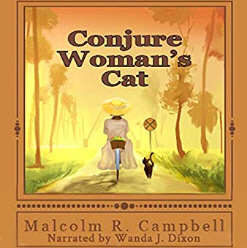
Conjure Woman’s Cat

Recipient of the prestigious Red Earphones Award from AudioFile Magazine: Wanda J. “Dixon’s warmth and gorgeous singing voice are superb in this story about Conjure Woman Eulalie, which is told through the voice of her cat and spirit companion, Lena. Dixon zestfully portrays Eulalie, who is “older than dirt” and is kept busy casting spells, mixing potions, and advising people–that is, when the ‘sleeping’ sign is removed from her door. Most distinctive is Eulalie’s recurring sigh, which conveys her frustration with Florida in the 1950s, when Jim Crow laws and ‘Colored Only’ signs were routine.”

Also available in paperback and e-book from Thomas-Jacob Publishing, this is the first story in the Florida Folk Magic Trilogy.


Eulalie and Washerwoman

From AudioFile Magazine: “Narrator Tracie Christian’s spirited style is ideal to portray the fantasy world of conjure woman Eulalie Jenkins and her shamanistic cat, Lena, who live in Florida in the 1950s. Christian captures Eulalie’s shock when she learns that Jewish merchant Lane Walker, who’s always traded fairly with the local African-Americans, is being forced to give up his store to the Liberty Improvement Club, which forbids serving blacks. Lively descriptions of Eulalie reading possum bones and casting spells; tender scenes with her old beau, Willie Tate; and feline Lena’s communication with Eulalie via secret thought speech add to the local atmosphere.”

Book two in the Florida Folk Magic Trilogy from Thomas-Jacob Publishing. Also available in e-book and paperback through online booksellers and bookstores.


Emily’s Stories

From AudioFile Magazine“Kelley Hazen’s spirited delivery enhances Campbell’s descriptive writing in these three stories about 14-year-old Emily Walters. ‘High Country Painter’ present a talkative Emily and a realistic-sounding bird that directs Emily to magically draw obstacles to divert a grizzly bear. In ‘Map Maker,’ Emily meets an eerie-sounding ghost who helps her save a sacred forest from developers. In ‘Sweetbay Magnolia,’ Hazen captures Grandma Walters’s elderly voice as well as her persistence and wit to perfection. Young listeners will enjoy hearing Emily explain about TMI–too much information. Hazen’s skill at creating believable bird and ghost voices adds to the listening pleasure.

This three-story collection was released by Vanilla Heart Publishing.

Listen and experience the wonderment of being a child again.

Malcolm


Never go drinking with your muse

My muse and I recently went out to a local biker bar and slammed down a case of Budweiser and several guys wearing badass tattoos and dirty clothes who thought we didn’t belong there.

We probably shouldn’t have made fun of the bikers who were drinking lite beer or were riding Mopeds.

My muse does not look like this.

The good thing about going to a biker bar is this: nobody asks what you do for a job. They assume the answer is either nothing or something illegal and that asking is a good way to get beat up. Suffice it to say, biker bars don’t have Enya on the jukebox. So, don’t expect much empathy there.

The bad thing about drinking with your muse is that she doesn’t like excuses. When you explain why you haven’t been writing lately due to __________, she says “So what?”

Yes, I’m trying to juggle three writing projects at the same time. That’s a first for me. I don’t like it. When I try to tell my muse why I don’t like it, she laughs and comes up with profanity so bad I didn’t even hear it in the navy.

As I told another writer years ago, “I don’t have a muse because high school literature courses portrayed muses as women who looked like they were dying of consumption or thought they were princesses.”

After saying that, a lady named Siobhan showed up and announced that she was my muse. The first thing I learned was that if I mispronounced her name, she’d kick the crap out of me. The second thing I learned was that she’s more psychic than I am. (For those of you who didn’t grow up speaking Gaelic, her name is pronounced “Shivahn.”)

“I want the best for you and your writing,” she always tells me. My response is usually, “You’re the lady who invented tough love, right?”

After a few Buds, we’re saying things that shouldn’t be said. Yet, I have to say, muses are more forgiving than spouses. You can tell as muse to “_____ off,” and she’ll always be there. You can’t say that to your wife or husband.

Basically, my muse thinks I’m hiding behind the research. That is, that I’m doing research long after it no longer matters and that it’s time to start writing the story. Okay, she may have a point. I do have a tendency to over-research everything I write. Maybe that’s because I started out as a journalist and a technical writer. Or, maybe that’s because maintaining that I’m still doing research is a good way to avoid doing any real writing.

I don’t think I’m the only writer who does this even though I’d probably buy a Harley if the main character in one of my novels rode a Harley. Accuracy’s important, right?

My muse said, “that’s a crock.” She also said, “Why aren’t you writing the story yet?” My answer is always, “Because I’m scared that I can’t.” Suffice it to say, she doesn’t buy that.

Malcolm