“The United States Department of State calls child marriage “gender-based violence.” The United States Agency for International Development calls it “a human rights abuse.” Across the board, our government condemns child marriage worldwide and provides funding for programs that fight this abuse overseas. But the U.S. government makes exceptions when it comes to children living in the U.S.
“The state laws within the United States do not align with our own internationally proposed standards of how other countries should treat their children. Forty-eight states are failing to protect girls from child marriage. They have dangerous loopholes and exceptions that allow for marriage, some even have no minimum age for marriage. Shockingly, it is legal for a U.S. citizen child to sponsor a visa for a foreign-born spouse or fiancé(e).”
As a strong supporter of the AHA Foundation, my sense of the American Public’s attitude about religious or culturally based violence against women is that it occurs in third world countries. Unfortunately, child marriages, among other travesties, also occur in the U.S.
Like Native American women who are swept into sex trafficking, women from third world countries who legally come to the United States are often swept into unwanted and often-abusive child marriages. I agree with the AHA’s assertion that “Putting in place a minimum age of 18 to sponsor a spousal/fiancé(e) visa is a simple, common-sense solution that would protect U.S. children from the very real threats associated with forced and child marriage.”
Today’s volatile political climate has lent itself to poetry, essays, articles, and novels as writers find themselves unable to keep silent. Good for them. I would like to see more novels in defense of women that explore child marriages in a country where the very concept is solidly against such practices.
God forbid you should ever donate to a cause because once you do, your in-basket will be filled with dire warnings such as DONATE NOW TO STOP WORLD FROM BLOWING UP.
Does this almost-SPAM really work?
I associate it with the kinds of pitches I see aired with late-night TV shows where actors who look as reputable as Hannibal Lector try to push “miracle” products that I can get delivered immediately at 99% off if I call now. “Operators are standing by.”
So now, it’s politics. The bogus theme I hate most is, “Hey, Malcolm, we need 100,000 signatures by midnight to stop [whoever] from doing [whatever].” Are you serious? What’s with the deadline? This crap has been going on for years and suddenly I have to sign some silly petition with no legal standing by midnight?
And, “Malcolm, are you with us? A mysterious donor will triple match all contributions made in the next 15 minutes.”
I wonder how long it will be before this shrill rhetoric turns into outright threats. “DONATE OR DIE. Killers are standing by to rub out everyone who fails to support our nonviolent loving kindness campaign by high noon.”
When I see a lot of this schlock from the same place, I unsubscribe, assuming I can figure out how and can get through the barrage of questions I have to answer: “Don’t you love us anymore?” “Did we do something wrong?” “Do you think we’re just a bunch of assholes?”
Then, after I unsubscribe to something I never signed up for in the first place, guess how much good it does? Nada. Zip. The dire messages and pleas for money keep coming.
I figure e-mail SPAM and blog comment SPAM must work because they aren’t going away. I’m starting to think that I should use this technique to sell my books: “Hello, buy a copy of Conjure Woman’s Cat by midnight or I’ll put a hex on your ass.”
Okay, it was just a thought.
But seriously, you political bastards asking for money and signatures before midnight need to shut the hell up. Let’s see, if given the choice between donating to your petition drive or buying a bottle of Scotch, what should I do? I’m buying the Scotch because it tastes good while the petition drive probably isn’t going to do squat.
I saw an article today that said most cell phone calls will soon be from spammers. I can believe that. Most of the e-mail in my in-basket is SPAM. Thank goodness WordPress weeds out most of the SPAM comments on my blog. Everybody’s talking and nobody’s listening.
The reason is simple: those doing the talking are selling snake oil.
Children’s Fantasy Literature: An Introduction by Farah Mendlesohn and Michael Levy won the 2018 Mythopoeic Award for Myth and Fantasy Studies. When Sandra Lindow, Levy’s widow, accepted the award for her late husband (who died last year), she said, “He would be particularly pleased to receive this recognition because historically children’s fantasy has been undervalued. A good part of his career was dedicated to reading and researching those books that provide both high-quality entertainment and emotional education for children and young adults.”
With the exception of R. J. Rowling’s Harry Potter series, which also captured the attention of adult readers, children’s fantasy is often written off as “just kids’ stuff” while fairy tales have received a great deal of scholarly analysis. I hope this award will help draw attention to this book as well as its subject.
Publisher’s Description
“Fantasy has been an important and much-loved part of children’s literature for hundreds of years, yet relatively little has been written about it. Children’s Fantasy Literature traces the development of the tradition of the children’s fantastic – fictions specifically written for children and fictions appropriated by them – from the sixteenth to the twenty-first century, examining the work of Lewis Carroll, L. Frank Baum, C. S. Lewis, Roald Dahl, J. K. Rowling and others from across the English-speaking world. The volume considers changing views on both the nature of the child and on the appropriateness of fantasy for the child reader, the role of children’s fantasy literature in helping to develop the imagination, and its complex interactions with issues of class, politics, and gender. The text analyses hundreds of works of fiction, placing each in its appropriate context within the tradition of fantasy literature.”
Children’s Literature Association Quarterly Review
“Children’s Fantasy Literature: An Introduction is an immense work in scope and scholarship. As befits its authors, Michael Levy and Farah Mendlesohn – two prominent figures in the world of children’s literature criticism – this latest work is a far-reaching feat that grasps the tenuous strings of the inception of both fantasy and children’s literature and weaves them from the sixteenth through the twenty-first centuries into a tremendous narrative tapestry.” – Joli Barham McClelland
From the Introduction
“The aim of this book is to bring together two traditions of criticism, that of the literature of the fantasic, and that of children’s literature. In addition, the book aims ti situate children’s fantasy in the context of changing ideas of childhood across three centuries; and perhaps most crucially, to consider the effect which the extension of childhood has had upon the writing and publishing of children’s fiction.”
The research and writing of this book comprise an ambitious project that will lead to greater understanding of the genre and–with luck–more respect.
The Florida Folk Magic series is set in the fictional town of Torreya 53 miles west of Tallahassee in the “other-Florida” world of the panhandle of the 1950s when the Ku Klux Klan, police officers, church elders, city fathers, and your next door neighbor were hard to tell apart. The sunshine state advertised itself as a playground and that’s what northern snowbirds saw. Residents, especially African Americans, saw it as a world of terror.
Unfortunately, racism is still with us in the new century. Progress has been made since the years when these stories are set. But inequality still exists, hate groups still urge Americans to return to the Jim Crow era, and even the discussions about how to bring about quality change are often divisive. This trilogy of novels was written with the hope that the voices for love, trust, and true equal rights will prevail. – Conjure Woman’s Cat Website
During the 1950s, it never occurred to me that the racism I saw around me during the Separate-but-Equal, Jim Crow era would still be suffocating our country, ruining lives, and causing violence 70 years later. I’ll confess that I was naïve in my outlook then, but I thought we as a people were better than that. I still hope that someday soon, we will be.
I have no intention of spinning the good, the bad, and the ugly of politics here or engaging in a discussion in the comments about whose fault the resurgence of racism debates is. What I see in the news and in social media is making things worse. Charges and counter-charges are not an informed debate, much less a route toward a united country where racism is no longer an issue.
To some extent, some of the news outlets are at fault because they are selective in what they show since what they show supports their agendas. Those who watch different networks and/or view different online news sites get radically different versions of the news. When news organizations have agendas, that is, loyalties to one political party or the other, we all end up with corrupted versions of what’s happening in our country and the world.
As a former college journalism instructor, it saddens me when reporters and their networks/newspapers throw objectivity out the window. Bias is the first indicator of a newspaper or news channel that cannot be trusted. Yet people are trusting them and basing their opinions on horrible reporting.
The social media further disseminate these erroneous and twisted views. People believe what they hear on their selected news outlets without bothering to check other sources for more information, much less alternative views. Most people–as evidenced by their social media comments–don’t seem to realize that many programs on CNN and FOX are not news shows, but opinion shows. Yet, these viewers think they’re getting real, objective new coverage.
Among other things, racism is being perpetrated for ratings and votes
To my mind, that’s like yelling fire in a crowded theater. One-sided coverage about nasty white cops is fueling the fire. One-sided coverage about black crimes is fueling the fire. This isn’t dialogue, it’s propaganda. It’s making people fearful of each other rather than bringing them together.
I saw news stories like this during the Jim Crow era. I don’t expect to see them now. But, political parties and sullied news organizations are doing all they can to ensure that the United States remains racist. This approach is old, ugly, and inexcusable. Blacks and Whites deserve better than this. Instead, we’re being fed propaganda that keeps us at odds with each other.
The best question I can ask is: “Who is profiting from the discord?
I think we need to find out and vote them out of office, stop buying their products, and stop seeing them as saints with words of wisdom. They are morally, spiritually, and ethically bankrupt.
While the novels will continue to be available separately, those who plan to read all of them in e-book form will save by purchasing the three-in-one trilogy.
Florida Folk Magic Stories is also available at the following other online resellers. The cover looks different on these sites but the text inside is the same.
“O, give me a home where the buffalo roam. Or a chrome-and-glass condo where the TV is on. A chipped wooden bench in a broken down railway station, under a clear, open New England sky. Or an ornate hotel lobby, hushed, with velvety banquettes, the clinking notes of silverware and china from the dining room. A sudden, rushing downpour in the fall, or searing dry heat, or the squeak of boots in snow. The dusty interior of a pick-up truck’s cab, where the characters sit in silence listening to the engine tick as it cools.” – Sarah Van Arsdale in “Atmospheric Pressure: Using Setting to Create Atmosphere & Emotions,” The Writers’ Chronicle, October-November, 2018
When a character in the novel you’re reading cuts her finger, can you smell the blood?
First edition
For years, new writers avoided describing settings in their short stories and novels because they suffered through ancient novels in high school and college literature classes with thousands of dreary words of description. Description fell out of fashion. On the plus side, readers no longer had to feel guilty when they skipped multiple long paragraphs of description. On the minus side, readers were likely to end up with a cacophony of disembodied voices in a dark room–and they were lucky if the author bothered to tell them the room was dark.
So now, authors are (I think) learning that their stories are better when they engage the five senses. Van Arsdale writes that “Readers bend toward setting because we’re bound to it with our physical bodies, we feel the humidity rise without even checking the Accuweather forecast, or we smell the damp, cave-like earth as we approach a subway station.”
I just finished re-reading Shirley Jackson’s novel “The Haunting of Hill House.” Now there’s a novel where the reader definitely knows where the characters are at and what they and the house smell like:
“No Human eye can isolate the unhappy coincidence of line and place which suggests evil in the face of a house, and yet somehow a maniac juxtaposition, a badly turned angle, some chance meeting of roof and sky, turned Hill House into a place of despair, more frightening because the face of Hill House seemed awake, with a watchfulness from the blank windows and a touch of glee in the eyebrow of a cornice.”
Place settings can be somewhat ephemeral such as this one in Mark Helprin’s “Winter’s Tale”:
“Winter then in its early and clear stages, was a purifying engine that ran unhindered over city and country, alerting the stars to sparkle violently and shower their silver light into the arms of bare upreaching trees. It was a mad and beautiful thing that scoured raw the souls of animals and man, driving them before it until they loved to run. And what it did to Northern forests can hardly be described, considering that it iced the branches of the sycamores on Chrystie Street and swept them back and forth until they rang like ranks of bells.”
Or somewhat more literal like this passage from Cormac McCarthy’s “Blood Meridian”:
First edition
“They rode on and the sun in the east flushed pale streaks of light and then a deeper run of color like blood seeping up in sudden reaches flaring planewise and where the earth drained up into the sky at the edge of creation the top of the sun rose out of nothing like the head of a great red phallus until it cleared the unseen rim and sat squat and pulsing and malevolent behind them.”
There’s no need for ungainly paragraphs of description as Pat Conroy shows us in “South of Broad”:
“San Francisco is a city that requires a fine pair of legs, a city of cliffs misnamed as hills, honeycombed with a fine webbing of showy houses that cling to the slanted streets with the fierceness of abalones.”
Now here’s a passage from Erin Morgenstern’s “The Night Circus” which is a bit long for some of today’s readers, but the writing easily holds the attention of the adventurous reader:
“The finished clock is resplendent. At first glance it is simply a clock, a rather large black clock with a white face and a silver pendulum. Well crafted, obviously, with intricately carved woodwork edges and a perfectly painted face, but just a clock. But that is before it is wound. Before it begins to tick, the pendulum swinging steadily and evenly. Then, then it becomes something else.
The changes are slow. First, the color changes in the face, shifts from white to grey, and then there are clouds that float across it, disappearing when they reach the opposite side. Meanwhile, bits of the body of the clock expand and contract, like pieces of a puzzle. As though the clock is falling apart, slowly and gracefully.
All of this takes hours.
First edition
The face of the clock becomes a darker grey, and then black, with twinkling stars where numbers had been previously. The body of the clock, which has been methodically turning itself inside out and expanding, is now entirely subtle shades of white and grey. And it is not just pieces, it is figures and objects, perfectly carved flowers and planets and tiny books with actual paper pages that turn. There is a silver dragon that curls around part of the now visible clockwork, a tiny princess in a carved tower who paces in distress, awaiting an absent prince. Teapots that pour into teacups and minuscule curls of steam that rise from them as the seconds tick. Wrapped presents open. Small cats chase small dogs. An entire game of chess is played.
At the center, where a cuckoo bird would live in a more traditional timepiece, is the juggler. Dress in harlequin style with a grey mask, he juggles shiny silver balls that correspond to each hour. As the clock chimes, another ball joins the rest until at midnight he juggles twelve balls in a complex pattern.
After midnight, the clock begins once more to fold in upon itself. The face lightens and the cloud returns. The number of juggled balls decreases until the juggler himself vanishes.
By noon it is a clock again, and no longer a dream.”
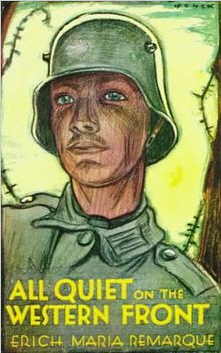
Growing up, I had more trouble getting through “All Quiet on the Western Front” by Erich Maria Remarque than any other book I was assigned to read in an English class. It was more real than I could tolerate because the author made sure I could smell the blood:
First English language edition
“I lie down on many a station platform; I stand before many a soup kitchen; I squat on many a bench;–then at last the landscape becomes disturbing, mysterious, and familiar. It glides past the western windows with its villages, their thatched roofs like caps, pulled over the white-washed, half-timbered houses, its corn-fields, gleaming like mother-of-pearl in the slanting light, its orchards, its barns and old lime trees.
“The names of the stations begin to take on meaning and my heart trembles. The train stamps and stamps onward. I stand at the window and hold on to the frame. These names mark the boundaries of my youth.”
Van Asdale writes that in spite of the author’s infatuation with his or her main character, s/he must bring that character “to a real place and time for examination. Bring the reader into the cab o the pickup truck; turn the radio on low. Or roll down one window, to hear the crickets, or those far-off traffic sounds. Watch. Listen. These details allow the atmosphere, and who among us hasn’t sat in a car late at night, talking, awash with emotion? This is what it is to create atmosphere, and to allow atmosphere to give rise to emotion. And that is, ultimately, the reason for digging your spade deeply into setting.”
I love stream-of-consciousness writing and interior monologues from characters who may or may not be reliable narrators. But even if you don’t want to tackle techniques on the cutting edge of fiction, you can still–with apt words and on-point sketches–find enough details about the setting of your story to immerse your reader into the center of the plot.
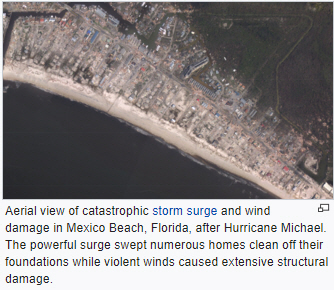
“Hurricane Michael was the third-most intense Atlantic hurricane to make landfall in the United States in terms of pressure, behind the 1935 Labor Day hurricane and Hurricane Camille of 1969. It was also the strongest in terms of maximum sustained wind speed to strike the contiguous United States since Andrew in 1992. In addition, it was the strongest on record in the Florida Panhandle, and was the fourth-strongest landfalling hurricane in the contiguous United States, in terms of wind speed”. – Wikipedia
I cannot help but follow the weather maps and news about Hurricane Michael. When referring to Mexico Beach and Panama City, Florida, the word “catastrophe” is often used. I grew up in Tallahassee which is about 20 miles from the coast. We spent many hours along the coast from St. Marks to Alligator Point to Carrabelle to Apalachicola. We seldom went to Panama City because–even then–it routinely filled up with tourists. I’d never been to Mexico Beach.
The photographs, as editors keep saying, look like a war zone. I’ve seen this before, but not on this scale in Florida. It’s a miniature Katrina. We saw most of the affected coastline as kids from speedboats and sailboats. We spent many hours at a St. Theresa beach cottage owned by good friends. I hope it’s still there. It’s hard to look at all this in news pictures just as it’s hard to look at Glacier National Park wildfire stories in news pictures.
Not that I could do anything if I were there, but I feel like I should be there even though I’ve been away from the Florida Panhandle for so many years, I know very few people there anymore. Yet, there’s something special about the places where we grew up and/or spent a lot of time that draws us to them when the people there are in trouble.
The area where Michael hit has often been called “the forgotten coast” because most of the tourism and development were elsewhere. In that sense, I have always been happy it was forgotten because I didn’t want it to attract the commercialized mess of places like Daytona Beach. But now, I hope that FEMA programs and agencies that help with rebuilding places after so-called acts of God don’t forget the forgotten coast.
“Seven years ago, the Evil Mastermind launched Indies Unlimited. Since then, we’ve had over 2.5 MILLION page views, been named as one of Six Great Blogs for Indie Authors in Publishers Weekly, and ranked as one of the top writing-related sites by Alexa.”
Indies Unlimited is the go-to blog for writers learning their craft and then learning how to market their work in competition with the one million self-published books released each year. Since the blog is run by volunteers, it’s obviously a labor of love, though I hate using that hackneyed old phrase to describe their work.
Even if you don’t have time to check the blog every week, a scan through their archive of posts will usually materialize what you’re looking for whenever you have a question or the need for a little inspiration.
I hope Indies Unlimited is going strong seven years from now.
A few days ago I saw a discussion among readers of so-called cozy, witchy romances in which most of the fans preferred fantasy versions of witchcraft over novels that made even a lightweight attempt at reality. What we’re talking about here is contemporary fantasy, stories that take place within our own world as opposed to those set on another planet.
This is what I find when I search for witchcraft on a clip art service. While it’s what we think, it isn’t reality.
Wisely, I think, I said nothing. I’ve read a few of those cozy witchcraft novels and, even though the storylines were interesting, my primary thought was that the authors were playing fast and loose with the supernatural. That is, the stories had little or nothing to do with either real Wicca or real traditional witchcraft. The witches in the stories were given powers and rituals that real witches don’t have OR they continued to follow the long-time portrayals (by Hollywood and the Christian Church) of witches as satan worshippers.
While that’s a convenient approach, it’s about as irresponsible as telling a story about–say, the Presbyterian Church or General Motors or Walmart that doesn’t stick to established facts about these organizations. Yes, I know, if makes novels more exciting if a Presbyterian a minister has a wand and can use spells out of the Harry Potter books. But it’s false.
The practices of real witches are very tame when compared to the cozy romances and horror novels written about them. Maybe that’s why authors and a lot of readers like the phony fantasy versions. During the 1950s and 1960s, at a time when the triple feature horror-rama presentations at drive-in theaters were doing big business, the silver screen was awash in symbols from multiple religions and belief systems that–for the sake of a scary story–were turned into a cesspool of evil to earn a buck.
In addition to witches, mystics, shamen, psychics, healers, herbalists, visionaries, and others have been slandered by the mainstream as people associated with evil and/or scams of one kind or another. This has given authors and filmmakers an “anything goes” license to make up whatever nastiness they want about the supernatural and those who believe in it. You may think the Salem witchcraft trials are far away, but the attitude behind them is still with us.
Humans seem predisposed to distrust anyone they can label as “other.” Most often, this ignorant habit focuses on other races, foreigners in general, and people from another part of the country. But it also includes witches, shamen, and healers. Why does this happen? Brainwashing from mainstream religions that routinely accuse people who don’t even believe in the devil as being worshippers of the devil. And, the fact that mixing long-time fears about the supernatural into a riveting movie or novel will bring in a lot of dollars.
The majority of our population seems to fall into two camps of people: (1) Those who believe the supernatural is bunk, and (2) Those who believe the supernatural is evil. If one ever pointed out that many church-going people believed in Christian (and other) mystics of the past, we were told that such people don’t exist now. Sure they do. They’ve been frightened into keeping quiet.
All of us have mental capabilities we can develop: hunches and premonitions, intuition about our ailments, feelings about our connections to the Earth as a living organism, and the ability to strongly influence the course of our lives. It’s sad that we overlook all of this because we’re told it’s evil or mindless superstition. So no, I don’t like those cozy witchy novels and Hollywood movies that play fast and loose with the supernatural because those things are holding us back.
–Malcolm
Malcolm R. Campbell is the author of the three novels in the Florida Folk Magic series that portray hoodoo as it really is.

 I associate it with the kinds of pitches I see aired with late-night TV shows where actors who look as reputable as Hannibal Lector try to push “miracle” products that I can get delivered immediately at 99% off if I call now. “Operators are standing by.”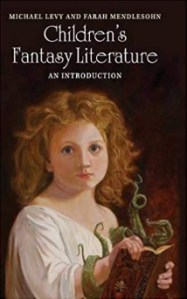
 I have no intention of spinning the good, the bad, and the ugly of politics here or engaging in a discussion in the comments about whose fault the resurgence of racism debates is. What I see in the news and in social media is making things worse. Charges and counter-charges are not an informed debate, much less a route toward a united country where racism is no longer an issue.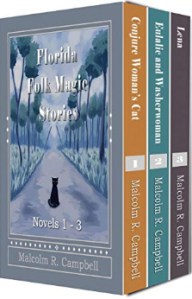
 Thomas-Jacob Publishing






 Malcolm's Round Table